
HomeArchiveThemesAbout

#Olympus

Mountain seat of the Olympian gods.

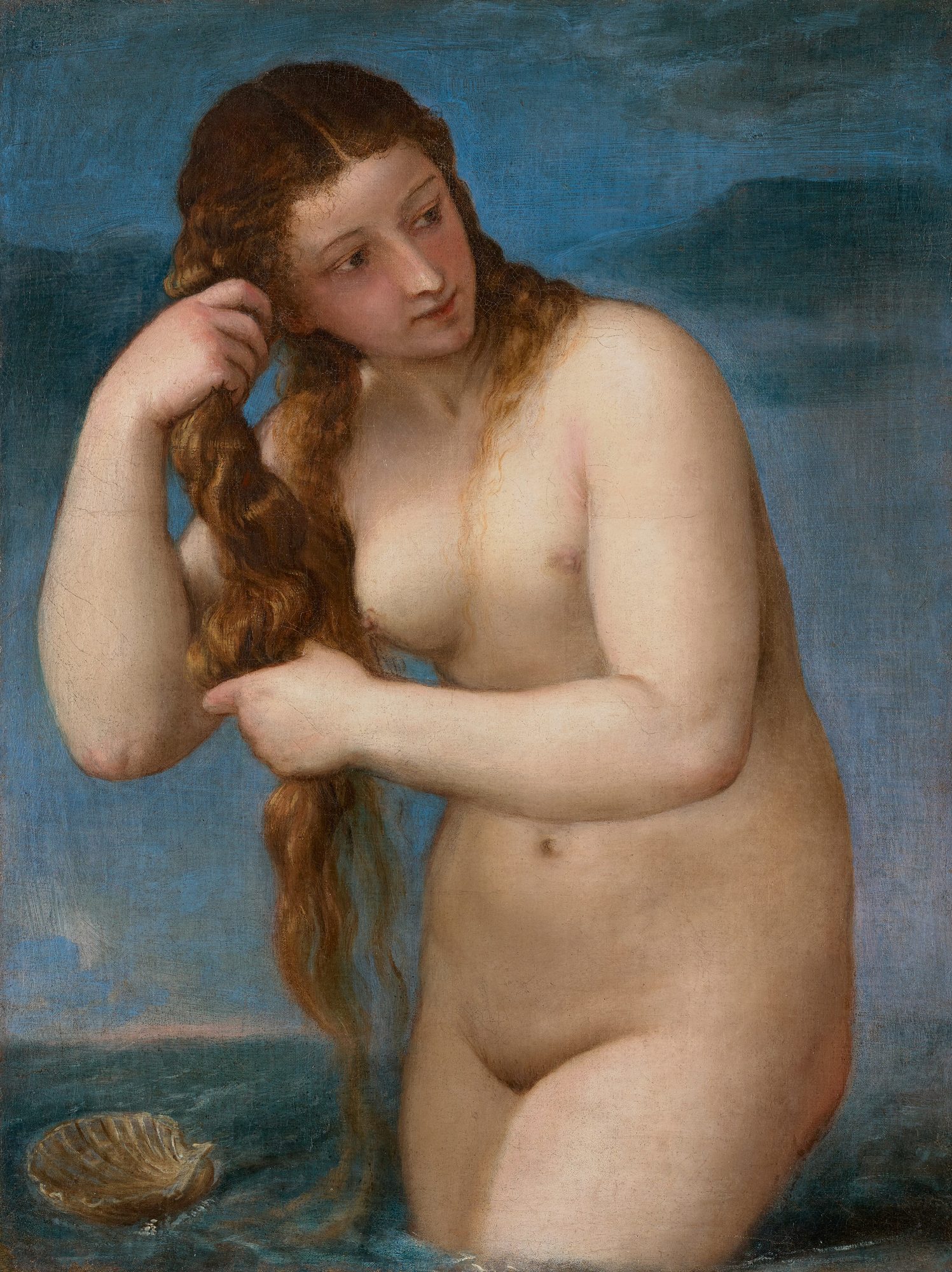
A nude Aphrodite risen waist-deep from a grey-blue sea, wringing the water from the long rope of her hair as she looks aside, a scallop shell adrift on the swell beside her.
Greek

Aphrodite, Goddess of Love

Born from sea-foam and the severed flesh of Heaven, the goddess whose power bent gods and beasts alike, and whom only three could resist.
5 minHesiod
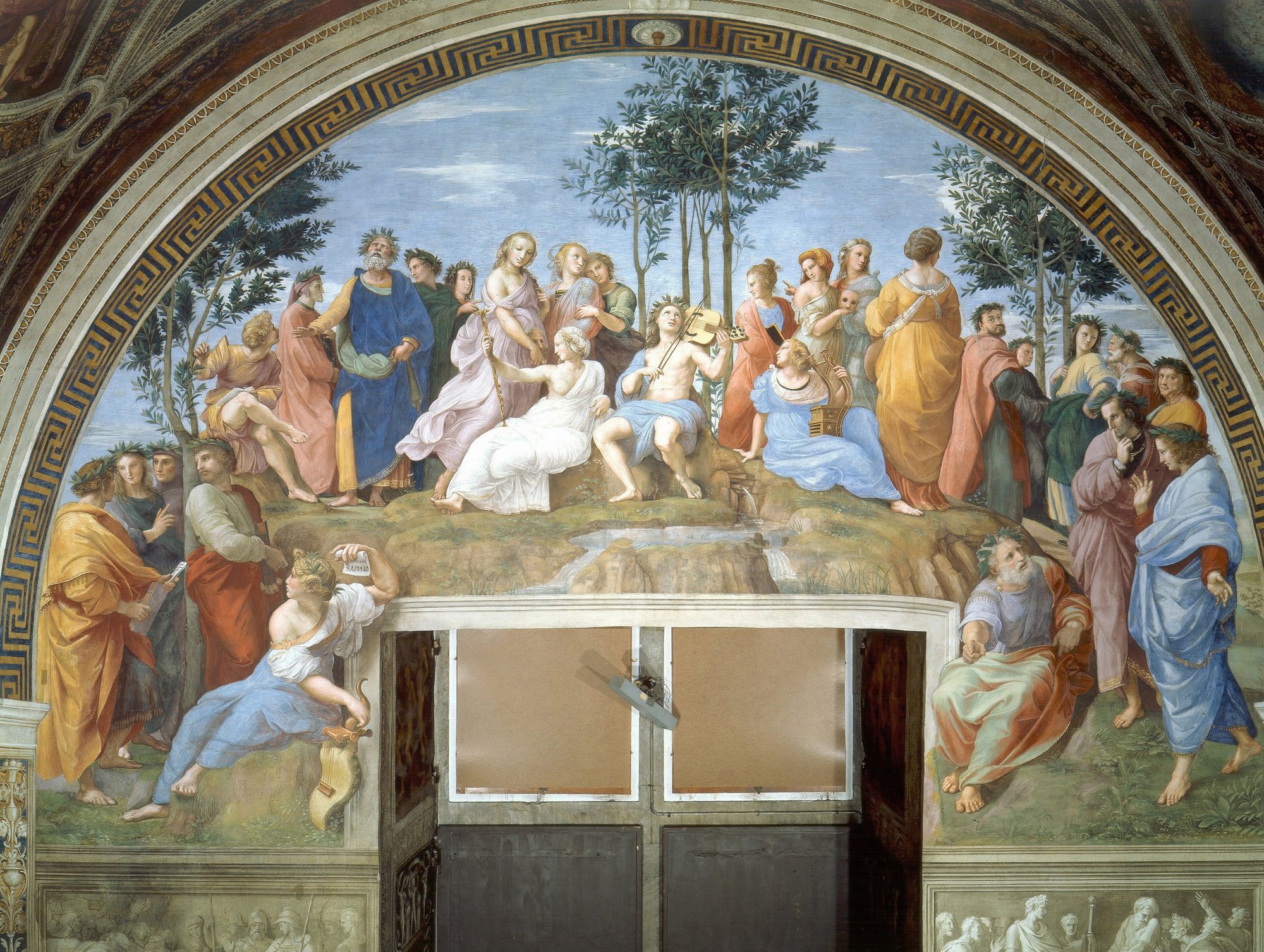
Raphael's fresco The Parnassus: Apollo seated at centre on Parnassus playing a stringed lyre, surrounded by the nine Muses and the great poets of antiquity, beneath a vaulted sky.
Greek

Apollo, God of Light and Prophecy

The newborn who burst his swaddling bands to claim the lyre, the bow and the truth of Zeus, then killed a dragon to found the oracle that spoke for him.
5 minHomeric Hymn 3
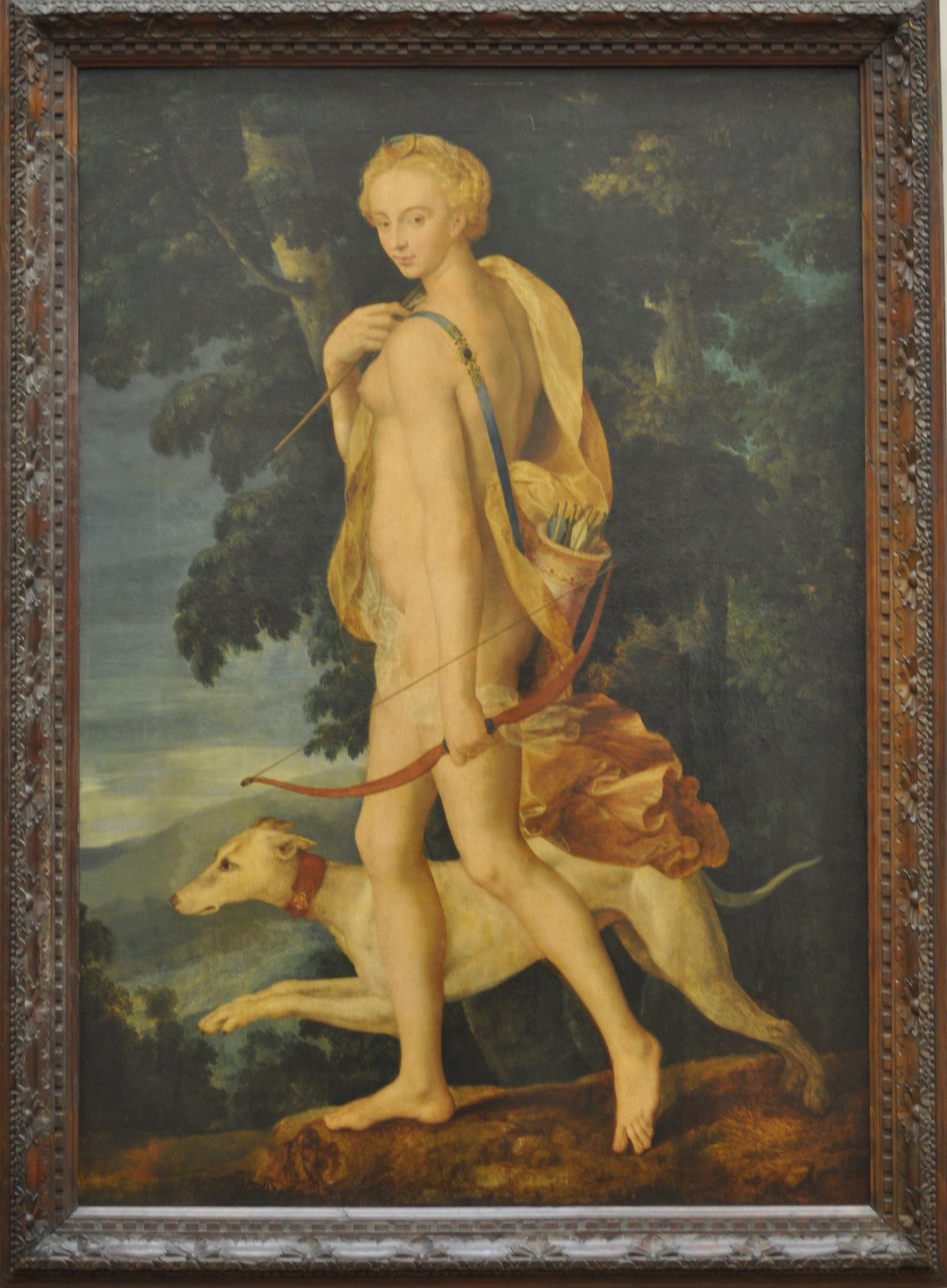
Diana the huntress striding through a dark wood, a gold mantle slipping from her shoulders, reaching back to draw a white-fletched arrow from the quiver at her side while a red recurve bow hangs in her lowered hand. A lean white hound courses at her feet, and a lake glimmers through the trees behind her.
Greek

Artemis, the Huntress

The small child who climbed onto her father's knee and asked for a bow, eternal maidenhood and all the mountains in the world, then took them.
5 minHomeric Hymn 27
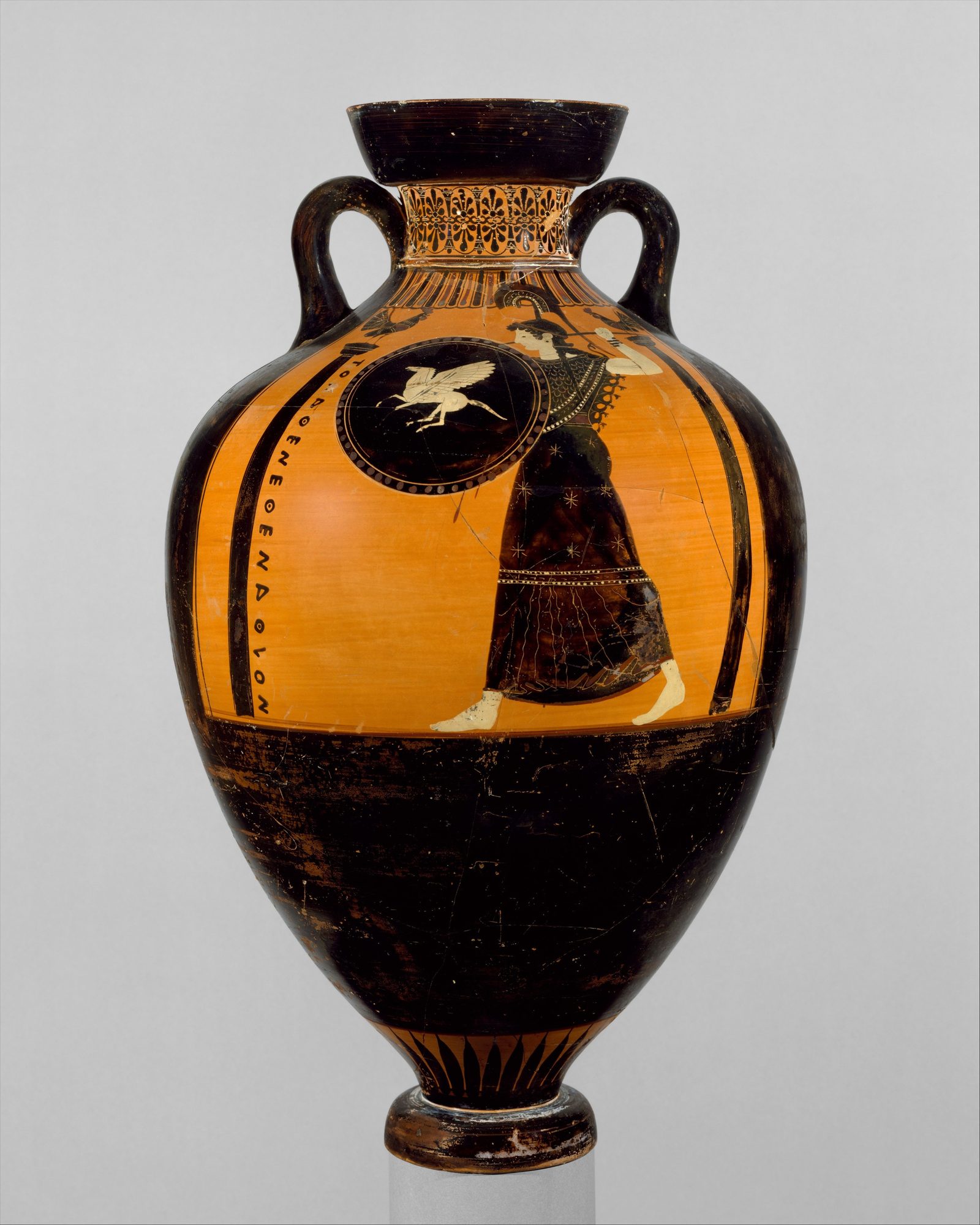
A black-figure Panathenaic prize amphora: the goddess Athena Promachos strides to the left between two columns, helmeted, brandishing a spear and holding a round shield, her aegis across her chest.
Greek

Athena, Goddess of Wisdom and War

She was born from her father's skull in full armour, spear already levelled, and the whole of Olympus reeled at the sight of a daughter equal to Zeus.
5 minHesiod
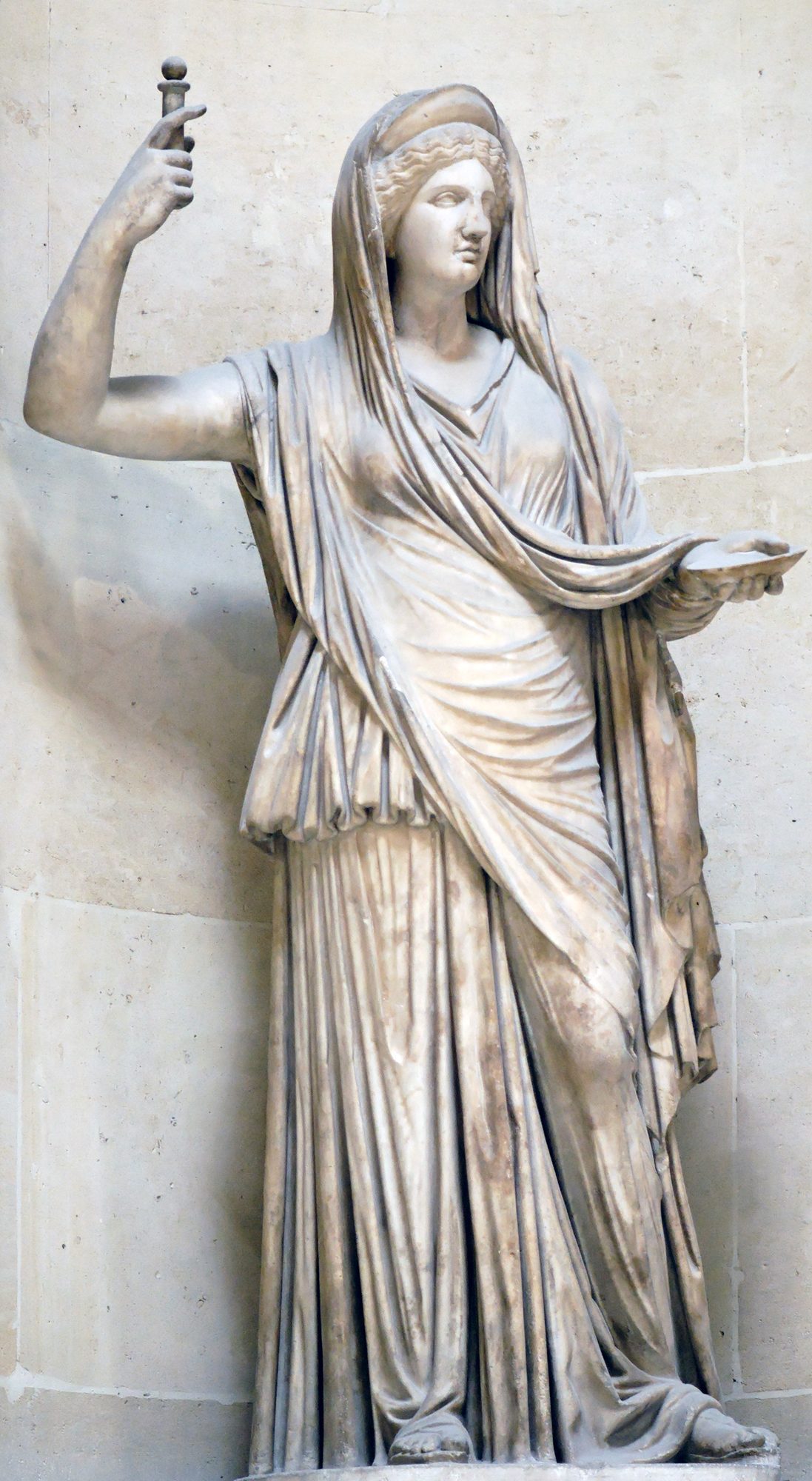
Marble statue of Hera as queen, standing veiled in a long chiton and himation with a diadem band across her brow, her raised right hand holding a sceptre and her extended left hand bearing a shallow offering dish.
Greek

Hera, Queen of Olympus

The goddess of marriage who ruled beside Zeus and warred against him in the same breath, dressing for seduction as a strategy of state.
6 minHomer
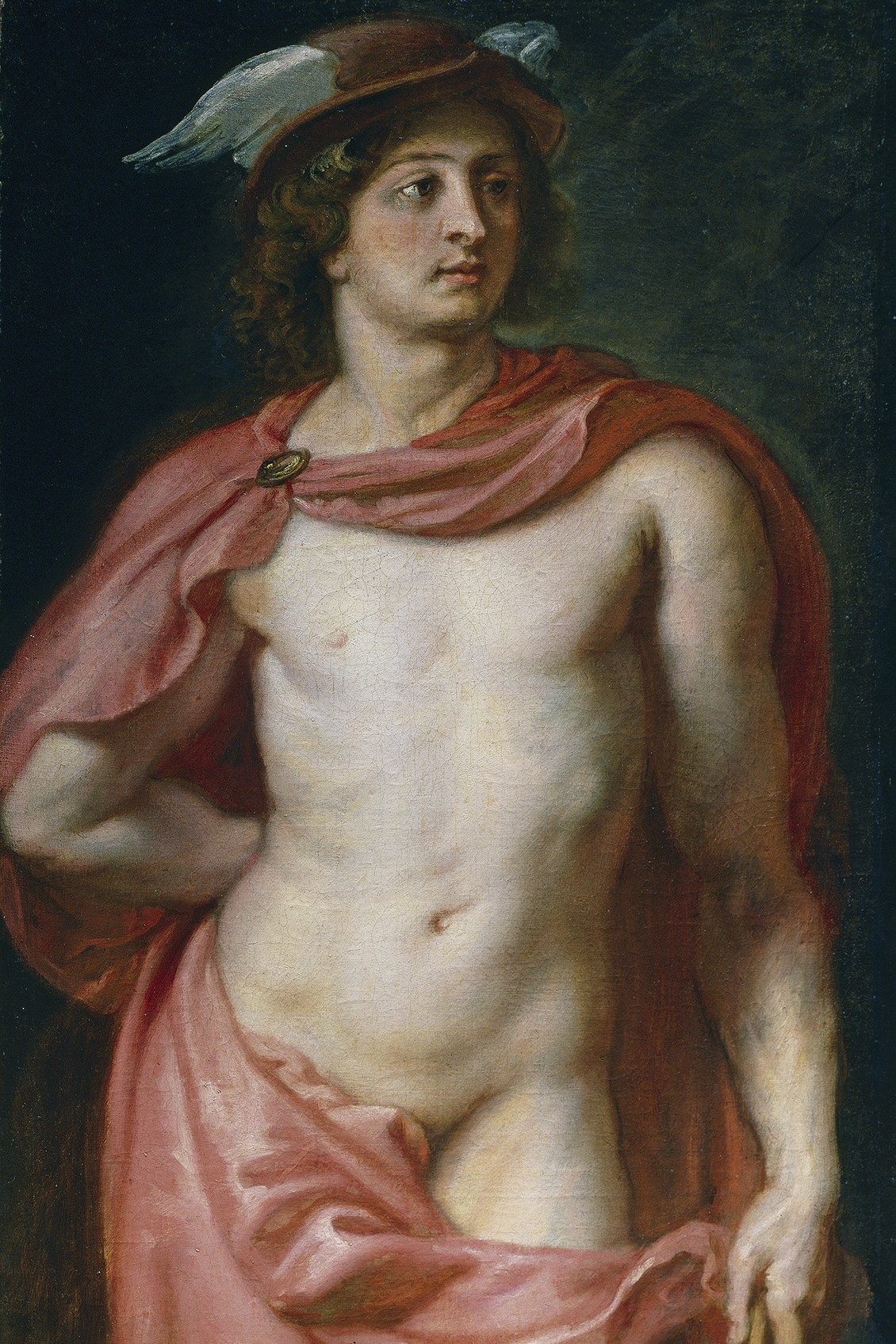
The young Hermes, unbearded and long-haired, wearing the winged traveller's hat (petasos) with its pale feathers spread at either side. A coral-rose mantle is clasped at one shoulder with a gold brooch and falls across his bare torso; he stands against a dark ground, his head turned to gaze aside.
Greek

Hermes, the Messenger God

Born at dawn, he had invented the lyre and stolen a god's cattle before nightfall. The trickster who talks his way onto Olympus and walks the dead down to Hades.
6 minHomeric Hymn 4
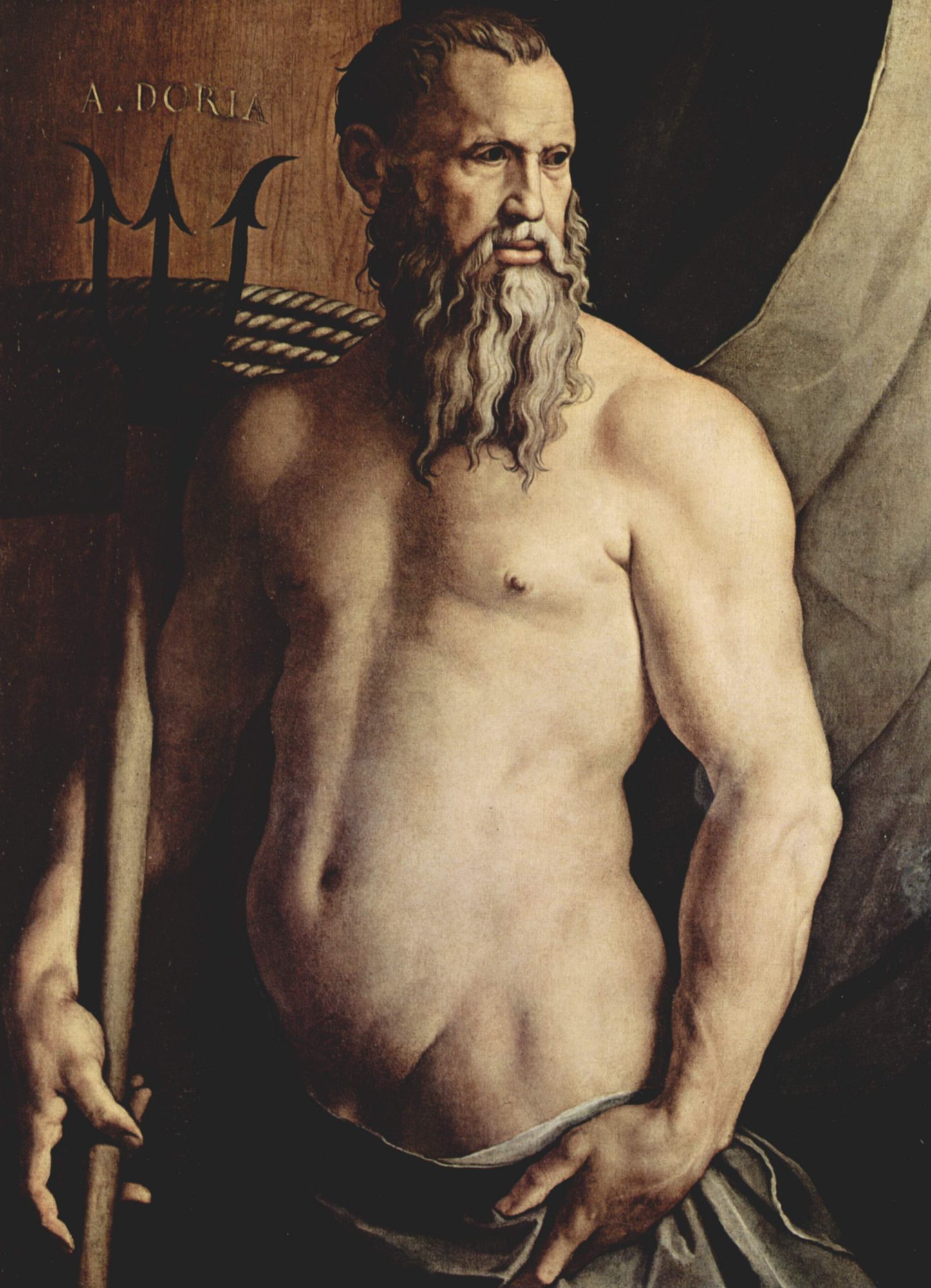
A grey-bearded, muscular sea-god shown half-length and nude to the waist, a grey-green drape at his hips, gripping a three-pronged trident in his right hand. Behind his shoulder a ship's spar wound with rope and a carved trident emblem sit against a dark wooden ground, with the incised inscription "A·DORIA" at upper left.
Greek

Poseidon, Lord of the Sea

He drew the grey sea by lot and never forgave a slight, splitting rock with his trident to raise storms, drown heroes and shake the earth itself.
5 minHesiod
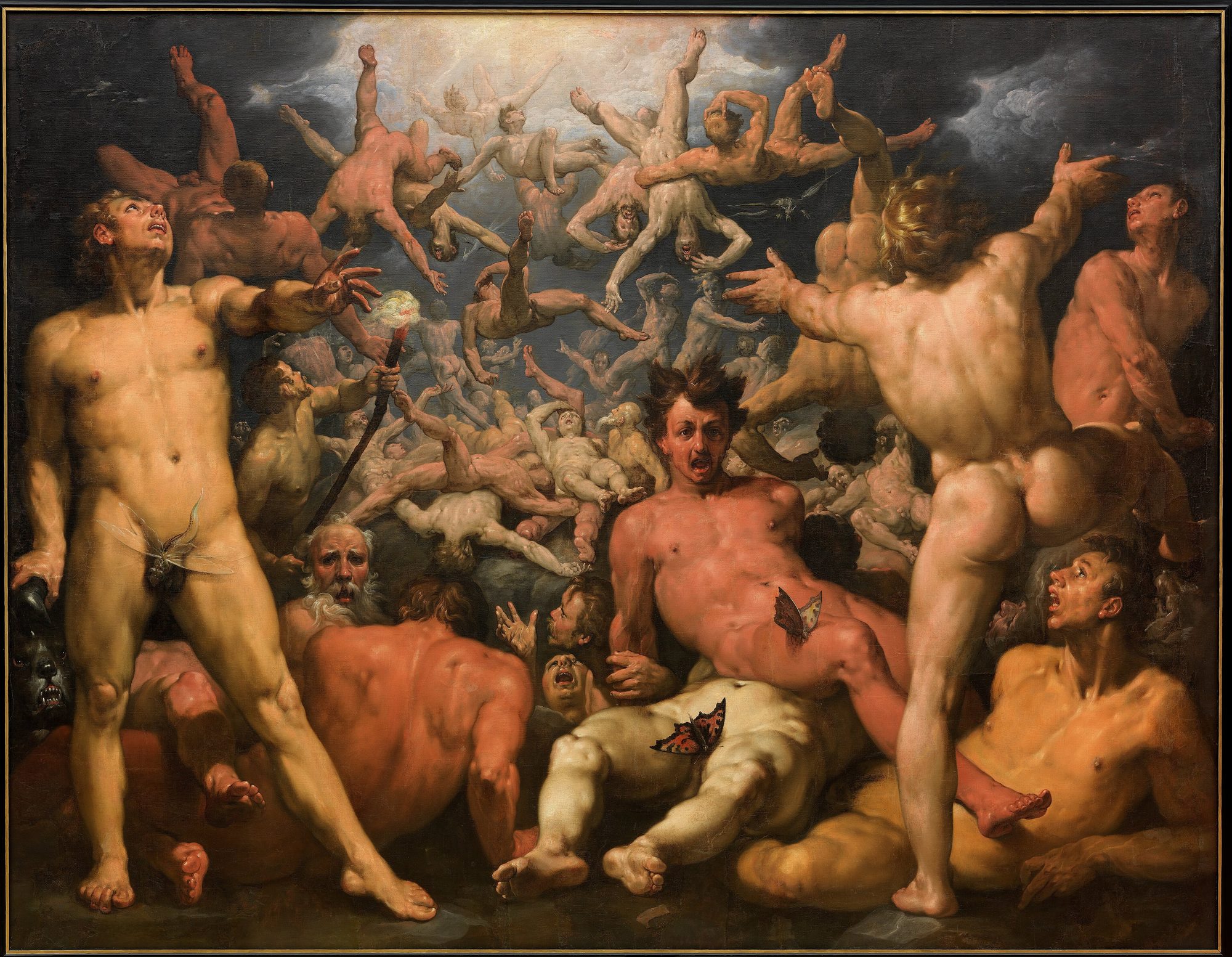
A dark, teeming Mannerist canvas of the defeated Titans hurled from the sky. From a luminous break in the storm-clouds at the top, a mass of muscular nude figures tumbles headlong and foreshortened into the depths, limbs flailing and faces contorted in terror. They pile into a heap of straining bodies across the foreground, ruddy and pale flesh tangled together; one massive figure sprawls face-up at the centre, mouth open in a scream, his hair standing on end. At the lower left a standing youth grips a burning torch while a black hound's fanged head snarls beside him, and a few small butterflies and insects — the painter's emblems of the fleeting — rest on the fallen limbs.
Greek

The Titanomachy

For ten years the sky itself hung in the balance, until Zeus loosed the hundred-armed prisoners of the deep and the world caught fire.
8 minHesiod
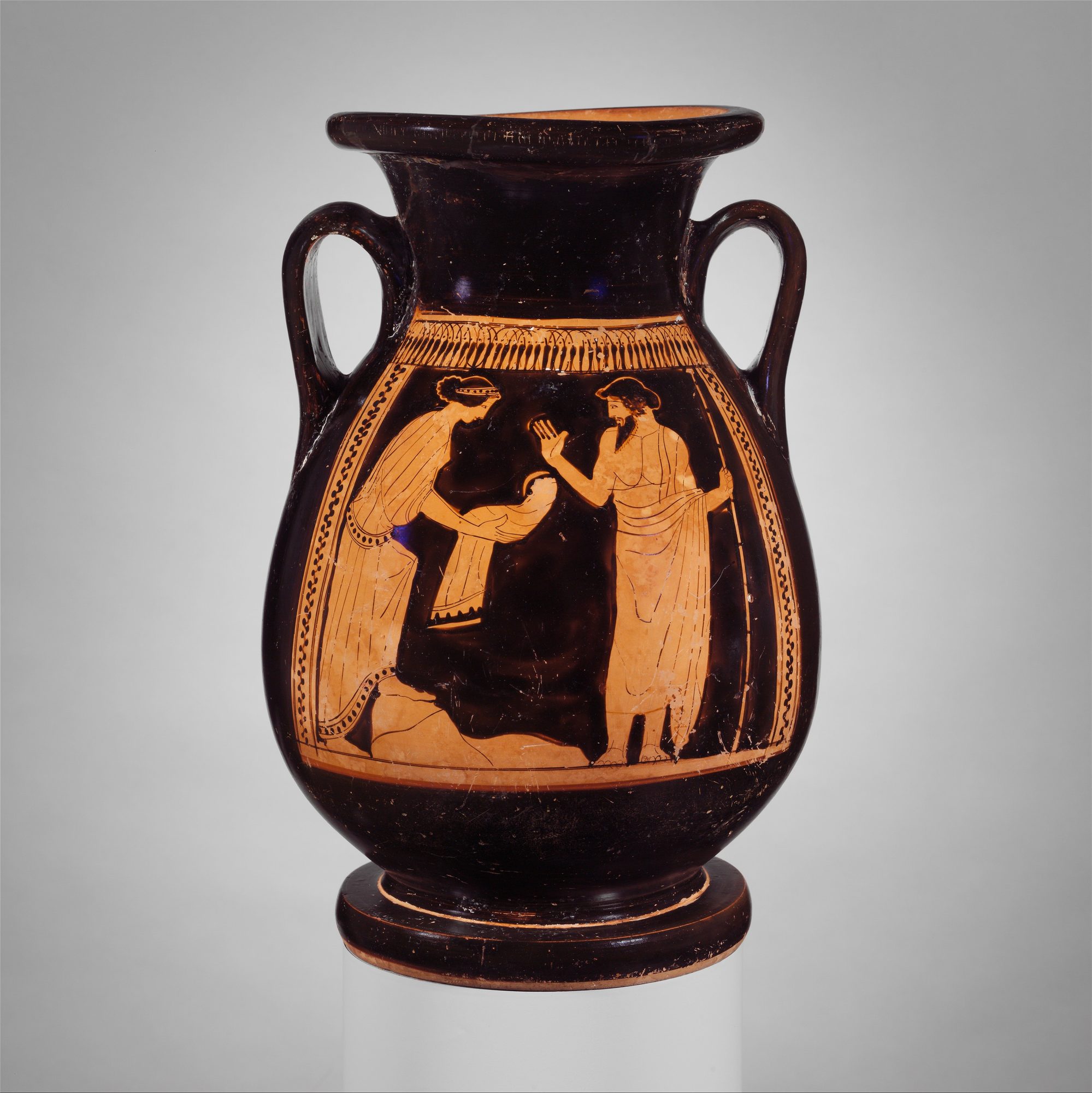
An Attic red-figure pelike, the whole black-glazed vessel standing against a plain grey ground, its belly panel bordered by a band of tongues above and running dot-chains at the sides. In the scene the Titaness Rhea, at left in a long pleated chiton and mantle with her hair bound in a fillet, steps forward and holds out in both hands the stone wrapped in swaddling clothes; facing her at right the bearded Kronos, in a himation that leaves one shoulder bare and a soft cap, grips a long sceptre in his trailing hand and raises his other hand to receive the bundle he believes is his newborn son — the swaddled-stone deception that founds the ruling family.
Greek

The Twelve Olympians: The Ruling Family

There is no ancient list of the Twelve. What the oldest poets give us instead is a household with a throne room, a swallowed generation, and a family quarrel that never quite ends.
7 minHesiod