HomeArchiveThemesAbout
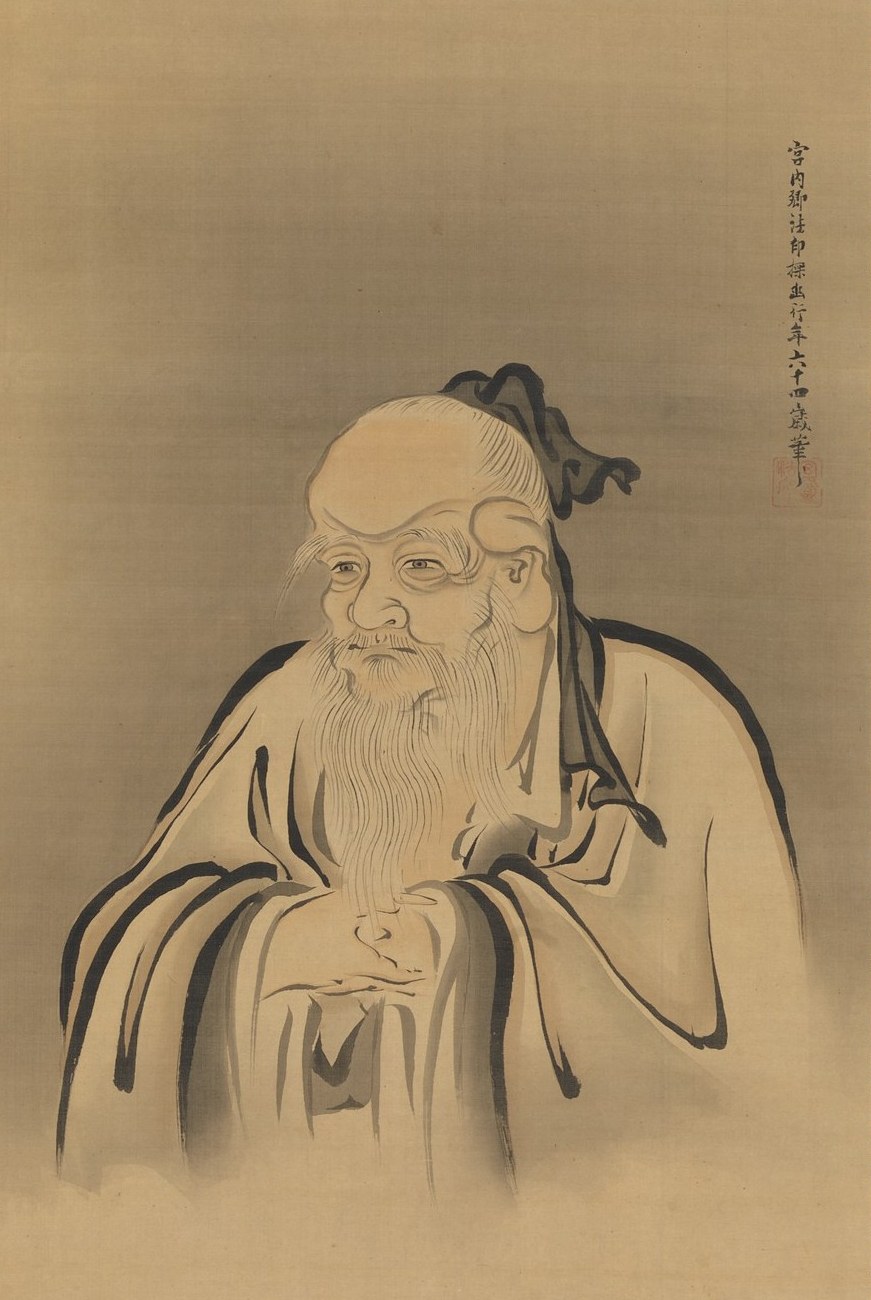
Ink-and-colour portrait of Shennong as a serene white-bearded elder-sage seated with his hands clasped, wild hair bound in a topknot, in a loose pale robe against a plain silk ground, with a brushed inscription and a red seal at upper right.
Featured · Chinese Pantheon

Shennong, the Divine Farmer

The god whose name every herbalist invokes governs a pharmacy of three hundred and sixty-five drugs ranked like a royal court, yet the tradition itself admits he could not have written a word of the book that bears his name.

Read the retelling

Latest Retellings

All articles
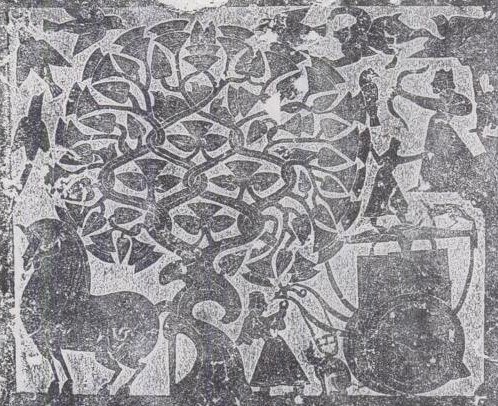
Ink rubbing of an Eastern Han stone relief from the Wu Liang Shrine — the great Fusang mulberry at centre with the sun-crows perched in its branches, the archer Yi at upper right drawing a bow up into the tree, and the solar goddess Xihe with a dragon-horse chariot below.
Chinese

Houyi Shoots the Ten Suns

Ten suns climbed into the sky at once and the world began to cook: the crops charred, the trees died, and the people had nothing left to eat. So the sage-emperor Yao sent for an archer.
6 minHuainanzi
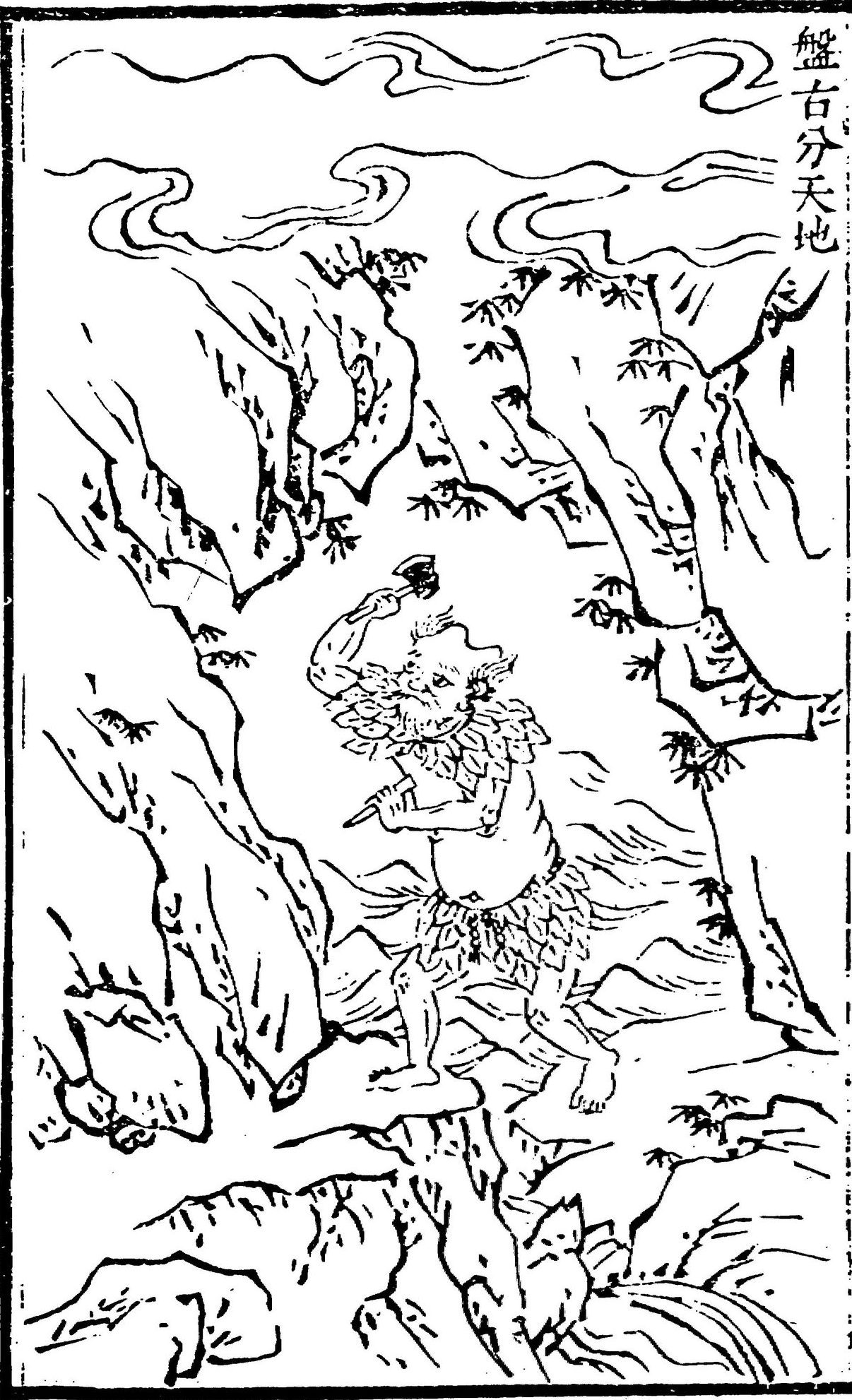
Chinese woodblock line-print of the primordial giant Pangu separating Heaven and Earth: a hairy, horned figure in a leafy skirt stands on a rocky ledge and swings a hatchet overhead with his raised right hand, cleaving apart the swirling cloud-scrolls of the sky above from the crags, bamboo and waves of the earth below; a title cartouche reading 盤古分天地 runs down the upper-right corner.
Chinese

Pangu and the Cosmic Egg

For eighteen thousand years a giant grew inside a shell of chaos, holding the raw sky and the raw earth apart with his own body; when at last he died, there was nowhere left for him to go but into the world.
6 minXu Zheng
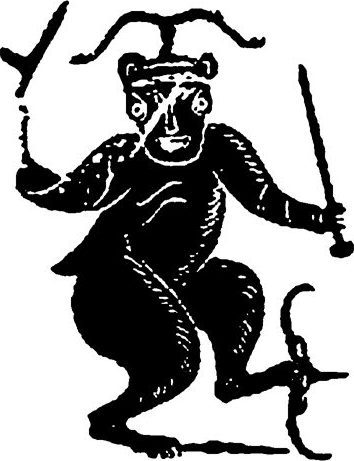
Black line image of the war-monster Chiyou as a horned, shaggy hybrid figure standing frontally, a blade brandished in each raised hand and a third weapon planted point-down at his side, with a long tail and clawed hoof-like feet, on a plain white ground; a rendering of a Han-dynasty stone-relief motif.
Chinese

Chiyou, the War Monster

Dig in the fields of the old north country and you may turn up a skull hard as bronze, or a tooth two inches long that no hammer will break: the bones, people said, of the horned god of war the Yellow Emperor could kill but never quite be rid of.
6 minClassic of Mountains and Seas
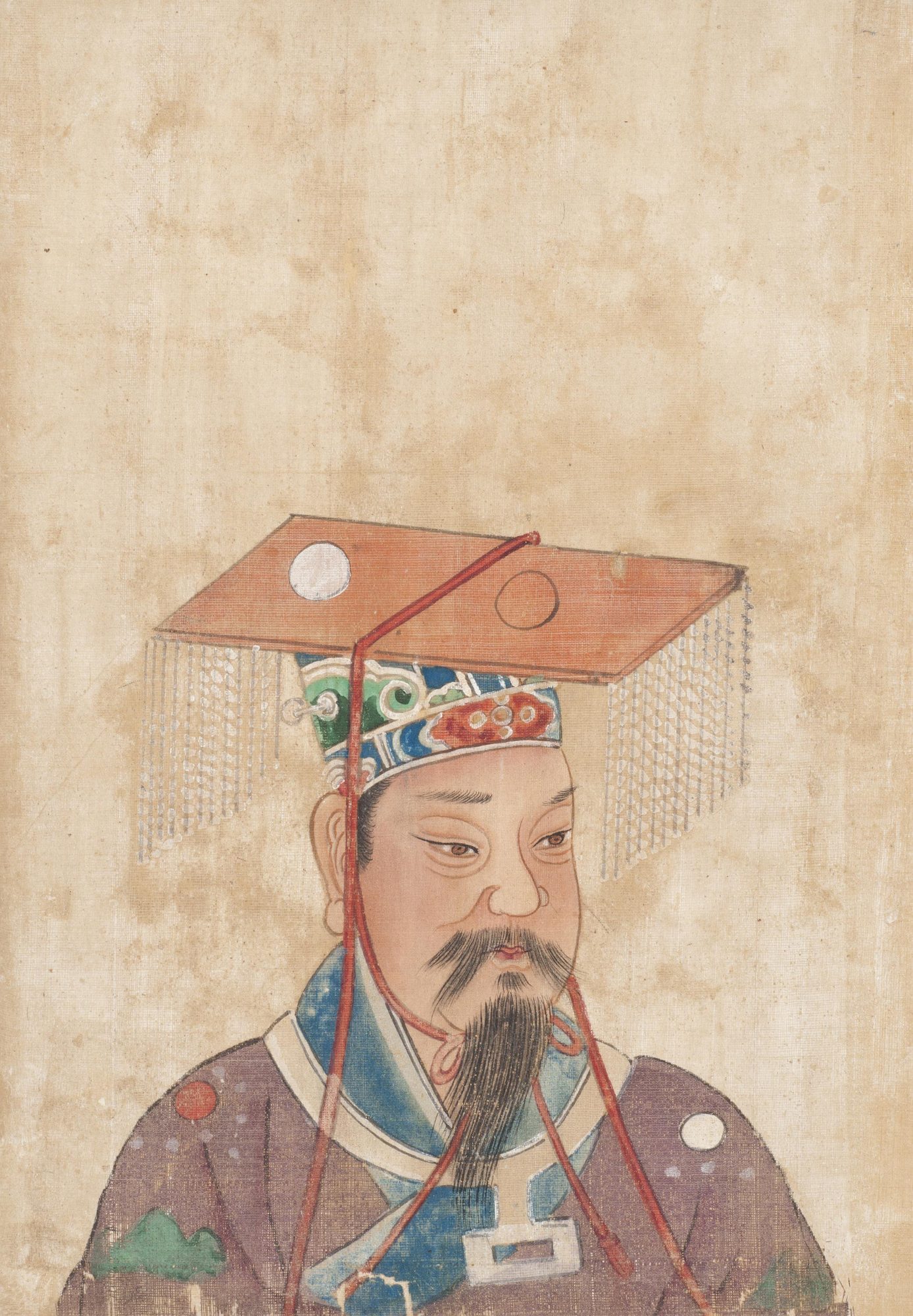
Ink-and-colour album-leaf portrait of the Yellow Emperor as Son of Heaven, shown in bust length wearing the flat-boarded mianguan crown with beaded tassel strings and a dragon-robe over a blue collar, against a plain aged-silk ground.
Chinese

The Yellow Emperor

When the old order collapsed and the fiercest of the warlords could not be subdued, a man who could speak from the cradle trained in shield and dagger-axe, broke the rebel Chiyou on the wilderness of Zhuolu, and was raised up as the first Son of Heaven of a civilised world.
7 minSima Qian
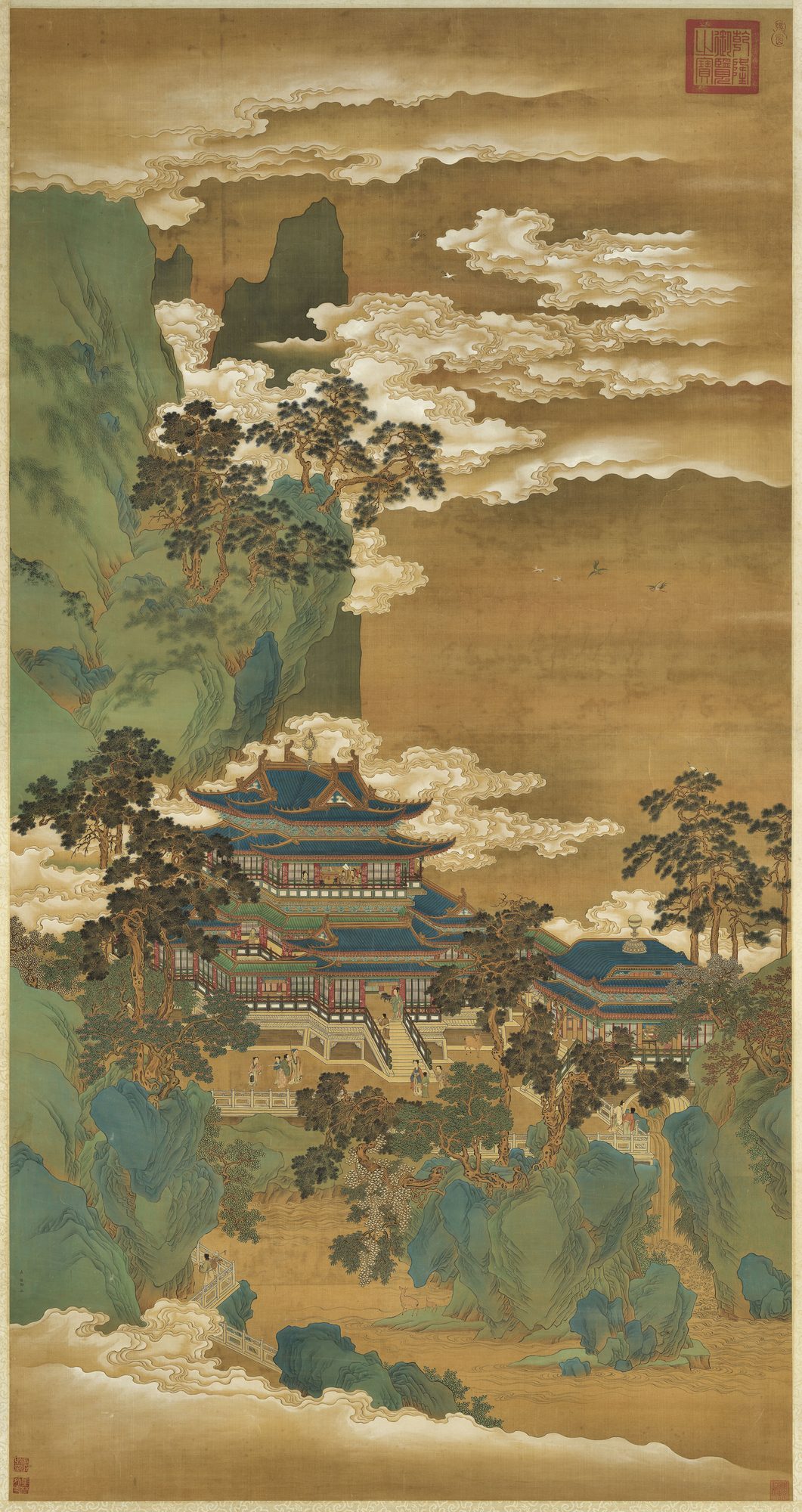
A blue-green Chinese silk landscape of an immortal mountain: jade-blue peaks wreathed in cloud rising above a many-tiered celestial palace with red pillars, blue-tiled roofs and jade balustrades, cranes in flight, deer among the rocks, and tiny figures climbing stone stairs and crossing bridges toward the heights.
Chinese

Mount Kunlun, Axis of the World

A jade-railed paradise in the northwest where four world-rivers rise, deathless trees grow and a stair of three tiers climbs out of the earth and into Heaven itself.
6 minShanhaijing
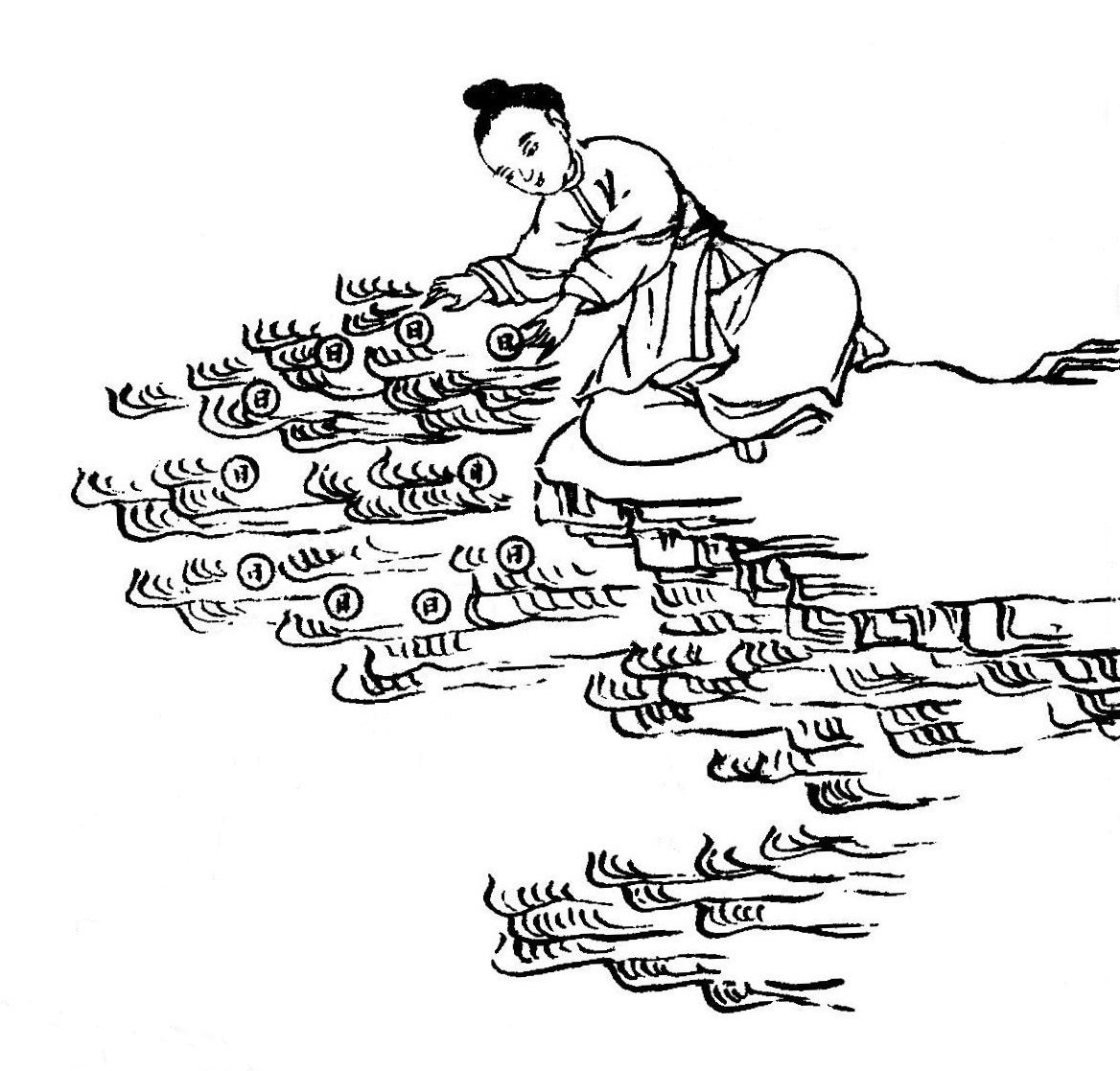
A traditional Chinese line drawing of the solar goddess Xihe kneeling at the water's edge and bathing the suns. She reaches both hands down into a gulf where the ten suns, each drawn as a small disc marked with the character 日 (sun), ride crested waves that fan out across the lower field; her hair is gathered in a topknot and she wears a long flowing robe.
Chinese

Xihe, Mother of the Suns

She had ten children and every one of them was a sun. In a gulf of sweet water at the edge of the world she bathed them, and sent them out one at a time to cross the sky.

5 minShanhaijing

The archive keeps growing.

Every retelling is drawn from the poets who first told it. Hesiod, Homer, Ovid, the Eddas. The sources are kept honest.