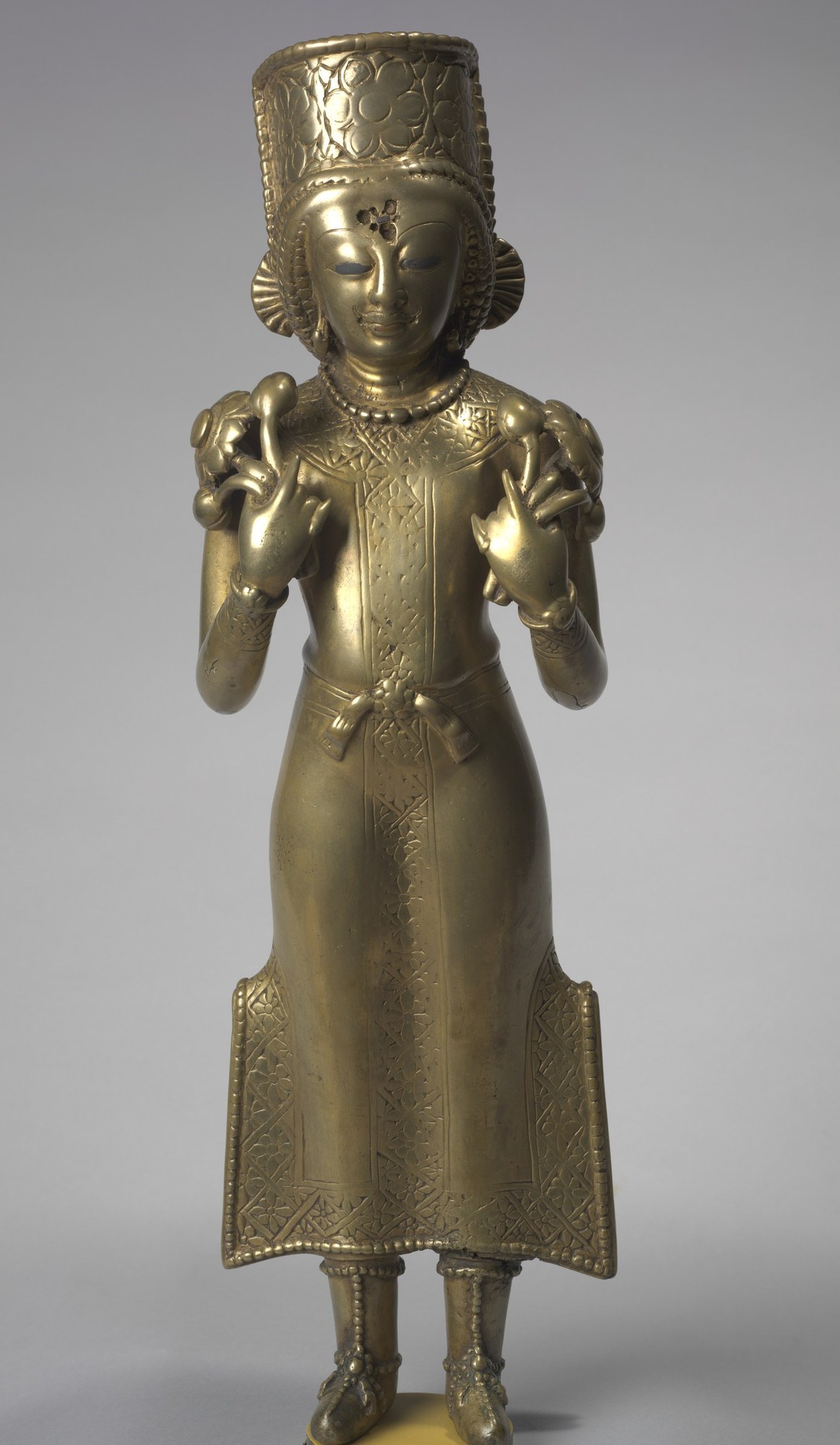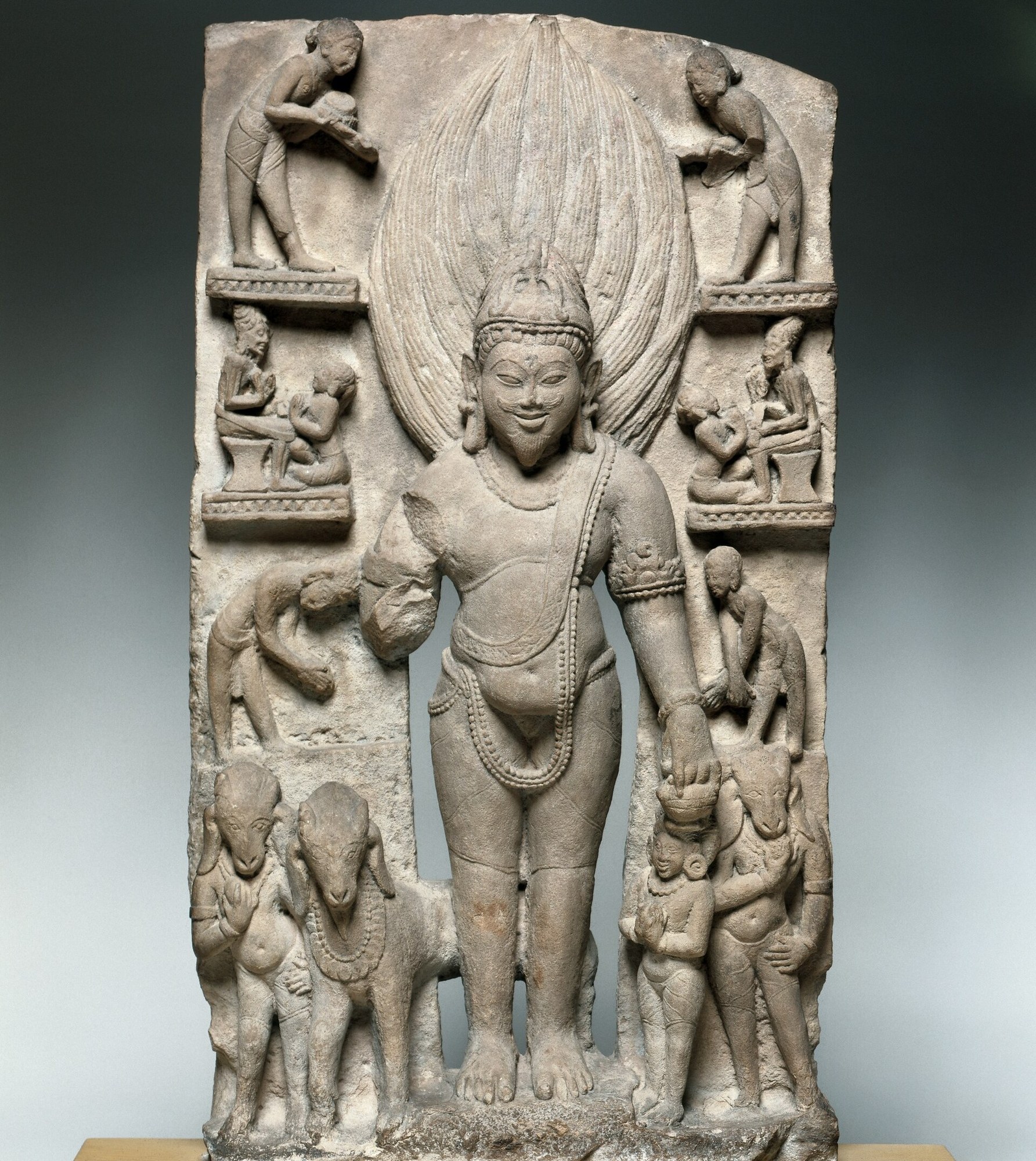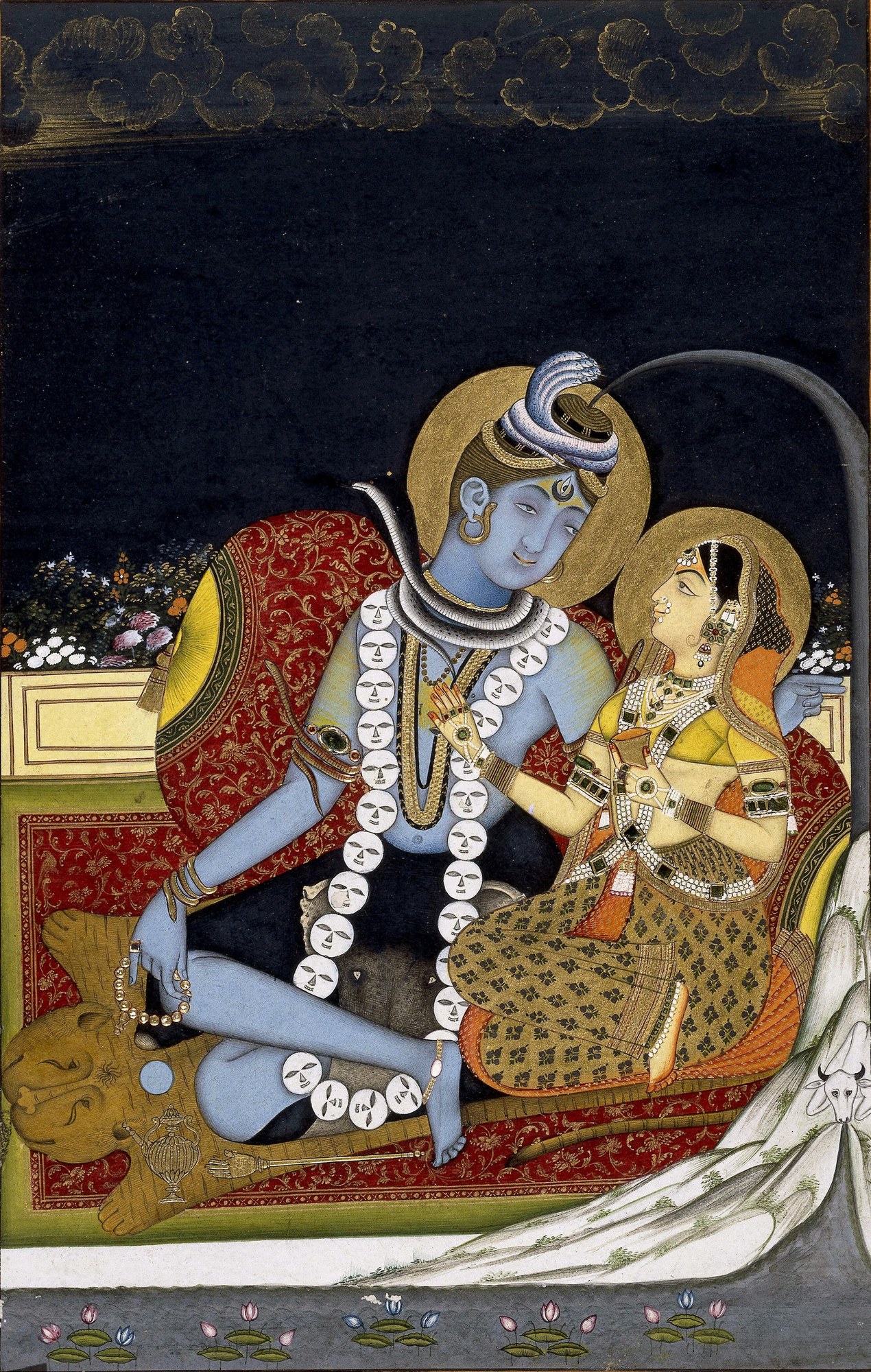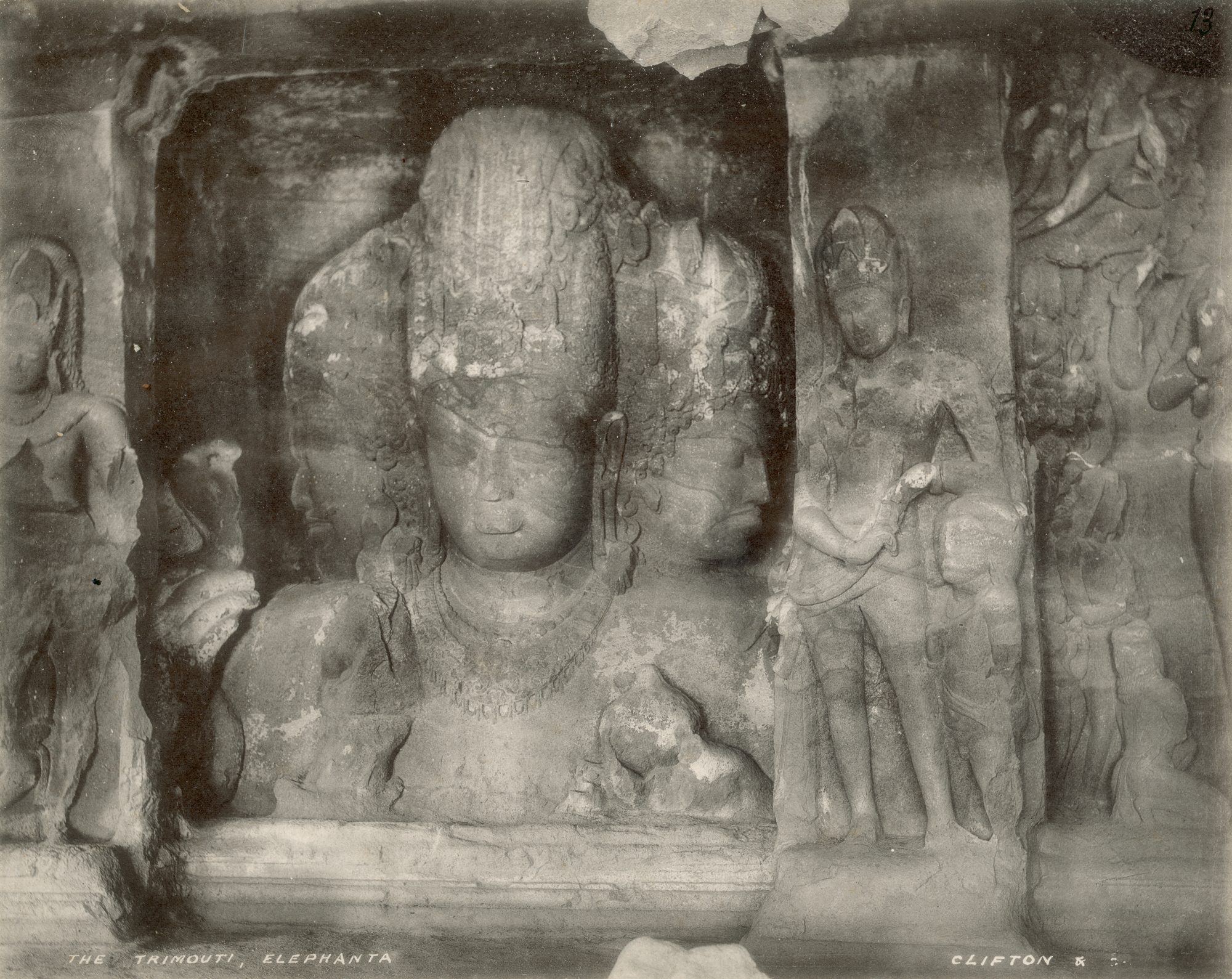
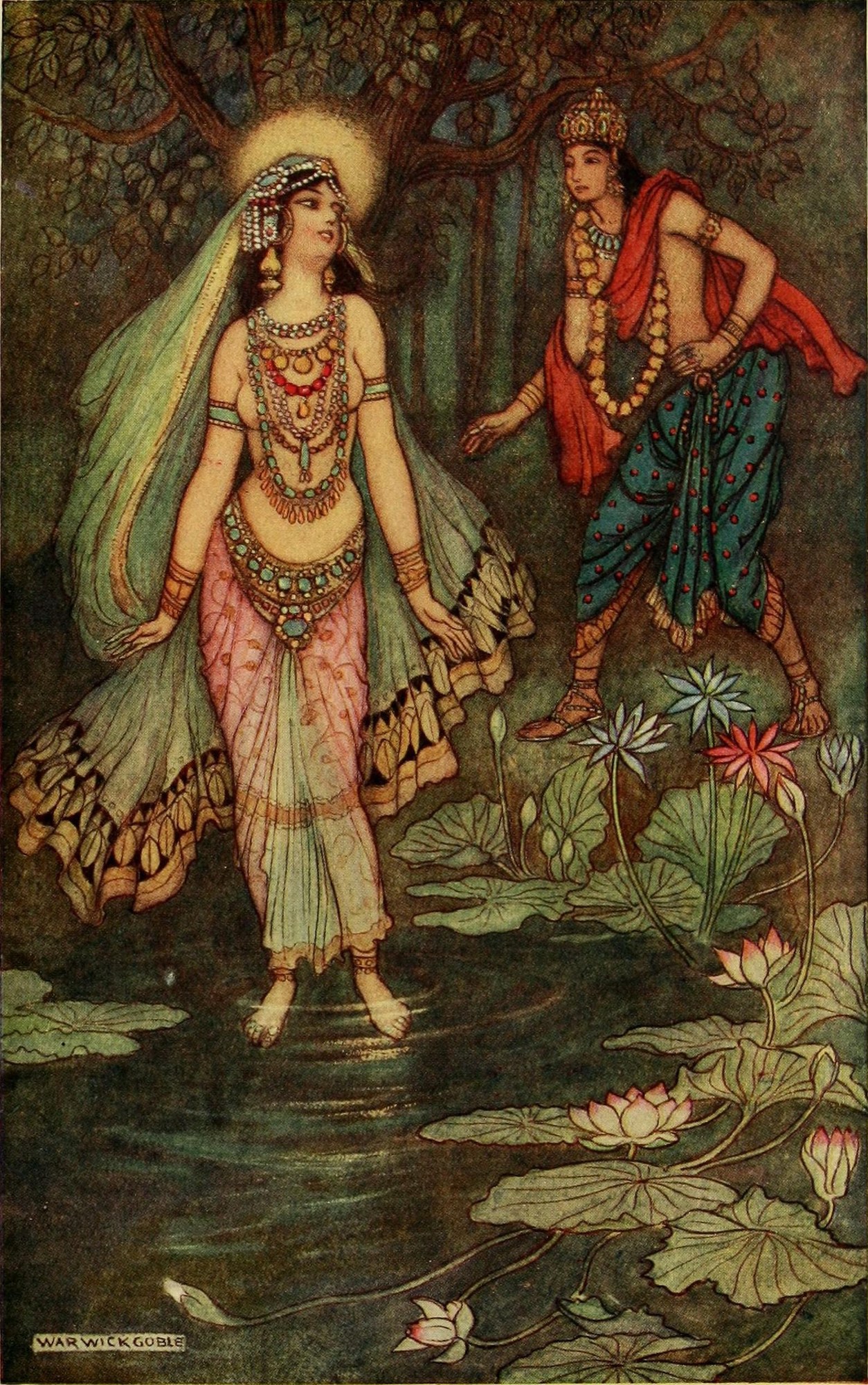
She is a river you can drown in and a woman you can marry, and the oldest texts see no contradiction in that. Called the Queen of rivers, she takes at will the form of a beautiful female rising from the waters,
steps out of her own current onto the bank, speaks, weds a king, bears him children, and walks back into the flood. To the priests who sang of her she was never a symbol for a river. She was the river, and the river was a goddess, and the water that a pilgrim cups at a ford in the plains is the same being who rises, in another telling, out of the nail of a god’s foot far above the sky.
Water out of the foot of a god
The account of where she begins comes from a different age and school than the epic that tells her marriage. The Vishṇu Purāṇa, a text of the first millennium of the common era and so centuries younger than the core of the Mahābhārata, gives her a source no cartographer could find: her source in the nail of the great toe of Vishṇu’s left foot.
From there she pours down through the third region of heaven, embrowned with the unguents of the nymphs of heaven, who have sported in her waters.
The pole-star receives her first. Dhruva sustains her day and night devoutly on his head,
and around him the seven sages of the sky sit at their austerities, wreathing their braided locks with her waves.
Even the moon takes light from her, its orb deriving augmented lustre from her contact
as she washes past and falls at last on the summit of Meru.
There she does not simply land and run. She encircles the city of Brahmā at the mountain’s crown and splits into four great rivers that flow to the four quarters of the world: the Sítá to the east, the Chakshu to the west, the Bhadrá to the north, and southward, toward the land of India, the Alakánandá.
It is this last branch, the Purāṇa is careful to say, that becomes the Ganges mortals know, the river that in a separate and famous story raised to heaven the sinful sons of Sagara, by washing their ashes.
That descent to earth is its own long tale, told elsewhere. What the cosmology fixes here is her rank: before she is ever an earthly river, she is a heavenly one, and the earthly Ganges is only her southern arm.
The name that saves at a hundred leagues
This sectarian, Vaiṣṇava framing carries a theology with it. To bathe in her, the Purāṇa promises, wipes out sin at once; her waters offered by sons to their dead ancestors yield a gratification rarely attainable,
and those intent on Kesava
who bathe in her win final liberation.
The claim reaches further still, past the need to touch her at all: those who, even at a distance of a hundred leagues, exclaim ‘Gaṅgā, Gaṅgā,’ atone for the sins committed during three previous lives.
The bare sound of her name, spoken far from any bank, is made to do the work of a lifetime’s penance. It belongs to the later, devotional stratum of her worship, not to the grimmer story the epic tells of what she did as a wife.
A celestial maiden on the bank
That story is the Mahābhārata’s, and it turns on a curse. In the court of Brahmā a king named Mahābhiṣa, who had bought his way to heaven with a thousand horse-sacrifices, watched Gaṅgā when the wind loosened her garments, white as the beams of the moon,
and while the gods bowed their heads he did not look away. Brahmā cursed him back to a mortal life and told him Gaṅgā too would be born among men and do him injuries. He returned to earth as King ŚantanuA Kuru king of Hastināpura, in the Mahābhārata the reincarnation of a cursed earlier king, who takes Gaṅgā as his wife. of the Kurus.
On her own way down Gaṅgā met the eight VasusA class of eight Hindu deities of the elements and heavens; in this Mahābhārata episode all eight are cursed to be born as mortal men., gods of the elements who had been cursed by the sage Vasiṣṭha to be born as men. One of them, Dyaus, had stolen the sage’s wish-granting cow Nandinī to please his wife; for that theft all eight were condemned to the humiliation of human birth. They begged the goddess to become their mother and to spare them the long human years: throw thy children, as they are born, into the water,
they asked, so that each might be released the moment he was born. She agreed, on the condition that one son be permitted to live. That surviving son, they granted, would be childless.
So when Gaṅgā came to the bank as a celestial maiden
and Śantanu, entranced, asked her to be his wife, she consented to only one term, and it was a strange one: he must never question anything she did, never speak to her an unkind word, or she would leave him at once. Seven times she bore him a child, and seven times she carried the newborn to the river and let it slip under, saying only, This is for thy good.
The king held his tongue, terrified of losing her, and watched his sons sink to rise no more.
Slay it not
At the eighth child the silence broke. Śantanu cried out, Slay it not! Murderess of thy sons!
and with the words the bargain ended. She turned on him the truth he had never dared to ask for. I am Ganga the daughter of Janhu,
she told him, and explained the whole hidden mechanism: the eight Vasus, the curse, the mercy of the drowning that had freed seven of them back to heaven. The eighth, the thief Dyaus, was the one condemned to stay, and this one she would keep and rear. She took the child and vanished into the water with him.
Years later Śantanu found his river gone strangely shallow, its flow dammed by the celestial arrows of a youth who stood in the current like Indra himself.
Gaṅgā rose again to give the boy back, grown now, schooled in the Vedas and in arms, and handed him over decked in ornaments
for his father to name heir. This was BhīṣmaThe eighth son of Gaṅgā and Śantanu, the one child she rears rather than drowns; a central figure of the later Mahābhārata war., the one son of the drowning who lived, and the childlessness the Vasus laid on him would shape the whole tragedy of the epic that follows.
Daughter of two fathers
Who her own father was, the tradition cannot quite agree, and it is honest to leave the disagreement standing. In the epic she calls herself Jāhnavī, the daughter of the sage Jahnu, a name she earns in the descent story told separately. In the Puranic genealogy, reported in Wilson’s note, she is instead the elder daughter of the mountain-king Himavat and his wife Mena, and so the sister of Pārvatī.
Hindu usage does not treat these as rivals so much as different truths from different textual layers, a river being daughter to a sage by one line of story and to a mountain by another. What every layer agrees on is her shape: three-coursed, running at once through heaven, earth, and the world below, a single being worshipped as water and remembered as a mother who drowned her sons to set them free.
This is for thy good. (Mahābhārata, Ādi Parva, Sambhava Parva §XCVIII, tr. Kisari Mohan Ganguli)
- Vyāsa, Mahābhārata, Ādi Parva (Book 1), Sambhava Parva, Sections XCVI–C (Kisari Mohan Ganguli, trans., for the P. C. Roy edition; of an epic conventionally dated c. 400 BCE–400 CE)the whole Gaṅgā-and-Śantanu story read verbatim — Mahābhiṣa’s staring in Brahmā’s court and Brahmā’s curse; the eight Vasus meeting the goddess and the drowning bargain; Dyaus’s theft of the cow Nandinī at his wife’s urging and Vasiṣṭha’s curse; Gaṅgā’s single marriage-condition to Śantanu; the seven drowned sons and the words
This is for thy good
; the eighth-child crySlay it not! Murderess of thy sons!
; her self-naming asthe daughter of Janhu
; and the shallow-river reunion at which she returns the grown Bhīṣma. - Vishṇu Purāṇa, Book II, chapters 2 and 8 (H. H. Wilson, trans., 1840; of a Purāṇa of the 1st millennium CE, several centuries to roughly a thousand years later than the epic core, and Vaiṣṇava in its framing)read verbatim for her source at
the nail of the great toe of Vishṇu’s left foot
; Dhruva bearing her and the seven sages wreathing their locks; the moon brightened by her current; her fall on Meru, the encircling of Brahmā’s city, and the division into the four rivers Sítá, Alakánandá, Chakshu, and Bhadrá (II.2); the identification of the earthly Ganges with the Alakánandá branch that washed the ashes of Sagara’s sons; and the salvific theology, down to the name that atoneseven at a distance of a hundred leagues
(II.8). - Variant traditions. Gaṅgā’s parentage is double-layered and is not merged here. The Mahābhārata styles her Jāhnavī,
daughter of Jahnu
; the Purāṇic genealogy reported in Wilson’s editorial note makes her daughter of Himavat and Mena and sister of Pārvatī (the Haimavatī descent), a footnote drawing on the Vāyu/Vishṇu genealogies rather than the Vishṇu Purāṇa main text, and so labelled. The popular image of Śiva catching the river in his hair belongs to the earthly descent-quest, told separately; the Vishṇu Purāṇa (Wilson’s note 27) assigns the hair-borne river to the earthly Alakánandá only, and gives Dhruva, not Śiva, as bearer of the celestial Gaṅgā. The goddess’s makara (crocodile) mount, a standard attribute in sculpture, is not in either text read here and is omitted.