HomeArchiveThemesAbout

#Love

Eros, marriage, desire, devotion, and its costs.

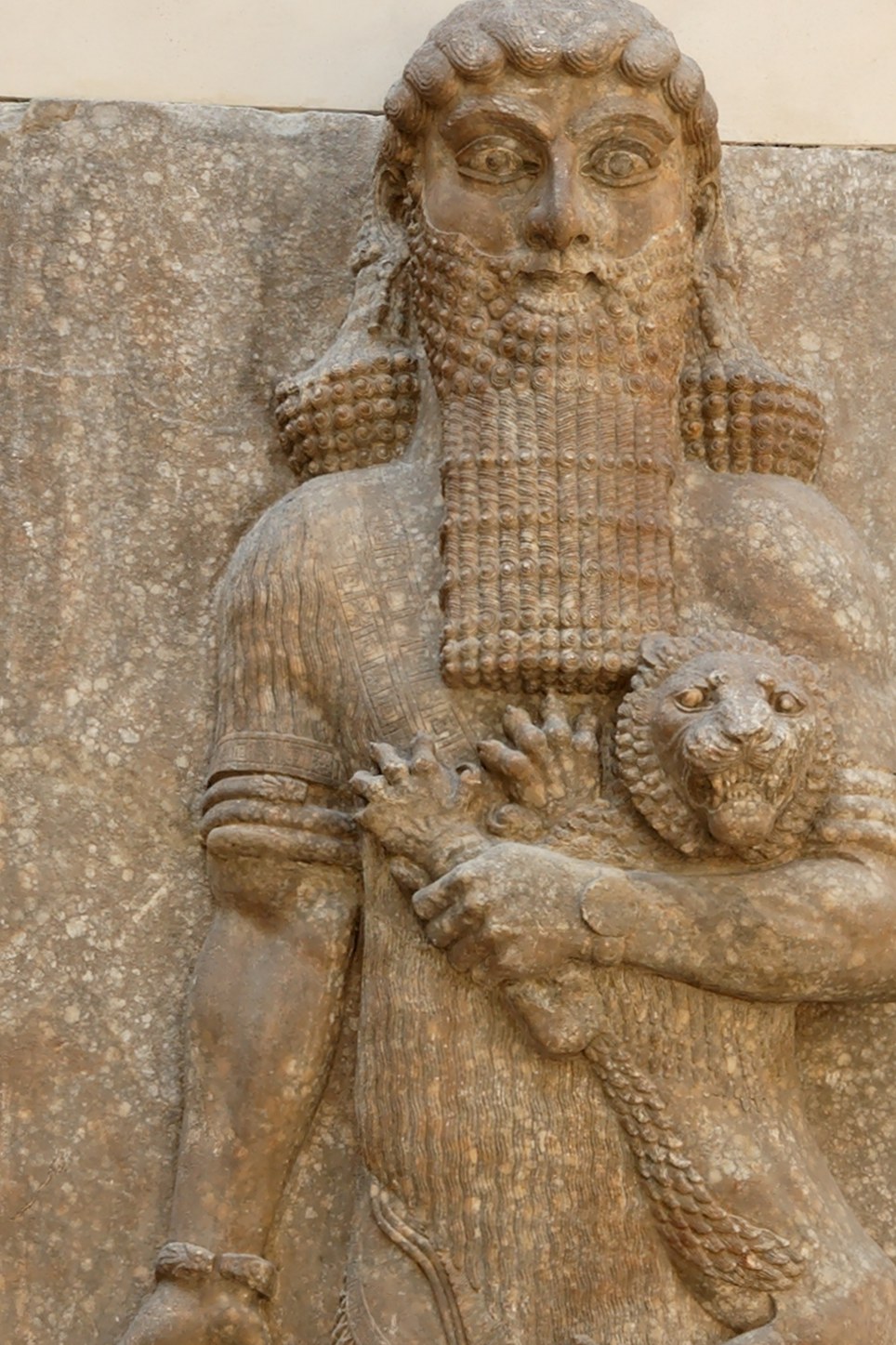
Neo-Assyrian stone relief: a colossal bearded male figure with elaborately curled hair and a long tiered beard stands frontally, cradling a small lion against his chest with his left arm while a coiled object (read as a serpent) hangs from his lowered right hand; carved gypsum-alabaster from a palace façade.
Mesop.

Gilgamesh and Enkidu

A king who let no bride reach her wedding bed, and the wild man the gods made out of clay to break him: how the two who first tried to kill each other became the one bond in the oldest story we have.
6 min*The Epic of Gilgamesh*
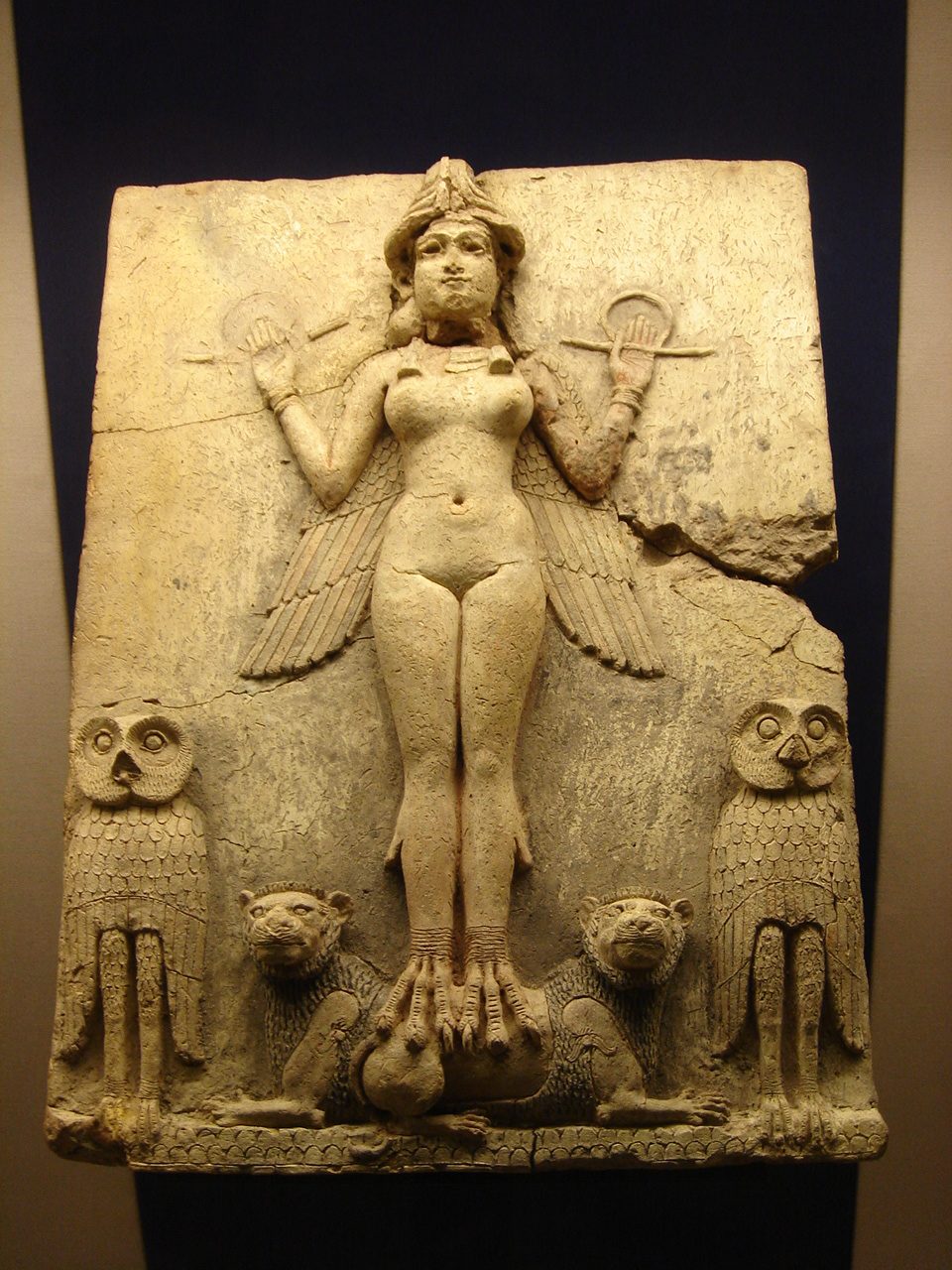
Old Babylonian terracotta relief plaque: a frontal nude winged goddess with a horned crown and bird talons for feet, holding a rod-and-ring measuring emblem in each raised hand, standing on the backs of two recumbent lions and flanked by a pair of upright owls, over a scale-patterned mountain register.
Mesop.

Inanna-Ishtar, Queen of Heaven

Goddess of desire and of war in a single body, the morning star who walked down alive into the land of no return: boldest of the great gods, and the most dangerous to love.
7 min*Inana's Descent to the Nether World*
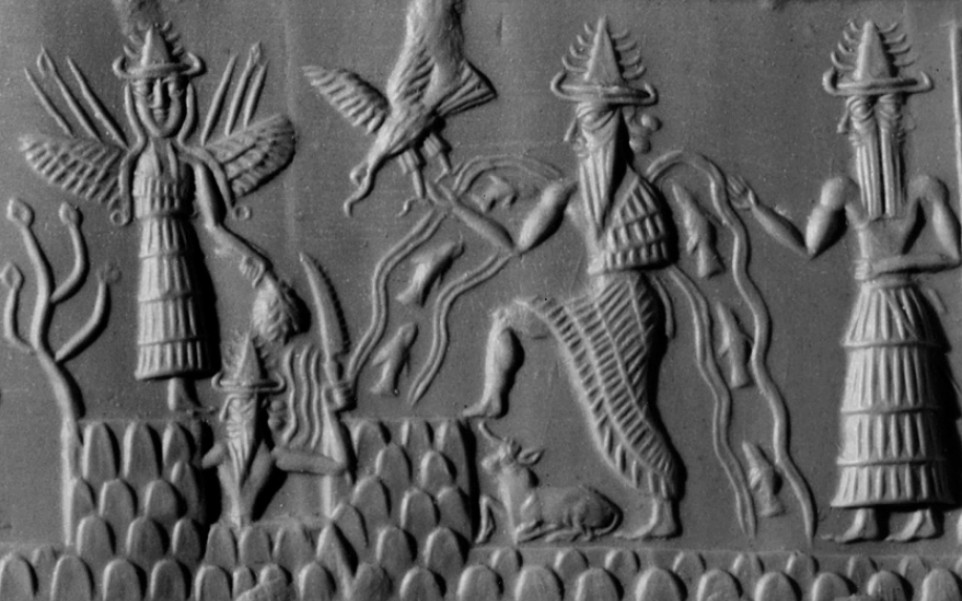
Rolled-out impression of an Akkadian cylinder seal: a file of standing deities identified by their many-horned crowns — the winged goddess Ishtar at left, the sun-god Shamash rising through the mountains at centre, and at right the god Ea (Enki), lord of the sweet-water deep, with streams of water and fish flowing from his shoulders, his two-faced vizier Usimu beside him.
Mesop.

Apsu and Tiamat: The Sweet Water and the Salt Sea

Before heaven had a name there were two waters, and they mingled. Everything that followed, the gods, the quarrel, the war that split a body into a sky, began in that first commingling of the fresh and the salt.
6 minEnūma Eliš
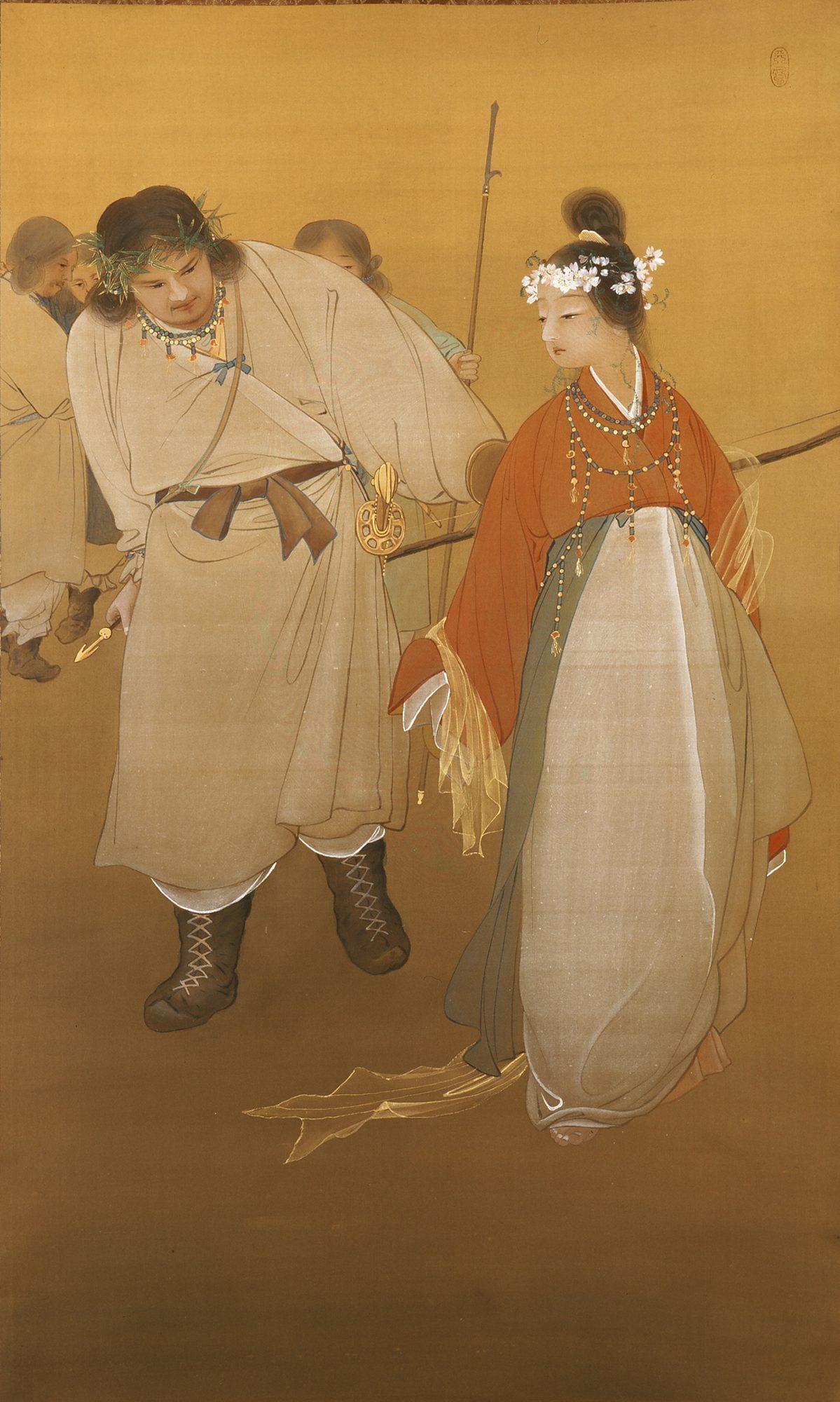
Japanese silk painting of Ninigi-no-Mikoto, the heavenly grandchild, striding in a pale robe with a leafy crown, jewelled necklaces and a gold-fitted sword, beside the blossom-princess Konohana-sakuya-hime, who is crowned with cherry blossom and robed in vermilion over pale green; attendants follow softly behind against a gold ground.
Japanese

The Descent of Ninigi

The sun-goddess hands her newborn grandson a mirror and tells him to reverence it as her own spirit, then sends him down the Floating Bridge of Heaven to rule the earth: how the imperial line came down from the sky, and why its rulers die like flowers.
7 minKojiki
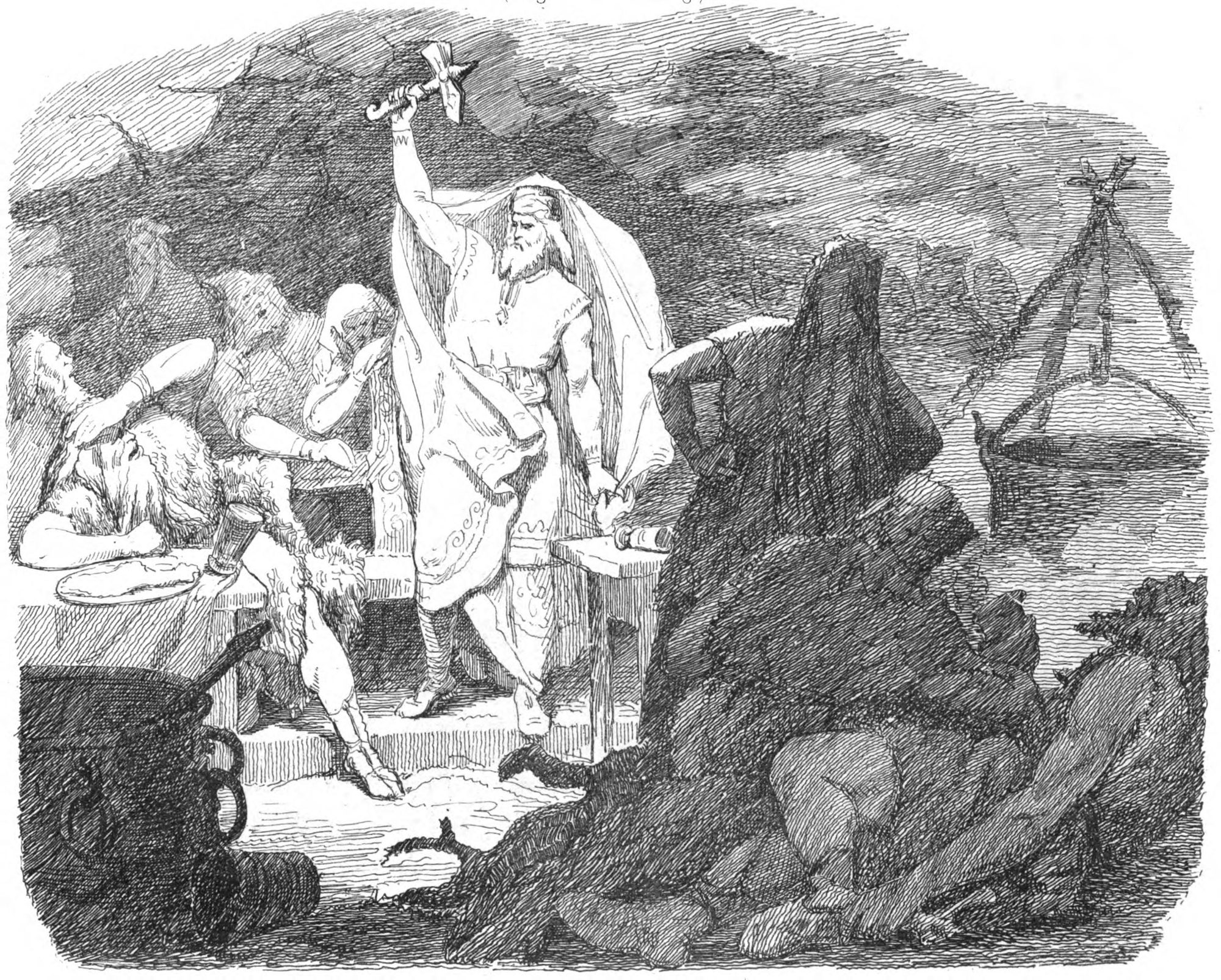
A lithograph of Thor regaining his hammer: at the forced wedding the god seizes Mjöllnir from the giant Thrym, the bride's veil still about him, Loki at his side.
Norse

The Theft of Mjöllnir

A giant buries the thunder-god's hammer eight leagues down and names his ransom: the goddess Freyja for his bride. So the strongest of the gods is bound into a bridal veil and sent to a wedding he means to end with a killing.
6 minPoetic Edda
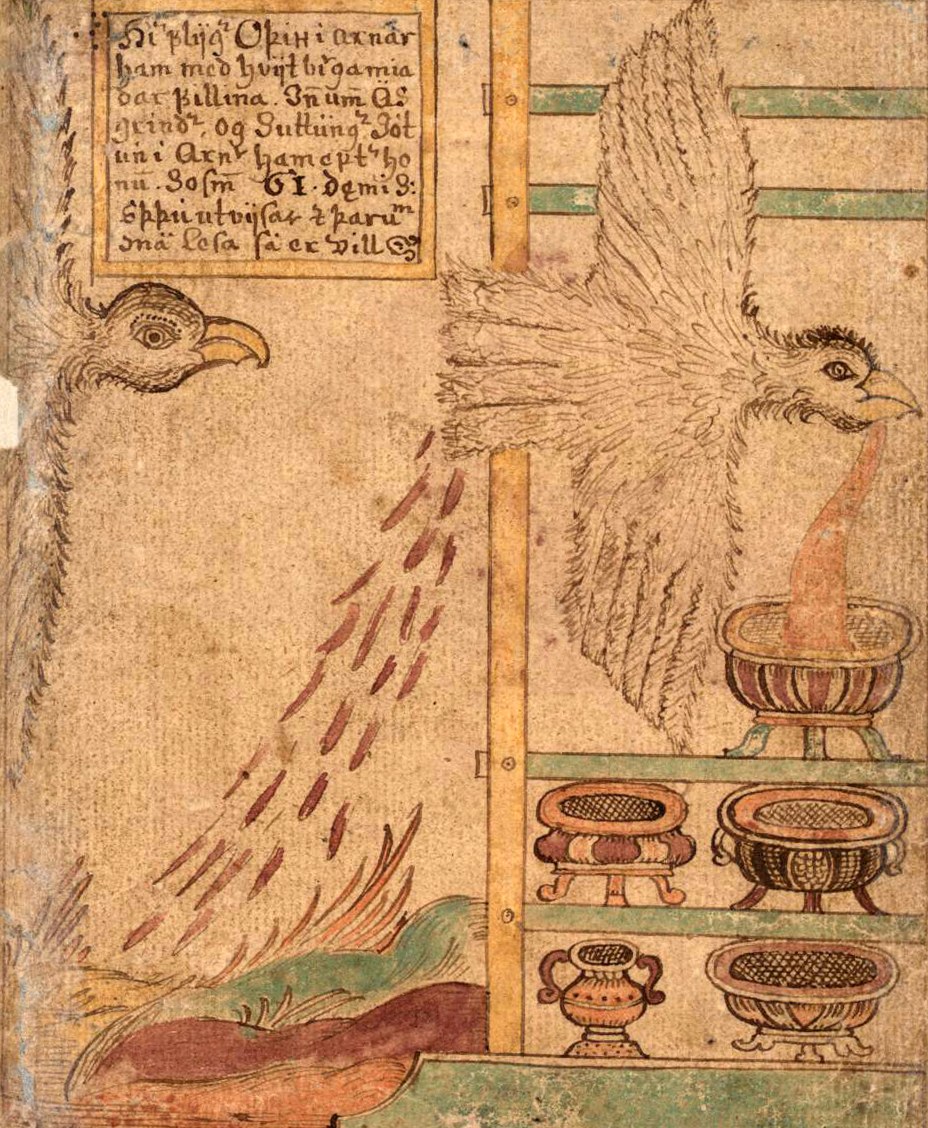
Icelandic Edda-manuscript illustration: Odin, in the shape of a great winged eagle, spews the stolen Mead of Poetry down into three ritual vessels ranged on a wooden frame, while the giant Suttung — also in eagle-shape — pursues at upper left and a stream of the escaped mead falls away below; a handwritten Icelandic caption box sits at top-left.
Norse

The Mead of Poetry

How poetry got into the world: a murdered sage, a mead brewed from his blood, and the god who slept three nights with a giant's daughter to steal it, then left her to grief.
6 minSnorri Sturluson
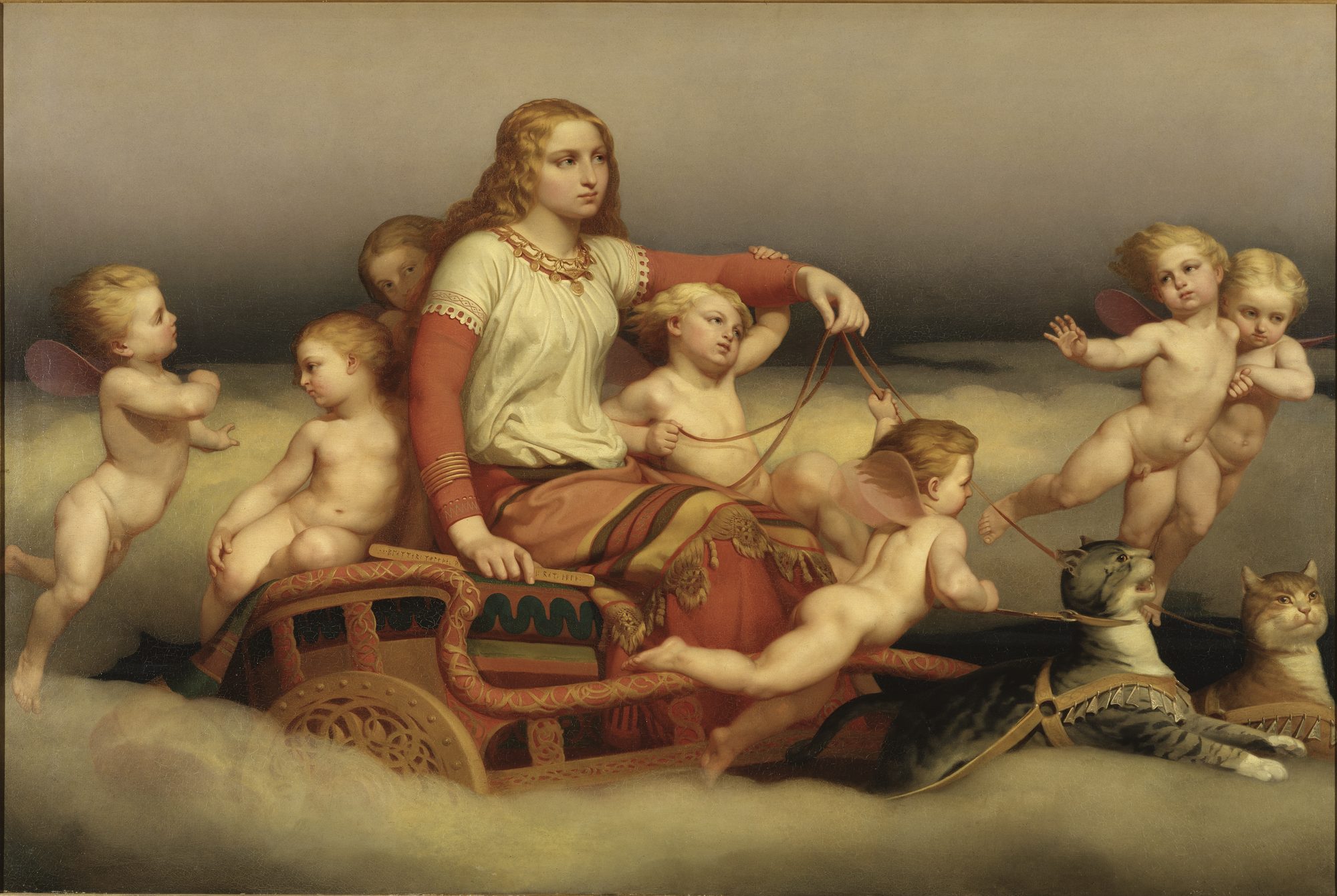
An oil painting of the goddess Freyja walking through a twilight landscape, helmeted and cloaked, her golden necklace at her throat, searching for her vanished husband.
Norse

Freyja of the Vanir

She rides to the battlefield in a chariot drawn by cats and carries home half the slain, weeps red gold for a husband who wandered off, and is the goddess men pray to when they are in love: the strangest and most renowned of the Norse goddesses.
6 minSnorri Sturluson
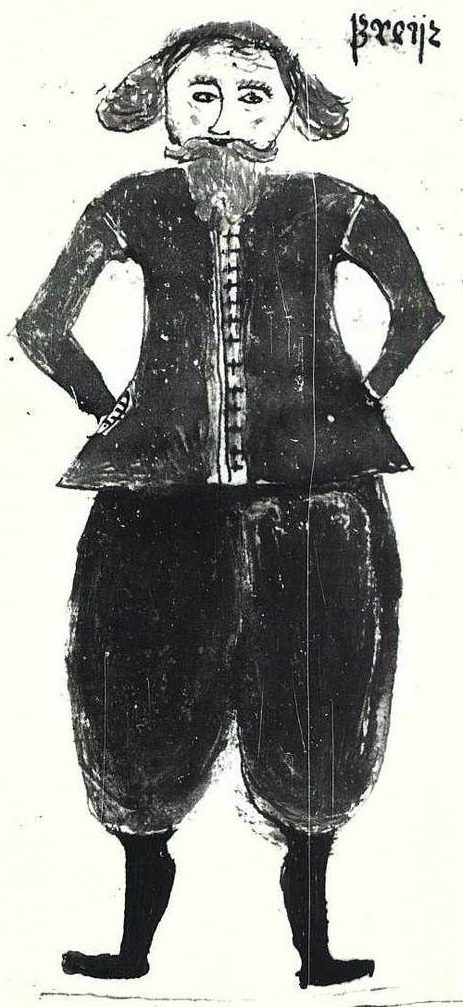
A naïve 17th-century Icelandic manuscript drawing of the Norse god Freyr as a bearded, long-haired man standing frontally with his hands on his hips, wearing a buttoned dark tunic, wide breeches and boots, his name "Freir" inscribed in the upper-right corner.
Norse

Freyr, Lord of Plenty

He climbed into a seat that was not his, looked out over all the worlds, and fell so hard for a giant's daughter that he gave away the one sword that could have saved him: the Vanir god of the fruitful season, lord of the elves, and the most renowned of the gods you called on for peace.
6 minPoetic Edda
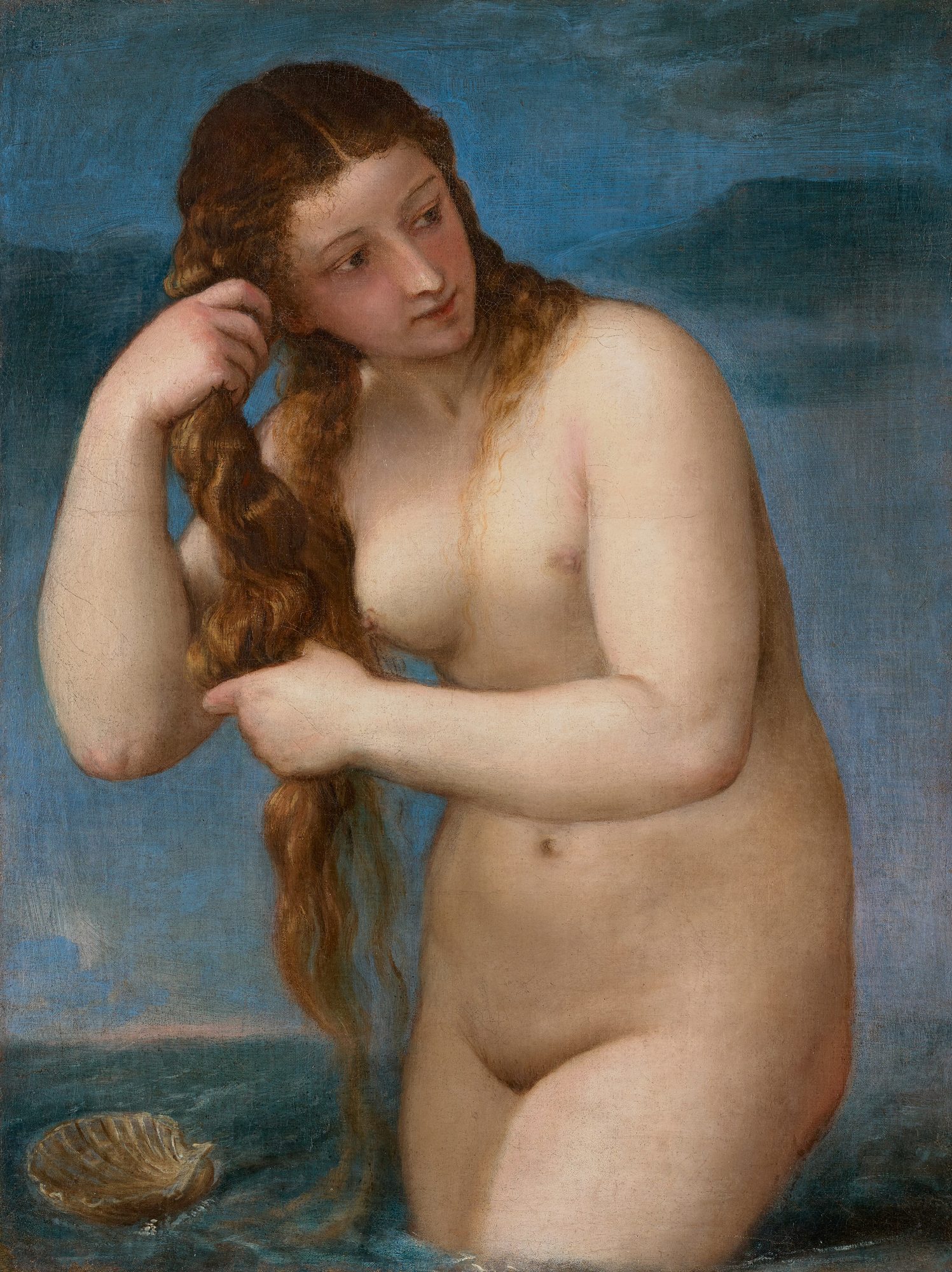
A nude Aphrodite risen waist-deep from a grey-blue sea, wringing the water from the long rope of her hair as she looks aside, a scallop shell adrift on the swell beside her.
Greek

Aphrodite, Goddess of Love

Born from sea-foam and the severed flesh of Heaven, the goddess whose power bent gods and beasts alike, and whom only three could resist.
5 minHesiod
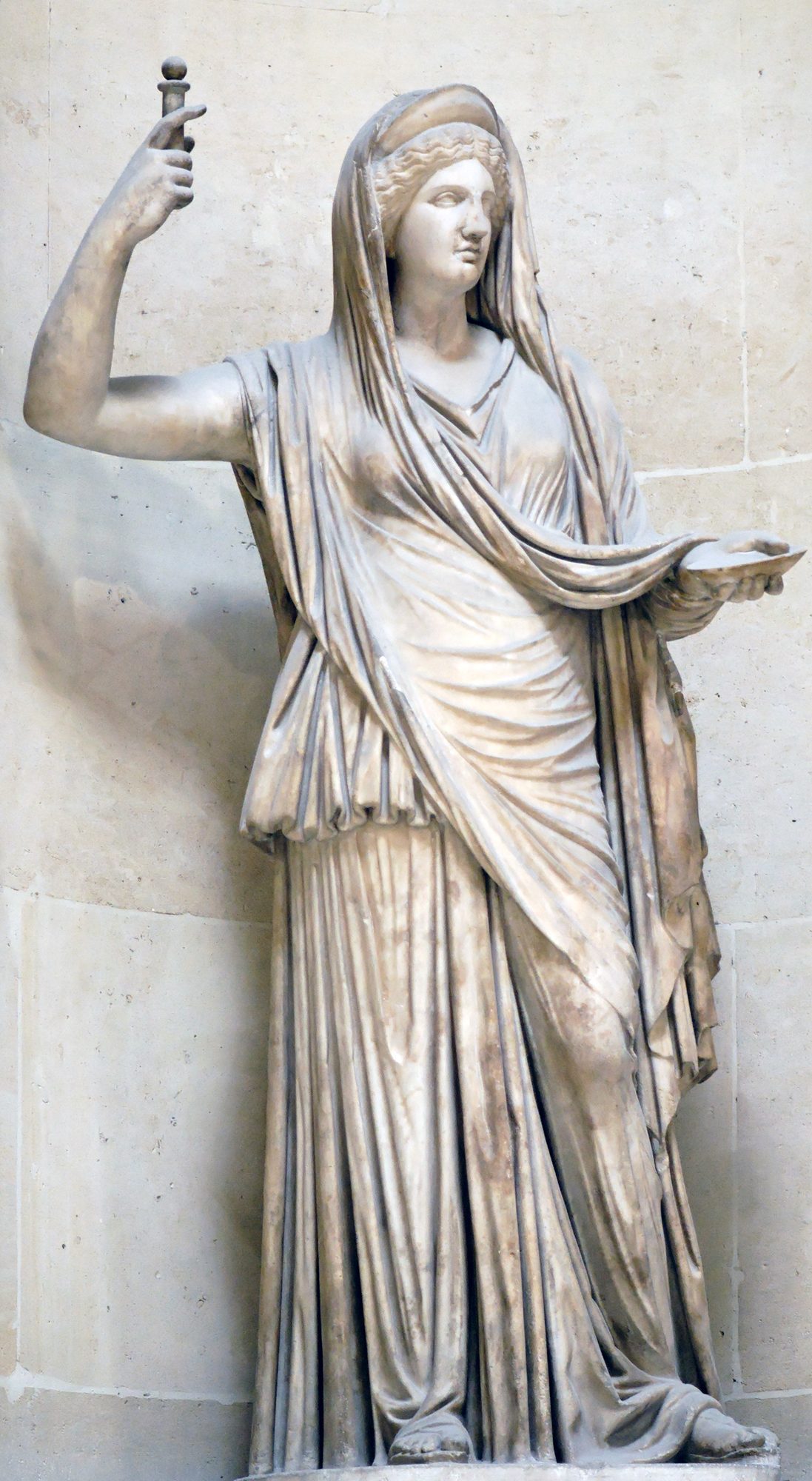
Marble statue of Hera as queen, standing veiled in a long chiton and himation with a diadem band across her brow, her raised right hand holding a sceptre and her extended left hand bearing a shallow offering dish.
Greek

Hera, Queen of Olympus

The goddess of marriage who ruled beside Zeus and warred against him in the same breath, dressing for seduction as a strategy of state.
6 minHomer
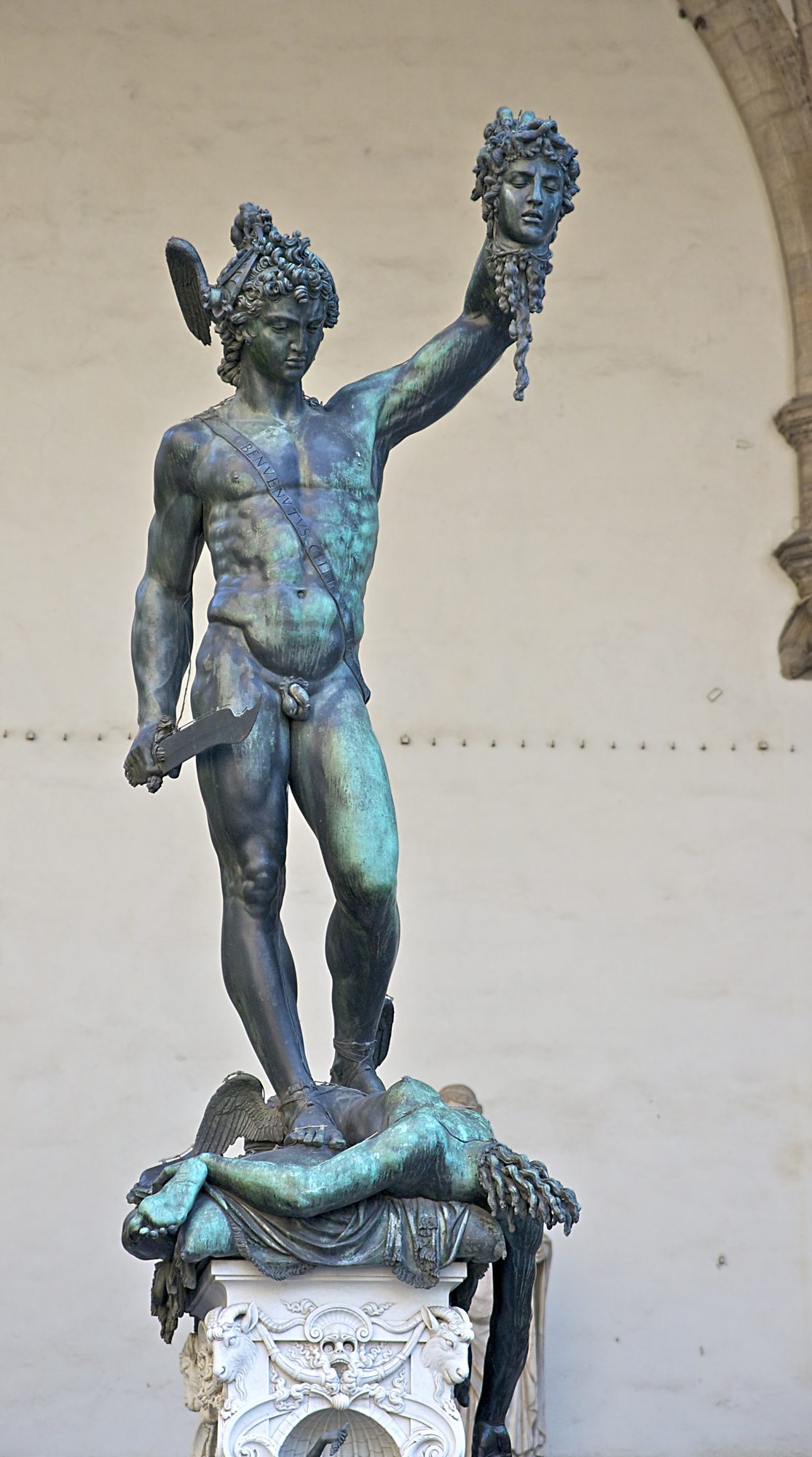
A nude young hero in a winged cap holds aloft the severed, snake-haired head of Medusa in his raised left hand and a curved sickle in his lowered right, his own gaze cast down and away from the trophy; the Gorgon's decapitated body slumps beneath his feet on an ornate pedestal against a plain pale wall — Benvenuto Cellini's bronze Perseus with the Head of Medusa in the Loggia dei Lanzi, Florence.
Greek

Perseus, Slayer of Medusa

Locked in a bronze cell, cast to sea in a chest, sent for a head no man could look at and live. The hero who won by never looking, and killed his grandfather by accident.
6 minPseudo-Apollodorus
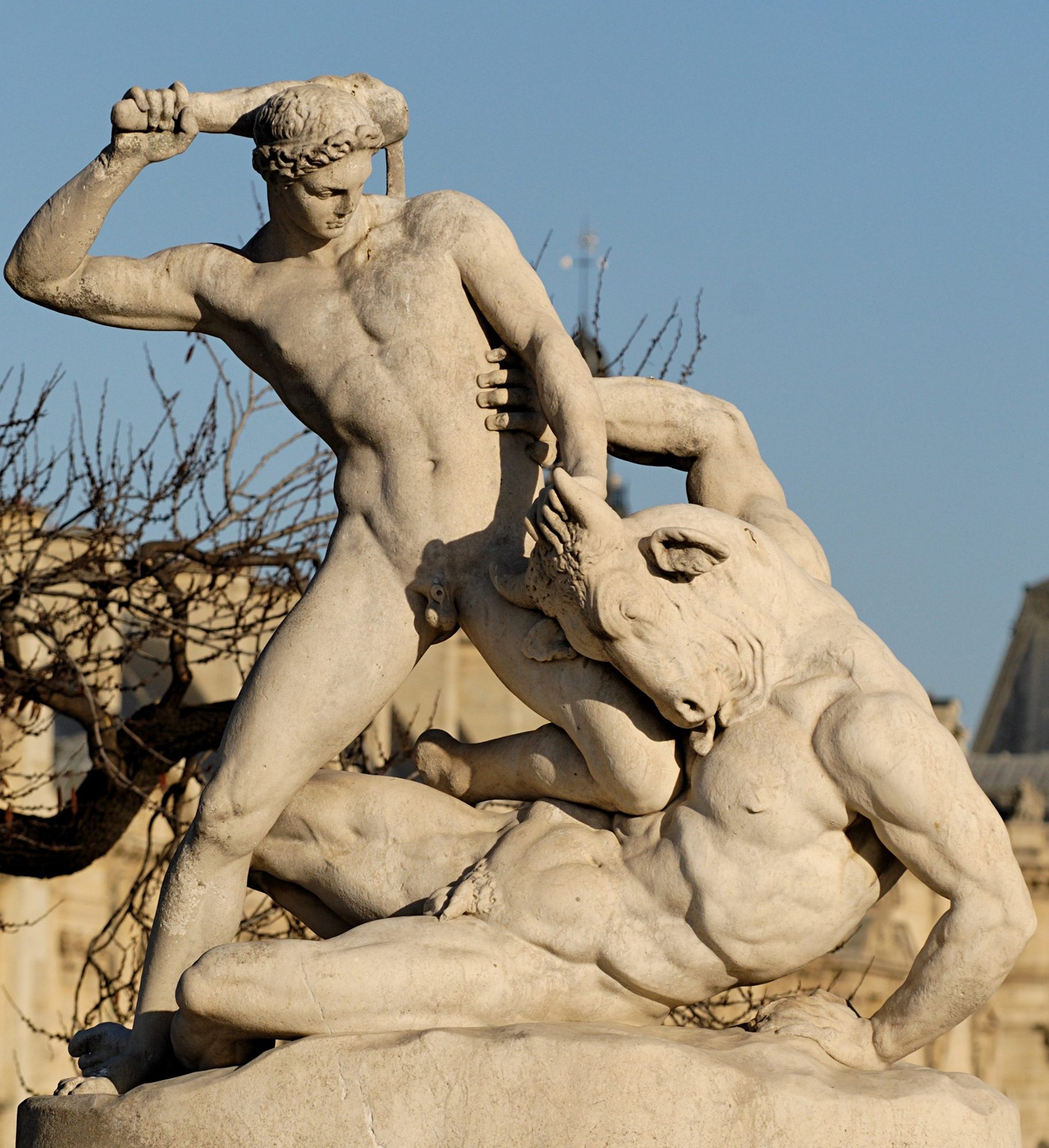
A white marble statue of a nude, laurel-crowned Theseus lunging forward with a club raised overhead in one hand, gripping the horned head of the bull-headed Minotaur with the other as the beast collapses beneath him over a fallen youth, set against a soft-focus ground of bare trees and pale stonework.
Greek

Theseus, Hero of Athens

A prince who chose the killers' road, unwound a thread through the dark to end a monster, and forgot a single sail. The founder Athens made in its own image, remembered for what he built and what he abandoned.
6 minPlutarch
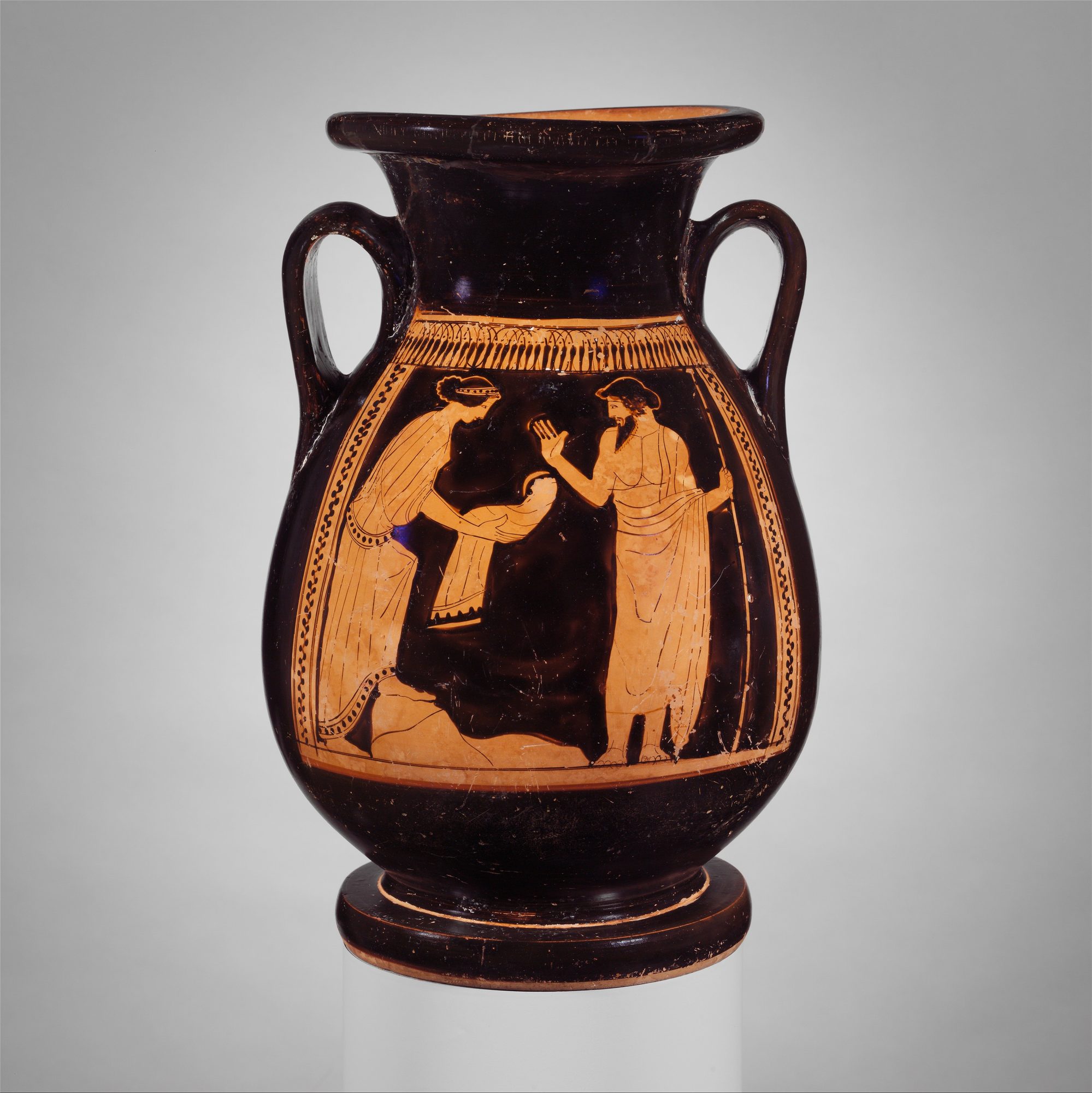
An Attic red-figure pelike, the whole black-glazed vessel standing against a plain grey ground, its belly panel bordered by a band of tongues above and running dot-chains at the sides. In the scene the Titaness Rhea, at left in a long pleated chiton and mantle with her hair bound in a fillet, steps forward and holds out in both hands the stone wrapped in swaddling clothes; facing her at right the bearded Kronos, in a himation that leaves one shoulder bare and a soft cap, grips a long sceptre in his trailing hand and raises his other hand to receive the bundle he believes is his newborn son — the swaddled-stone deception that founds the ruling family.
Greek

The Twelve Olympians: The Ruling Family

There is no ancient list of the Twelve. What the oldest poets give us instead is a household with a throne room, a swallowed generation, and a family quarrel that never quite ends.

7 minHesiod