HomeArchiveThemesAbout

Mesopotamian Mythology

The gods of Sumer and Babylon, the great flood, and the search for eternal life — told from the Epic of Gilgamesh, the Enūma Eliš, and the Descent of Inanna, with every claim kept honest to its source.

Gods & Figures

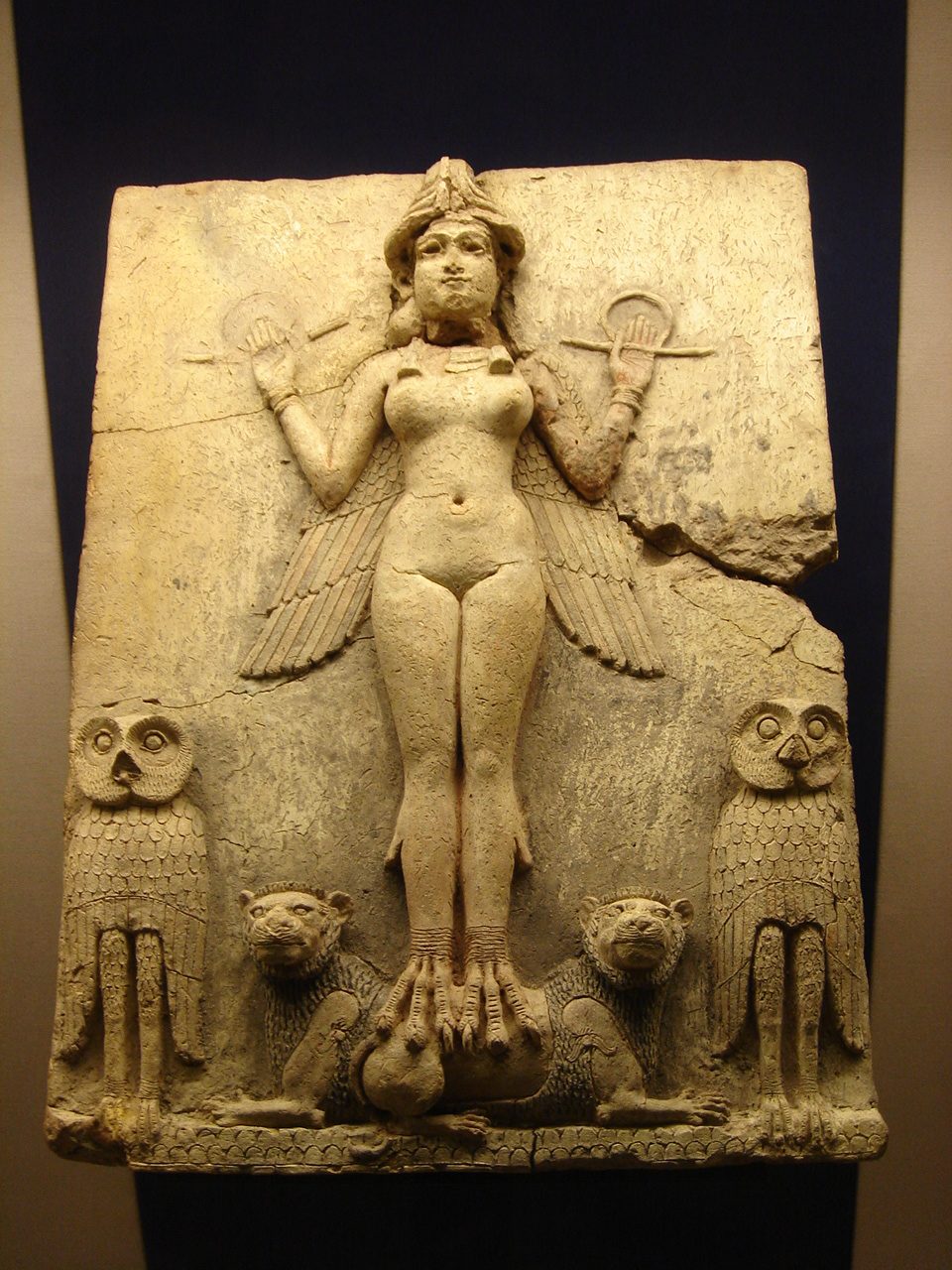
Old Babylonian terracotta relief plaque: a frontal nude winged goddess with a horned crown and bird talons for feet, holding a rod-and-ring measuring emblem in each raised hand, standing on the backs of two recumbent lions and flanked by a pair of upright owls, over a scale-patterned mountain register.
Mesop.

Inanna-Ishtar, Queen of Heaven

Goddess of desire and of war in a single body, the morning star who walked down alive into the land of no return: boldest of the great gods, and the most dangerous to love.
7 min*Inana's Descent to the Nether World*
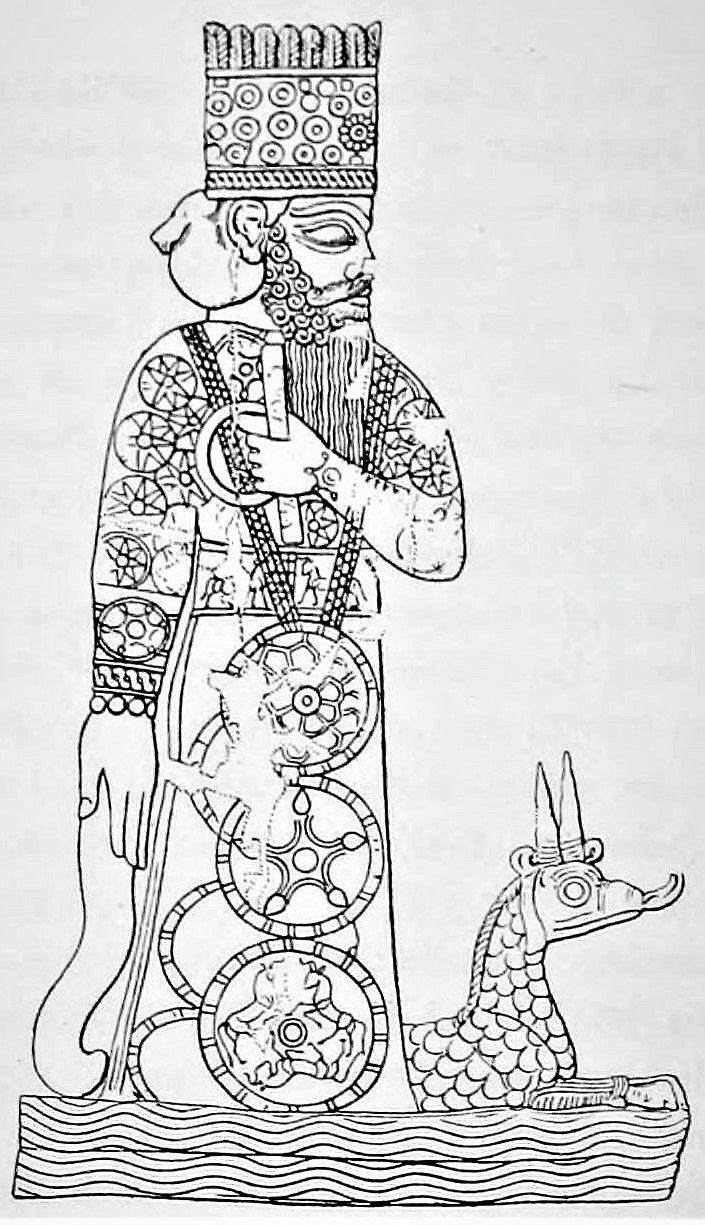
Line drawing of the Statue of Marduk: a bearded god in a tall crenellated horned crown and a long fringed robe covered in rosette-discs stands frontally, holding the ring-and-rod of kingship at his chest, while his scaled, horned snake-dragon (the mušḫuššu) crouches at his feet; both stand on a plinth of wavy lines — the split waters of the vanquished Tiamat.
Mesop.

Marduk, Champion of Babylon

The young storm-god who alone dared face the salt-water chaos, drove the winds down her throat and split her body into the sky, and traded a single victory for the kingship of all the gods.
6 min*Enūma Eliš*
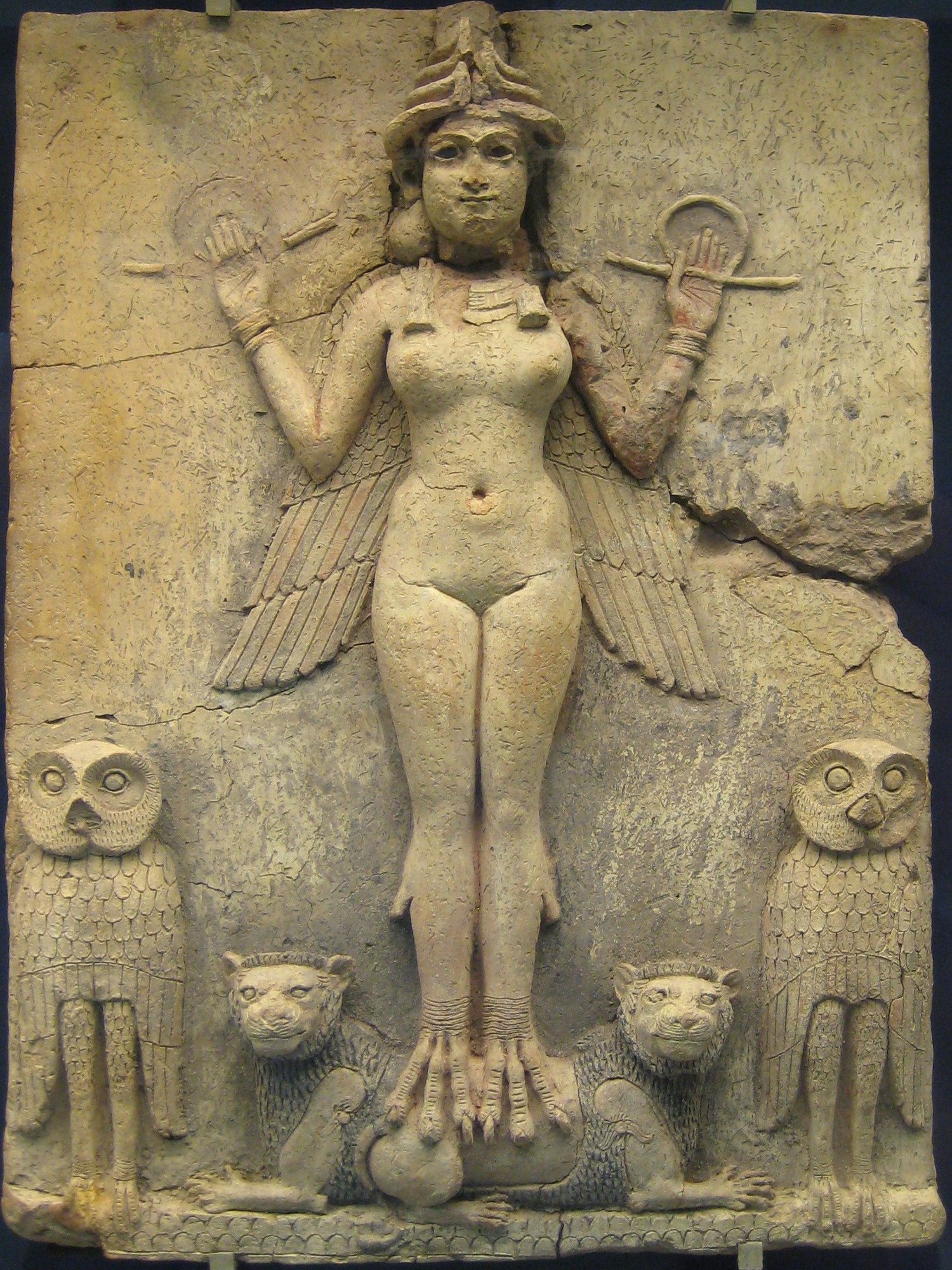
The Old Babylonian "Queen of the Night" terracotta relief: a winged nude goddess in a horned headdress, holding a rod-and-ring symbol in each raised hand, standing on the backs of two lions and flanked by two owls, with a scale-pattern mountain base below. The figure has been variously identified as Ishtar, Lilith, or Ereshkigal.
Mesop.

Ereshkigal: The Queen the Sources Kept Rewriting

A goddess so fearsome she was barely worshipped, married off to a different god in every century that told her tale, and finally borrowed by Greek sorcerers who never knew what her name once meant.
4 min*Nergal and Ereshkigal*
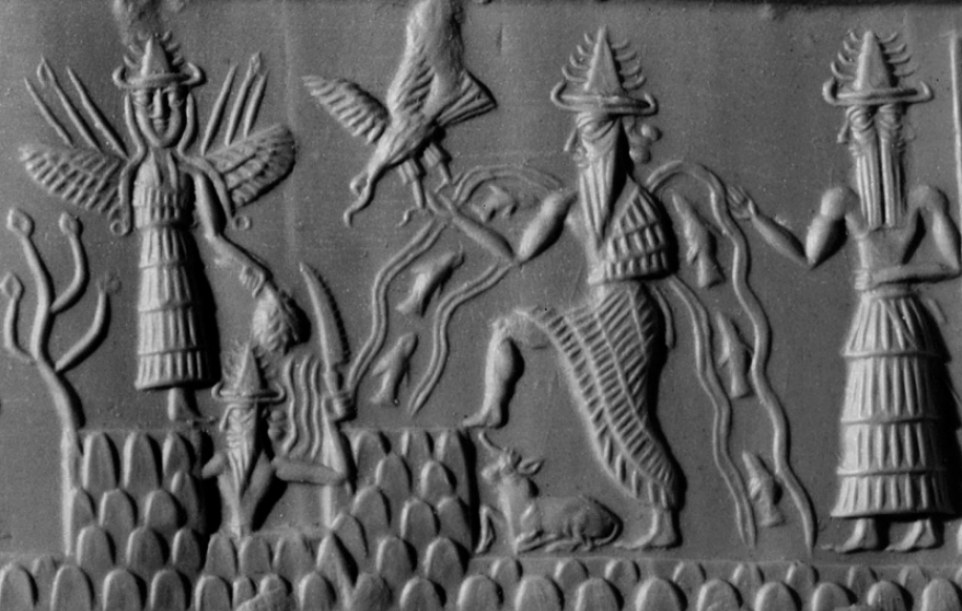
A modern grey clay impression rolled from an ancient Akkadian cylinder seal: four horned deities across a rolled-out frieze. At centre-right the water-god Ea (Sumerian Enki) strides forward with one foot raised on a mountain, two streams of water full of small fish flowing down from each shoulder; his two-faced vizier Usimu stands at the right edge, the winged goddess Ishtar at the far left, and the sun-god Shamash cuts through the mountains between them.
Mesop.

Apsu, the Sweet-Water Deep

The first being in the Babylonian cosmos was fresh water that did nothing but rest, until noise drove it to murder its own children. Then the poem killed it off the page.
6 minEnūma Eliš
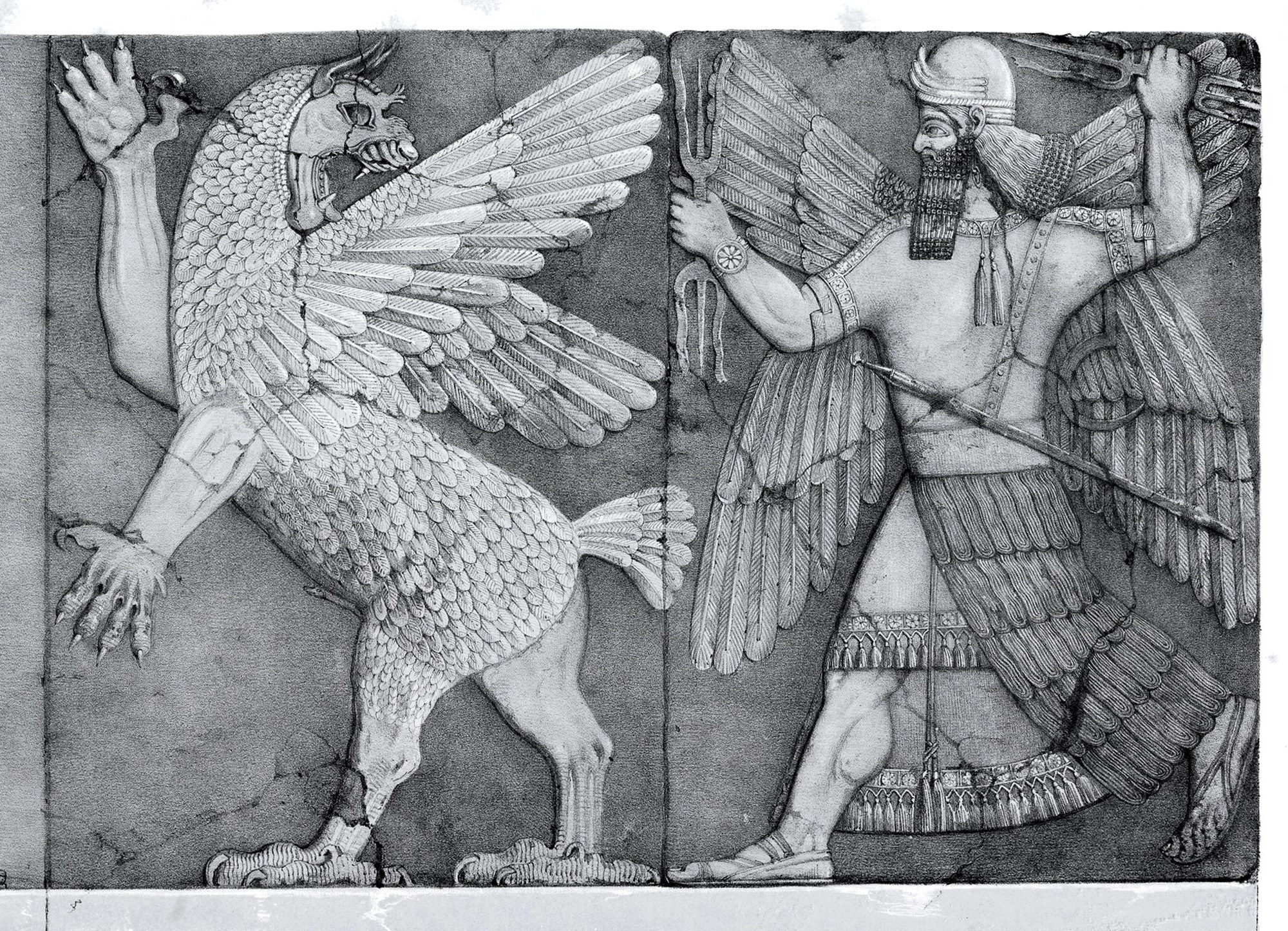
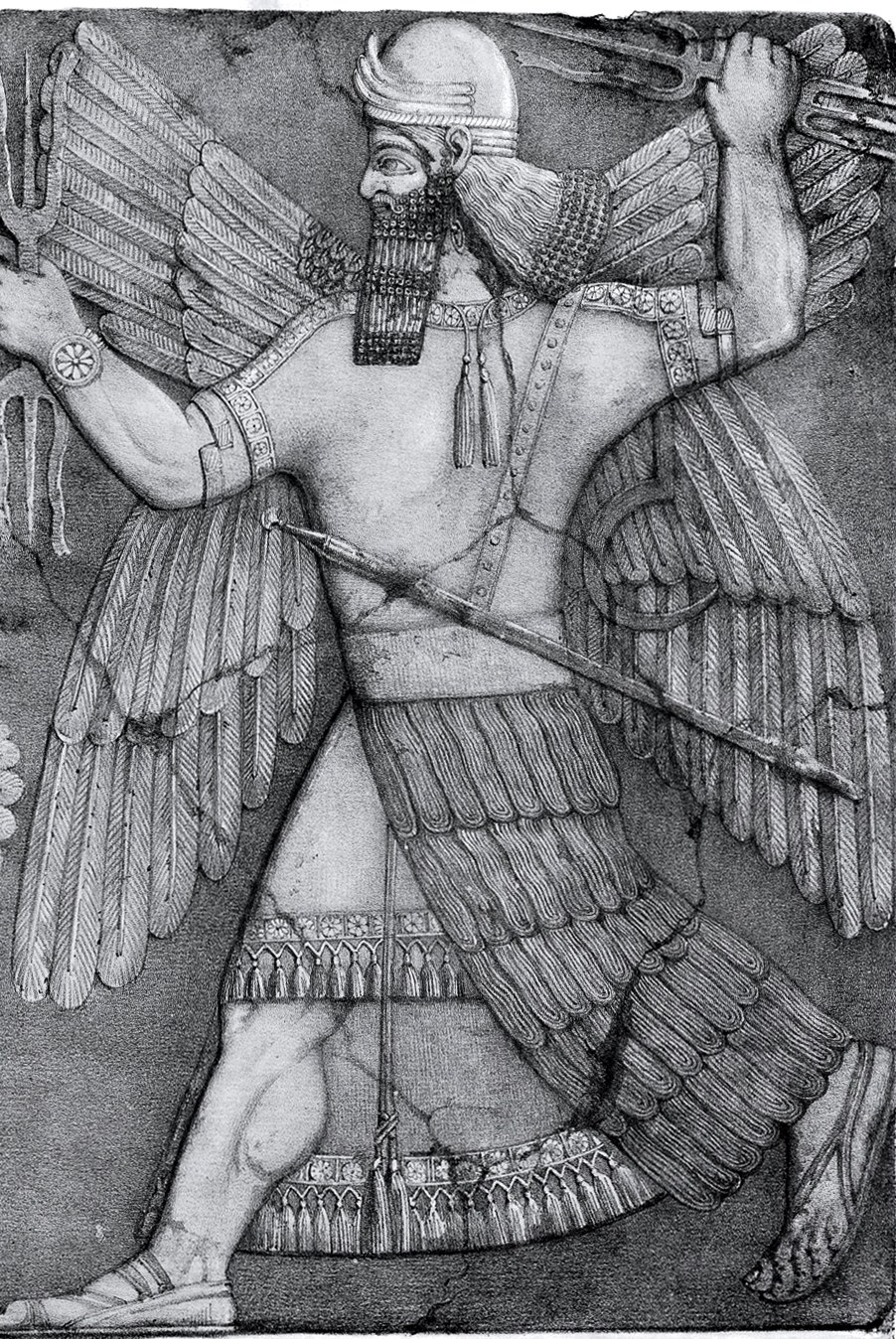
Neo-Assyrian carved stone relief: a four-winged, helmeted and bearded storm-god strides forward brandishing thunderbolts, the deity who in the tradition slays the chaos-monster Tiamat.
Mesop.

Tiamat, the Primeval Sea

She was the salt ocean before the ocean had a shore, the mother of every god, and the body a younger god would one day split open to roof the sky. This is Tiamat as a being: her names, her monstrous brood, and how her carcass became the world.
8 min*Enūma Eliš*

Story Retellings

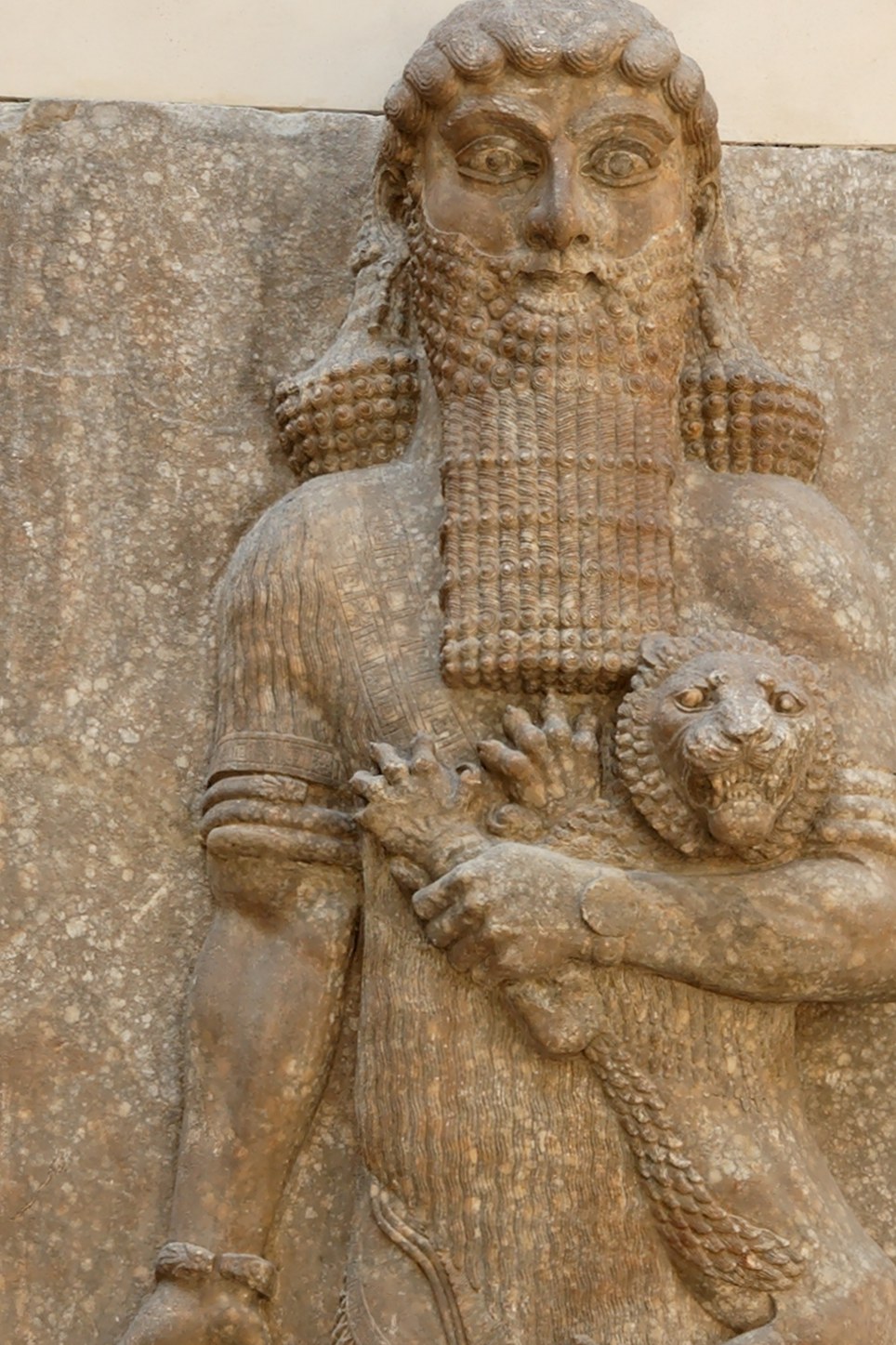
Neo-Assyrian stone relief: a colossal bearded male figure with elaborately curled hair and a long tiered beard stands frontally, cradling a small lion against his chest with his left arm while a coiled object (read as a serpent) hangs from his lowered right hand; carved gypsum-alabaster from a palace façade.
Mesop.

Gilgamesh and Enkidu

A king who let no bride reach her wedding bed, and the wild man the gods made out of clay to break him: how the two who first tried to kill each other became the one bond in the oldest story we have.
6 min*The Epic of Gilgamesh*
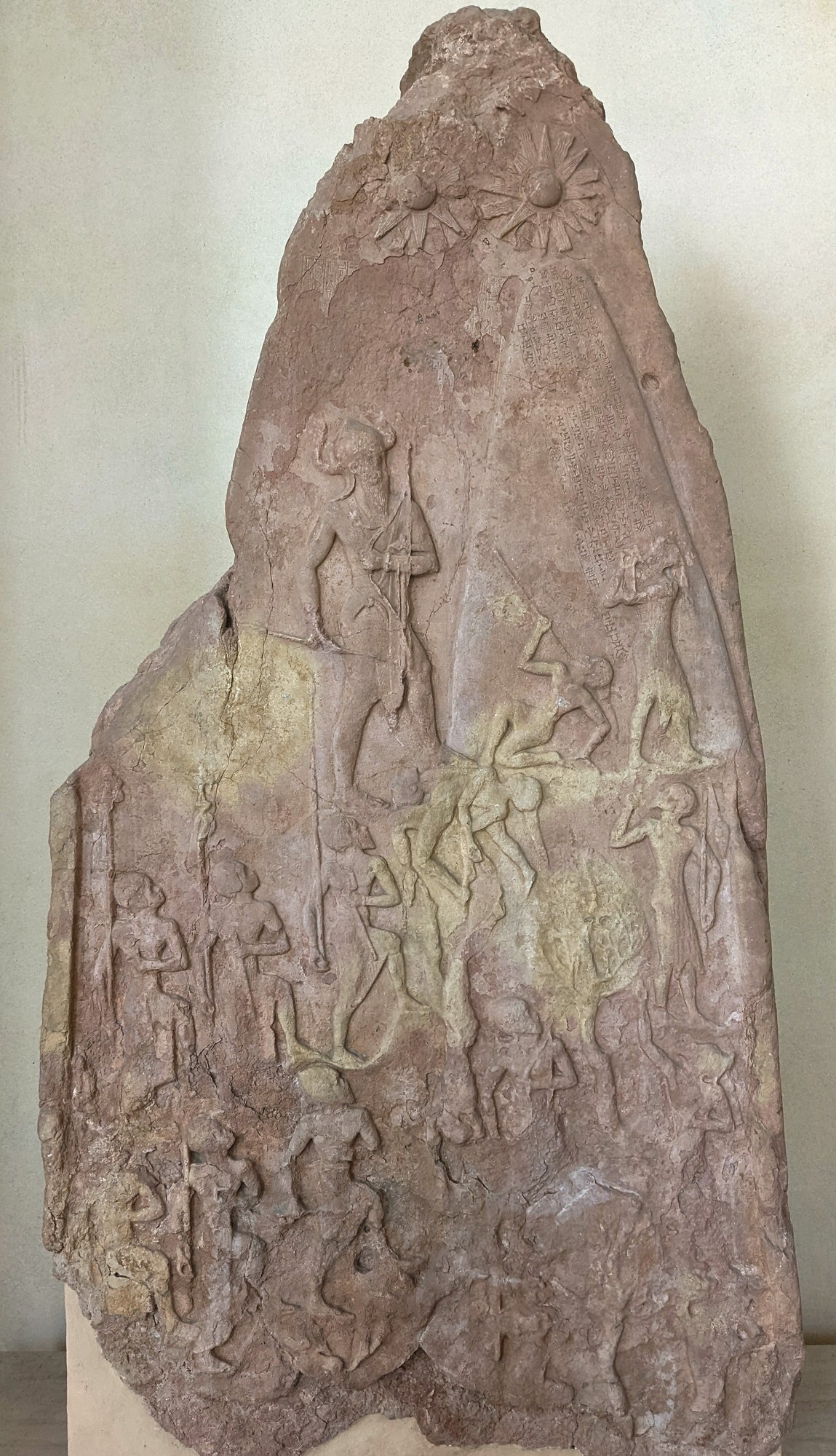
The Victory Stele of Naram-Sin: a tall pink-sandstone monument carved in relief. The Akkadian king Naram-Suen, wearing a horned helmet of divinity and carrying a bow and spear, climbs a wooded mountain above his soldiers, who advance in file; his defeated enemies fall, flee and beg beneath him, and sun-and-star glyphs of the gods shine over the peak.
Mesop.

The Curse of Agade

A king took axes to the god's own house, packed the temple's gold into leather bags, and loaded it onto ships. So the poets, four centuries after the city fell, explained why Agade vanished from the earth.
6 min'The cursing of Agade'
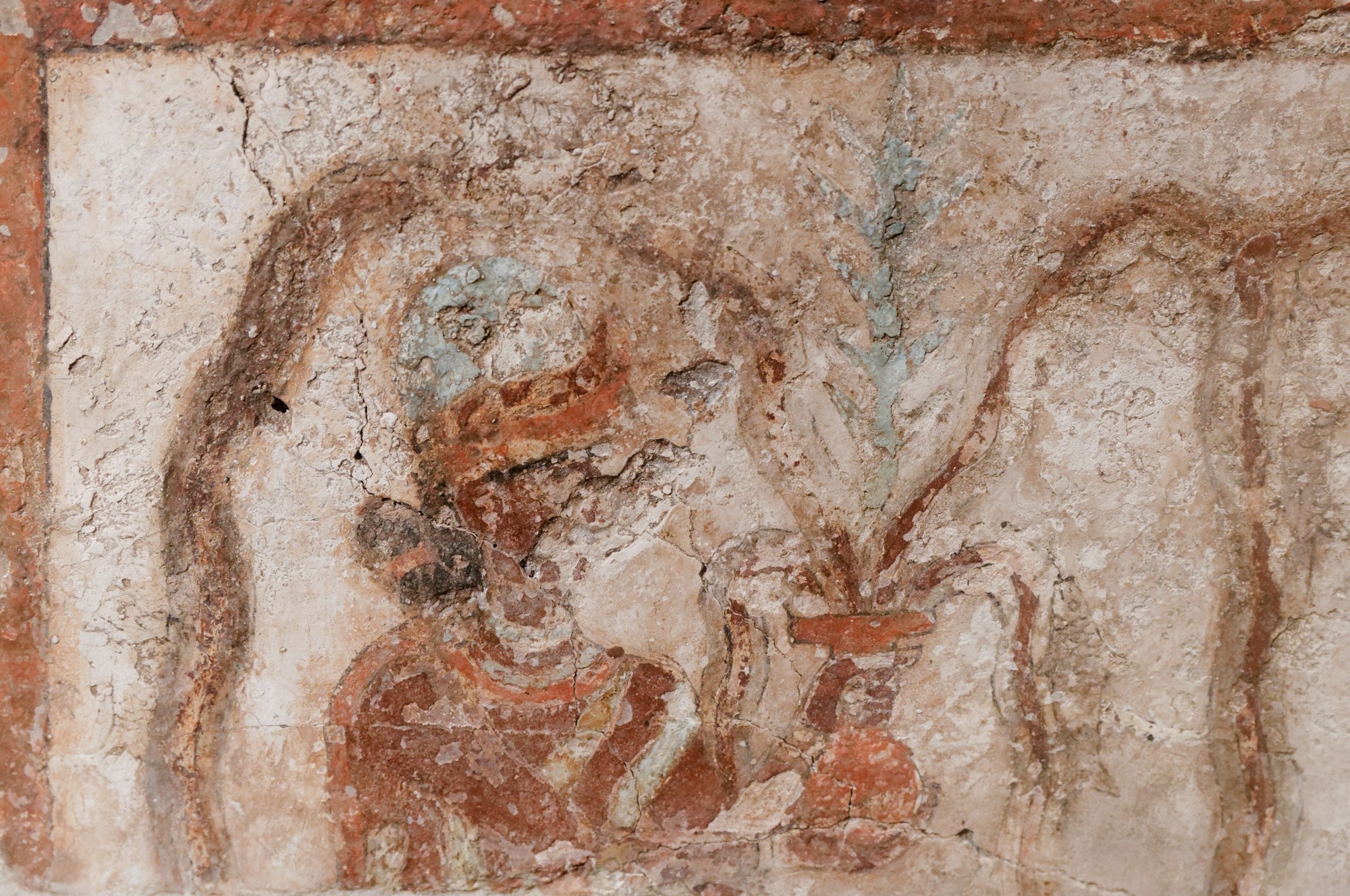
Detail of the Mari palace wall painting known as the Investiture of Zimri-Lim: a goddess in a blue-crowned headdress and a red-and-blue flounced robe stands within a painted red frame, holding a globular vessel from which a leafy plant and streams of water rise — the flowing-vase goddess who embodies the life-giving sweet waters, the abundance of the water-god Ea. The surface is a cracked, fragmentary tempera-on-plaster ground in ochre, red and turquoise.
Mesop.

Atrahasis: The Making of Humankind

Forty years the lesser gods dug the rivers by hand. Then they burned their tools and surrounded their master's house in the dark, and the only way to end the strike was to build a creature that could take the work off them.
7 min*Atra-hasis*
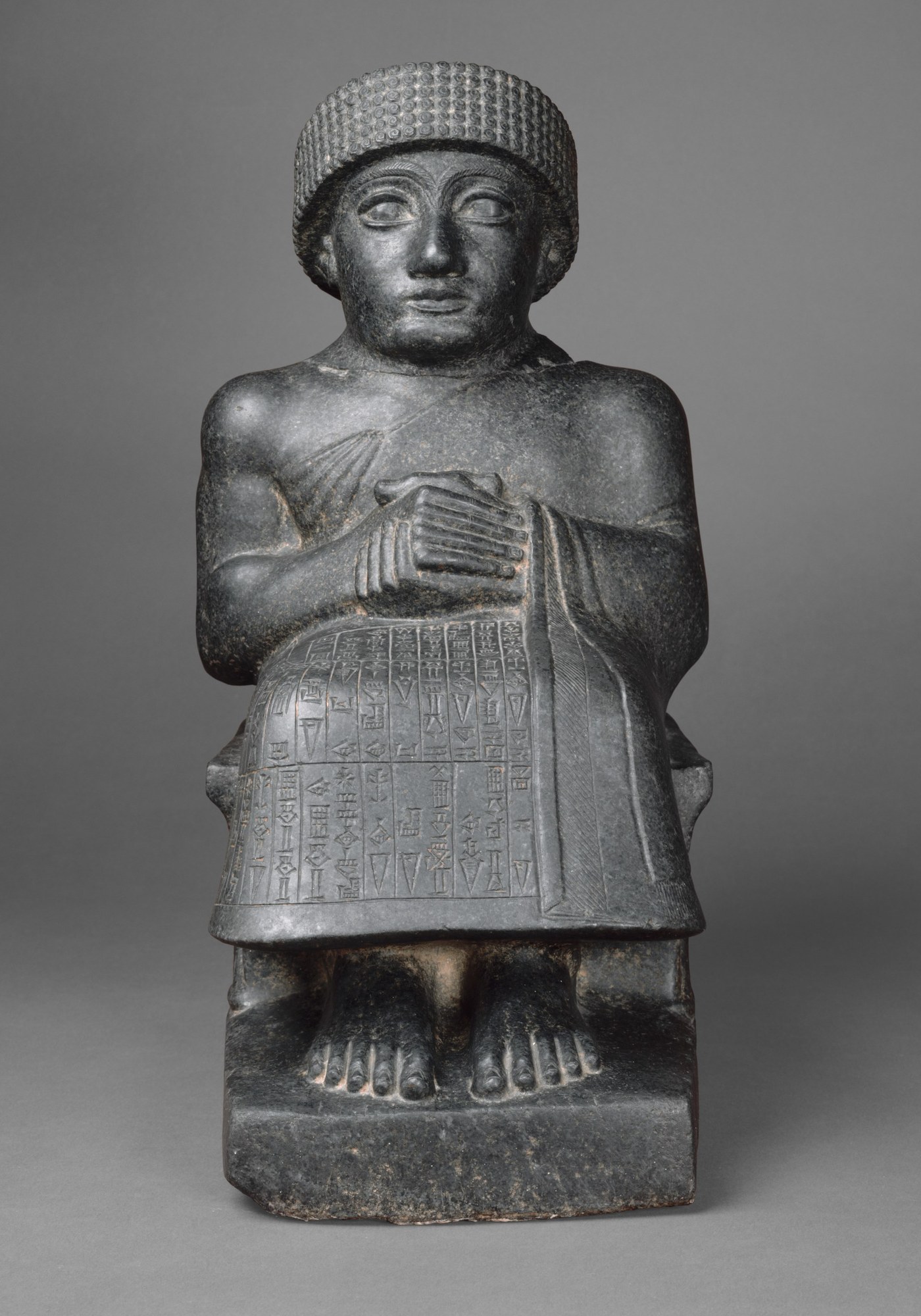
Neo-Sumerian diorite statue of the ruler Gudea of Lagash, seated with hands clasped in prayer at his chest, wearing a brimmed fleece cap and a fringed cloak over one shoulder; his lap and skirt are covered with columns of cuneiform, his bare feet resting on the base.
Mesop.

The Death of Gilgamesh

The strongest king who ever lived is dying in his own bed, and in a dream he must stand before the gods and hear them decide what a man is allowed to keep.
7 minThe Death of Gilgameš
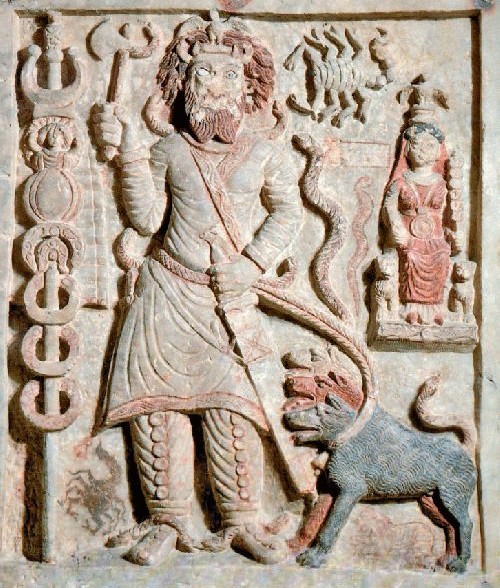
A 19th-century line engraving of a Neo-Assyrian palace relief: at right a bearded, winged warrior-god in a horned helmet strides forward, raising a weapon overhead and holding a bow, pursuing at left a winged, lion-headed and horned monster that flees with clawed hands thrown up.
Mesop.

Anzu's Theft of the Tablet of Destinies

The storm-bird has stolen the writ of fate and made his own word law, and every god the assembly names to fight him refuses. The recovery is a hunt won not by strength but by a trick that turns the thief's own magic dead.
6 minThe Standard Babylonian *Myth of Anzu* / *Epic of Anzû*
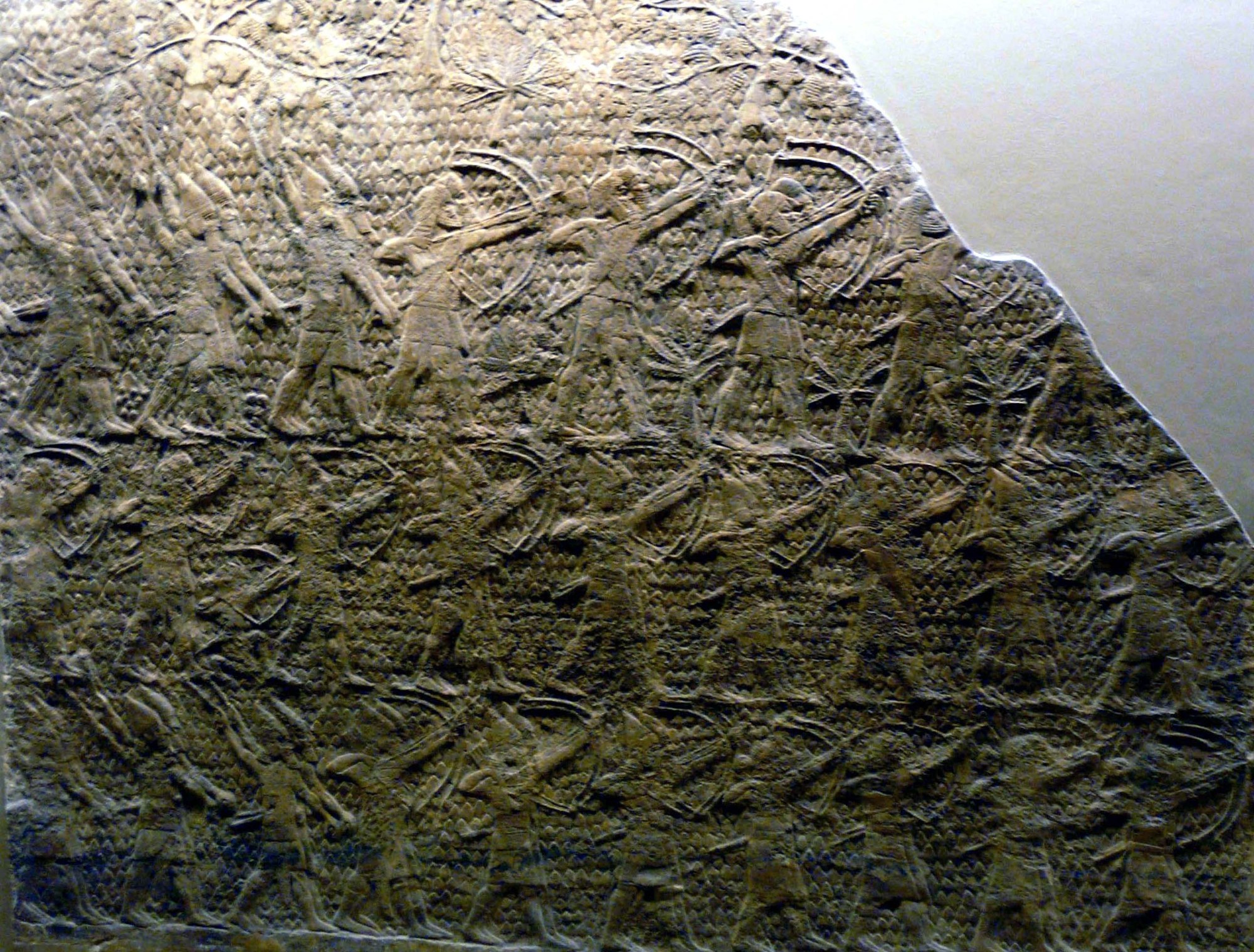
Carved Neo-Assyrian stone relief crowded with soldiers advancing uphill: archers drawing their bows and slingers whirling stones, packed in dense registers across a weathered tan gypsum panel with its broken top edge.
Mesop.

Erra and Ishum: The Wrath of the Plague God

The war-god lies too tired to rise, until his own heart and seven restless weapons talk him into a slaughter no god can call off. Only his own minister can end it, and only by making war on a mountain instead of on men.
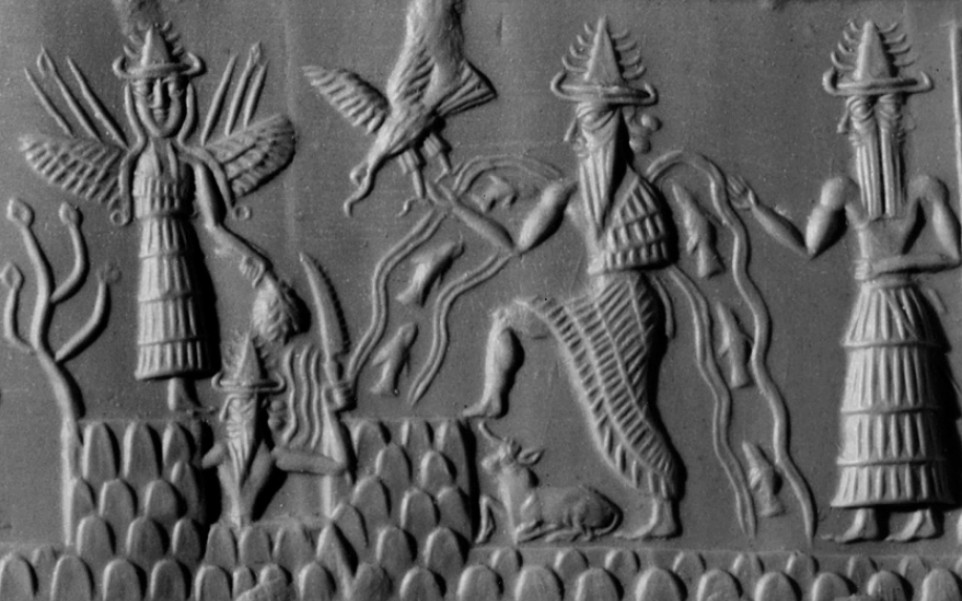
6 minThe Poem of Erra and Ishum

Relationships

Rolled-out impression of an Akkadian cylinder seal: a file of standing deities identified by their many-horned crowns — the winged goddess Ishtar at left, the sun-god Shamash rising through the mountains at centre, and at right the god Ea (Enki), lord of the sweet-water deep, with streams of water and fish flowing from his shoulders, his two-faced vizier Usimu beside him.
Mesop.

Apsu and Tiamat: The Sweet Water and the Salt Sea

Before heaven had a name there were two waters, and they mingled. Everything that followed, the gods, the quarrel, the war that split a body into a sky, began in that first commingling of the fresh and the salt.
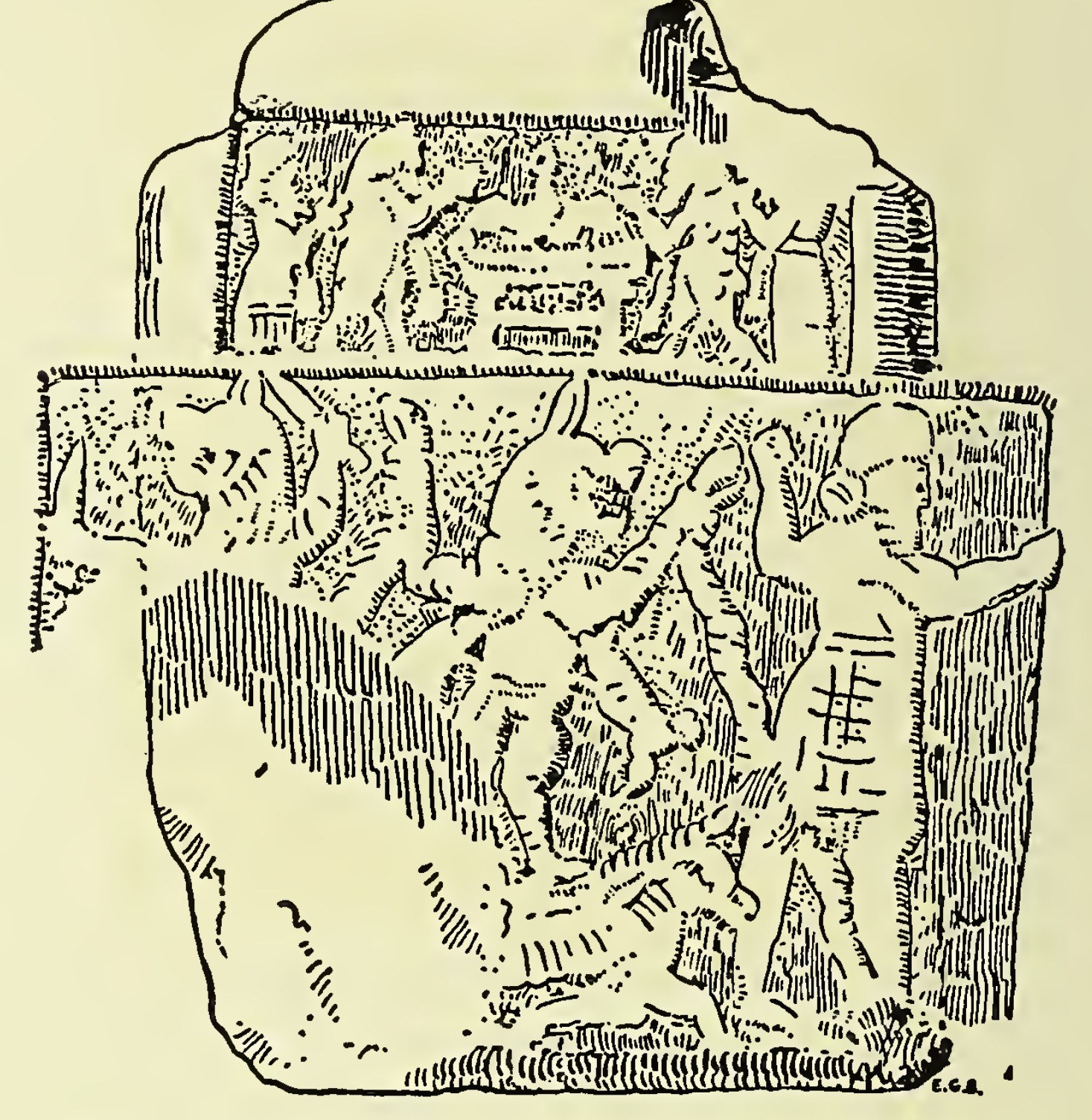
6 minEnūma Eliš

Cosmology & Sacred Places

Line engraving of a Babylonian bronze exorcism amulet shown from the back: a tall arched plaque whose upper edge is overhung by the horned, dog-headed face of a demon peering down; below, stacked horizontal registers of ritual figures and vessels, and at the base the underworld, where the demoness Lamashtu with lifted arms is driven off across the water toward the land of the dead.
Mesop.

Kur, the Land of No Return

Dust for bread, mud for meat, and feathers for clothes: the great below of the Sumerians and Babylonians, a house with a bolt on the door and a queen who lets no one out.
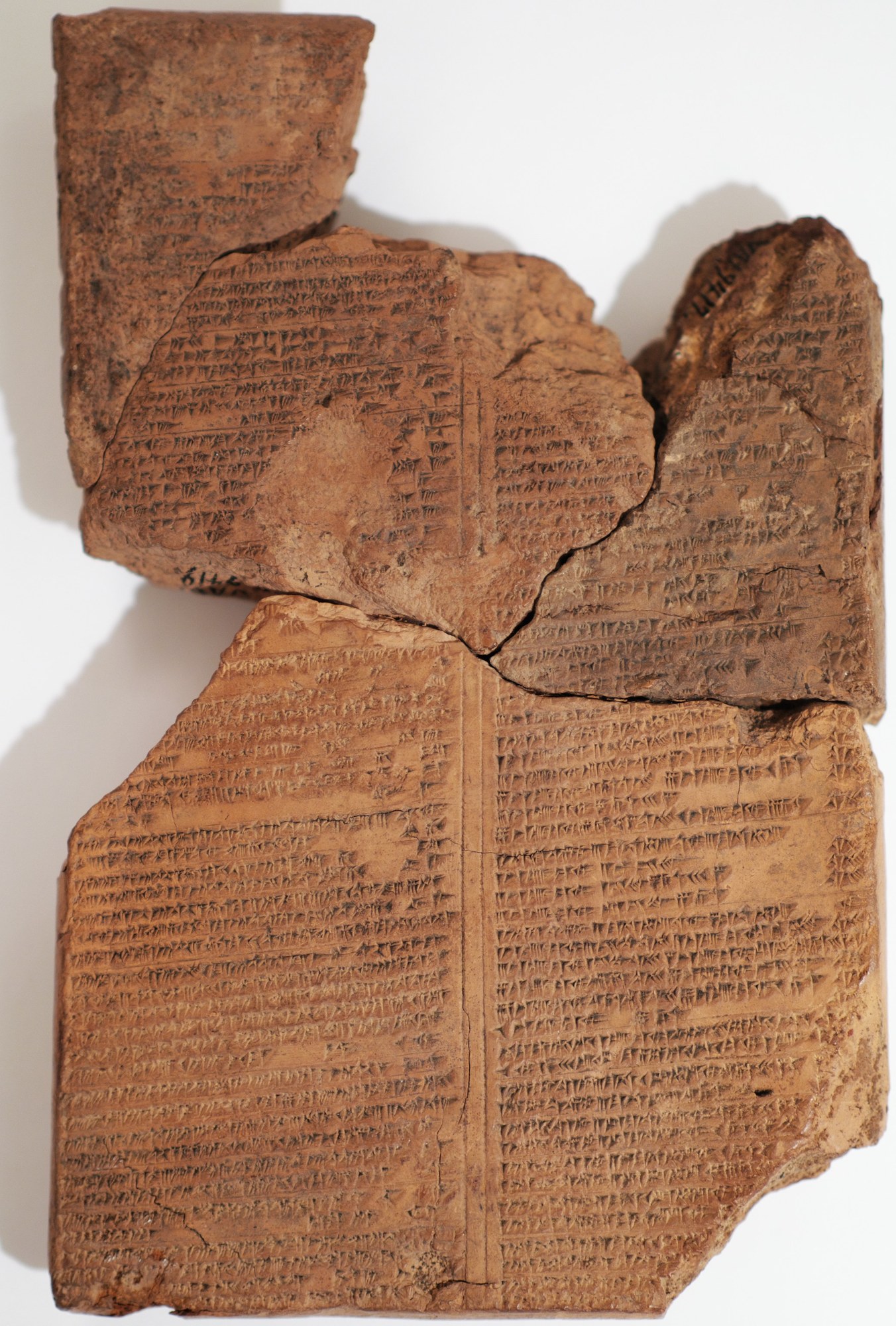
8 min*Inana's Descent to the Nether World*
A large fragmentary Babylonian cuneiform tablet, joined from several broken pieces, its surface ruled into columns of dense cuneiform — a copy of the astronomical compendium MUL.APIN, the standard Babylonian handbook of the stars, the paths of the sky and the calendar.
Mesop.

Marduk Founds the Year and Sets the Moon in Its Course

With the sea dead beneath his foot, the champion turned to a quieter labour: fixing the stations of the sky, dividing the year, and handing the moon a monthly work-order. This is the creation of measured time, spoken into being at the world's first dawn.
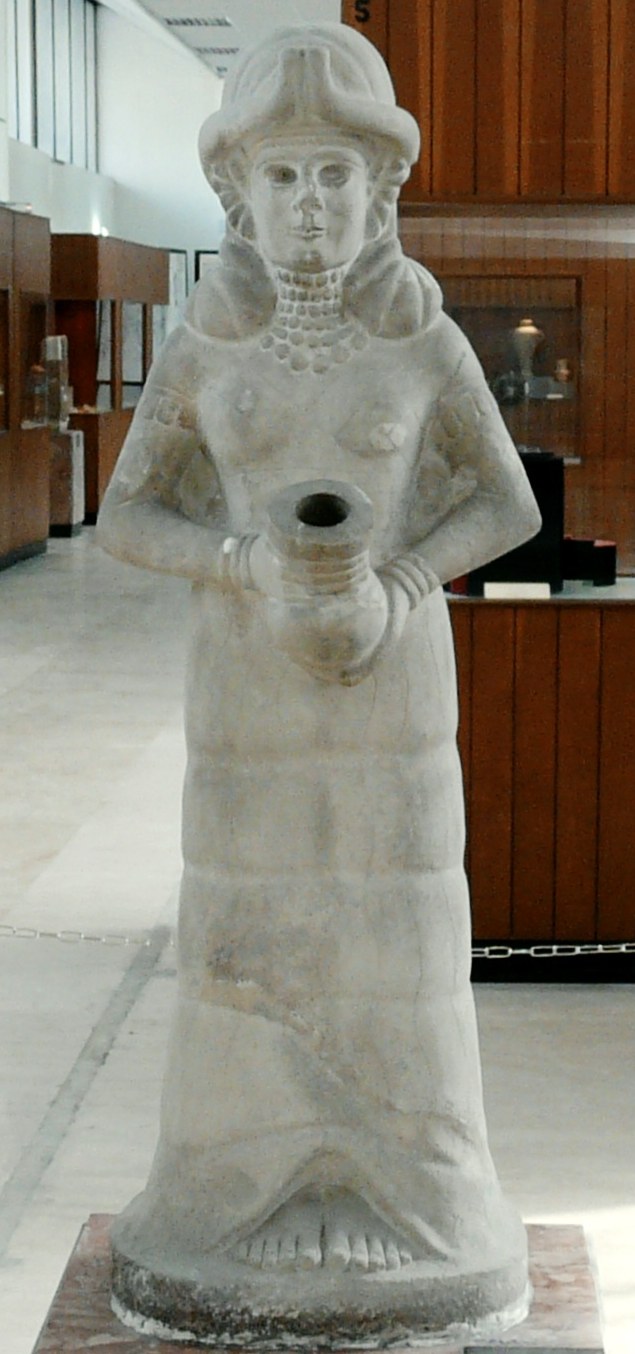
7 min*Enūma Eliš*
Weathered ancient limestone statue of a standing goddess in a horned headdress and a long flounced robe, a tiered bead choker and necklace at her throat, holding at her belly in both hands a round vase pierced through its centre — the vessel from which the life-giving waters were made to flow; displayed on a plinth in the National Museum of Aleppo.
Mesop.

Nammu: The Primeval Sea Who Bore Heaven and Earth

The gods are digging canals and weeping over the work when their oldest mother carries their tears down into the deep to wake her sleeping son. What she is called, and what she made, is a question two thousand years of clay cannot quite settle.
7 min*Enki and Ninmah*
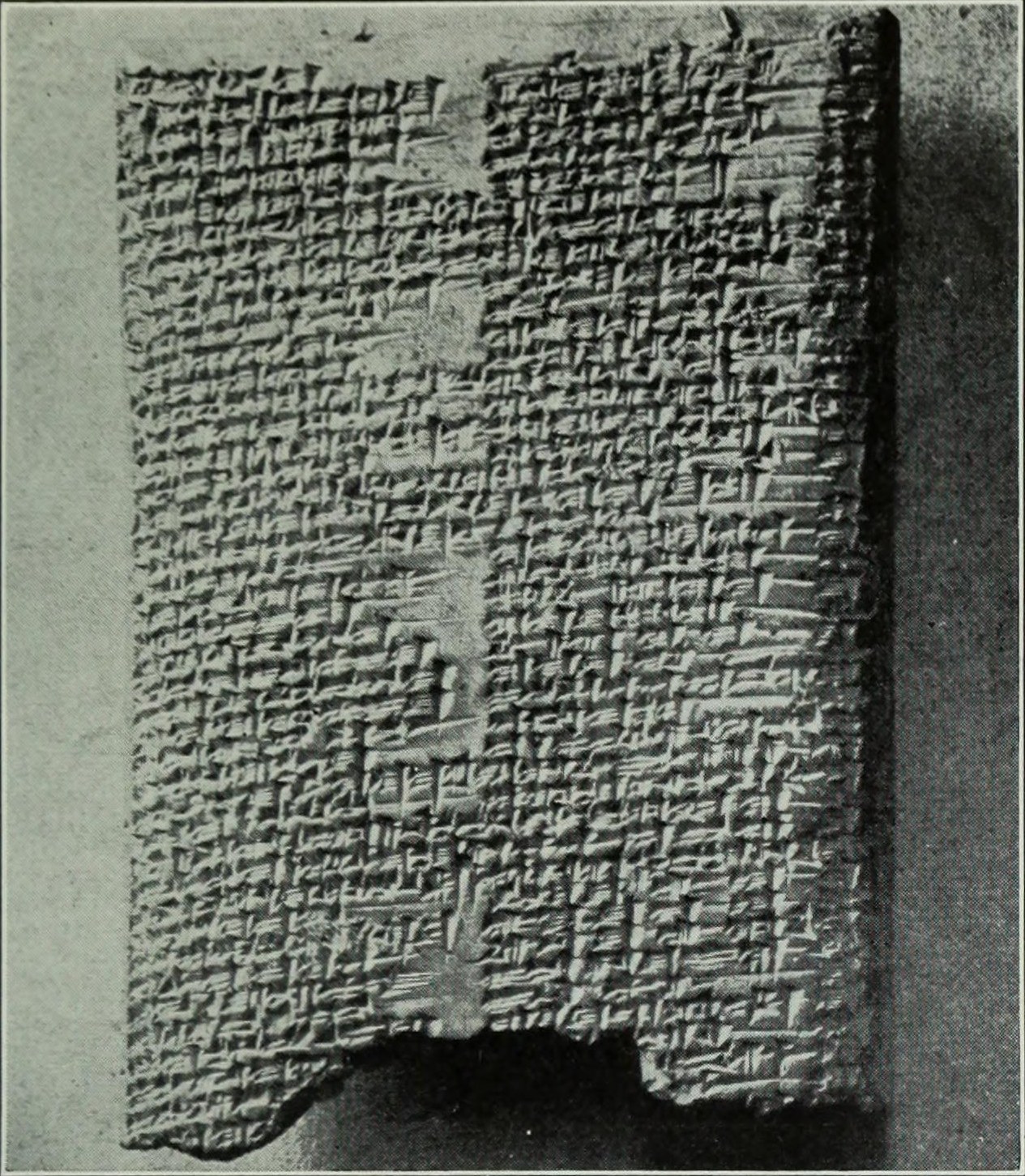
A photograph of the actual ancient clay tablet of the Fourth Tablet of the Babylonian Epic of Creation (Enūma Eliš), British Museum 93016: a broken rectangular fragment densely covered in columns of impressed cuneiform wedges, lit to cast a shadow on a plain ground.
Mesop.

The Tablet of Destinies and the Ordering of Fates

A single clay writ, sealed and laid over the heart, carried the right to decree the fate of the whole created order. Whoever held it ruled the universe, so the history of Mesopotamian kingship is the history of who held it next.
7 min*Enūma Eliš*
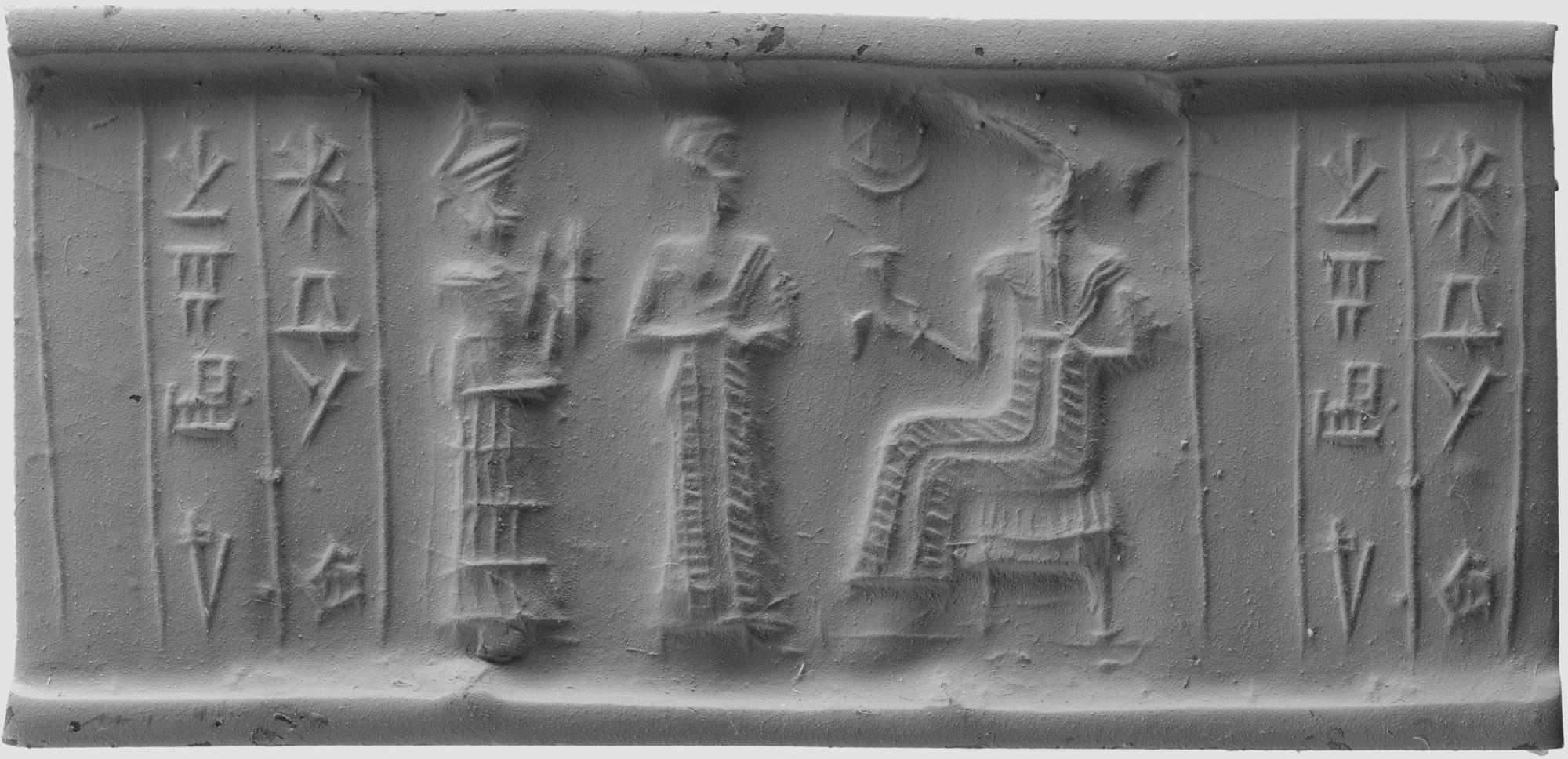
The modern grey rolled impression of a Mesopotamian cylinder seal: a standing worshipper and an interceding goddess with both hands raised approach a deity enthroned on a tiered throne, a crescent moon above, with panels of cuneiform to either side.
Mesop.

When An Carried Off Heaven and Enlil the Earth

The Sumerians never wrote the poem in which heaven and earth are torn apart. They only ever mention it, in the breath before a story begins: once, in the first days, the sky was prised off the ground and the two were shared out among the gods.
7 min*Gilgameš
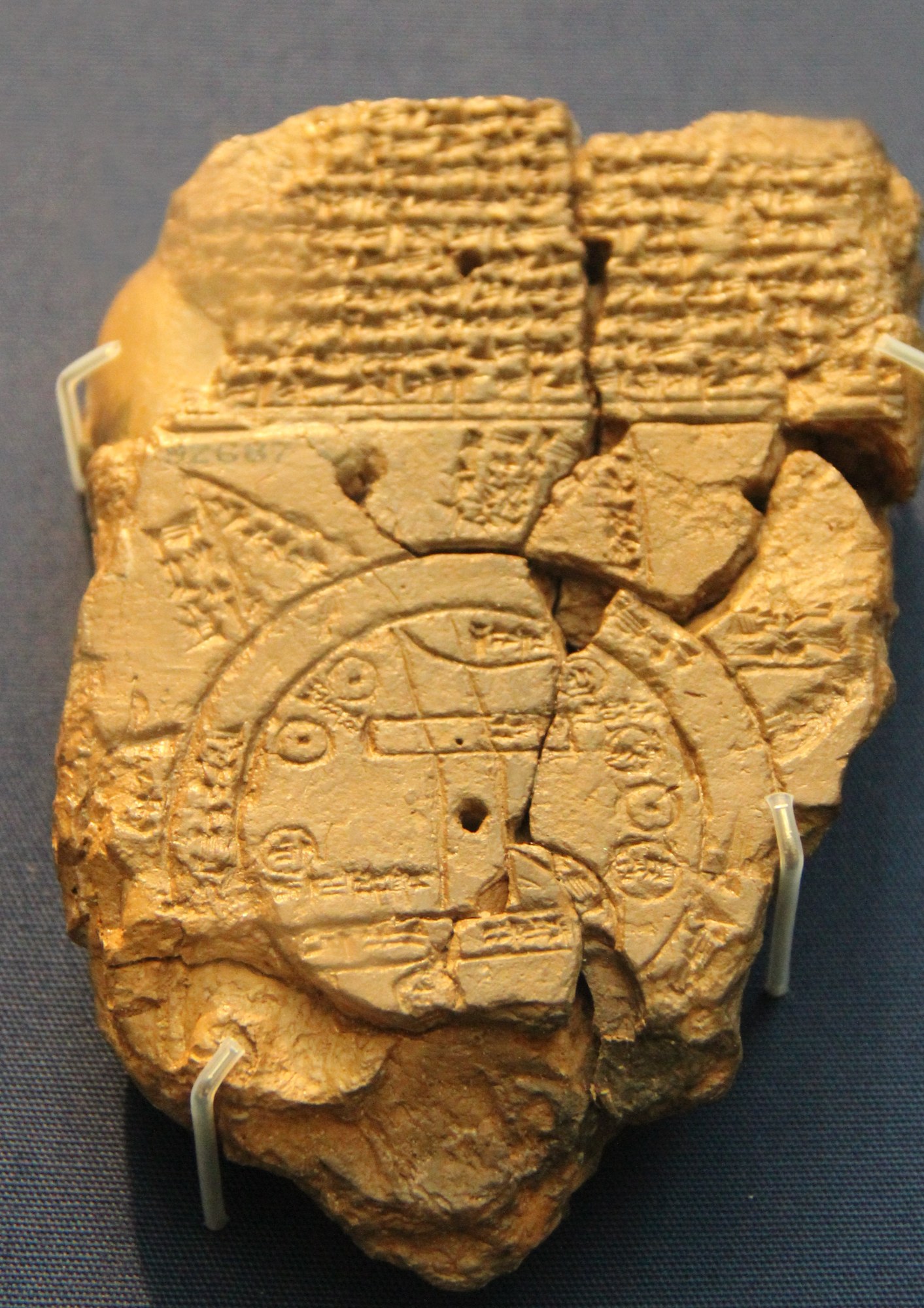
A broken Babylonian clay tablet, its upper half filled with lines of cuneiform and its lower half incised with a circular map of the world: the earth as a disc ringed by the ocean, with radiating triangular regions beyond it.
Mesop.

The Three Earths Beneath the Heavens

One short, forbidden tablet maps the Babylonian universe as six stone floors stacked in open air: three heavens above, three earths below, each a coloured slab laid down by a single arranging god. It is a diagram, not a story, and it argues with itself.
9 minKAR 307 obv. 30–38

Worship & Ritual

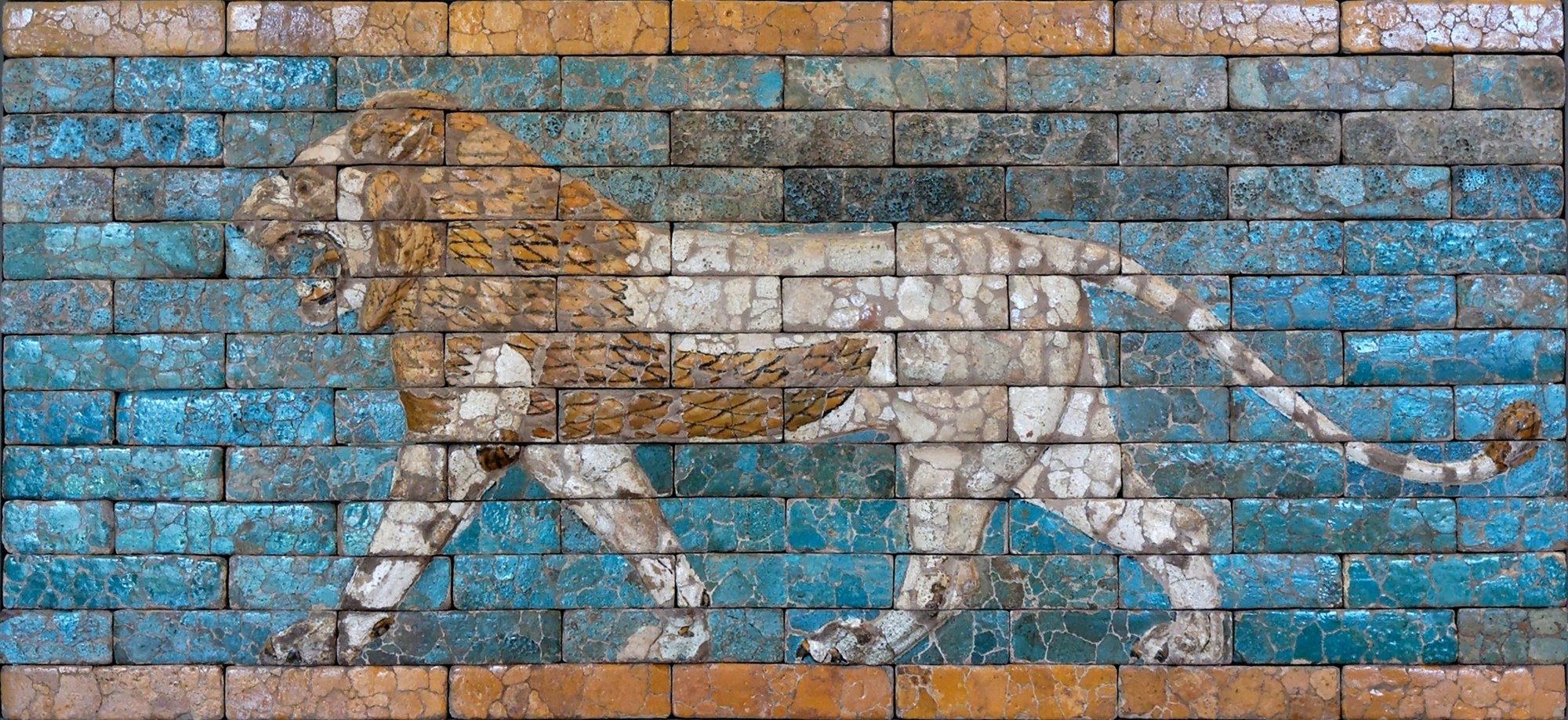
A striding, roaring lion in molded glazed brick — tawny mane, cream body, tail curling up behind — walking left to right across a turquoise-blue field bordered above and below by bands of ochre brick, from the Processional Way of Babylon.
Mesop.

The Akitu: Babylon's New Year Festival

For eleven days each spring the priests of Babylon washed a god, stripped a king of his crown and slapped him until he wept, then carried the whole company of the gods out through the glazed gate to renew the year.
8 minF. Thureau-Dangin

Themes

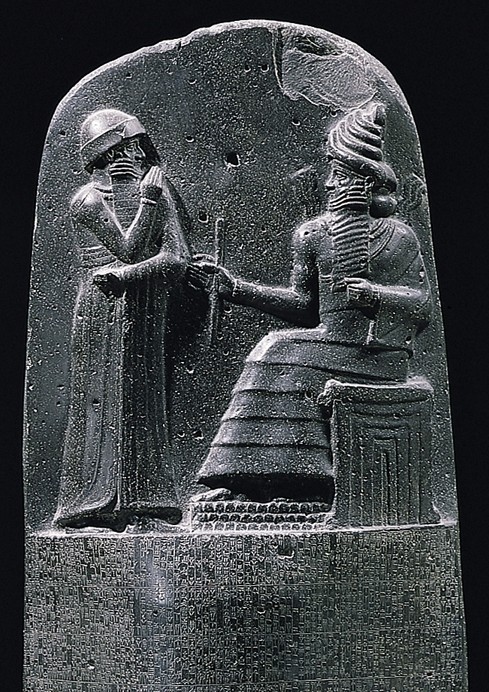
The relief at the top of the law stele of Hammurabi: at right the sun-god Shamash sits enthroned on a tiered temple-façade throne, wearing the many-tiered horned crown of divinity with flames rising from his shoulders, extending the rod-and-ring of just rule; at left the standing king Hammurabi raises one hand to his mouth in reverence to receive it. Carved in dark basalt, the figures set against a plain black ground above the opening lines of the cuneiform law-code.
Mesop.

The Decreeing of Fates at the New Year

Once a year the most powerful man in Babylonia was stripped of his crown, struck on the cheek and made to weep, so that a council of gods could settle his fate and the land's for the twelve months to come.

8 min*Enūma Eliš*