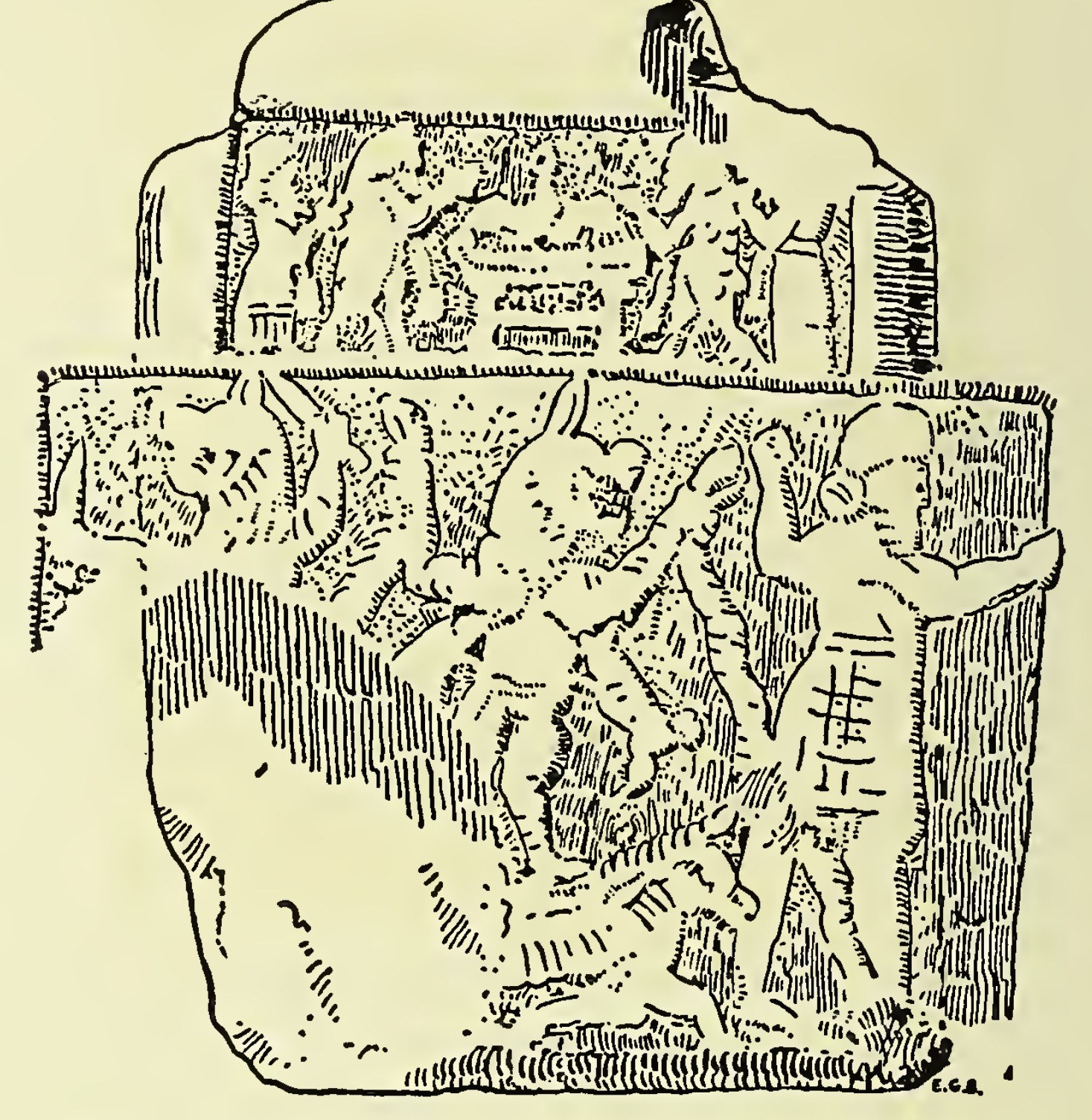
The dead are hungry, and there is nothing down there to eat but dust. That is the first thing the oldest writing tells us about the place below the world. It is a house you can walk into and never walk out of, where the door has a bolt on the far side and the dust has settled thick over both, and where the people who arrive are given dust for bread and mud for meat and a coat of feathers to wear, and told that this is where they live now. The Sumerians called it the great below, set against the great heaven, and its plainest name was the land of no return.
You reach it by going down. The Sumerian word is kur, which also means mountain and foreign country, and modern scholars use Kur
as a convenient label for the underworld, though the ancient poems more often just say the great below,
or name the palace at its centre, Ganzer, or in the Akkadian tradition call the whole realm Irkalla. It is worth being honest about that from the start: no character in the old texts announces I am going down to Kur
as if that were the country’s proper name. What they say instead matters more: that they are going to the place from which no one comes back.
The road that returns not
The Babylonian poem opens by naming the country in a single breathless heap of dread. It is the land whence none return, the place of darkness, the house from which none who enter come forth again, the road whose course returns not. When the goddess of love and war comes hammering at the gate in the Sumerian version, the doorman does not welcome her; he interrogates her, and his question is the country’s whole theology in two lines. Why have you travelled to the land of no return? How did you set your heart on the road whose traveller never returns?
This is the hinge that separates the Mesopotamian afterlife from the ones that came later. There is no weighing of the heart here, no ferry-fare, no fields of the blessed on the far side. There is a gate, and past the gate a house, and the house has no back door. Return is not merely difficult; it is against the law of the place, and the whole drama of the descent myths turns on the single terrible exception the realm will allow.
Dust for bread
The image that carries the entire cosmology is the diet of the dead. The Babylonian text describes the arriving soul entering a place where dust is their bread and mud their food, where they behold not the light and dwell in darkness, clothed like birds in a garment of feathers, and over door and bolt the dust is scattered. Everything about the living body’s comfort is inverted. Bread becomes dust, and food becomes mud. Clothing becomes a moulting coat of feathers that will never fly. Even the light is gone.
The same picture surfaces in Gilgamesh, and its power is that it arrives as a nightmare. The wild man Enkidu, dying, dreams that an eagle-taloned being seizes him and drags him down into the dark abyss of the dread goddess, Irkalla. There he sees the house of the dead, and he sees who lives in it.
The beings there are without light; they eat dust and feed upon mud; they are clad in feathers and have wings like birds; they see no light and live in the darkness of night. And moving among them, stripped of every earthly rank, are former kings; serving where once they were served are the high priests, the ministrants, the magician and the prophet. The underworld is a great leveller. Crowns count for nothing once the dust is your bread.
A house with seven gates
The way in is not a fall but a procession, and a deliberate stripping away. In the Sumerian descent the traveller passes through seven gates, and at each one the gatekeeper takes away a single article of dress or regalia: the turban for the open country, then the small lapis beads at the neck, the twin egg-shaped beads on the breast, the pectoral called Come, man, come,
the golden ring, the measuring rod and line of lapis, and last of all the pala robe, the garment of ladyship itself.
At every threshold the same refrain answers the traveller’s protest: be silent, a divine power of the underworld has been fulfilled. The Babylonian version keeps the seven gates and the same logic of removal, so that whoever comes before the queen arrives naked and powerless, every emblem of rank and identity surrendered at the door. The architecture of the place is designed to unmake you.
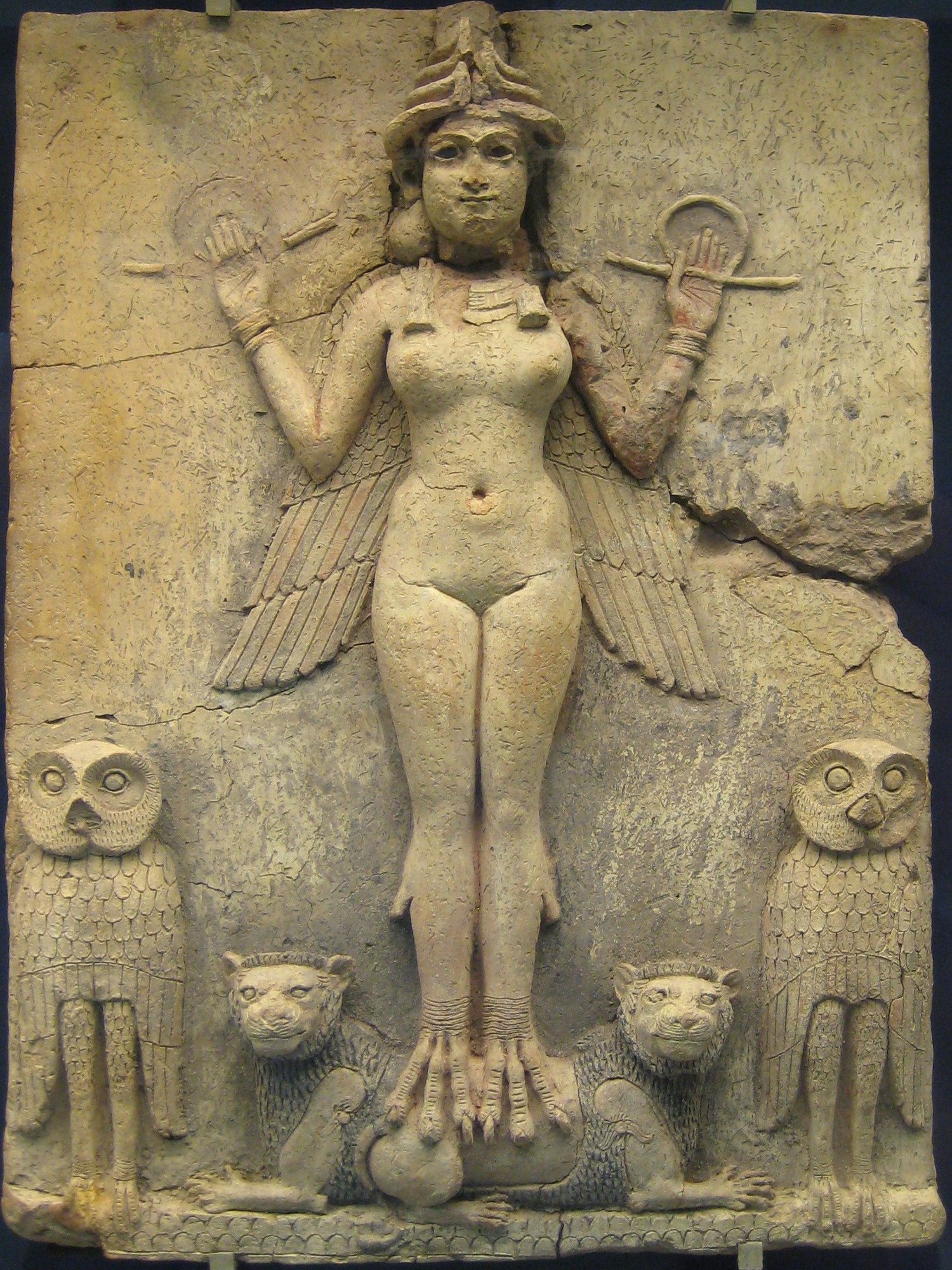
At the centre of the house is a throne, and on it sits the one power that never leaves. Ereshkigal, whose name the Akkadian scribes sometimes render Allatu, is the queen and sole ruler of the great below, elder sister of the bright goddess who comes knocking. She is no serene sovereign.
The Sumerian poem finds her in something like the agony of labour, groaning on account of her children, her holy shoulders bare of any linen cloth, her nails like a pickaxe, her hair bunched up as if it were leeks. This is the ruler of the dead: not a jewelled king of terrors but a suffering woman on a throne in the dark, and the poems treat her with a strange, hard tenderness.
Her court is not empty. The Anuna, the seven judges, sit and render their decision against the intruder, and the sentence they pass turns a living goddess into a corpse, hung on a hook like meat on a butcher’s peg for three days and three nights. Her vizier in the Babylonian tale is Namtar, the demon of plague, who strikes with disease in every limb of the body. And prowling the passages are the galla, the pitiless bailiffs of the realm, beings who know no food and know no drink, who tear the wife from a man’s embrace and snatch the son from a man’s knee. They are the enforcement arm of the law of no return.
The one way out, and its price
And yet someone does come back, once, and the manner of it defines the realm as sharply as the bolt on its door. Return from the great below is possible only by substitution. Who has ever ascended from the underworld unscathed? If the goddess is to rise, the poem insists, let her provide a substitute for herself. Life for a life; the house keeps its tally.
In the Sumerian telling she is revived where she hangs, sprinkled with the food of life and the water of life carried down by two sexless little beings whom the wise god Enki pinches from the dirt under his fingernails, creatures of no fixed category who can therefore slip past a law made for the living and the dead. But the price still falls due. She rises, and the galla rise with her, and a substitute must go down in her place.
The Babylonian version binds the same principle to the turning of the world. While the goddess is shut in the great below, all desire fails on the earth above; men and beasts alike cease to perform their natural functions, and nothing conceives or is born. The absence of the goddess of love empties the world of love, and the gods themselves are forced to act, sending a creature named Uddushu-namir to win her release with the Waters of Life.
Here the two traditions part company in their machinery even as they agree on the water. Sumerian Enki fashions two beings; Akkadian Ea makes one, and it is Namtar who sprinkles the reviving water. The developed drama of a named human substitute, the shepherd handed over to the demons, belongs to the Sumerian poem; the surviving Babylonian text only gestures at it in its closing lines. Same law, different accounting.
That is the shape of the Mesopotamian underworld, and it is bleaker and more honest than most of what came after. No paradise waits on the far side, no reward answers a good life, no judge weighs the heart to sort the saved from the damned. There is only the house of dust, the same for the king and the priest and the beggar, ruled by a grieving queen behind seven gates, and one law written over the bolt: the road returns not, unless someone else agrees to walk it in your place.
To the place where dust is their bread, and mud their food. They behold not the light, they dwell in darkness, and are clothed like birds in a garment of feathers; and over door and bolt the dust is scattered. (The Descent of Ishtar, trans. L. W. King, 1899, p. 180)
- Inana’s Descent to the Nether World (Sumerian, incipit An-gal-ta,
From the Great Heaven
), ETCSL t.1.4.1 (composite edition and English translation by J. A. Black, G. Cunningham, E. Robson, G. Zólyomi et al., Faculty of Oriental Studies, University of Oxford), read verbatim. Supplies the great-below / great-heaven polarity; the doorman Neti’s challenge at the palace Ganzer (the road whose traveller never returns
); holy Ereshkigala as queen and the funeral of Gugalanna as the pretext for descent; the seven gates and the ordered stripping of the regalia with the refrainBe silent, Inana, a divine power of the underworld has been fulfilled
; the Anuna as the seven judges, thelook of death,
and the corpse hung on a hook for three days and three nights; Ereshkigal in her agony (nails like a pickaxe, hair bunched like leeks); the galla whoknow no food, know no drink
; and the law of the substitute. - The Descent of Ishtar into the Underworld (Akkadian), trans. Leonard W. King, Babylonian Religion and Mythology (London, 1899), pp. 179–182 (public domain; archive.org id
babylonianrelig00kinguoft), read verbatim. Supplies theland whence none return
opening formula; the dust-and-mud, feathers-and-darkness description of the dead (dust is their bread, and mud their food … over door and bolt the dust is scattered
); the realm of Irkalla and the byword Cuthah; Allatu as an alternate name for the queen (Ereshkigal); Namtar and the plague; the failure of all fertility on earth during the goddess’s absence; and Ea’s creature Uddushu-namir sent to fetch the Waters of Life. - The Epic of Gilgamish, Enkidu’s
House of Dust
dream, trans. E. A. Wallis Budge, The Babylonian Story of the Deluge and the Epic of Gilgamish (British Museum, 1920), p. 44 (public domain; archive.org idbabylonianstoryo00brituoft), read verbatim. Supplies the eagle-taloned being who drags the dreamer down to the abyss of Irkalla; the dead whoeat dust and feed upon mud
and areclad in feathers
; and the former kings, high priests, ministrants, the magician and the prophet seen among them. Budge (1920) prints the fragment among the early tablets; modern critical editions place Enkidu’s underworld dream in Tablet VII of the Standard Babylonian epic. The imagery is identical; only the tablet-numbering differs.