Two hours before the end of the night, in a Babylon still under stars, the high priest rose and went down to the river to wash. He came back in a fresh linen garment, stood before the greatest god of the city, and recited a prayer that no one else on earth was permitted to hear. This is where the New Year began: not with a crowd, not with the king, not yet with any statue carried in the light, but with one man in the dark, saying twenty-one lines to a shut door. What we know of that dark comes almost entirely from a single cluster of clay tablets, and there is a difficulty in them we have to face before we walk any further into the temple.
A script copied a thousand years late
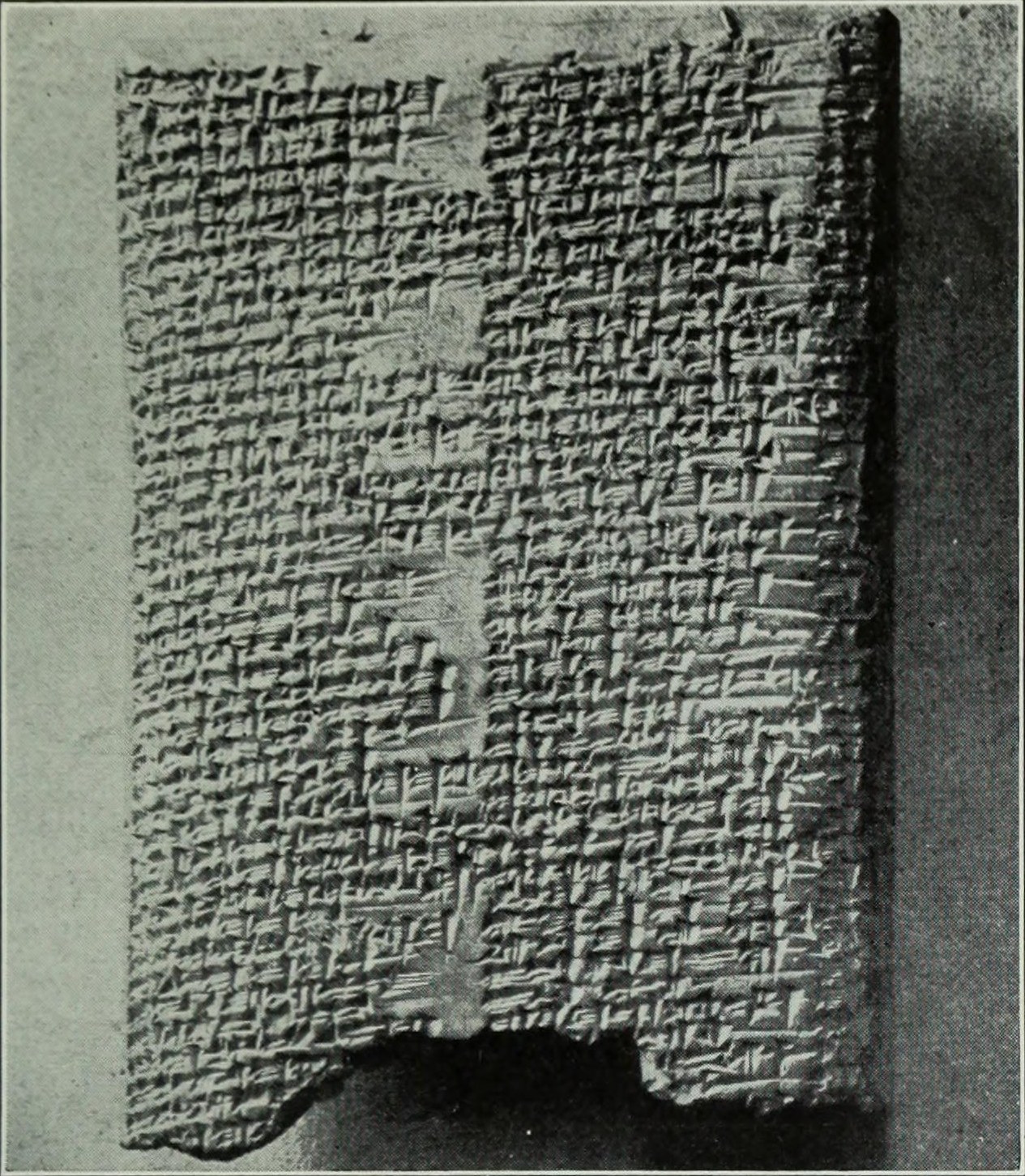
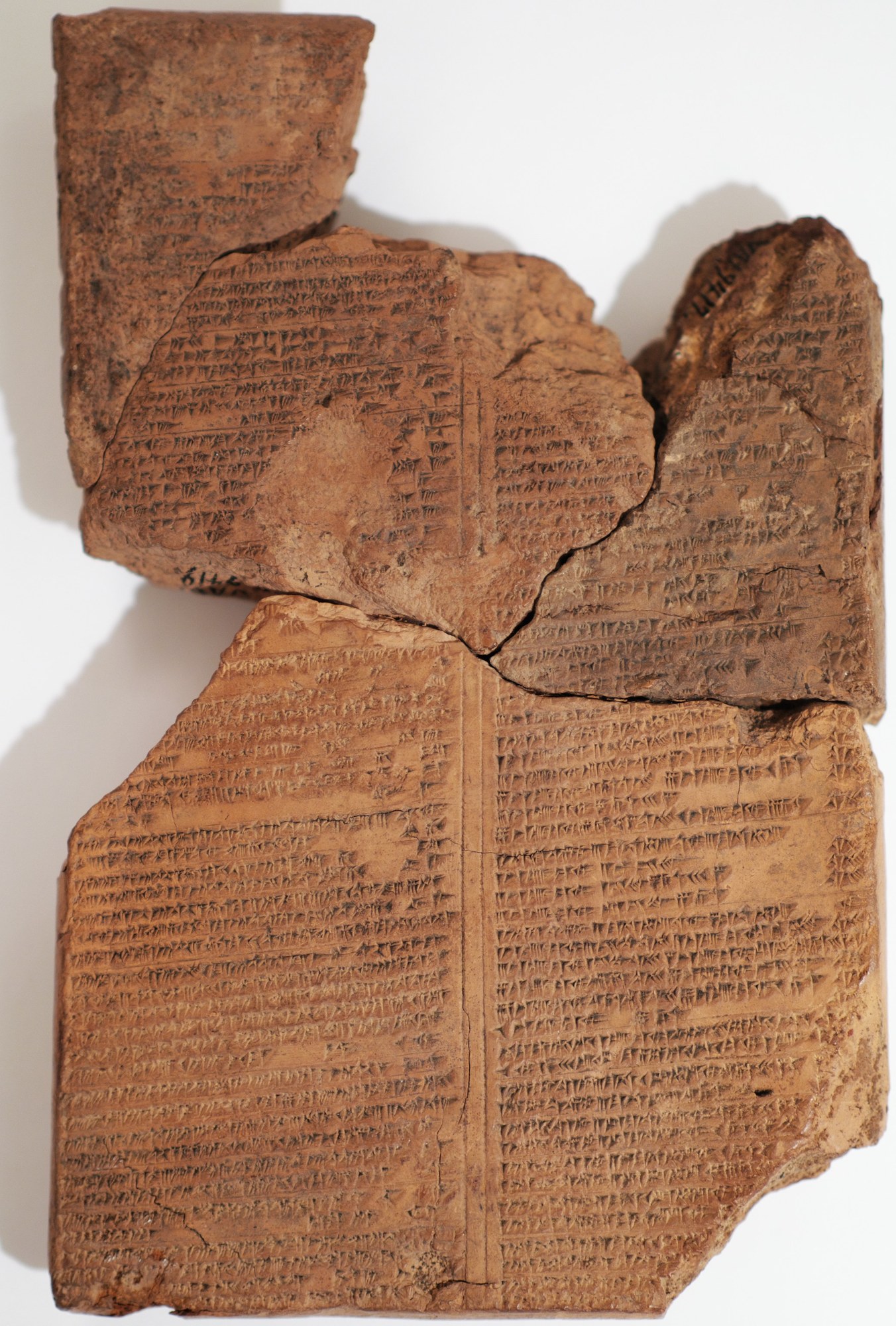
The festival is ancient. Its name, the akītu, reaches back to the third millennium BCE and a Sumerian rite tied to the sowing of barley, and by the first millennium the Babylonians kept it twice a year, the great one in the spring month of NisannuThe first month of the Babylonian year, falling in March or April around the spring equinox. and a lesser one in the autumn. But the detailed day-by-day programme we are about to follow survives only in tablets copied very late, under Persian and then Greek rule, somewhere between the fifth and second centuries BCE. That is between one thousand and two thousand years after the festival’s origins, a gap wider than the whole span of recorded Greek myth.
The scholar who first edited them said plainly that it was rather futile to try to fix when they were composed. So the choreography set out here is genuine ritual, but it is the script the late Babylonian priesthood preserved, not a timeless certainty out of the Bronze Age, and one recent reading holds that these priests were asserting themselves against foreign kings when they wrote it down.
The doors nobody else may open
The pre-dawn washing repeats each morning, the priest always in linen, always at the river first. On the second day his set prayer is the one they called the Secret of the EsagilaThe temple of Marduk inside Babylon, its name meaning roughly "house whose top is high", housing the god's cella and his son Nabû's shrine., exactly twenty-one lines, and the tablet is emphatic that no one but the urigalluThe high priest of Marduk's cella, called the šešgallu in other sources; the chief human actor throughout the festival., the high priest of Marduk’s cella, may recite it or even show it to the god. It opens by naming the god without rival in his wrath, gracious king, lord of the lands, whose seat is Babylon and whose tiara is the neighbouring city of Borsippa, and it ends by begging him to turn his face toward his own temple and grant the privileged citizens of Babylon their freedom.
Only after this does the priest open the temple doors and let the junior clergy in to their duties. The lamentation-priests and the singers take up their portions likewise on the mornings that follow. On the third day, in the afternoon, craftsmen are called to make two small figures, seven fingers tall, one of cedar and one of tamarisk, garnished with gold, clothed in red, each raising its right hand toward Nabû while one grips a snake and the other a scorpion. They are set aside and fed from a god’s offering-table until the day comes to behead and burn them.
The old gods veiled while the new god is proclaimed
The fourth day is the day of the great text. Three and a third hours before dawn the priest recites hymns that invoke Marduk and his consort under a long litany of stars and planets, the god as the Dragon-constellation and as Jupiter, the goddess as Venus. Then, after the evening meal, he recites the whole of Enūma elišThe Babylonian creation epic, named from its opening words "when on high", recited in full to Marduk on the fourth day. to the god, from its beginning to its end.
The single most telling stage-direction in the entire ritual attends this recitation: while the epic is read aloud, the tiara of the sky-god Anu and the throne of the old chief Enlil are to remain covered. The choreography is doing an argument. As the poem proclaims how the young god fought the sea and made the world and was raised above every other power, the emblems of the elder gods he displaced sit veiled in their own temple, unable to look on their own eclipse.
The blow that must draw tears
On the fifth day the temple is purified and the king is broken. Before dawn the priest washes in water of both the Tigris and the Euphrates; after sunrise an exorcist performs the cleansing they called the kuppuru, sounding a bronze kettledrum in the middle of the temple, beheading a sheep and wiping its carcass over the walls before carrying it to the river and throwing it in, facing west.
Both the exorcist and the sword-bearer are made unclean by handling the victim and must leave Babylon for the open country until the twelfth day; the high priest may not so much as watch the rite, for if he sees it he is no longer pure. A golden canopy is drawn from Marduk’s treasury to drape Nabû’s shrine.
Then the king enters, for the first time in the whole eleven days. He is led before the god, and the priest takes from him his sceptre, his ring, his mace and the crown of kingship and lays them on a seat. The priest strikes the king’s cheek, drags him by the ears and forces him down on his knees.
Kneeling, the king recites a protestation of innocence: he has not sinned against the lord of the lands, has not destroyed Babylon nor ordered it scattered, has not made the temple tremble, has not struck the cheek of the city’s privileged citizens nor thrown down its walls. The priest reassures him that the god will hear his prayer, magnify his lordship and cast down his enemy, and returns the insignia.
Then comes the second blow. The priest strikes the king’s cheek again, and everything hangs on what follows: if the king’s tears flow, the god is pleased; if his tears do not flow, the god is angry, and an enemy will rise up and bring the king down. The slap is engineered to produce the tears it reads, ritual weeping as a demonstration, not an accident of feeling. In the evening the priest binds forty reeds and sets a white bull before a pit of honey, cream and oil, and the king kindles the reeds with a torch while the two of them call on the burning bull of the sky and the fire-god. There the day-five tablet breaks off.
The hand of the god, out through the gate
Everything past this point is reconstruction, pieced together from royal inscriptions and chronicles rather than read off the ritual tablet, and it should be held more loosely than what came before. On the fourth day the king had already travelled to fetch Nabû’s statue from Borsippa; that is the errand that brings him back for his humbling on the fifth. Around the sixth the other gods’ statues arrive in the city, and the two red figurines made on the third day are beheaded and burned as enemies defeated in the enactment. The climax inside the walls falls on the eighth, when the gods assemble on the dais of destinies and fix the fates for the coming year.
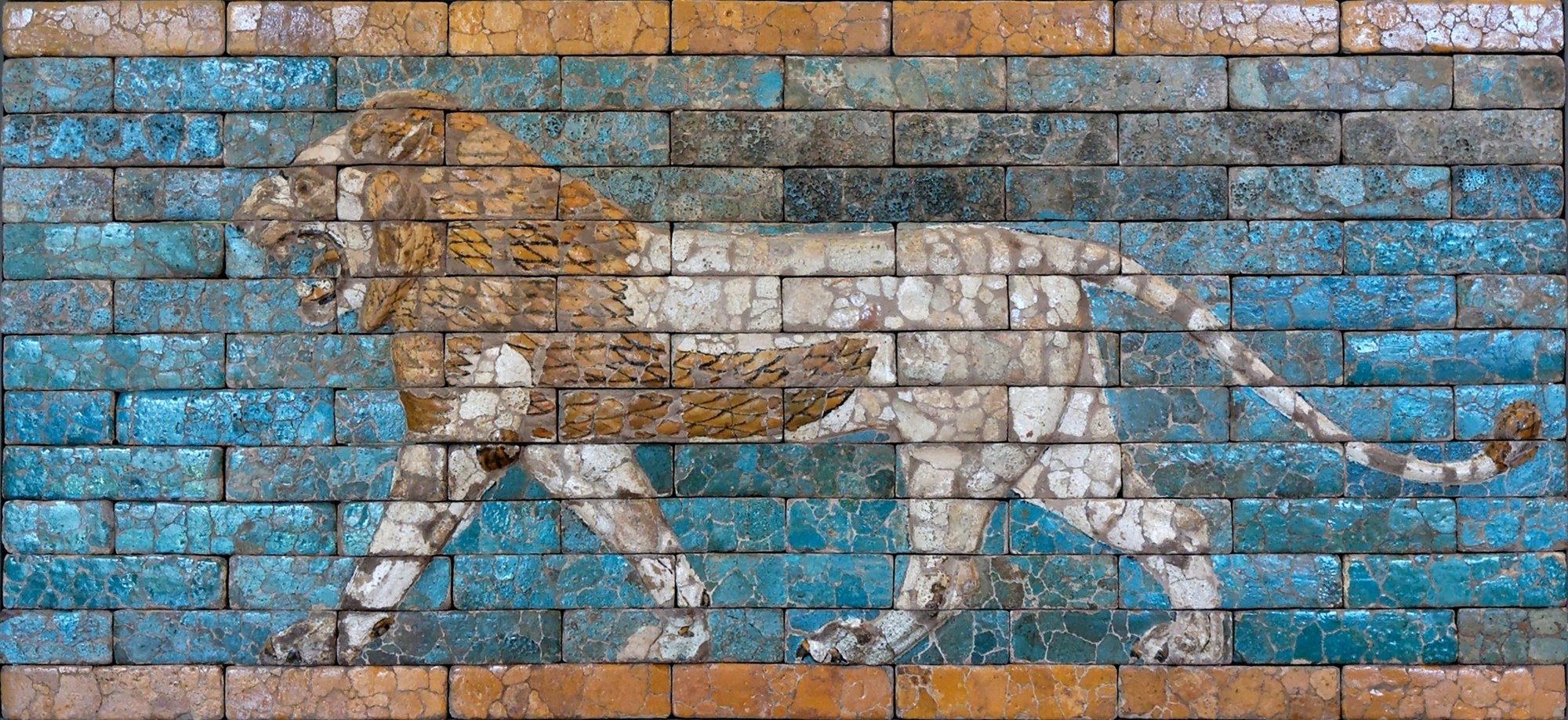
Then the whole company is brought out and the procession sets off, through the glazed-brick Ištar Gate and down the great avenue, the king exercising his privilege of taking the hand of the god to lead the statue out. Part of the way the gods travel by barque on the river to the akītu-house, the house of the New Year standing in open country north of the walls, where later and indirect sources suggest the young god’s defeat of the sea was played out again in ritual.
This procession was very probably the only moment in the whole calendar when ordinary people could see the statues of their gods at all, the temples being otherwise closed to everyone but the priests. On the eleventh day the gods return in triumph to the temple, pass again through the dais of destinies and confirm the year’s fates, and the festival ends. On the twelfth, Nabû goes home to Borsippa, and the cycle closes.
If his tears flow, Bēl is favourable; if his tears do not flow, Bēl is angry: an enemy will rise up and bring about his downfall.
- F. Thureau-Dangin, Rituels accadiens, Paris 1921,
Le rituel des fêtes du nouvel an à Babylone,
pp. 127–154 — the source of nearly everything narrated abovethe ritual tablets giving the continuous temple programme for Nisannu, days 2 to 5. The pre-dawn washings and linen; the twenty-one-line Secret of the Esagila and its opening and closing lines; the two seven-finger figurines of cedar and tamarisk with snake and scorpion; the day-four recitation of Enūma elišfrom beginning to end
with the tiara of Anu and the throne of Enlil kept covered; the day-five kuppuru purification (kettledrum, the sheep wiped over the temple and thrown in the river, the exorcist and sword-bearer banished, the priest forbidden to watch); the golden canopy over Nabû’s shrine; the king’s stripped insignia, the slaps, the ear-drag, the negative confession, the reassurance and the tears-omen; and the white-bull rite. The block-quoted tears-omen is rendered from Thureau-Dangin’s text. The tablet is a late copy, Achaemenid to Seleucid or Parthian (c. 5th–2nd c. BCE), and breaks off at day 5; the editor judged itassez vain
to date the composition. - A. Sachs,
Akkadian Rituals,
in J. B. Pritchard (ed.), Ancient Near Eastern Texts (ANET), 3rd ed., Princeton 1969, pp. 331–334 — the standard English translation of the same tablets,Temple Program for the New Year’s Festivals at Babylon
; same late date. - The Babylonian Creation Epic (Enūma eliš) — the set text recited in full to the god on the fourth day; cited here for the fact of its recitation and the veiling that accompanied it, not for its plot. Usually placed in the later second millennium BCE.
- Royal inscriptions and chronicles of Nebuchadnezzar II and Nabonidus, with the Nabonidus Chronicle — the scattered evidence, cited through Thureau-Dangin (1921) pp. 146–148, from which the procession of days 6 to 12 (the Processional Way, the Ištar Gate, the barque, the akītu-house, the return) is reconstructed, the ritual tablet itself being silent past day 5.
- Related Seleucid-era akītu tablets from Uruk (AO.6459, AO.6465 and others), in Thureau-Dangin (1921), Part II, pp. 79–125 — dated by their colophons to the Seleucid era; they confirm how late the surviving ritual corpus is.
- Sam Mirelman,
The Babylonian Akītu Festival and the Ritual Humiliation of the King,
The Ancient Near East Today (ASOR) 10.9, September 2022 — an Assyriologist’s summaryindependent English of the negative confession and the tears-omen, the point that the second slap is designed to produce tears, and the statement of the tablets’ late date and the priestly-self-assertion reading. - **Céline Débourse, *Of Priests and KingsThe Babylonian New Year Festival in the Last Age of Cuneiform Culture*, Leiden: Brill, 2022** — argues that the late ritual texts are a Hellenistic-era priestly product rather than copies of old originals.
- Julye Bidmead, The Akitu Festival (Gorgias, 2004); Svend A. Pallis, The Babylonian Akitu Festival (Copenhagen, 1926) — the standard monographs.
- Mark E. Cohen, The Cultic Calendars of the Ancient Near East (CDL Press, 1993), the akītu sections — the comparative calendrical context across Mesopotamian cities.