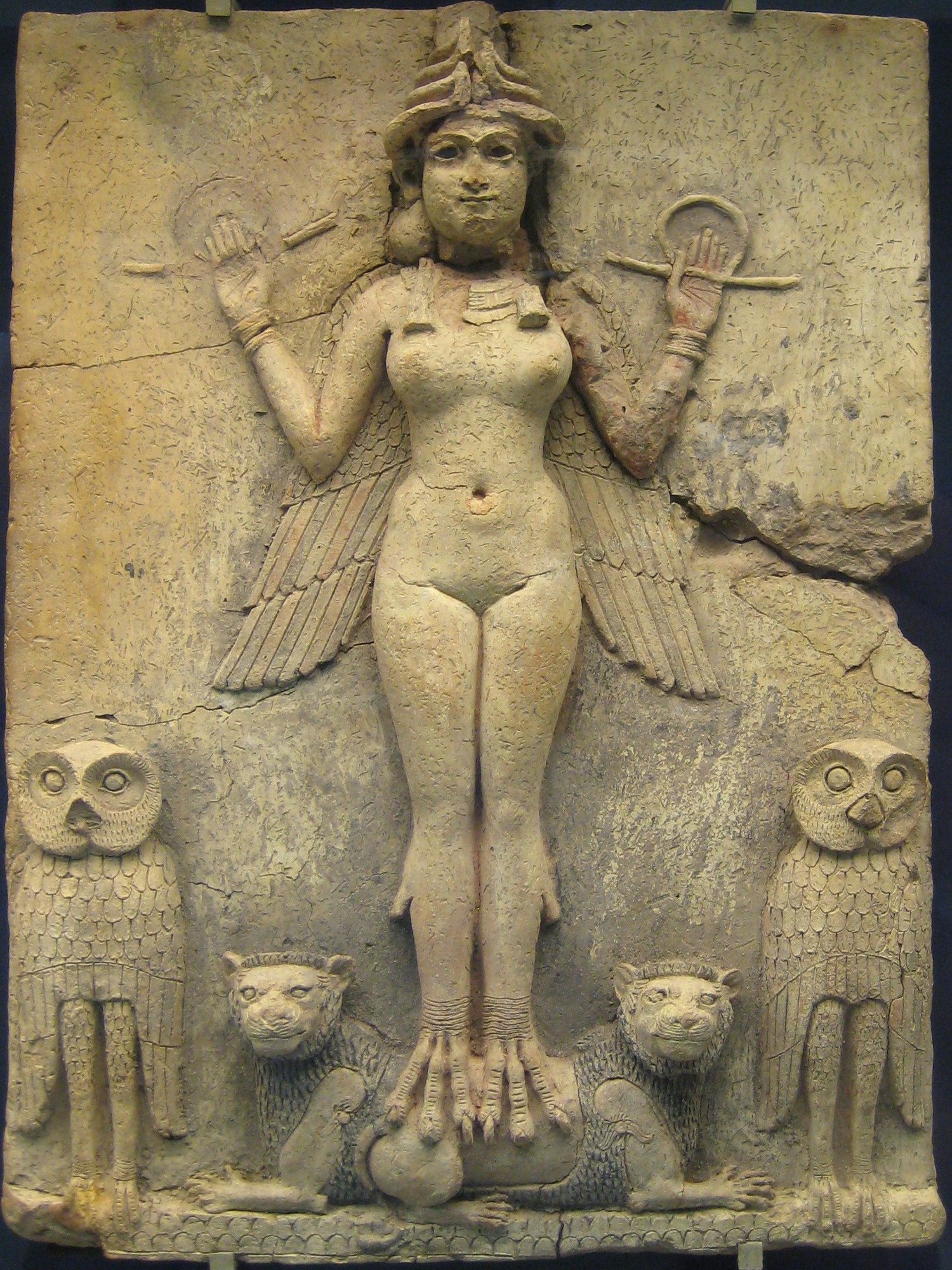
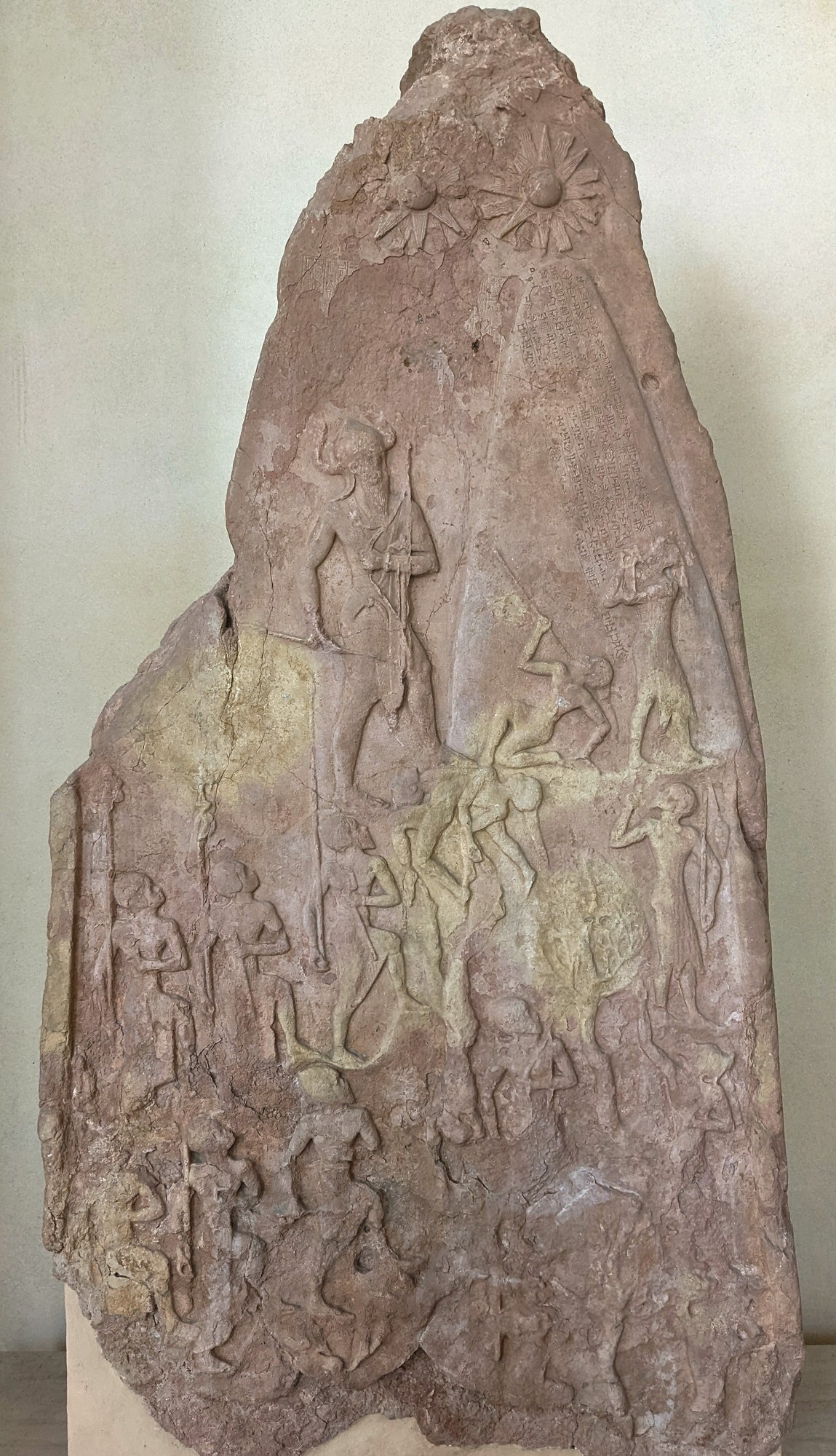
For a while it was the richest place on earth. Inana had set her throne in Agade and filled its storehouses, and the poem that tells us so is not shy about the inventory. She packed the emmer-wheat silos with gold and the white-emmer silos with silver; she brought in copper, tin and blocks of lapis lazuli and sealed the granaries from outside. Monkeys, mighty elephants, water buffalo, thoroughbred dogs, lions and long-woolled sheep crowded the public squares. Tribute came from Martu and Elam and the black land of the Meluhans, and the harbour was full of joy. This is the city at the top of its arc, and the reader should hold the picture, because the same poem is about to take every piece of it away.
The disquieting word from the temple
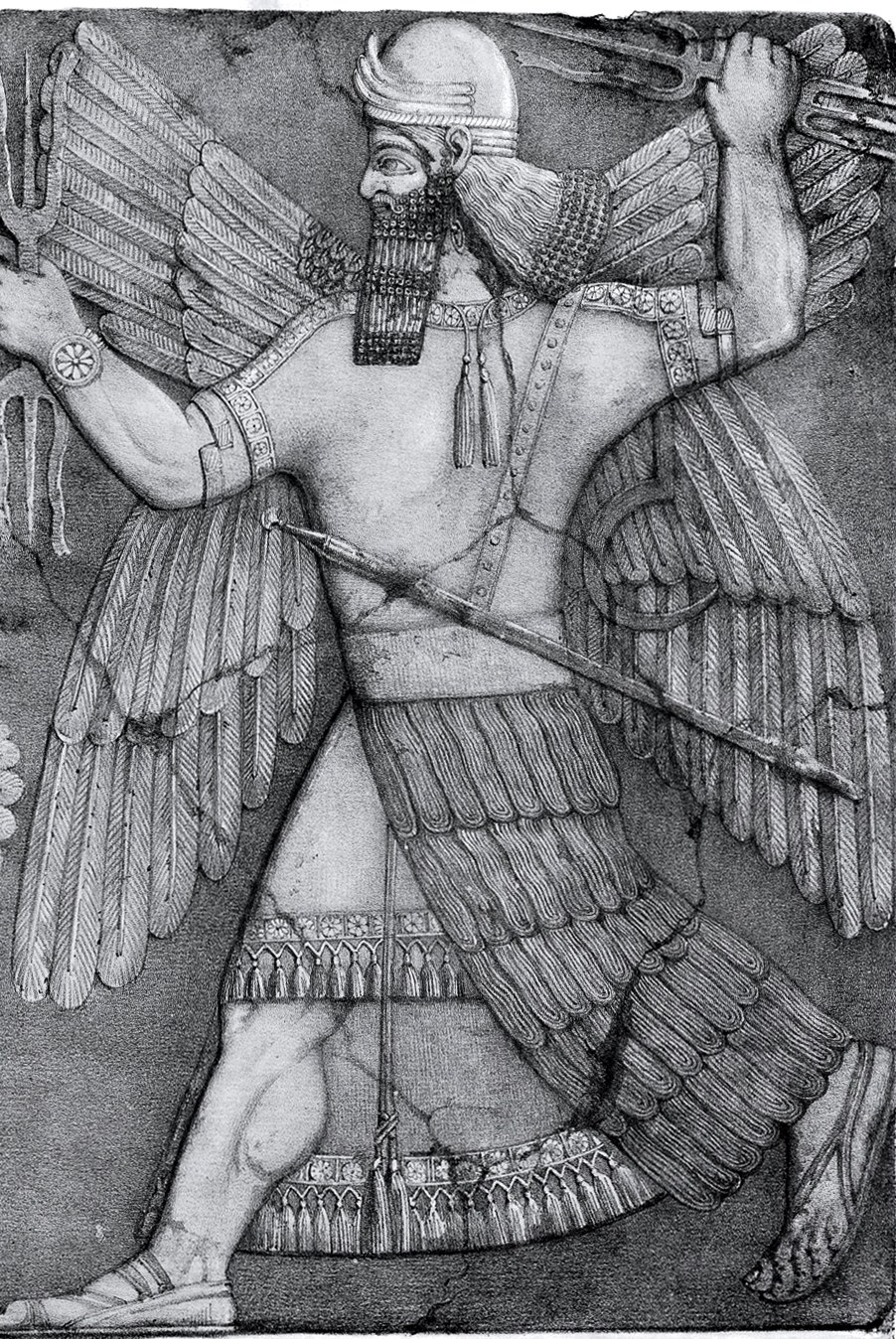
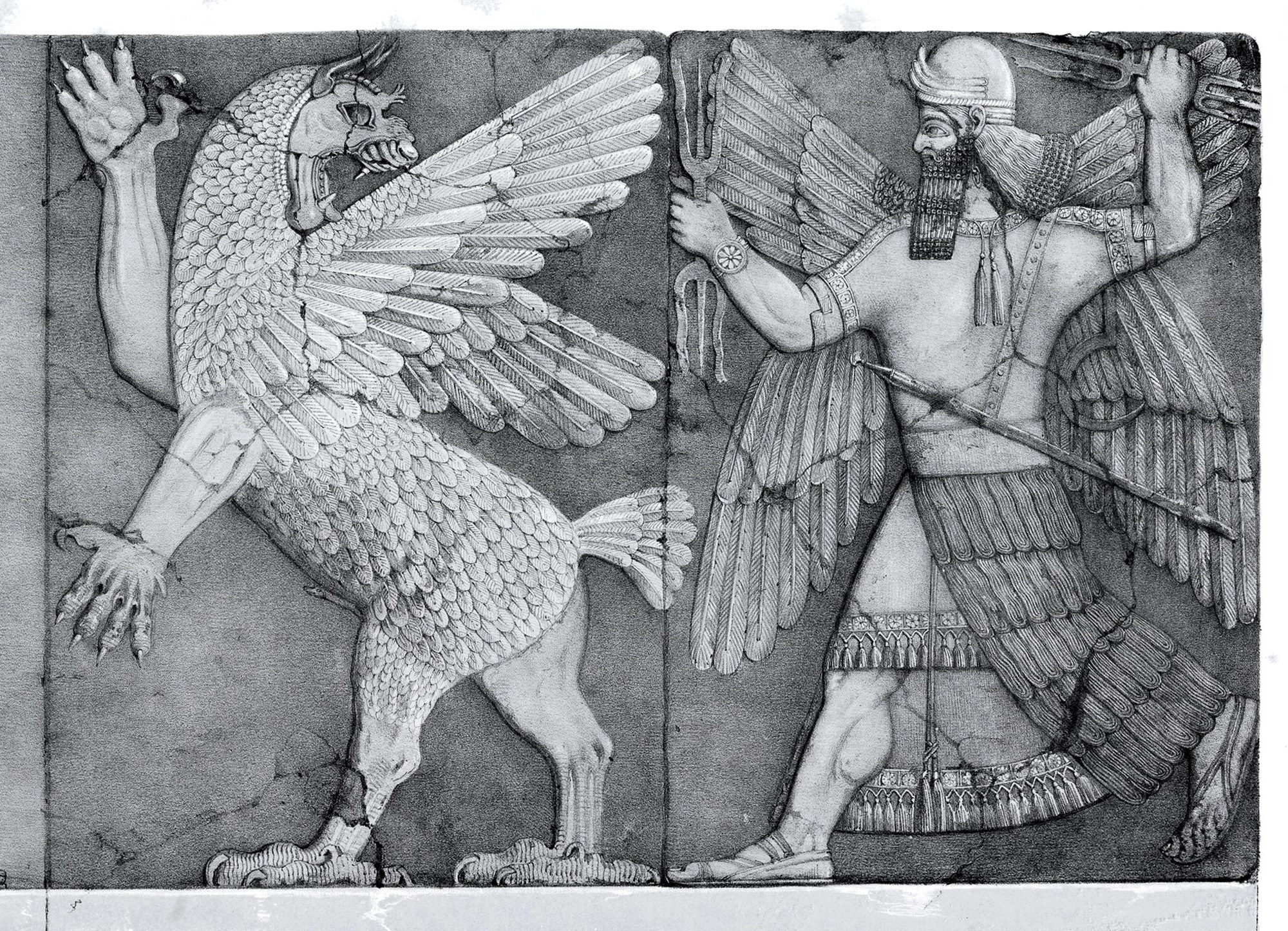
The turn arrives in a single ominous line: the statement coming from the E-kurEnlil's great temple at Nippur, the 'House of the Mountain', chief sanctuary of the god the poem makes lord of Sumer's fate. was disquieting. What Enlil had decreed against the city is never spelled out, but Inana hears it and acts at once. The patron goddess who made Agade rich abandons her own sanctuary. She strips the city of the gift of battle and hands it to the enemy, and within five or ten days the other gods come to collect what they had lent. NinurtaThe warrior son of Enlil, god of war and of the ploughed field, who here reclaims Agade's crown, emblem and throne for his own temple. carries off the royal crown, the emblem and the throne. Utu takes the city’s eloquence, Enki its wisdom, An its fearsomeness, Inana its weapons. A kingship is being dismantled part by part, quietly, before any army has marched.
Into this steps the king. Naram-Suen, the fourth ruler of Sargon’s Akkadian line and the first Mesopotamian king to call himself a god, is here simply the shepherd of Agade, who rose like daylight on the holy throne while his city wall reached the heavens. He is not told a reason either. He is shown a warning.
Mourning clothes and two silent omens
In a vision of the night Naram-Suen sees that Enlil will not let the kingdom of Agade rest in a pleasant, lasting home, that he will make its temples shake and scatter its treasures. It is a warning, not yet a sentence, and the king’s response is the most human moment in the poem. He puts on mourning clothes. He does not muster, he does not build. He waits. He persisted for seven years, the poet says, and then asks the question we are meant to ask with him: who has ever seen a king bury his head in his hands for seven years?
Twice he tries to force an answer out of the gods. He performs extispicyDivination by reading the entrails of a slaughtered animal, here a kid, to learn a god's will before an undertaking. on a kid to learn whether he may build the temple, and twice the omen has nothing to say. He wants to alter Enlil’s pronouncement, and the pronouncement will not be read. A god who wants to be told yes, and cannot even be told no, finally stops asking.
Ladders against the House of the Mountain
What he does next is the hinge of the whole composition, and it is worth being exact about what the poem claims and what history does not. Naram-Suen musters his troops and attacks the E-kur itself. Like a robber plundering a city, he sets tall ladders against the temple. He casts great axes and sharpens the double-edged agasilig blades; he drives spades against the temple’s roots and axes against its top, until the temple, like a dead soldier, bows its neck before him.
Then he takes it apart. He rips out the drainpipes and tears off the upper lintel. He throws the guardian lahama deities of the great pilasters into the fire. He strips the giguna of its cedar, cypress, juniper and boxwood, packs the gold into containers and the silver into leather bags, fills the docks with copper as if it were a huge transport of grain, and moors the loaded ships at Enlil’s own quay.
Here the reader owes the text one piece of honesty it cannot supply itself. This is theology, not chronicle. The oldest fragments of the poem come from the Ur III period around 2100 BCE, a little over a century after Naram-Suen’s reign, and the fuller version read here is Old Babylonian, copied around 1800 BCE, roughly four hundred and fifty years after the events it describes.
It was written by poets looking back at a vanished city and asking why the gods had let it fall. The archaeological record points the other way: a royal year-name has Naram-Suen receiving a weapon from Enlil’s temple, and building there continued under his son. The historical king seems to have honoured the E-kur, not razed it. The sacrilege is the poem’s answer to a question, not a memory of a crime.
The people with canine instincts
Enlil’s reply is to look at the mountains. Considering what should be destroyed in return for the wrecking of his beloved temple, he lifts his gaze to the Gubin ranges and brings down the Gutians, an unbridled people with human intelligence but canine instincts and the features of monkeys. Like small birds they swoop on the land in great flocks. Highways go untravelled, herds are driven off, the fields yield no grain and the thick clouds withhold their rain.
Then comes the famine, priced out in the poem’s cruellest arithmetic: for a shekel, only half a litre of oil, half a litre of grain, a single mina of wool, a small measure of fish. Those who lay down on the roof died on the roof; those who lay down in the house went unburied. Dogs packed the silent streets, and where two men walked together they were devoured. Heroes lay dead upon heroes, and the blood of traitors ran into the blood of honest men.
Eight gods over one city
Only now do the great gods act as a body. The survivors set up seven balag drums and made them resound to Enlil for seven days and seven nights, crying alas for the city and alas for the E-kur, until the god lay down fasting in his chamber. Then eight deities came to cool his heart with water: Suen, Enki, Inana, Ninurta, Iskur, Utu, Nuska and Nisaba. The list carries a deliberate sting, for Inana stands among the cursers of the city she once made rich and then abandoned.
Together they turned on Agade. City, you pounced on the E-kur as if you had pounced on Enlil himself; may your giguna be reduced to a pile of dust, may your pilasters and their standing lahama fall like tall young men drunk on wine. And it took. Grass grew on the tow-paths and the waggon-roads, brackish water ran where fresh had flowed, and no one could dwell or rest there. So it was, the poem says, before Utu on that very day.
The last line is the one no reader expects. After all the ruin, the poet does not mourn. He praises: Inana be praised for the destruction of Agade. The goddess who filled the storehouses and then emptied the city of its gods is thanked for the wreck, as though the whole arc from gold to grass were her single, coherent work. That is the theology the poem was built to carry. A great city fell, and rather than call it chance, the poets made it the reckoning of an offended god, complete with the crime that earned it.
May your holy walls, to their highest point, resound with mourning! May your giguna be reduced to a pile of dust! May your pilasters with the standing lahama deities fall to the ground like tall young men drunk on wine! (The cursing of Agade, ETCSL 2.1.5, 213–221, tr. ETCSL)
- The cursing of Agade (Sumerian; also The Curse of Agade / The Curse of Akkad), ETCSL text no. 2.1.5: ed. and tr. The Electronic Text Corpus of Sumerian Literature, Faculty of Oriental Studies, University of Oxford. Old Babylonian recension (281 lines), with fragments of an earlier Ur III version (Segments A–F). The complete narrative used hereInana’s endowment of Agade and its golden age; the disquieting word from the E-kur and Inana’s abandonment; the gods withdrawing crown, eloquence, wisdom and weapons; Naram-Suen’s warning dream, his seven years of mourning and his failed extispicy; the assault on the E-kur (ladders, axes, the burning of the lahama guardians, the looting of gold, silver and copper onto ships); Enlil summoning the Gutians; the famine and its runaway prices; the seven-day lamentation rite; and the eightfold curse of Suen, Enki, Inana, Ninurta, Iskur, Utu, Nuska and Nisaba, ending
Inana be praised for the destruction of Agade!
Read verbatim. - **Jerrold S. Cooper, The Curse of Agade (BaltimoreJohns Hopkins University Press, 1983):** the standard critical edition, translation and study, which establishes the poem as a historiographic and theological composition, an explanation of why Akkad fell, written long after the fall, rather than a contemporary record of it. This reading underlies the dating caution above; the sacrilege against the E-kur is the poem’s own answer to Agade’s ruin, and is contradicted by evidence (a year-name, continued building under Shar-kali-sharri) that the historical Naram-Suen honoured Enlil’s temple. Cited as the standard edition; its wording and pagination not quoted here.