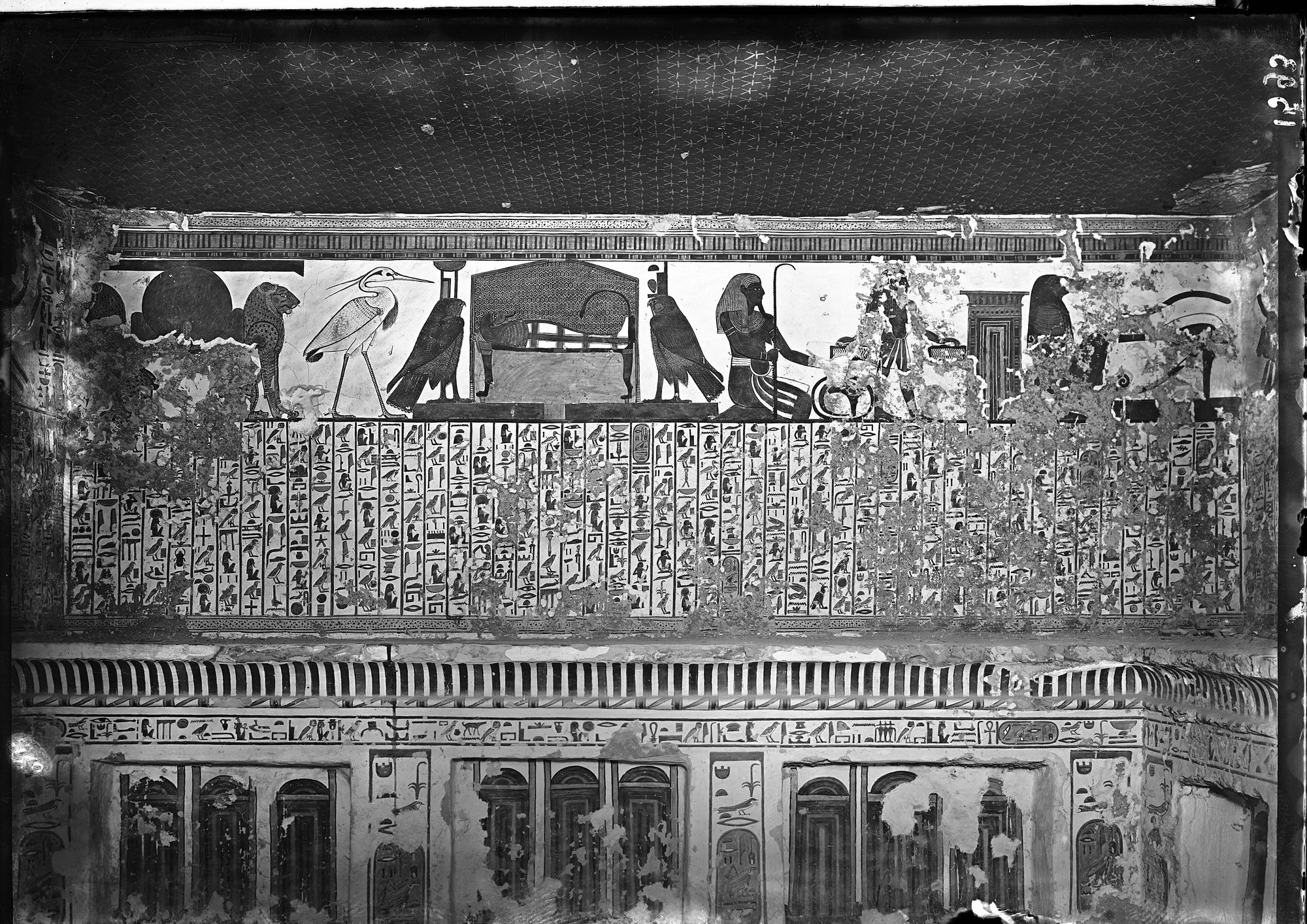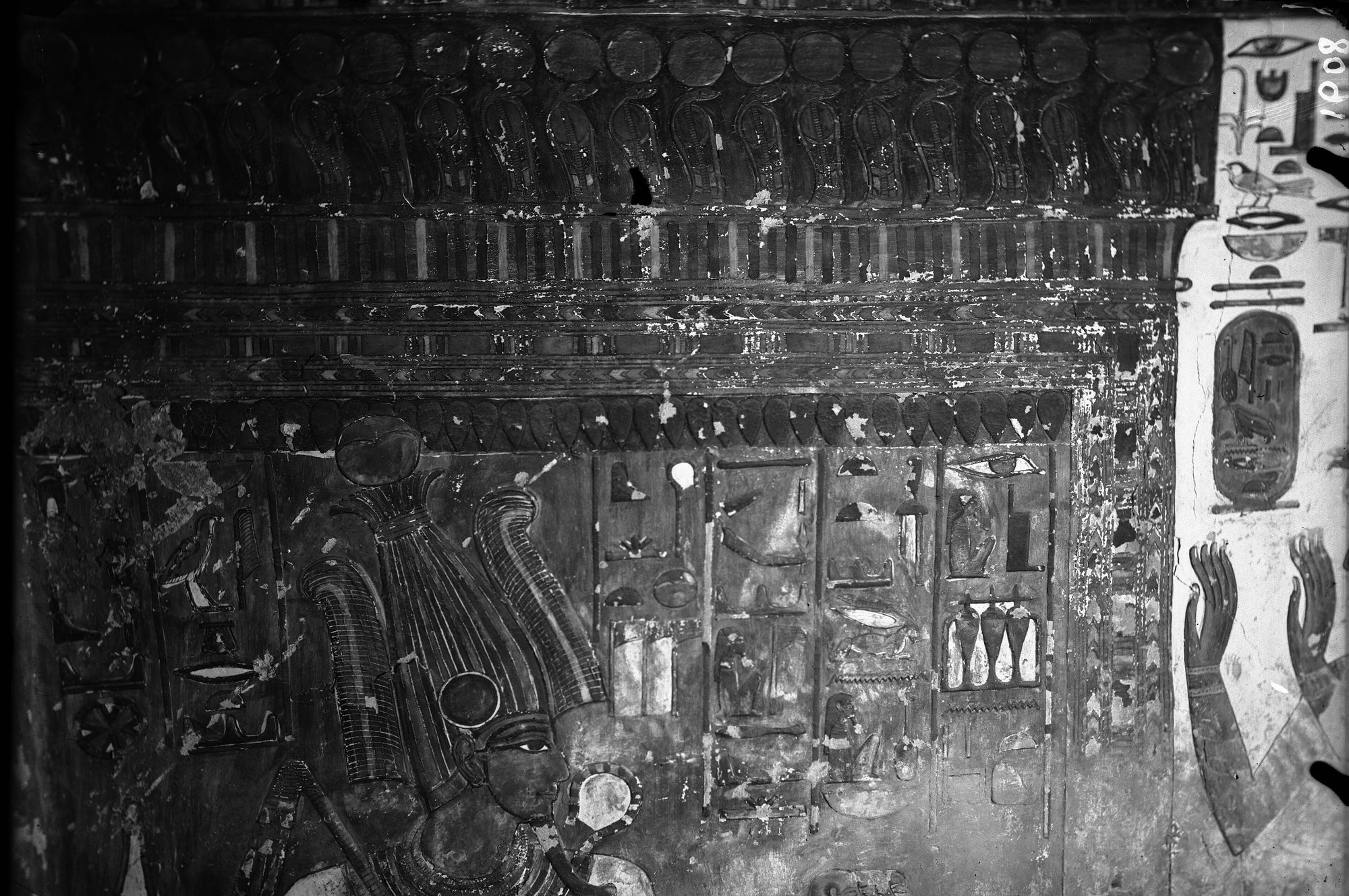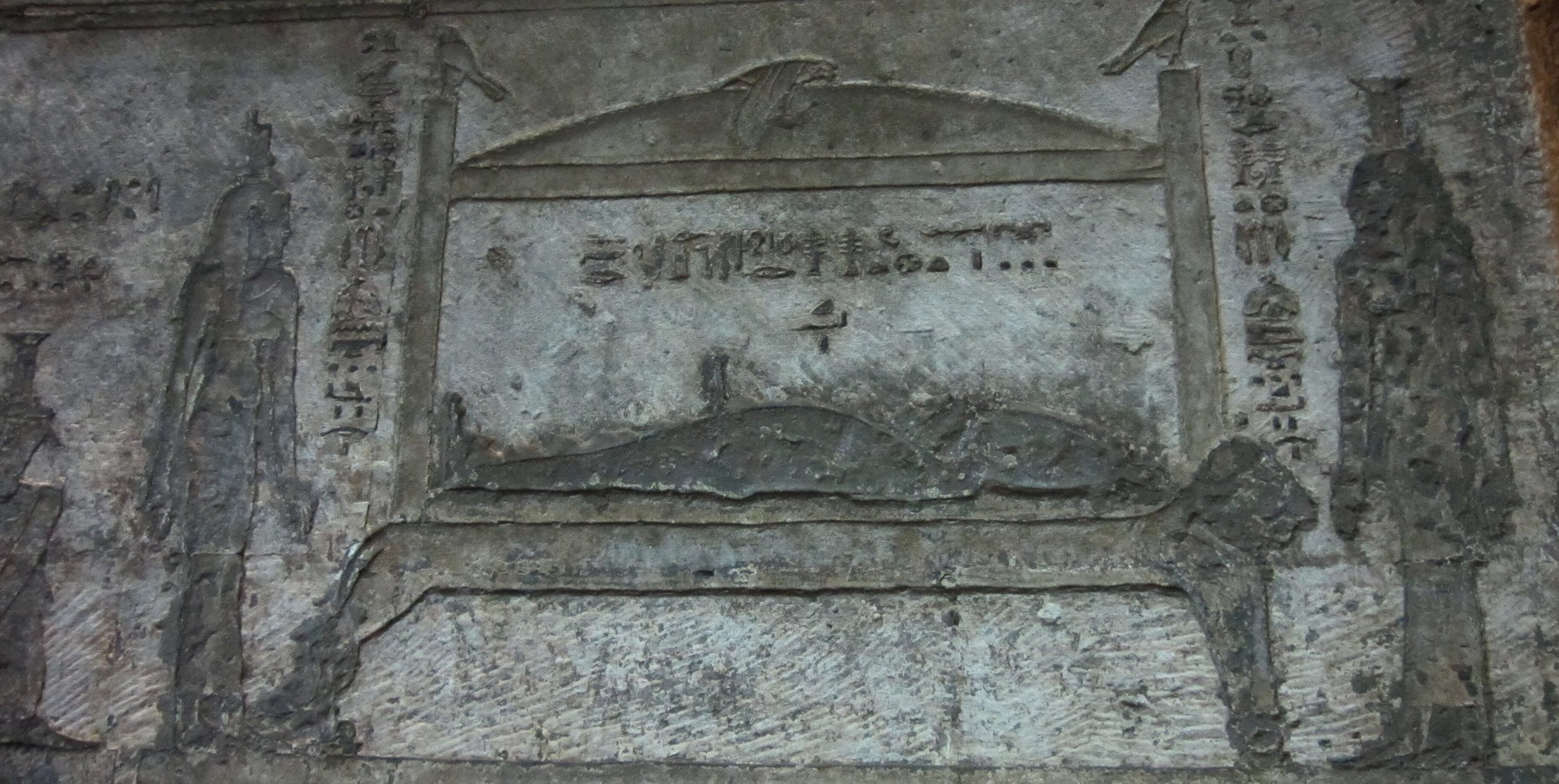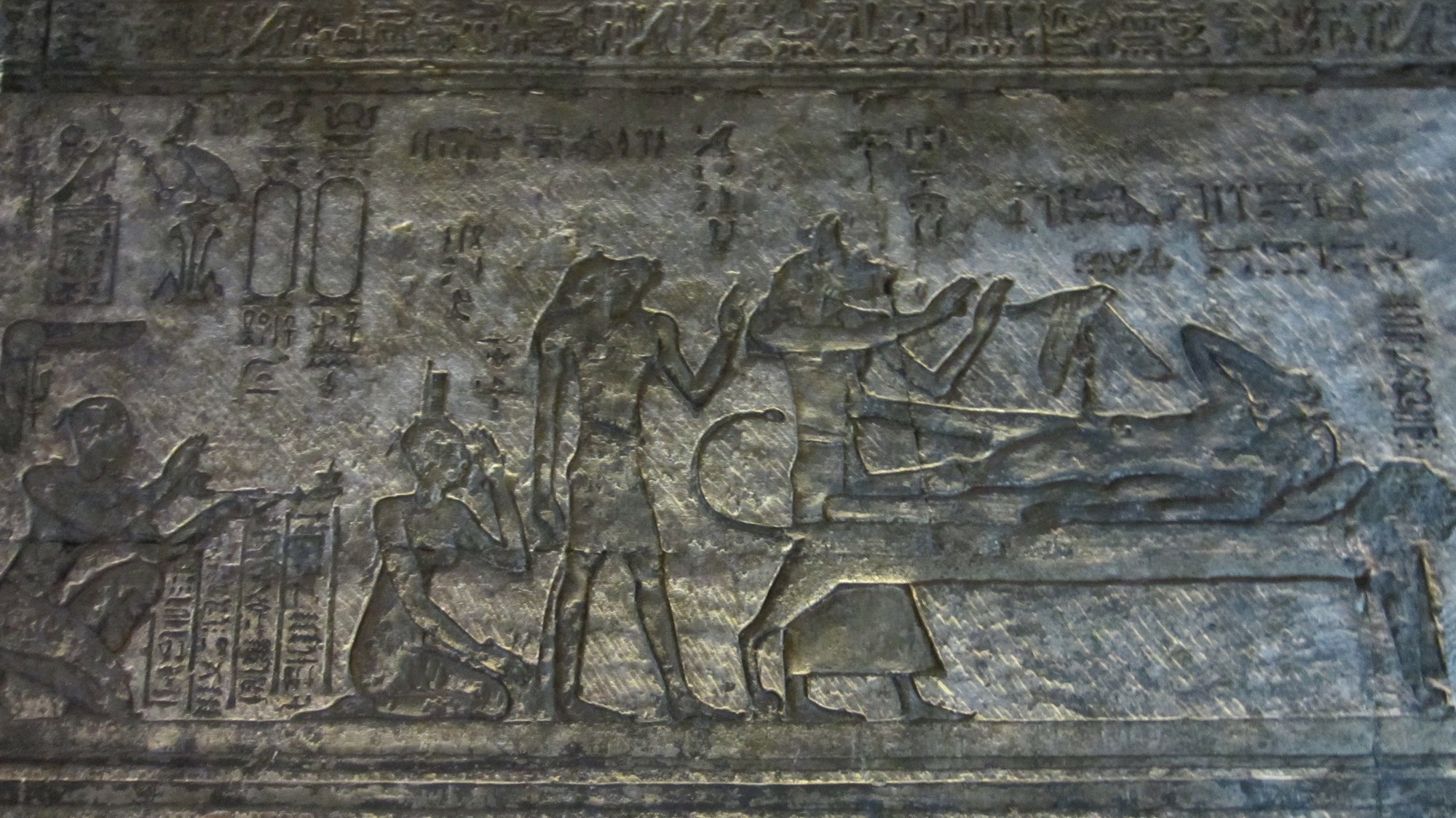
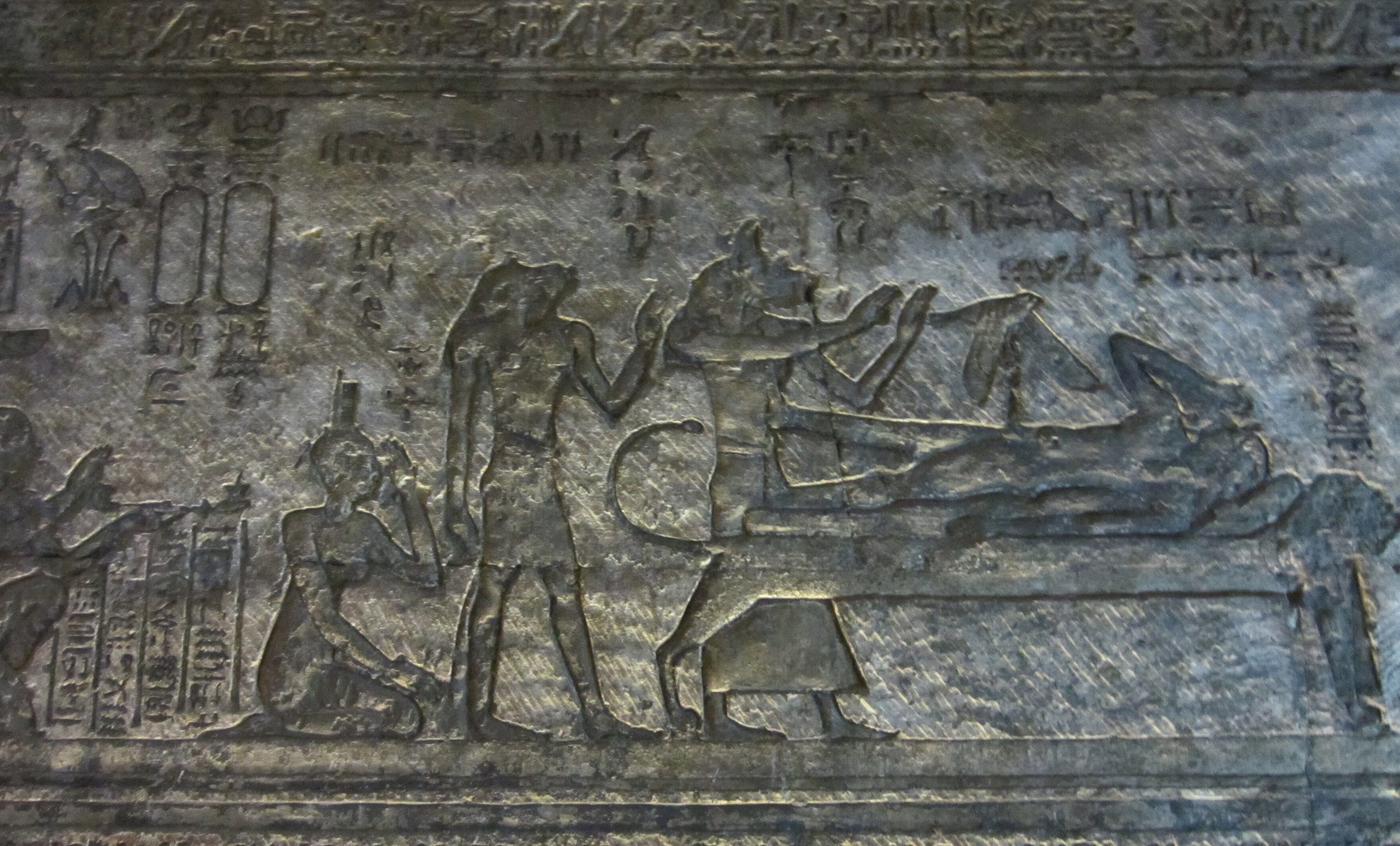
They were in love before they were born. In the story a Greek priest set down of them, the two lay together in the darkness of their mother’s body and consorted there, brother and sister, husband and wife, enamoured of each other before either had drawn a breath in the light. It is the strangest opening any marriage in myth is given, and it is load-bearing: this is not a bond that death will be allowed to end, because it began before life. Osiris will be murdered, sealed in a coffin, dismembered and scattered the length of Egypt, and none of it will get him free of her. Isis will find him every time. The most influential love story the ancient world told is not about desire fulfilled; it is about a wife who would not let go.
Enamoured in the dark of the womb
The Egyptians told the birth of these gods as a smuggling operation against fate. The Sun had cursed their mother, Nut, not to bear in any month of any year; Thoth won five extra days from the Moon, and on them the children were born, Osiris, Set, Isis, Nephthys. But the detail that matters for the couple is earlier and quieter. Isis and Osiris did not fall in love as adults and marry; they had loved each other already, in the womb, before the five days were counted out. Everything the marriage becomes, the loyalty, the searching, the refusal of the grave, is a keeping of that first promise.
When Osiris grew and became king, he made himself the gentlest of rulers, drawing his people out of a beggarly life, giving them grain and law, then leaving Egypt to carry the same gifts across the earth by persuasion and song rather than arms. And here the marriage shows its working shape: while he was away, the kingdom did not fall to his enemies, because his wife held it.
The queen who held the kingdom
Plutarch’s phrase is precise and worth keeping. In Osiris’s absence, he writes, Isis who was in control, was vigilant and alert,
and because she was, Typhon could attempt nothing. This is not the passive, weeping Isis of later sentiment; she is the reason the throne is still there when her husband comes home, and the devotion the myth is famous for begins as competence. When Set finally struck, he did it not by any weakness in his queen’s guard but by a trick that used Osiris’s own trust.
The trick is the beautiful chest. Set measured his brother’s body in secret and built a coffin to fit him exactly, gilded and lovely, and at a banquet offered it as a game to whoever should lie down and fill it. When Osiris climbed in, the conspirators slammed the lid, nailed it, poured molten lead along the seams, and floated the box down the Nile to the sea. The husband was gone in an afternoon. The marriage was not.
A lock of hair by a foreign spring
When word reached her, Isis did the two small, exact things grief does. She cut off one lock of her hair and put on a garment of mourning. Then she began to walk, wandering everywhere at her wits’ end, questioning everyone she met, stopping even to ask little children whether they had seen the chest go by.
The search took her out of Egypt entirely, to Byblus on the Phoenician coast, where the coffin had drifted and lodged inside a heather-tree that grew up and swallowed it whole, and where the local king had felled the trunk and made it a pillar for his hall. Her husband’s body was sealed inside a beam in a stranger’s palace. She sat down beside a spring, all dejection and tears, and took service in that house as a nurse to be near him.
By night, the tale says, she turned herself into a swallow and flitted round and round the pillar with a wailing lament. The Egyptians told the same thing in their own older words, in the great hymn carved on Amenmose’s stela: she flew round and round over the earth uttering wailing cries of grief, and she did not alight on the ground until she had found him.
The same image surfaces across some fourteen centuries and two languages, the New Kingdom hymn and the Greek priest alike: the wife circling the dead in the air. At Byblus she cut the coffin out of the pillar and shipped it home.
Face laid upon the dead face
What she does then is the tenderest single moment the whole corpus gives the couple. Alone, in seclusion, she opened the chest. And she laid her own face upon the face inside it, and caressed it, and wept. Before she is the great magician who will reassemble a torn god and quicken him for a child, she is simply a woman lying against her dead husband’s face.
The horror was not finished. Set found the recovered body while hunting by moonlight, tore it into fourteen pieces, and flung them across the country, and Isis had to begin the search a second time, poling a papyrus barge through the marshes to gather her husband part by part. One part she never recovered, the phallus; she made a replica and consecrated it.
An heir got from beyond death
Out of that gathering the bond does the impossible thing that makes it the model of a love outlasting death: it produces a child. The oldest words are in the Pyramid Texts, spoken over dead kings of the Old Kingdom more than two thousand years before Plutarch: Thy sister comes to thee, rejoicing for love of thee. Thou hast placed her on thy phallus, that thy seed may go into her,
and from that union Horus the pointed has come forth from thee as Horus who was in Sothis,
the seed likened to the star Sirius, luminous and astral.
The great hymn says it as plainly: she drew from him his essence, and she made therefrom an heir,
and then suckled the child in solitariness.
In those oldest mourning-spells Nephthys stands beside her sister as the second of the two who heal the dead god; but at the tenderest beats, the swallow at the pillar, the face on the dead face, the child suckled in solitariness,
Isis is alone.
Here the traditions pull apart, and the honest thing is to say so rather than smooth it. The Egyptian sources have Isis conceive the avenging Horus directly from the revived body. Plutarch, who has the real phallus lost to the fish and only a replica made, instead reports a second posthumous union producing a lesser child, Harpocrates, born weak in his lower limbs. The two versions disagree on the mechanism and even on which Horus is meant. What they agree on is the thing that matters to the marriage: a husband dead, dismembered and buried still fathers a son on the wife who loved him.
Mercy at the end of the war
The bond keeps working from the far side of death. Osiris, now lord of the dead, comes back to the living world for one purpose, to train the boy Horus for the war of vengeance against Set. And when the war is won and the captured Typhon is handed to Isis in chains, she does the thing that sets her apart from her son: she lets him go.
Horus, enraged that his father’s murderer should walk free, wrenches the royal diadem from his mother’s head, and Thoth crowns her instead with a helmet shaped like a cow’s horns. The mother’s mercy against the son’s need for blood is a real fault-line in the family. The woman who searched the whole earth for her husband’s scattered body was not cruel even to the brother who scattered it.
That is the couple the Egyptians kept before them for three thousand years: not two gods who lived happily, but two parted by the worst thing that can happen and not, finally, parted at all. A wife who held his kingdom while he lived, circled the earth crying for him when he died, laid her face on his dead face, and drew a living son out of him after the grave. Egyptians came in time to hope to be spoken over as Osiris was and made to live; and the thing that made him live, in every telling, was that someone loved him enough to go and find him.
Thy sister comes to thee, rejoicing for love of thee. Thou hast placed her on thy phallus, that thy seed may go into her. (Pyramid Texts, Utterance 366, §632, tr. Mercer)
- Plutarch, De Iside et Osiride (Of Isis and Osiris) 12–19 (355D–358E), trans. Frank Cole Babbitt, Loeb Classical Library vol. V (1936), via LacusCurtius (
penelope.uchicago.edu/Thayer/E/Roman/Texts/Plutarch/Moralia/Isis_and_Osiris*/A.html)the only continuous ancient narrative of the couple’s story, source for the pre-natal love (consorted together in the darkness of the womb before their birth
), the five intercalary birthdays, Isisin control… vigilant and alert
as regent, Typhon’s conspiracy of 72 with the Ethiopian queen Aso and the fitted chest sealed with molten lead and cast out at the Tanitic mouth on the 17th of Athyr in the 28th year, Isis’s cut lock of hair and mourning garment at Kopto and her wandering questioning even of children, the coffin at Byblus grown into a heather-tree cut into a roof-pillar, Isis as nurse and as the swallow circlingwith a wailing lament
, Isis opening the chest to layher face upon the face within
and weep, the dismemberment into fourteen parts, the phallus lost to the three fish (lepidotus, sea-bream, pike) and its consecrated replica, the second posthumous union bearing the weak-limbed Harpocrates, Osiris returning from the dead to train Horus, and Isis releasing the captured Typhon while Horus wrests her diadem. A 1st–2nd century CE Greek philosophical retelling using Greek god-names (Cronus for Geb, Rhea for Nut, Hermes for Thoth, Typhon for Set, Dionysus for Osiris), late and interpretive, not an Egyptian primary text. - Pyramid Texts, Utterance 366, §§626–633 (esp. §632–633), trans. Samuel A. B. Mercer, The Pyramid Texts (Longmans, Green & Co., 1952); public-domain scan, archive.org id
THEPYRAMIDTEXTSTRANSLATIONthe earliest Egyptian witness to the bond surviving death, source for Isis and Nephthys as the paired mourner-healers who come to Osiris andheal thee
(§628), the posthumous conception (Thy sister comes to thee, rejoicing for love of thee. Thou hast placed her on thy phallus, that thy seed may go into her… Horus the pointed has come forth from thee as Horus who was in Sothis
, §632), the seed likened to Sothis (Sirius), and Horus as the sonwho avenges his father
(§633). Cited by paragraph number in the canonical manner; Mercer prints the dead king asN.
- Great Hymn to Osiris, Stela of Amenmose (Louvre C286), New Kingdom (18th Dynasty); the Isis passage read verbatim in E. A. Wallis Budge, Osiris and the Egyptian Resurrection vol. I (London, 1911), p. 94; public-domain scan, archive.org id
osirisegyptianre01budgthe Egyptian counterpart to Plutarch’s grief-and-search, source for Isis the winged mourner whoflew round and round over the earth uttering wailing cries of grief, and she did not alight on the ground until she had found him
, whomade to rise up the helpless members of him whose heart was at rest, she drew from him his essence, and she made therefrom an heir
, and whosuckled the child in solitariness
. Quoted here in Budge’s public-domain 1911 wording; the standard modern translation and theC286
museum designation are Miriam Lichtheim, Ancient Egyptian Literature vol. II (1976) pp. 81–86 (in copyright, not quoted here).