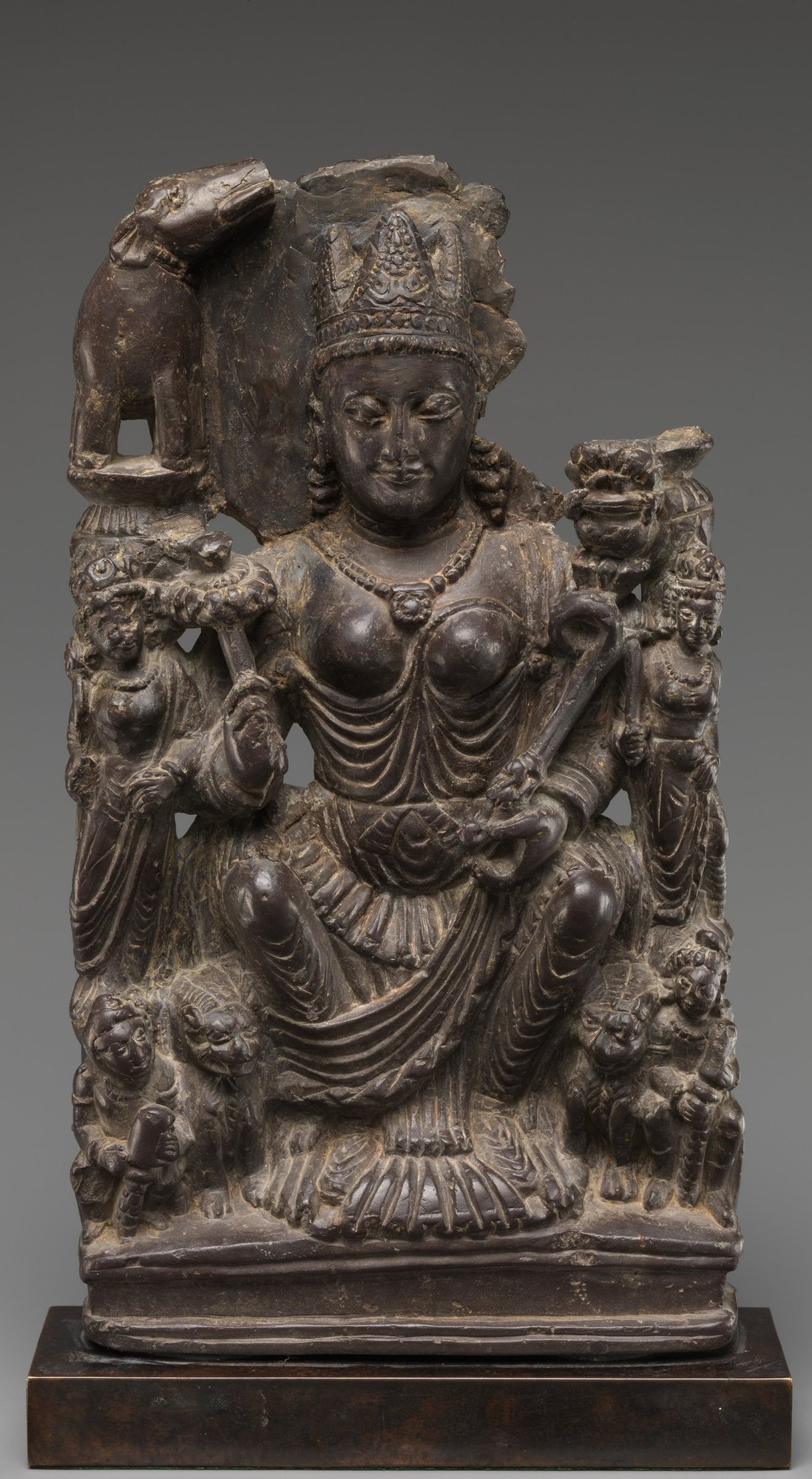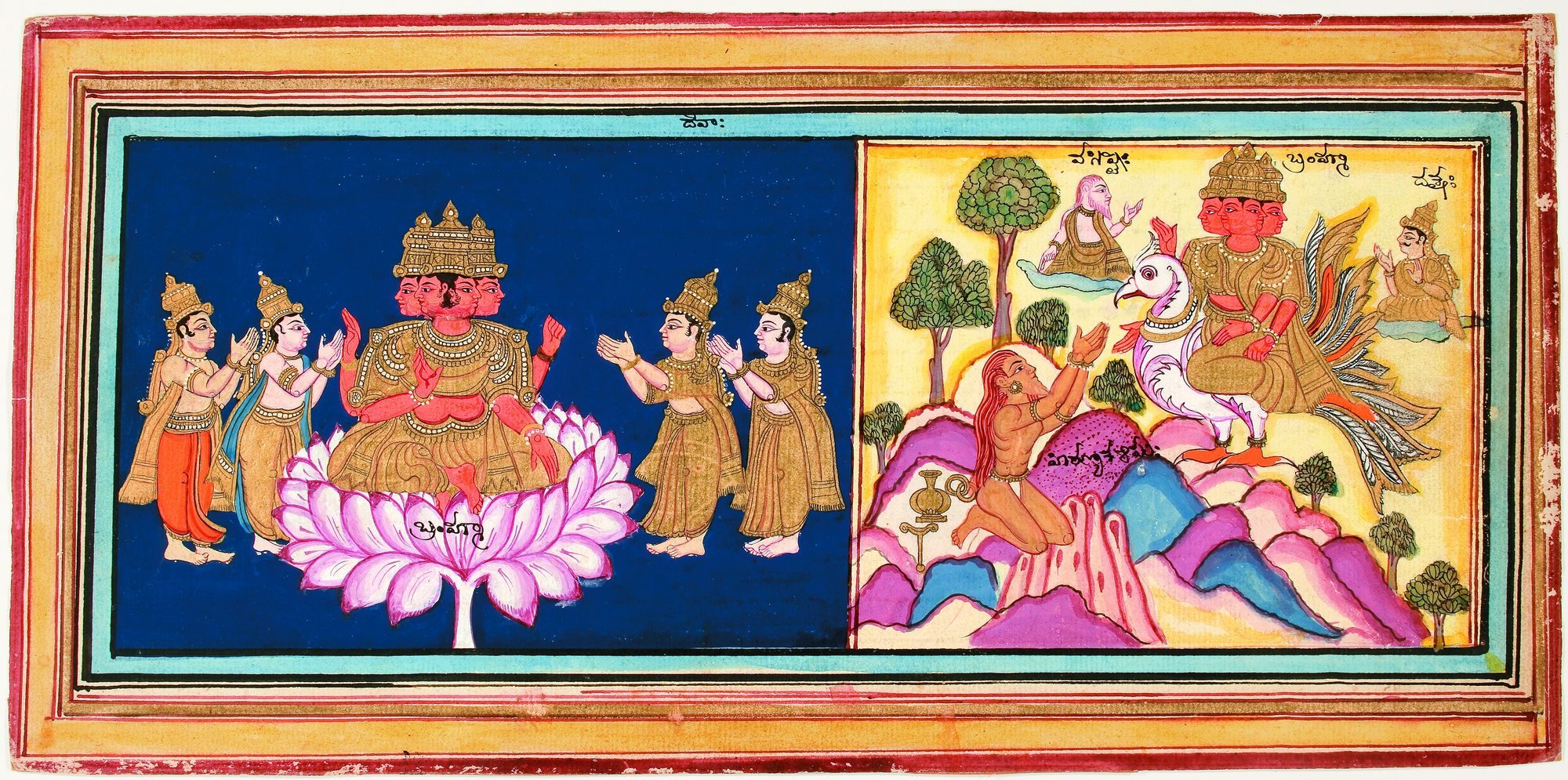
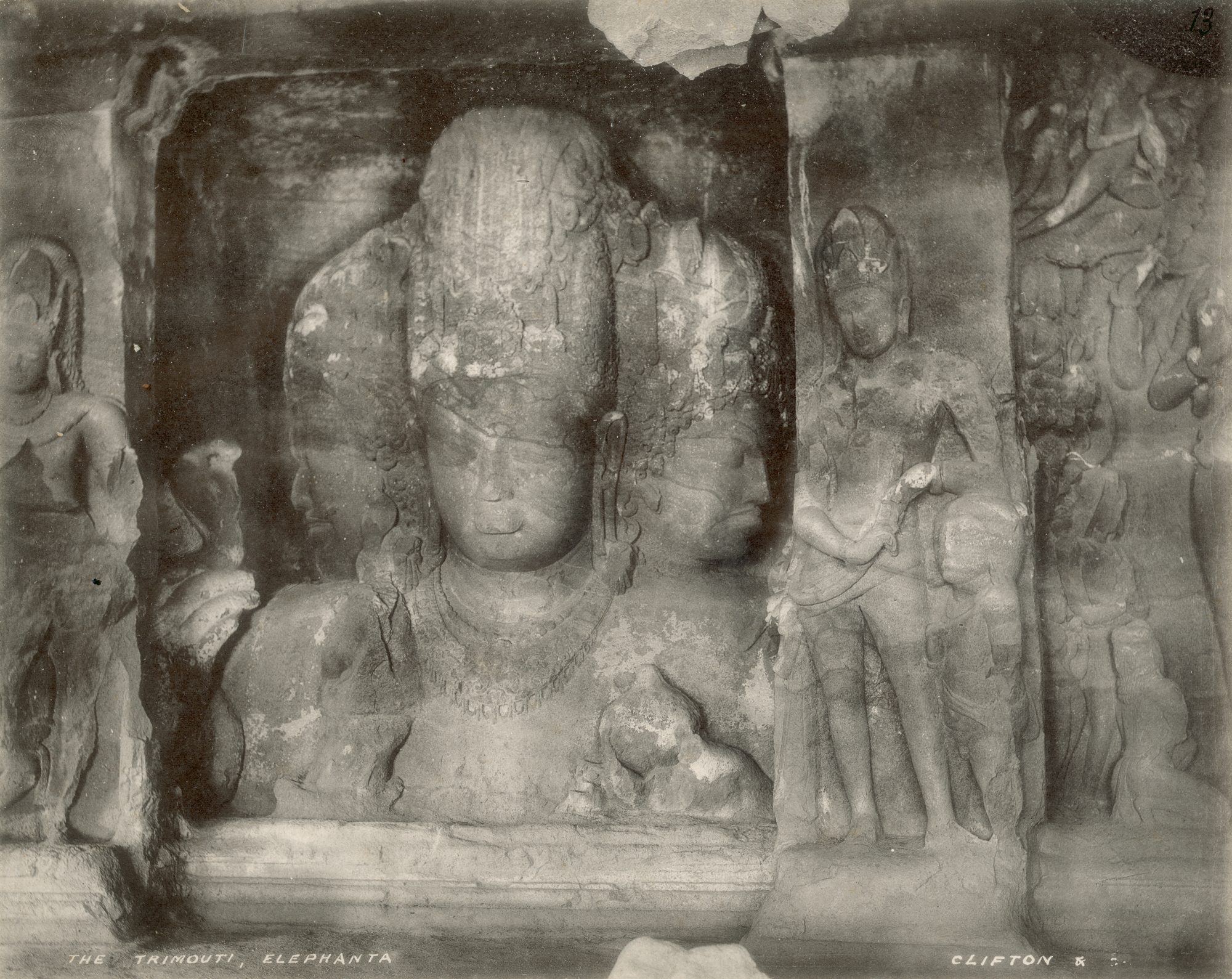
One god sits on the primeval waters inside a golden egg, and the egg is the whole world. Everything is folded away inside it: the mountains are its very substance, the oceans are the waters that fill its cavity, and within that shell wait the continents and the seas, the planets and the stars, the gods and demons and every man and woman yet to breathe. Wilson likens the thing to a coconut, all pulp within and husk without. The god does not create the world from outside it, the way a potter shapes a bowl. He becomes it.
He stirs into activity and, taking the name of the creator, spins the egg open into a universe. He steadies into goodness and, taking a second name, holds that universe together for a vast and patient age. Then he darkens into a third mood, takes a third name, opens his mouth, and swallows the whole of it back down. This is the doctrine the tradition would come to call the Trimūrti, the three-form: not three gods who divided the labour of the cosmos between them, but one reality that wears three faces because a single power cannot create, sustain and destroy while wearing only one.
Three names, three offices
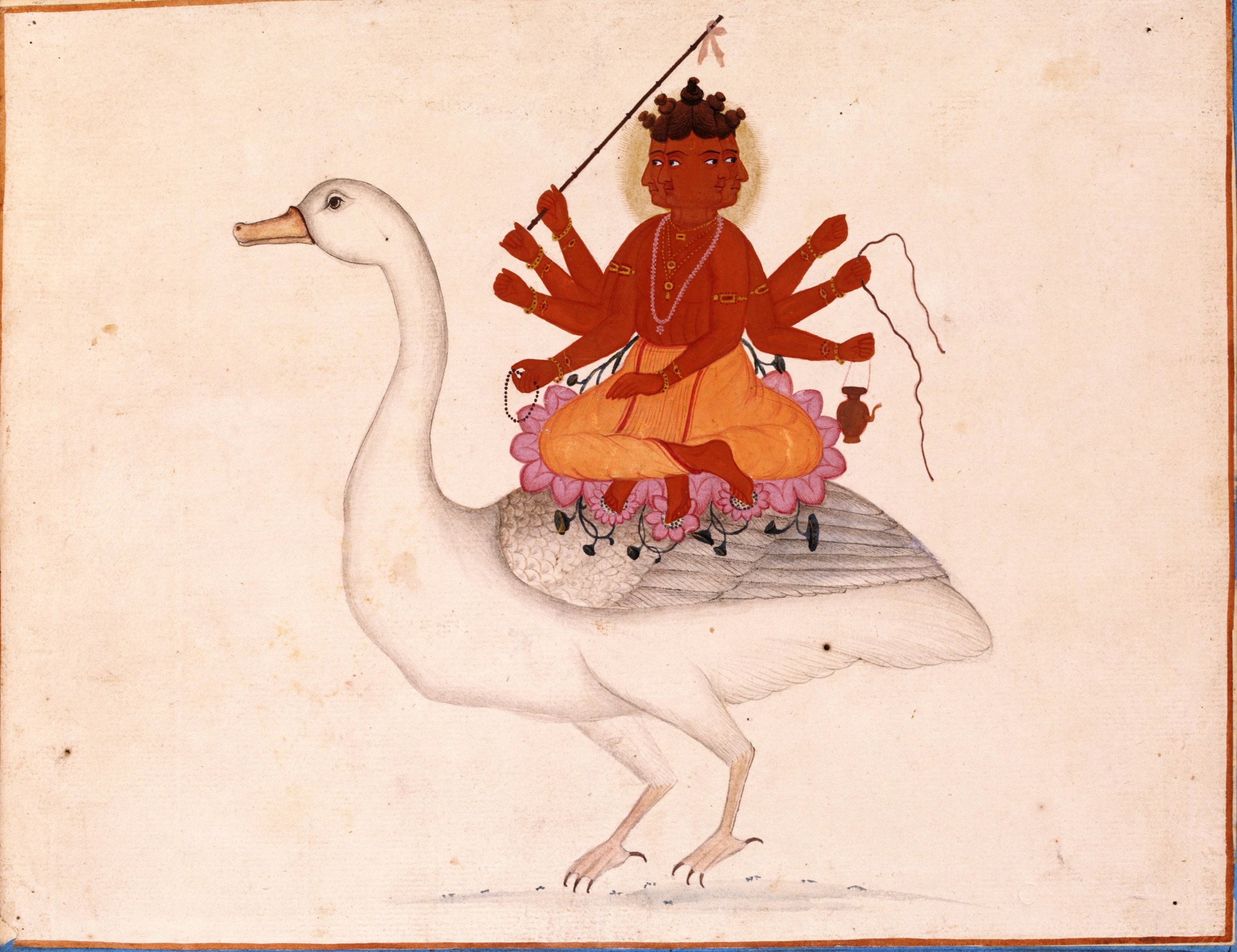
The Vishnu Purāṇa states it about as plainly as a sacred text ever states anything. In its opening cosmogony the supreme being is invoked under three names at once, as Hiraṇyagarbha, Hari and Śaṅkara, which Wilson glosses without fuss: Hiraṇyagarbha, the golden-egg-born, is a name of Brahmā; Hari is Vishnu; Śaṅkara is Śiva. One deity, three names, and the names correspond to three offices: the creator, the preserver, the destroyer.
The text then does something more precise than a mere list. It ties each office to a quality of matter itself, to one of the three guṇas, the strands out of which the whole material world is woven. There is activity, or passion. There is goodness, or light. There is darkness, or inertia. And the god operates through each in turn.
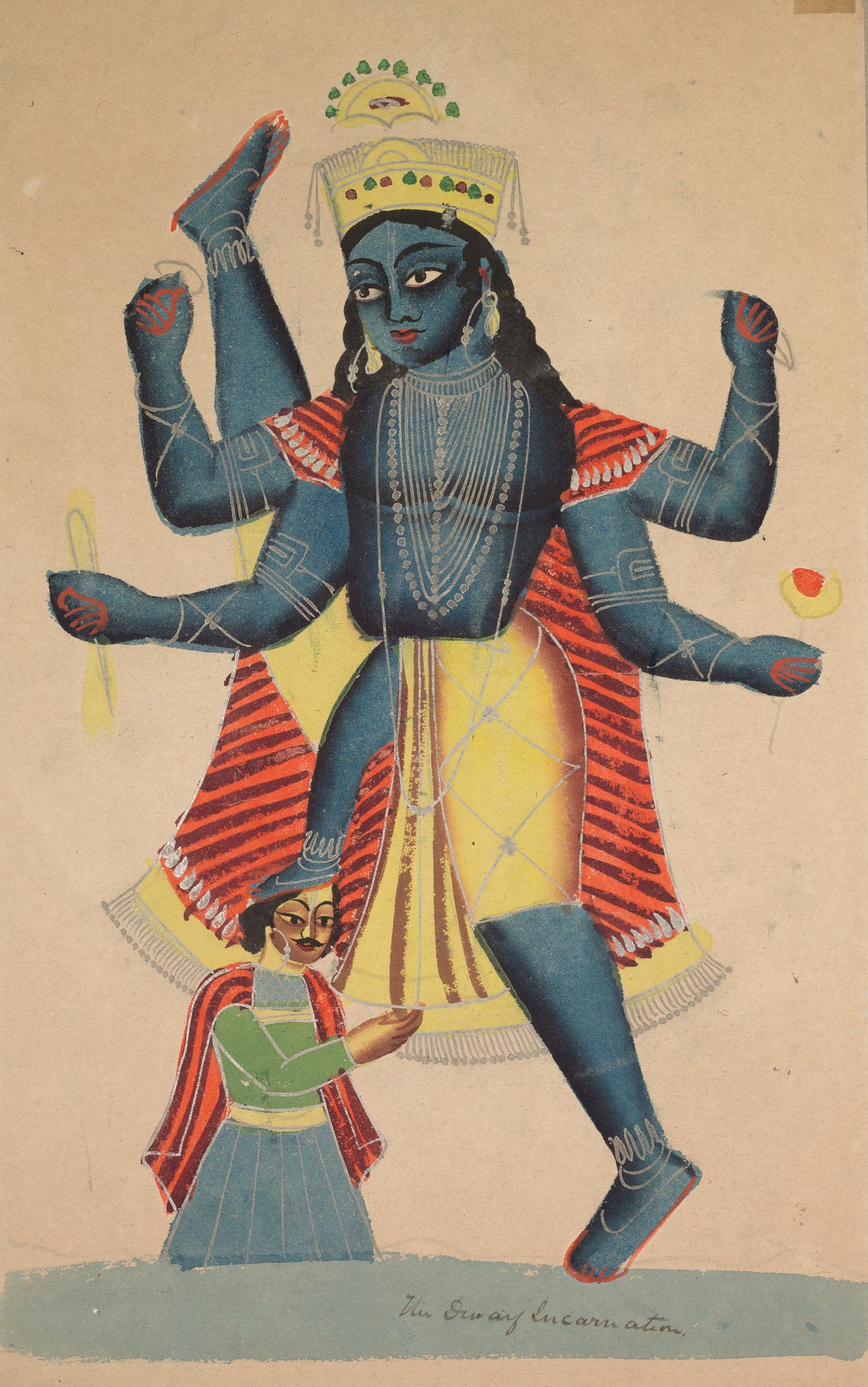
Watch the sequence in the Purāṇa’s own order. When the text clothes him in activity, Hari the lord of all himself becomes Brahmā and creates the universe. That is the first turn: the restless, generative energy of activity, and the god wearing it is the creator. Then the world exists, and it must be kept. Vishnu, with the quality of goodness, preserves created things through the long succession of ages, holding the cosmos steady against the pull of ruin until the close of the enormous span the tradition calls a Kalpa.
That is the second turn: the calm sustaining light of goodness, and the god wearing it is the preserver. And then the age runs out. The same mighty deity, now called Janārdana, invested with the quality of darkness, assumes the awful form of Rudra and swallows up the universe. That is the third turn: the devouring inertia of darkness, and the god wearing it is the destroyer.
One actor taking on masks
The mapping is not arbitrary, and to press the point Wilson quotes a second scripture. He quotes the Mārkaṇḍeya Purāṇa on exactly this point. In the capacity of Brahmā, it says, the god creates the worlds; in that of Rudra he destroys them; in that of Vishnu he is quiescent. These are the three states of the self-born. Brahmā is the quality of activity, Rudra the quality of darkness, Vishnu the quality of goodness, and so the three gods are the three qualities.
The Trimūrti, in other words, is not a family of deities but a metaphysics wearing divine faces: creation is what activity looks like when you personify it, preservation is personified goodness, dissolution is personified darkness, and behind all three stands the one who takes on the qualities the way a single actor takes on masks.
Why this is not a Trinity
Here is where a careful reader must slow down, because the easy version of this doctrine is the wrong one. It is tempting to reach for a comfortable analogy and call the Trimūrti the Hindu Holy Trinity, three co-equal persons of one godhead, each honoured alike. That is not what the texts say, and the Vishnu Purāṇa gives the game away in a single word. The one god who takes all three names is not some neutral absolute floating above the triad.
He is Vishnu. It is Hari who becomes Brahmā to create; it is Janārdana, a name of Vishnu, who becomes Rudra to destroy. The Purāṇa’s own chapter argument spells out the conclusion: the one only god, Janārdana, takes the designation of Brahmā, Vishnu and Śiva, according as he creates, preserves or destroys. The triad is real, but it is a Vaiṣṇava device. Brahmā and Śiva are, in this telling, the creating-mood and the destroying-mood of Vishnu himself.
The text does not even pretend to hold the three in balance. Wilson, in his preface, puts the Purāṇa’s bias with a bluntness that would be startling if it were not so frank about its own partisanship: the work sets out to show why Vishnu is the only one of the triad entitled to respect, Śiva being licentious, Brahmā arrogant, and Vishnu alone pure. This is a translator characterising a text’s slant, not a neutral report on Hindu belief, and it should be read as exactly that. But it makes the essential point unmissable.
There is no view from nowhere here. Each of the great sects tilts the triad toward its own supreme god. The Vaiṣṇava texts make Brahmā and Śiva into aspects of Vishnu; the Śaiva Purāṇas mirror the move exactly, enthroning Śiva as the supreme reality who contains Brahmā and Vishnu within himself and rejecting outright the notion that Śiva is merely the dark, destructive mode of someone else. The perfectly balanced, co-equal Trimūrti of the textbooks is more a later systematisation, tidy and even-handed, than a thing any devotee actually worshipped.
Sometimes Śiva before Vishnu
And yet the tradition does preserve, in at least one luminous place, the even-handed version. Kālidāsa gives the doctrine its most quoted literary form in the Kumārasambhava, where the gods lift a hymn to Brahmā. Salutation to thee of three forms, they sing, the one soul before the creation of the world, who afterwards divided thyself into the three guṇas of goodness, activity and darkness; manifesting thy might by the three forms, thou alone hast become the cause of the creation, the protection and the retraction of the universe. It is the whole doctrine in a single breath of praise: one soul, prior to everything, dividing into three qualities and three works.
And elsewhere in the same poem Kālidāsa states the egalitarian reading outright, in a stanza that refuses to rank the three at all. That was but one form divided in three ways, he writes, and their seniority is interchangeable: sometimes Śiva comes before Vishnu, sometimes Vishnu before Śiva, sometimes the creator before them both, and at others the two before the creator. No fixed hierarchy, no permanent first among equals. Here, and here almost alone, the three faces are truly level. This is the counter-text worth holding onto, the reminder that the subordinating versions were choices and not the only possible reading.
A wheel, not an arrow
There is one last thing the doctrine insists on, and to miss it is to misread the whole shape of the thing. The destruction is not the end. When Rudra has devoured all things and turned the world into one vast ocean, the Supreme does not simply cease. He reposes upon his mighty serpent-couch amid the deep; he sleeps through the long night of dissolution; he wakes after his season, and again, as Brahmā, becomes the author of creation. The Trimūrti is a wheel, not an arrow.
Create, preserve, devour, sleep, wake, create again, and the third face turns back into the first without a seam. What looks from inside a single lifetime like an ending is, from the god’s vantage, only the darkening trough between one turn of the wheel and the next. The reader who takes only the three names and the three functions away from all this has taken the skeleton and left the life. The life is in the turning: one reality, three faces, and a motion with no first term and no last.
Salutation to thee of three forms, the one soul before the creation of the world, who afterwards dividedst thyself into the three Guṇas (Satva, Rajas and Tamas)… Manifesting thy might by the three forms… thou alone hast come to be the cause of the creation, the protection and the retraction (of the universe). (Kumārasambhava II.4, II.6, tr. M. R. Kale)
- Vishnu Purāṇa, Book I, Chapter 2 (
Creation; the Mundane Egg
), trans. H. H. Wilson (archive.org idindia.history.resource.77336)the load-bearing statement of the doctrine — the supreme being invoked asHiraṇyagarbha, Hari, and Śaṅkara, the creator, the preserver, and destroyer,
glossed by Wilson as Brahmā, Vishnu and Śiva; the operational split across the world-cycle (“Affecting then the quality of activity, Hari… himself becoming Brahmā, engaged in the creation of the universe. Vishṇu, with the quality of goodness… preserves created things… until the close of the period termed a Kalpa; when the same mighty deity, Janārdana, invested with the quality of darkness, assumes the awful form of Rudra, and swallows up the universe”); the chapter argument’s formula thatthe one only god, Janārddana, takes the designation of Brahmá, Vishnu, and Siva, accordingly as he creates, preserves or destroys
; the golden mundane egg (the natural abode of Vishṇu in the character of Brahmā
); and the create-preserve-devour-sleep-wake cycle (the Supreme reposes upon his mighty serpent-couch amidst the deep: he awakes after a season, and, again, as Brahmā, becomes the author of creation
). The framing throughout is Vaiṣṇava: theone only god
is Vishnu/Janārdana. - Mārkaṇḍeya Purāṇa XLVI.16 ff., quoted in Wilson’s note to Vishnu Purāṇa I.2the explicit guṇa-to-function-to-god mapping —
In the capacity of Brahmā, he creates the worlds; in that of Rudra, he destroys them; in that of Vishṇu, he is quiescent. These are the three Avasthās (hypostases) of the self-born. Brahmā is the quality of activity; Rudra, that of darkness; Vishṇu… goodness. So, therefore, the three gods are the three qualities.
Read verbatim only as the block quotation embedded in Wilson’s footnote; the Mārkaṇḍeya Purāṇa’s own edition was not consulted this session, so this is citedas quoted by Wilson,
not from the Mārkaṇḍeya directly. - Kālidāsa, Kumārasambhava, Canto II.4–8 (the gods’ hymn to Brahmā), trans. M. R. Kale (archive.org id
KumarasambhavaCantosI-vii-SanskritCommentaryEnglishTranslationNotes)the classic literary crystallisation —Salutation to thee of three forms, the one soul before the creation of the world, who afterwards dividedst thyself into the three Guṇas (Satva, Rajas and Tamas)… thou alone hast come to be the cause of the creation, the protection and the retraction (of the universe).
- Kālidāsa, Kumārasambhava, Canto VII.44, trans. M. R. Kale (same edition)the egalitarian counter-text, the key stanza against sectarian subordination —
one form divided in the three ways,
whose seniority or juniority iscommon (interchangeable)
:sometimes Hara (Śiva) is prior to Vishṇu, or Hari to the former; sometimes the Creator (Brahmā) to them both; at others the two to the Creator.
- H. H. Wilson, Preface to the Vishnu Purāṇa (Vol. I) (archive.org id
india.history.resource.77336)the sectarian-subordination finding — the Vishnu Purāṇa is written to showwhy Vishṇu is the only one of the triad entitled to respect; Śiva being licentious, Brahmā arrogant, and Vishṇu alone pure.
This is the nineteenth-century translator characterising the text’s Vaiṣṇava bias, a scholarly/translator’s framing rather than a primary myth-claim, and is labelled as such.