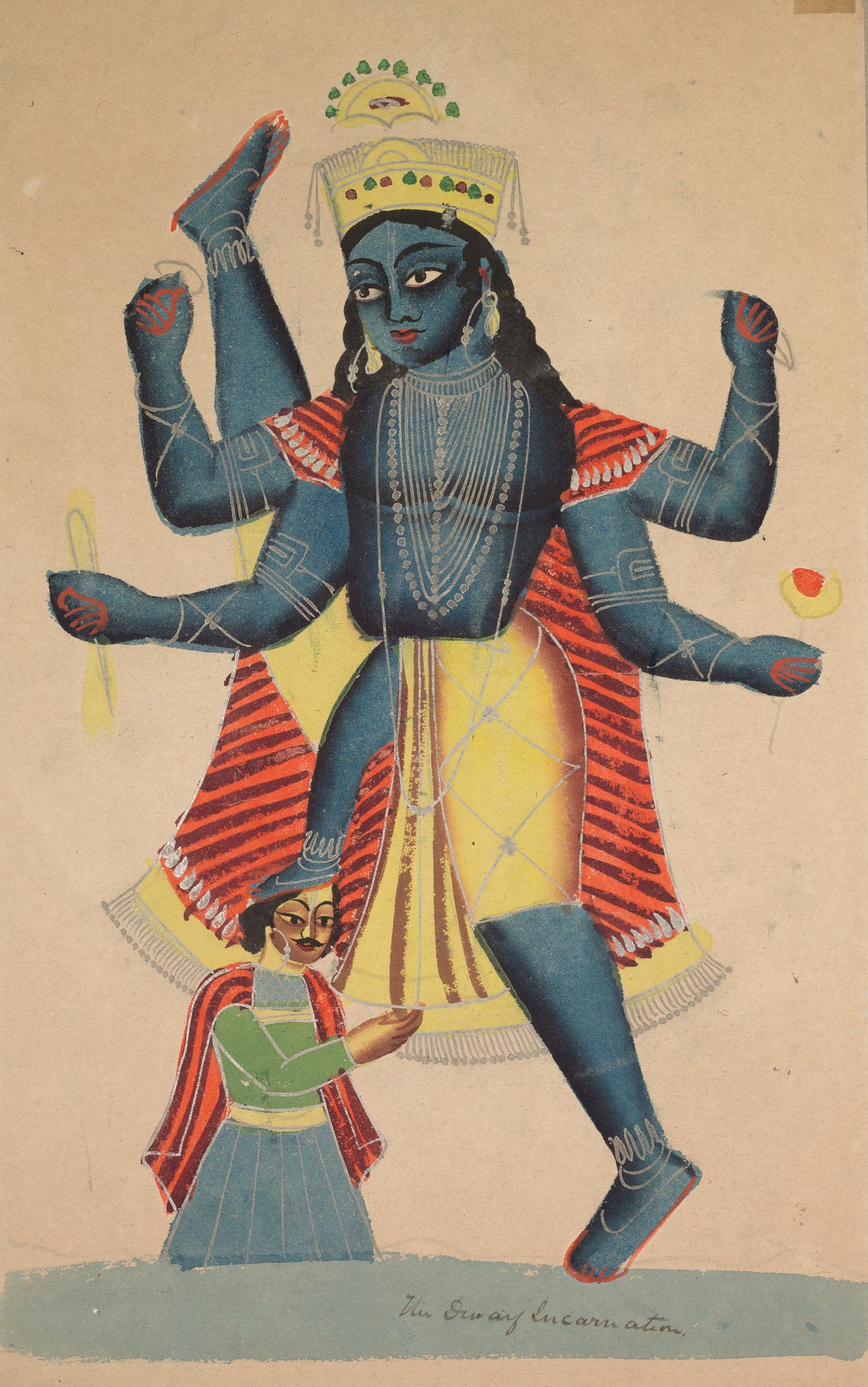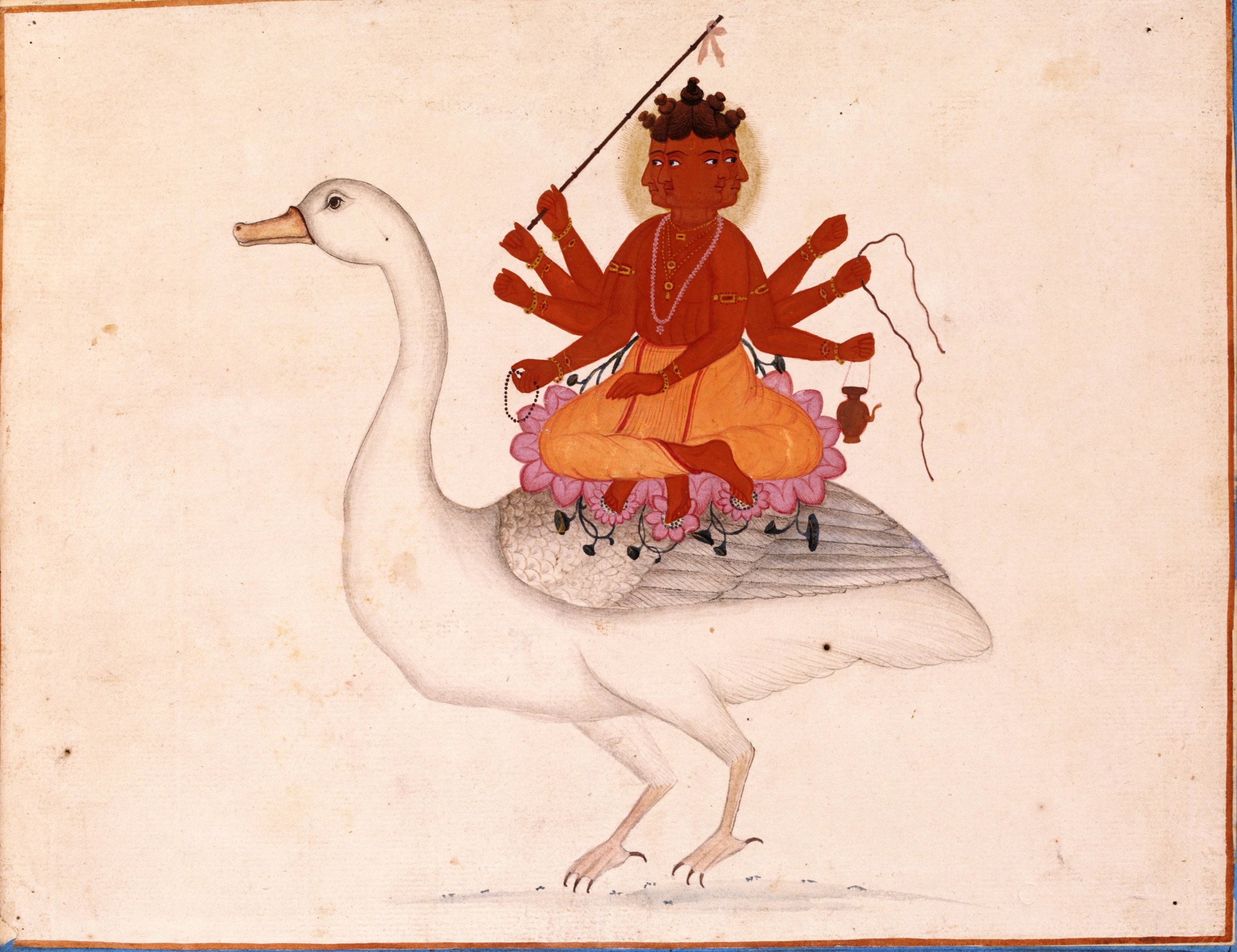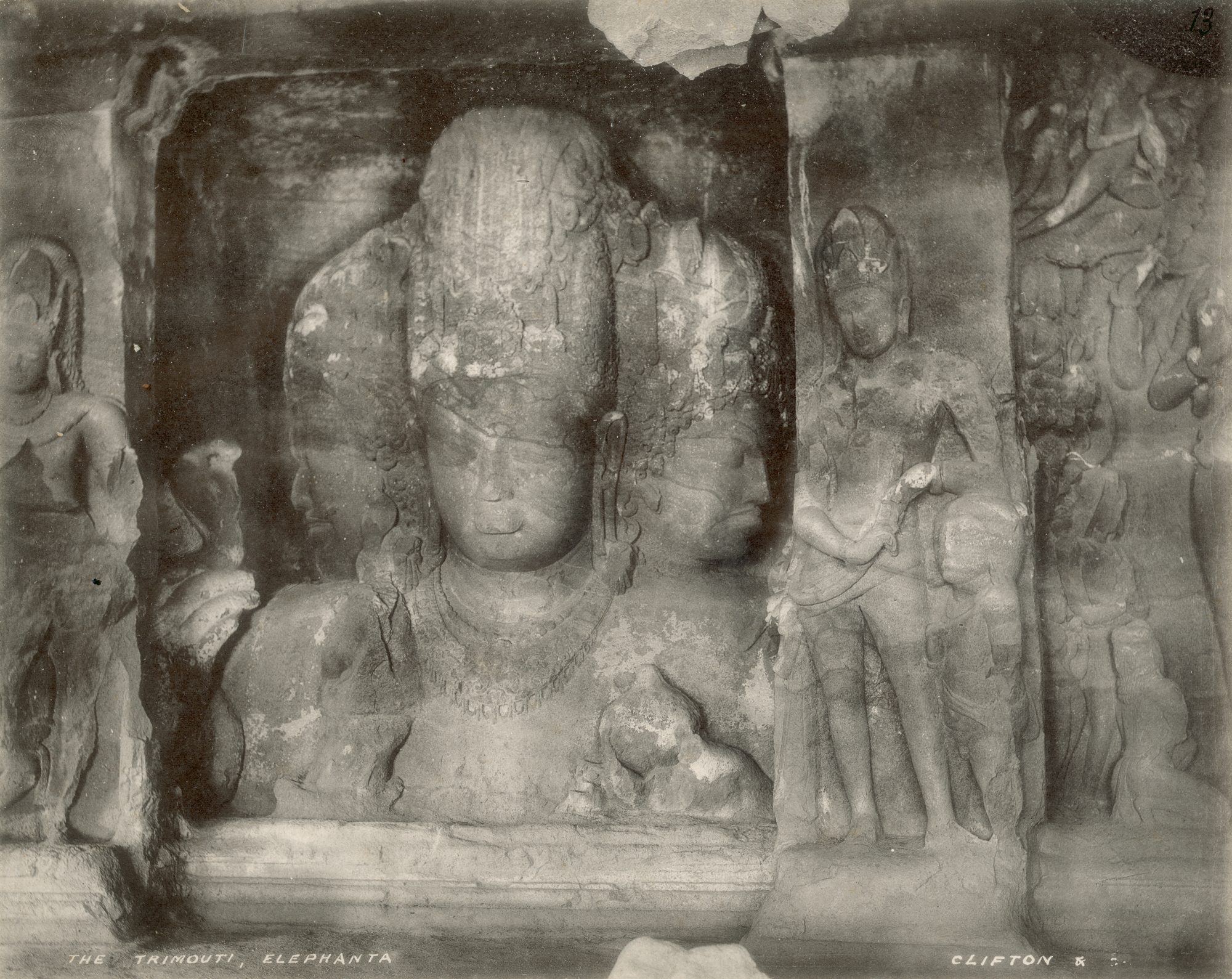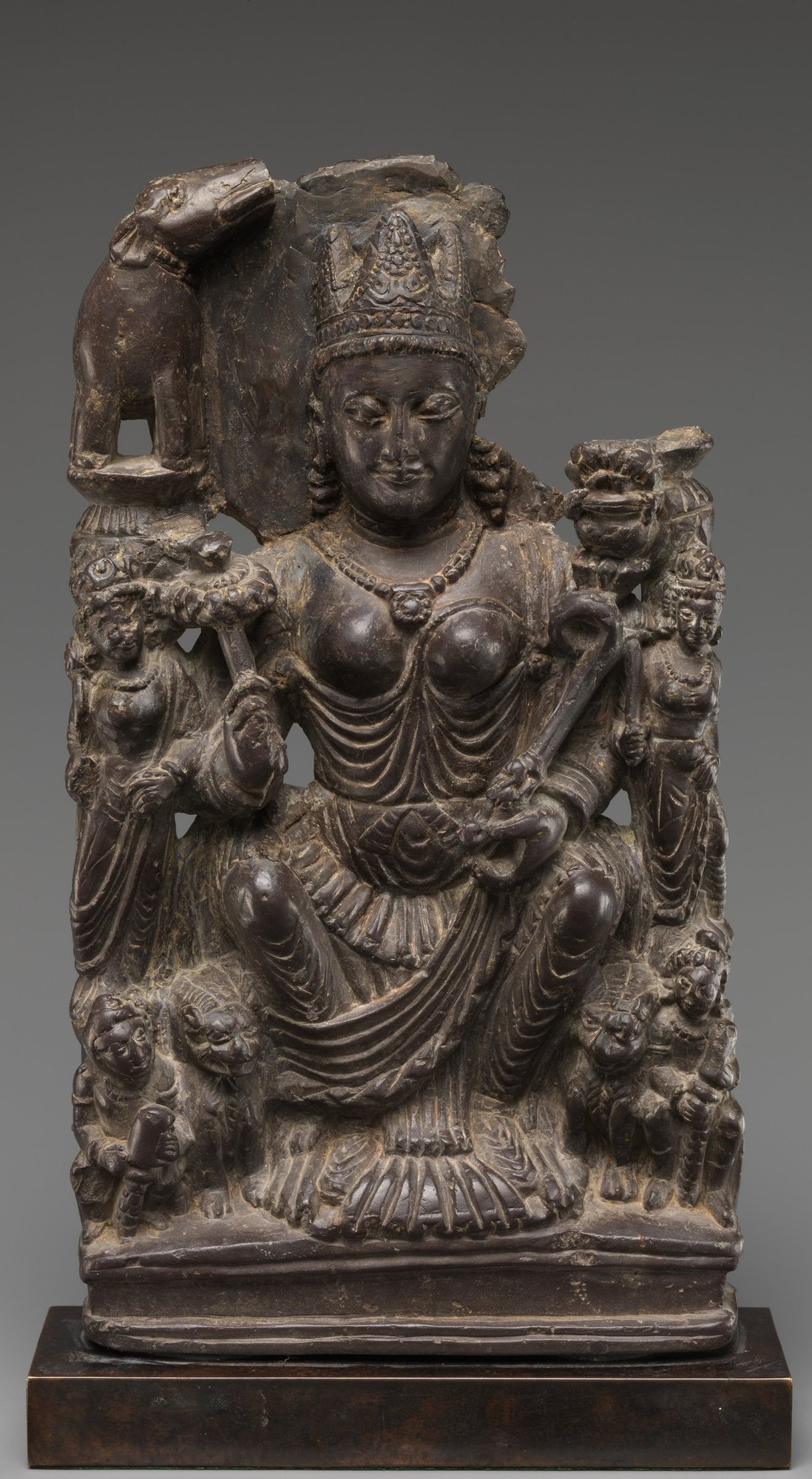
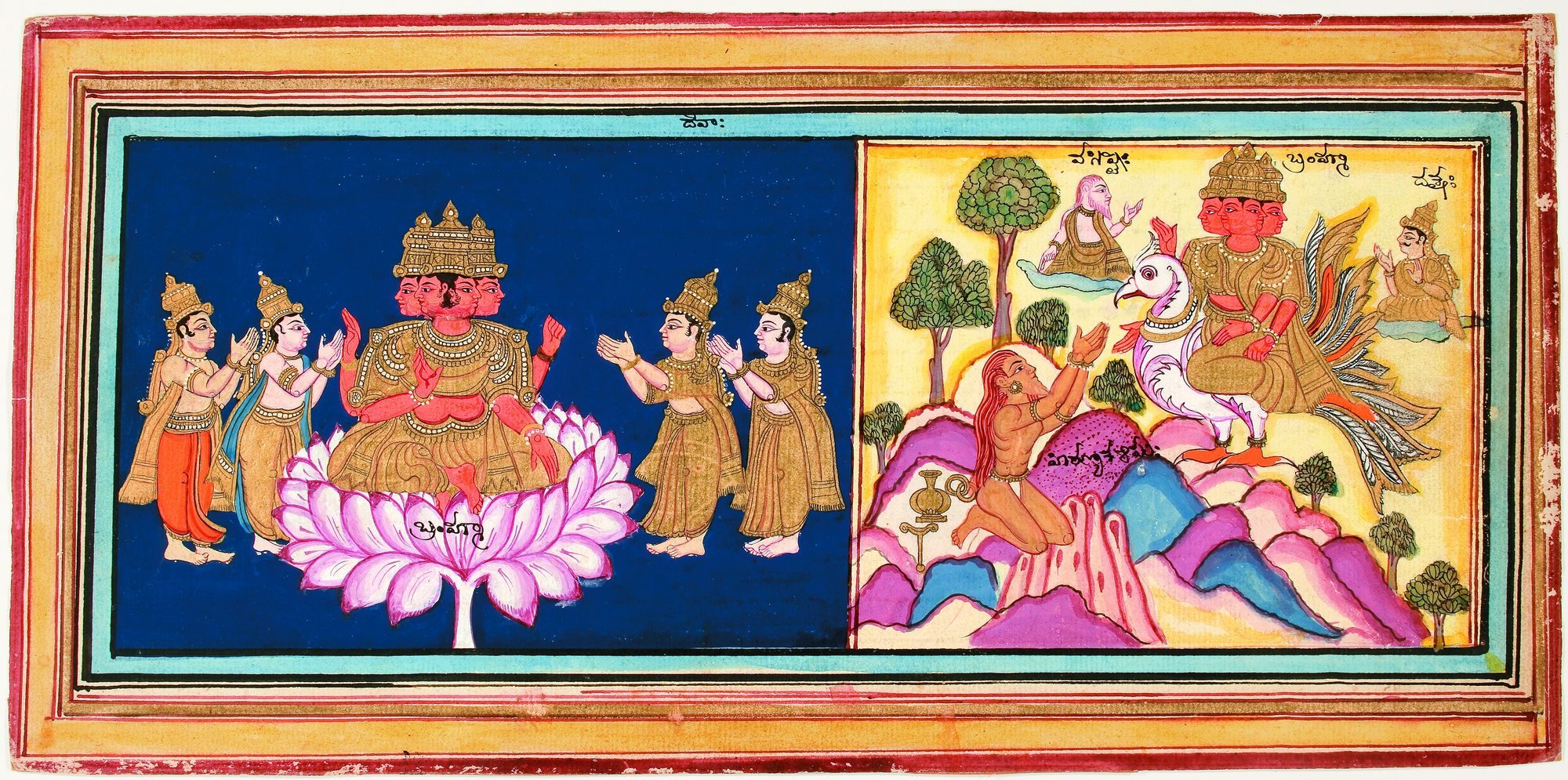
First there were the waters, and nothing else, and into that shoreless water the Self-existent one cast his seed. The Laws of Manu tell it in bare, enormous terms: the one called Svayambhū, desiring to bring forth beings out of his own body, laid his seed in the waters, and it grew into a golden egg blazing like the sun; and in that egg he was born as Brahman, the progenitor of the whole world, the whole of creation folded up in the shell with him. He lay there a full year. Then, by his thought alone, he broke the egg into two halves, and of one made the heaven and of the other the earth. This is the god the later tradition would name Brahmā, the maker, first of the three great functions, who brings the world into being before Vishnu can preserve it or Shiva unmake it.
It is worth pausing on the water and the egg before the god grows a face, because there is a trap here for anyone reaching back for origins. The four-faced Brahmā of temple and epic is not in the oldest layer of the tradition at all. The Ṛgveda, most ancient of the Vedas, has no creator called Brahmā, but a cluster of older, stranger cosmic figures out of whom he was slowly assembled, and the honest way to tell his story is to begin with them.
What god shall we adore
The eldest of these is Hiraṇyagarbha, whose name means the golden germ or golden embryo. In one of the great cosmogonic hymns the poet sings that in the beginning Hiraṇyagarbha arose, born the one lord of all that had been created, and that it was he who fixed and held up this earth and heaven. Verse after verse the singer piles up the god’s works, then closes each with the same unanswered question, sung like a refrain into the dark: what god shall we adore with our oblation?
Groping toward a first cause it cannot quite name, the hymn settles in its last verse on a title rather than a person, calling on Prajāpati, the lord of creatures, as the one being who comprehends all things that have come to be. The nineteenth-century translator who first carried this hymn into English noted that Hiraṇyagarbha here is the nearest approach the Veda makes to the later mystical idea of Brahmā, the creator of the world. That golden embryo on the first waters is the seed, in every sense, of the golden egg in Manu.
Four classes cut from a giant
Beside Hiraṇyagarbha stands a second Vedic figure, and he must not be confused with the first or with Brahmā, though the tradition would later fold all three together. This is Puruṣa, the cosmic Man, a being of a thousand heads and a thousand eyes and a thousand feet, immeasurably vast. Here the world is not spoken but sacrificed into being: the gods offer this primordial giant up, and from the pieces of his dismembered body the ordered cosmos is laid out. The moon is born from his mind and the sun from his eye; from his mouth come the fire and the storm-king; the sky is fashioned from his head, the earth from his feet.
And in the same act the four great classes of human society are cut from his body: the priest from his mouth, the warrior from his arms, the commoner from his thighs, the servant from his feet. This is the single passage in the whole of the Ṛgveda that names those four classes, and it names them not as Brahmā’s doing but as the fruit of Puruṣa’s sacrifice; the very same scheme is transferred to Brahmā only in the far later Laws of Manu. The template is Vedic; the attribution to Brahmā comes centuries after.
Waking to an empty house
These three ancient streams, the golden embryo, the sacrificed Man, the bare title Prajāpati waiting to be filled, flow into one. By the time of the Puranas the confluence has a name and a character, and the character is a maker who works not once but at the turn of every cosmic cycle.
The Vishnu Purāṇa opens its account of creation with Brahmā waking: at the close of the previous world-age he had lain down to sleep through the long night of dissolution, and now, at the dawn of the new age, endowed with the quality of goodness, he awakes from his night of sleep and beholds the universe void. The world he made last time has been drawn back into the dark, and he must make it again. This is a god who has done this before and will do it again, waking to an empty house at the start of another turn.
Splitting his own body down the middle
What he brings out of himself to fill that emptiness is, first of all, more of himself. From his mind he generates nine great sons, the mind-born Prajāpatis whom the text calls the nine Brahmās, and from them the lines of gods and men and creatures descend. But not all his offspring come gently: the maker’s brow darkens with anger, and out of that frowning forehead springs a being radiant as the noon-day sun, half male and half female at once, Rudra, the fierce god who will grow into Shiva, born of the creator’s own wrath.
Strangest of all, to make the first human beings he divides his own body down the middle, shaping one half into the first man, Manu Svāyambhuva, identical with his original self, and the other into the first woman, Śatarūpā. He does not make the primal couple apart from himself; he splits into them, and every later human descent traces back to that halving.
A lotus growing from Vishnu’s navel
The four faces he is famous for are, in these oldest sources, less a fixed portrait than a pressure the texts keep exerting. The Vishnu Purāṇa says the Vedas came out of his mouths, in the plural, and that image of the hymns pouring from more than one mouth is the seed of the later picture of the four-faced god reciting the four Vedas, one from each face. When the Mahābhārata states the epithet outright, hailing him as the four-faced Padmaja, the lotus-born, it names something the earlier texts had been circling all along. And that title, lotus-born, points to a wholly different account of his origin, one the tradition never truly reconciles with the first so much as lays beside it.
In Manu he is the self-existent Svayambhū, hatched from the golden egg he himself had seeded in the waters. But in the great Vaishnava current of the epics and Puranas he has a source above him: Vishnu reclines asleep upon the cosmic ocean, and from his navel grows a lotus, and from the heart of that lotus the creator is born, the Mahābhārata naming Nārāyaṇa as the one who has the lotus upon his navel. Self-born in the egg and lotus-born from Vishnu are not one seamless story but two, reconciled only by the Puranas’ own declaration that Brahmā is in the end one with Nārāyaṇa. It is a genuine variance, and the older honesty is to keep both and mark the seam rather than smooth it away.
Strikingly few temples of his own
Above all he is the lord of time, and the numbers the tradition attaches to him dwarf every human measure. A single day of Brahmā, Manu says, equals a thousand of the great ages of the gods, and his night is exactly as long; the Purāṇic reckoning works this day out to something over four billion of our years. Through that night the world is unmade and the god sleeps, and at its dawn he wakes to the void and begins again.
And for all the immensity of his office, the tradition would in time turn its deepest devotion elsewhere, to the preserver and the destroyer rather than the maker, so that the god from whom the worlds and all their creatures stream is honoured with strikingly few temples of his own, a fact of worship and history rather than of the myth. In the myth he remains what the oldest texts made him: the one who lay a year in the golden egg and then split his own body to bring forth the first man and the first woman, so that everything that lives is, in the end, a piece of him.
In the beginning rose Hiranyagarbha, born Only lord of all created beings. / He fixed and holdeth up this earth and heaven. What God shall we adore with our oblation? (Ṛgveda 10.121.1, tr. Ralph T. H. Griffith, The Hymns of the Rigveda)
- Ṛgveda 10.121 (Hiraṇyagarbha Sūkta; Griffith trans., The Hymns of the Rigveda)the
golden germ
Hiraṇyagarbhain the beginning
rose asborn Only lord of all created beings,
whofixed and holdeth up this earth and heaven
; the recurring refrainWhat God shall we adore with our oblation?
; and the closing verse (10) naming Prajāpati, the lord of creatures, as the sole comprehender of all created things. Griffith’s note (after Wallis) calls Hiraṇyagarbhathe nearest approach to the later mystical conception of Brahma, the creator of the world
— cited here as a translator’s scholarly observation, not a claim the Veda makes in those words. This is a Vedic precursor of Brahmā, not Brahmā by name. - Ṛgveda 10.90 (Puruṣa Sūkta; Griffith)the cosmic Man
of a thousand heads… a thousand eyes, a thousand feet,
sacrificed by the gods, from whose body the cosmos and the four social classes issue —The Brahman was his mouth, of both his arms was the Rajanya made. His thighs became the Vaisya, from his feet the Sudra was produced
; the moon from his mind, the sun from his eye, Indra and Agni from his mouth, the sky from his head, the earth from his feet. Griffith’s note:This is the only passage in the Rigveda which enumerates the four castes.
This is Puruṣa, a separate Vedic figure, not Brahmā; the caste-and-cosmos template is only later re-attributed to Brahmā in Manu. - Manu-smṛti (Laws of Manu) I.5–13, 31, 68–79 (G. Bühler trans., Sacred Books of the East vol. 25, 1886)the Self-existent (Svayambhū) casting his seed into the primeval waters; the seed becoming
a golden egg, in brilliancy equal to the sun; in that (egg) he himself was born as Brahman, the progenitor of the whole world
; the Nārāyaṇa etymology (The waters are called narah… as they were his first residence (ayana), he thence is named Narayana
); his residence in the eggduring a whole year,
then dividing itby his thought (alone)… into two halves
to form heaven and earth (I.12–13); the four classes causedto proceed from his mouth, his arms, his thighs, and his feet
(I.31) — the Puruṣa-Sūkta scheme now re-told of Brahman; and the cosmic time-scale,the sum of one thousand ages of the gods (makes) one day of Brahma, and… his night has the same length
(I.72–73). - Vishnu Purāṇa, Book I, chs. 4–7 (H. H. Wilson trans., 1840)
the divine Brahma, who is one with Narayana, created progeny, and is thence named the lord of progeny (Prajapati)
; at the close of the past (Padma) Kalpathe divine Brahma, endowed with the quality of goodness, awoke from his night of sleep, and beheld the universe void
; the nine mind-born sons Bhṛgu, Pulastya, Pulaha, Kratu, Aṅgiras, Marīchi, Dakṣa, Atri and Vasiṣṭha,the nine Brahmas
; Rudra springingfrom his forehead, darkened with angry frowns… radiant as the noon-tide sun… half male, half female
; the division of himself intothe Manu Swayambhuva
andSatarupa,
first man and first woman; the Vedasfrom his mouths
;Jyotsna (dawn), Ratri (night), Ahar (day), and Sandhya (evening)… the four bodies of Brahma
; and Wilson’s time-computation making the day of Brahmā 4,320,000,000 human years. - Mahābhārata, Ādi Parva (Kisari Mohan Ganguli trans.)in the hymn to Garuḍa the stacked epithets naming Brahmā
the four-faced Padmaja
(four-faced, lotus-born); and Nārāyaṇa at Vaikuṇṭhawho hath the lotus on his navel,
the iconographic root of the motif of Brahmā born from the lotus rising from Vishnu’s navel. - Bhāgavata Purāṇa, Canto 3 (the fullest single narrative of Brahmā’s birth on the navel-lotus, his confusion, the Madhu-Kaiṭabha demons and the four Vedas from four mouths)not read verbatim in this pass — no clean public-domain translation was retrieved. The navel-lotus birth is grounded here only through the Mahābhārata epithet (
lotus on his navel
/Padmaja
), which is read; the full Bhāgavata scene must be re-verified against a named translation before any of its specifics are printed.