
HomeArchiveThemesSkyAbout

#Glory And Fame

The hero's pursuit of undying renown (Greek kleos), a name kept alive in song and weighed against mortality.

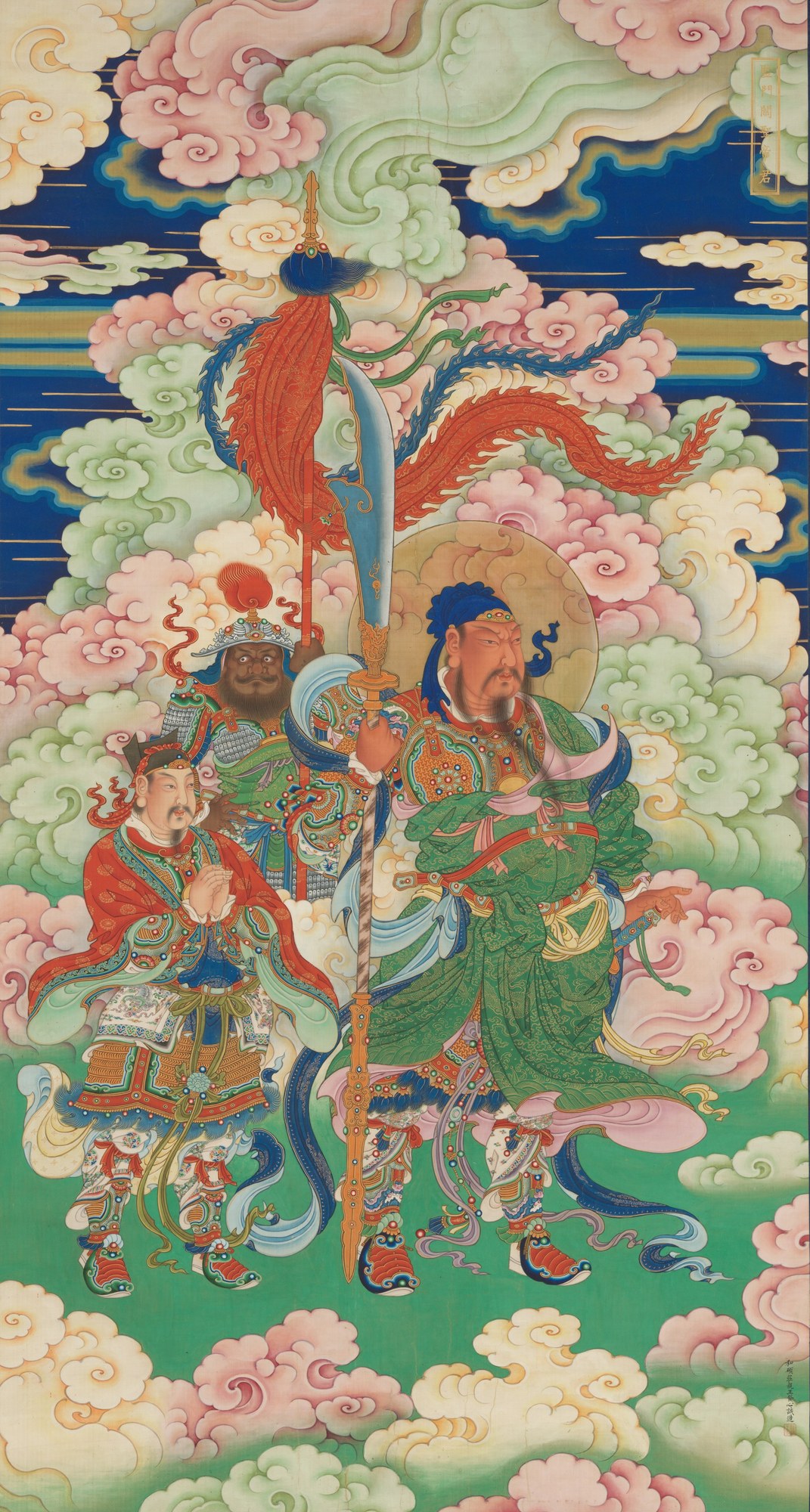
A Qing-dynasty hanging-scroll cult image of the deified Guan Yu standing on clouds: the long-bearded god in a green dragon-robe over mountain-pattern armour, a gold halo behind his head, one hand resting on the tall crescent-bladed guandao that his fierce dark-faced attendant holds upright behind him, a civil attendant in red robes with hands clasped at the left. The great blade, the sworn attendants and the divine halo are all late cult iconography, not features of the third-century record.
Chinese

Guandi, the Deified Warrior Guan Yu

A Three Kingdoms general, whom his own historian called proud and self-defeated, was raised over fourteen centuries into a god of war, loyalty, and finally money. Almost every prop the temples paint on him, the great blade, the red horse and the sworn oath, was added a thousand years after he died.
7 minChen Shou 陳壽
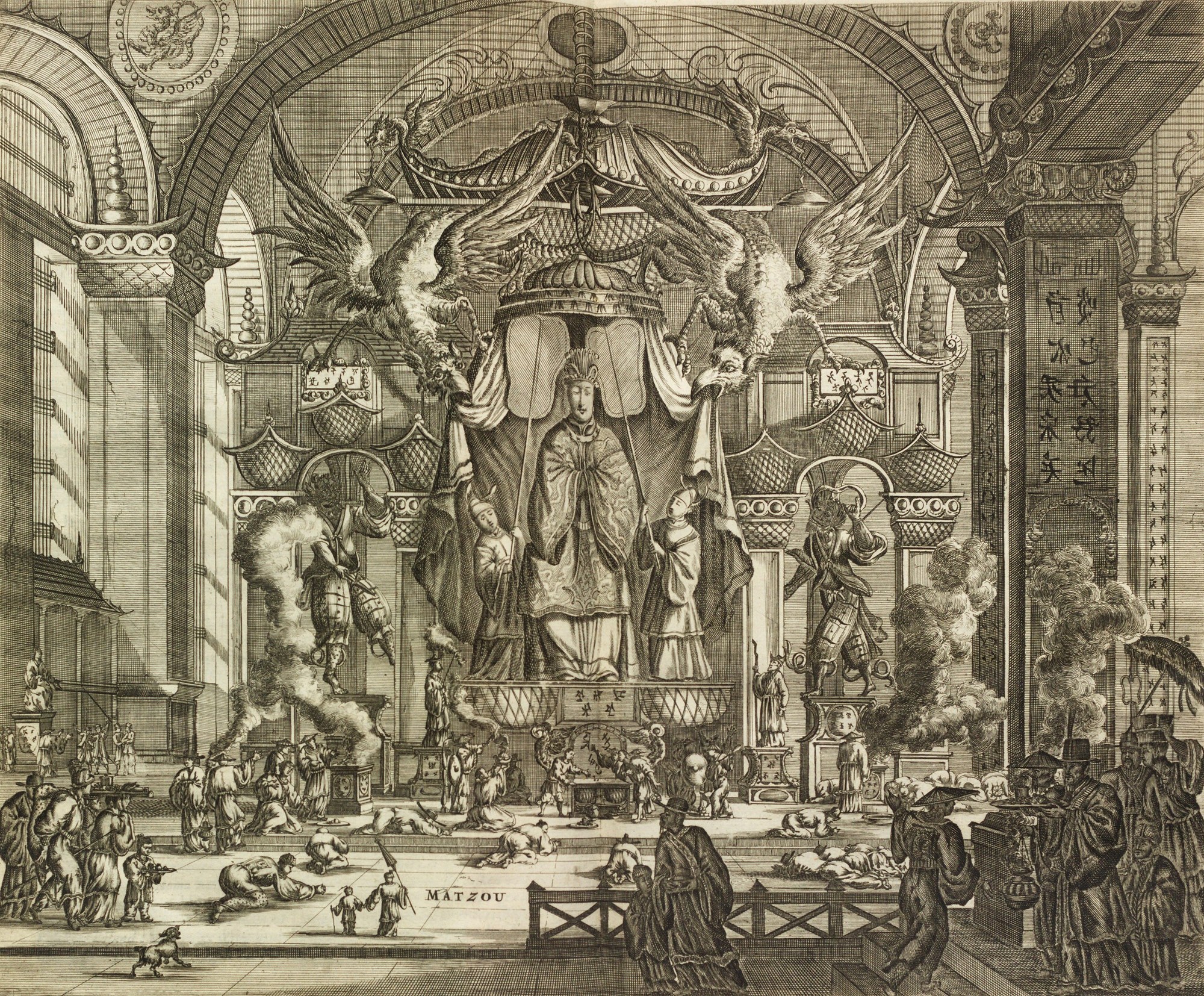
A 1670 European engraving of the goddess Matzou (Mazu) enthroned in her temple: a crowned, richly robed figure seated frontally beneath a dragon-flanked canopy, flanked by two attendants, with armoured guardian figures on pedestals to left and right and worshippers prostrate on the temple floor amid rising incense smoke; the name 'MATZOU' is engraved on the balustrade below. An early Dutch traveller's image of the fully developed state cult, its imperial regalia and demon-guardians the same late iconography the post dates centuries after the fisher-girl of the earliest record.
Chinese

Mazu, Empress of Heaven and the Sea

A Lin shamaness of Meizhou died around 987 and rose, edict by edict, to Empress of Heaven. The sailors she guards still call her Mazu, their word for Grandmother.

8 minLiao Pengfei 廖鵬飛