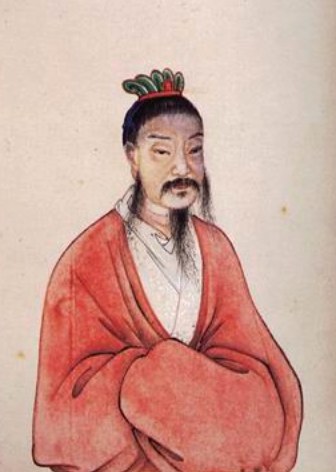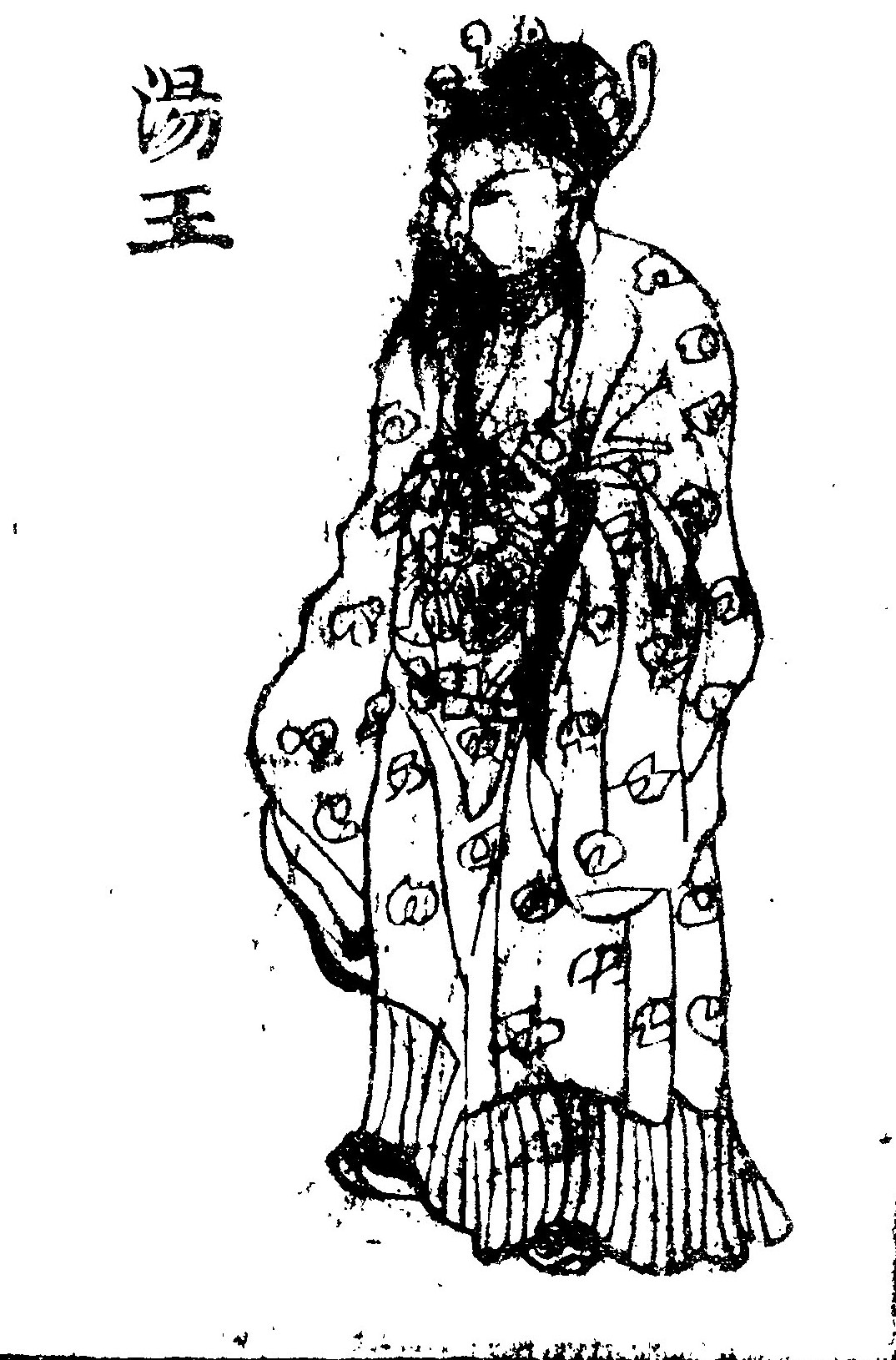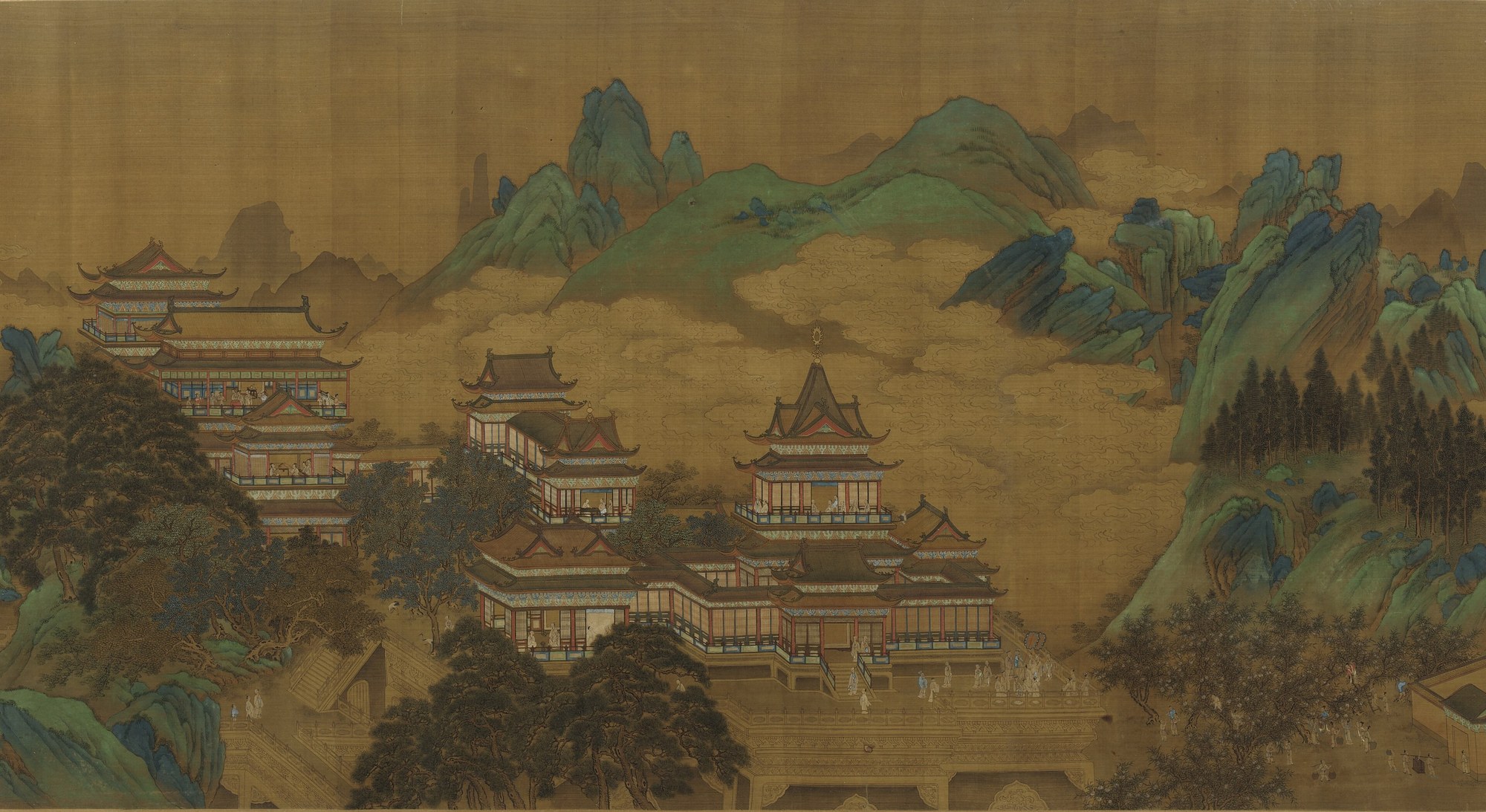
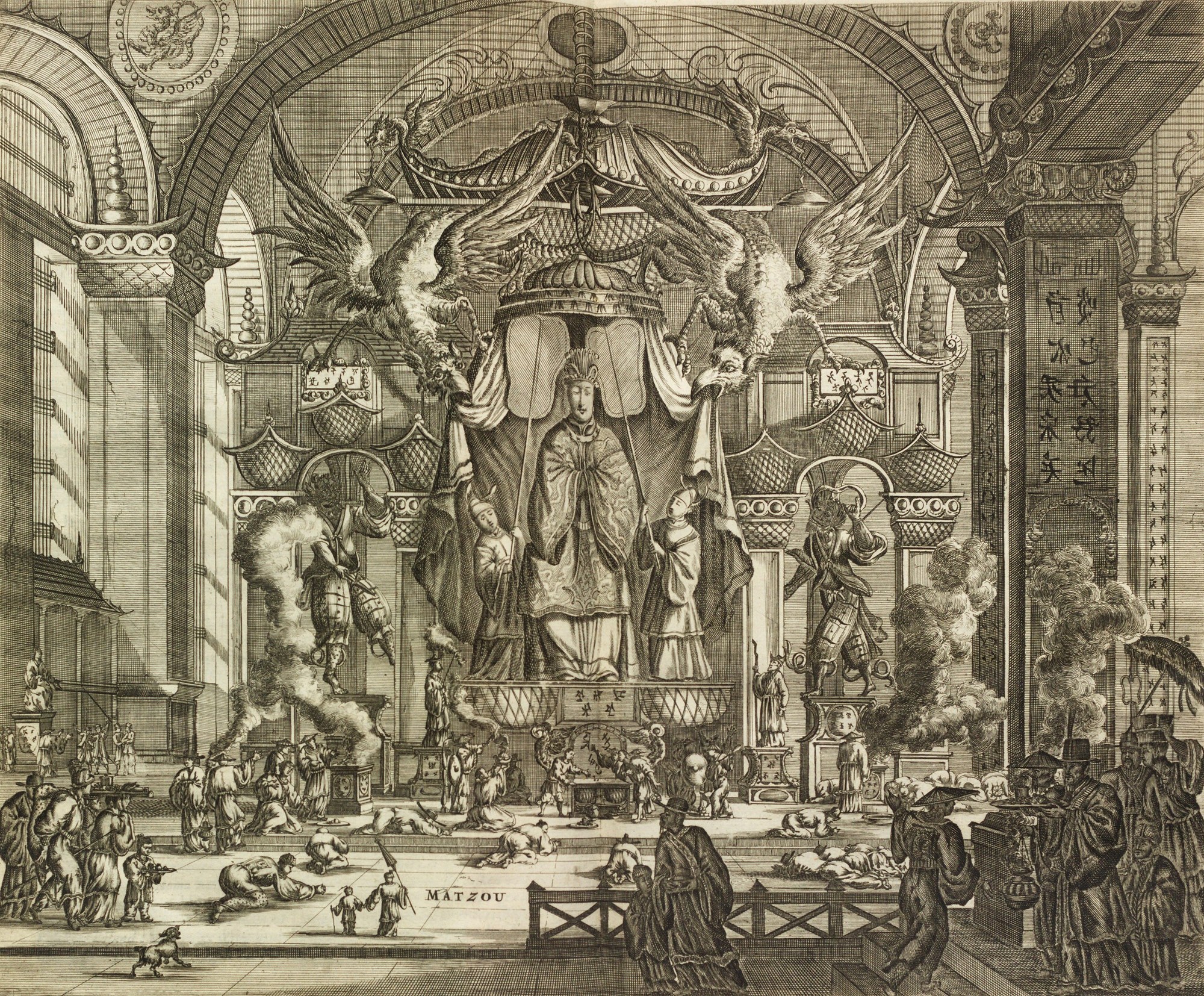
She began as a young woman in a red dress, seen standing on the shore of a small island to guide the fishing boats home, or dancing on the mast of a ship the storm should have taken. She ended, seven centuries later, seated in the flat-topped crown and hanging beads of an empress, holding a ceremonial tablet, worshipped from Fujian to Taiwan to every port where Chinese sailors put out to sea. The distance between those two images is the whole of her story, and it is measured not in miracles but in years and imperial decrees.
What the first witness actually wrote
Strip away everything the later temples paint on her and one document stands at the bottom, older than all the rest. It is an inscription by a man named Liao Pengfei, cut in the year 1150 to mark the rebuilding of a temple, and preserved by chance in a family genealogy. On the goddess’s origin it says only this: she is traditionally held to be a spirit-woman who communicates with Heaven; her surname was Lin; she was a person of Meizhou Isle, off Putian in Fujian; at first she took the shaman’s office as her occupation and could foreknow people’s fortune and misfortune; and after she died, the people set up a temple for her on that isle.
That is the entire reliable biography. A Lin-clan shamaness of a fishing island who told fortunes and, once dead, was given a shrine. There is no birth without crying, no Daoist master, no rescue at the loom, no empress. And the gap here is the first fact to hold onto, because it is exactly the trap this subject sets. The woman is traditionally said to have died around 987. Liao’s inscription is from 1150.
The earliest writer to name her at all set down his few sentences roughly a hundred and sixty years after she was in her grave, working from what people in the district still said. Everything earlier is lost, if it ever existed. A native Chinese source can stand as far from its subject as any foreign one: the Egyptian Pyramid Texts and the Bremner-Rhind papyrus, both native witnesses to the god Atum, sit two thousand years apart, a gulf wider than the one between Homer and Pausanias.
The other early witnesses agree with Liao and add almost nothing. A cluster of Southern-Song gazetteers and notebooks from the early to middle thirteenth century, the same local-record tradition the Putian county gazetteers belong to, each describes the same figure in nearly the same words: a Lin woman of Meizhou, numinous from birth, who could speak of men’s good and ill fortune, and who after death received temple offerings.
The Xianxi zhi calls her flatly a wuA shaman or spirit-medium in early Chinese religion, a man or woman who dealt with the gods and the dead and could foretell fortune; the office the earliest sources give Mazu., a shamaness. Hong Mai’s collection of strange tales notes only an old Temple of Lady Lin at a nearby harbour, its founding year already forgotten, its efficacy long famous. Four things, and no more, are early: the surname Lin, the island of Meizhou off Putian, the office of shamaness who foretold fortune, and a temple after death.
A doubter writes first
The very first person to put her in writing did not believe in her. A decade or so before Liao’s inscription, around 1140, the scholar Huang Gongdu wrote a poem on her shrine with something close to contempt: a lowly, misguided shamaness whose hold on the people he found hard to explain, noting only that her devotees danced and sang.
This is worth pausing on, because it inverts the usual shape of a cult’s history. We are used to the record beginning with belief and hardening into doubt. Here the earliest literate voice is the doubter, an educated man faintly embarrassed by a village medium’s popularity, and the centuries of grand devotion come afterwards, built on top of the thing he sniffed at.
A goddess on the mast, or the wrong goddess
The event that lifted the shrine out of its district was a storm. In 1122 the court sent an envoy, Lu Yundi, by sea to the kingdom of Goryeo. His convoy met heavy weather in the Eastern Sea; of eight ships that fouled one another, seven capsized and sank. Only Lu’s ship came through, and the sailors credited their survival to a goddess who appeared atop the mast in a whirling dance until the sea was suddenly calm. On his return the envoy petitioned the throne, and in 1123 the shrine was granted an official name-plaque, Shunji, the Smooth Crossing. That plaque was the cult’s entry into the state’s register, the first rung of everything that followed.
But even the founding miracle is contested at the source, and honesty requires saying so. The historian Hugh Clark points out that the official court record of that embassy credited the rescue not to the Meizhou goddess at all but to a different deity, the God of Yanyu of Fuzhou. The Fujianese crews, Clark argues, each prayed to their own local god, and Mazu’s exclusive claim on the 1122 storm was fixed only later, by her own cult reaching back to annex a shared triumph. The story is real; the attribution is a matter of dispute. It is safest to call the storm the cult’s founding legend rather than its founding fact.
The ladder from Lady to Empress
Here is the machine that made her a goddess, and it was not the sea. It was the imperial court, promoting her by decree the way it promoted a living official, one rank at a time, each dynasty in turn adding a rung.
The escalation is worth watching as a ladder, because each step is centuries above the last and each was a real edict. In 1156 the Southern Song gave her the first personal title, Lady Linghui, the rank of furen, Lady
. In 1192 she was raised to fei, Consort
or Princess
. Then in 1281 the Yuan dynasty of Kublai Khan, wholly dependent on grain shipped by sea and desperate for calm water, made her a Tianfei, a Consort of Heaven
, pulling her rank up out of the human world and into the sky.
The Ming kept her there; after the admiral Zheng He credited her with shepherding one of his great fleets, the title reached its Tianfei peak in 1409. And finally the Qing took the last step. After the goddess was credited with the conquest of Taiwan in 1683, the Kangxi Emperor elevated her to Tianhou, Empress of Heaven
. The Chinese record dates that grant to 1684, the year Kangxi 23; a Western apparatus places it in 1683, and there is no reason to hide the one-year disagreement.
That is the whole arc in five words: Lady, Consort, Consort of Heaven, Empress of Heaven. The village shamaness whom Huang Gongdu found beneath his notice had been carried, by roughly seven hundred years of enfeoffmentThe court''s grant of a title and rank to a person, living or divine, as if raising an official; the mechanism by which each dynasty promoted the goddess., to the top rank the Chinese cosmos allowed a woman. To call the tenth-century woman Empress of Heaven
is to move a Qing title back some seven centuries onto a fisher-girl who never heard it, the same anachronism as calling the historical Guan Yu an emperor. Under the later Qing the title went on swelling by accretion, war and flood and grain-fleet each adding characters, until it ran past forty of them, a monster of a name no one could say in a hurry.
Called by the small name
Which is the point of the name they actually used. Through all of this the sailors who most needed her never called her by any of the state’s grand titles. They called her Mazu, Mother-Ancestor
, the affectionate word a family uses for a grandmother, and it is by that plain name, not Tianfei or Tianhou, that she is loved to this day.
There is a folk belief, widely told though the scholars mark it unverified, that this was deliberate and even urgent: a drowning sailor called out to plain Mazu and never to the Empress of Heaven, because on hearing her full imperial style she would feel bound to dress and groom herself as her rank required before she could answer, and in a storm there was no time for that. Whether or not anyone truly reasoned it so, the instinct is exact. The name that saves you is the small one.
And almost everything else the temples now show is late. The two demon-generals who flank her doors, red Thousand-Mile Eye and green Wind-Following Ear, who could see and hear across the world and whom she is said to have beaten in combat and made her guardians, belong to the developed cult, not the early record. So does the story that she never cried as a newborn, which is where the name Lin Mo, the Silent One
, is said to come from. So does the tie to the bodhisattvaIn Buddhism, an enlightened being who stays in the world to save others; Guanyin, the one to whom the late legend ties Mazu's birth, is the most beloved. Guanyin, whose worship the legend threads through her birth. So does the precise pair of dates, born in 960 and dead on the Double Ninth of 987 at twenty-seven, which modern scholars distrust as too neat, the birth conveniently falling in the very first year of the Song.
The genealogy that makes her the daughter of a Putian military inspector of an illustrious Lin lineage is a sixteenth- and seventeenth-century invention; the earliest documents give her no family at all. And the source that supplies most of these lovely details, the Tianfei xiansheng lu, the very book the modern reader is pointed to first, is not a Song record but a hagiography compiled in the 1620s and printed around 1676, some six hundred and fifty to seven hundred and fifty years after the woman it claims to describe. It is a beautiful book. It is not evidence for a tenth-century life.
What survives from close to her own time is smaller and stranger and, in its way, more moving than the empress on her throne: a woman in a red dress standing on a headland, watching for boats that were late, whom the people of one small island could not stop believing in.
In the midst of the rushing waters, suddenly a divine lantern was seen shining at the masthead, and as soon as that miraculous light appeared the danger was appeased. (Changle inscription of Zheng He and associates, early 15th c.; tr. Needham 1959, p. 558)
- Liao Pengfei 廖鵬飛, 〈聖墩祖廟重建順濟廟記〉 (1150 CE): the earliest datable document to name the goddess, roughly one hundred and sixty years after the traditional death-date of c. 987. Source of the whole reliable core used here — a spirit-woman
who communicates with Heaven
(通天神女), surname Lin, of Meizhou Isle, whotook the shaman’s office
(以巫祝為事) andcould foreknow people’s fortune and misfortune
(能預知人禍福), and for whom, after she died,the people set up a temple on that isle
(眾為立廟於本嶼) — and of the 1122 storm in which a goddess appearedatop the mast in a whirling dance
(登檣竿為旋舞狀). Preserved in the 百塘李氏族譜 (a Li-family genealogy); its authenticity is occasionally questioned. Chinese read verbatim; full English translation in Ruitenbeek 1999, pp. 312–315. - Southern-Song gazetteer and notebook cluster (early–mid 13th c.): Huang Yansun’s Xianxi zhi 仙溪志 (which calls the Shunji temple’s goddess
originally a Lin-clan woman of Meizhou, who was a wu
), Li Junfu’s Puyang bishi 莆陽比事, Li Choufu’s 〈靈惠妃廟記〉, and Hong Mai’s Yijian zhi 夷堅志 (the old Temple of Lady Lin at Haikou). Independent near-contemporary witnesses, each giving a Lin shamaness of Meizhou off Putian who foretold fortune and received temple offerings; the local-record line the brief’s Xinghua/Putian county gazetteers continue. Chinese read verbatim. - Huang Gongdu 黃公度, poem on the Shunji shrine (c. 1140): the first literary attestation of the cult, and a sceptical one, treating the goddess as a lowly, misguided shamaness whose popularity the poet cannot explain. Known here through Clark 2007 (p. 204) and 2015 (p. 129), not read in the original; used as paraphrase only.
- Song huiyao jigao 宋會要輯稿 (recovered Song administrative and enfeoffment records): the standard documentary basis for the Song state grants, the 1123 Shunji plaque and the ladder of furen and fei titles from 1156. Cited as the record of record; its exact Mazu entries were not read word-for-word for this post and should be re-verified before any verbatim quotation.
- The canonisation ladder, 1123 → 1872: the staged Song, Yuan, Ming and Qing edicts that built the cult, each a real decree. Watershed rungs kept explicit and dated here1156 first personal title (Lady Linghui 靈惠夫人); 1192 first fei (Consort, 靈惠妃); 1281 first Tianfei 天妃 (Consort of Heaven, under Kublai Khan’s grain-dependent Yuan); 1409 the peak Tianfei title after Zheng He’s voyage; 1683/1684 first Tianhou 天后 (Empress of Heaven, under Kangxi after the conquest of Taiwan). The Tianhou date differs by source — 1683 in the English apparatus (Boltz), 1684/Kangxi 23 in the Chinese chain — and both are recorded, not silently reconciled. Drawn from the Tianfei xiansheng lu’s 〈歷朝顯聖褒封〉 and corroborated by Duyvendak 1938 (p. 344) and Boltz 2008 (pp. 741–743); the page numbers come from the citation apparatus and are treated as unverified.
- Tianfei xiansheng lu 天妃顯聖錄 (late Ming–early Qing hagiography): begun by Lin Yaoyu 林堯俞 after 1623 and first printed by the Chan monk Zhaocheng 照乘 c. 1676–77, revised into the 1730s — some six hundred and fifty to seven hundred and fifty years after the woman’s traditional death. Source of nearly every colourful detail (silent birth, loom-trance rescue, the two demon-generals, the empress regalia) and of the constructed Jiumu-Lin 九牧林氏 genealogy. Read for its dating and authorship, which is the load-bearing pointit is the brief’s headline source and it is not a contemporary record. Page references via the apparatus (Boltz 2008, pp. 741–743), not the book itself.
- Changle inscription 長樂碑 (Zheng He 鄭和 and associates, early 15th c.): a dated, on-monument cult witness recording the
divine lantern
at the masthead — the glow-discharge sailors call St Elmo’s fire. English translation via Needham, Science and Civilisation in China vol. 3 (1959), p. 558. - Secondary scholarship (interpretation, not primary): Hugh R. Clark, Portrait of a Community (2007) and
What Makes a Chinese God?
(2015), for the 1122 rescue being credited in the official embassy record to the God of Yanyu of Fuzhou rather than to Mazu, and for the doubting of the 960 birth-date; Judith Magee Boltz,Mazu
, Encyclopedia of Taoism II (2008), pp. 741–744; Klaas Ruitenbeek,Mazu, Patroness of Sailors
, Artibus Asiae 58 (1999), pp. 281–329 (the Liao 1150 and Lu Yundi translations, and the iconography). Labelled as interpretation, not primary attestation.