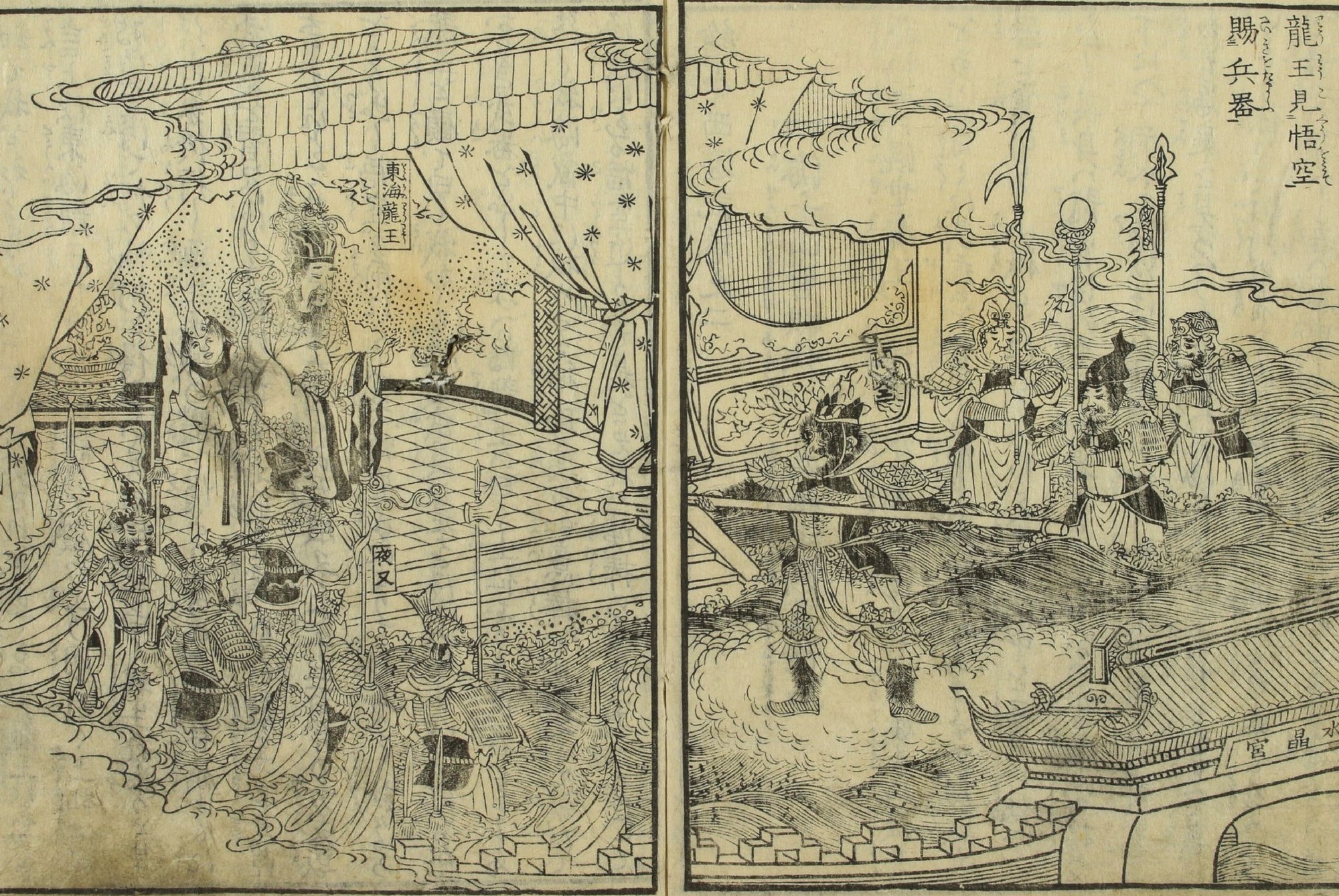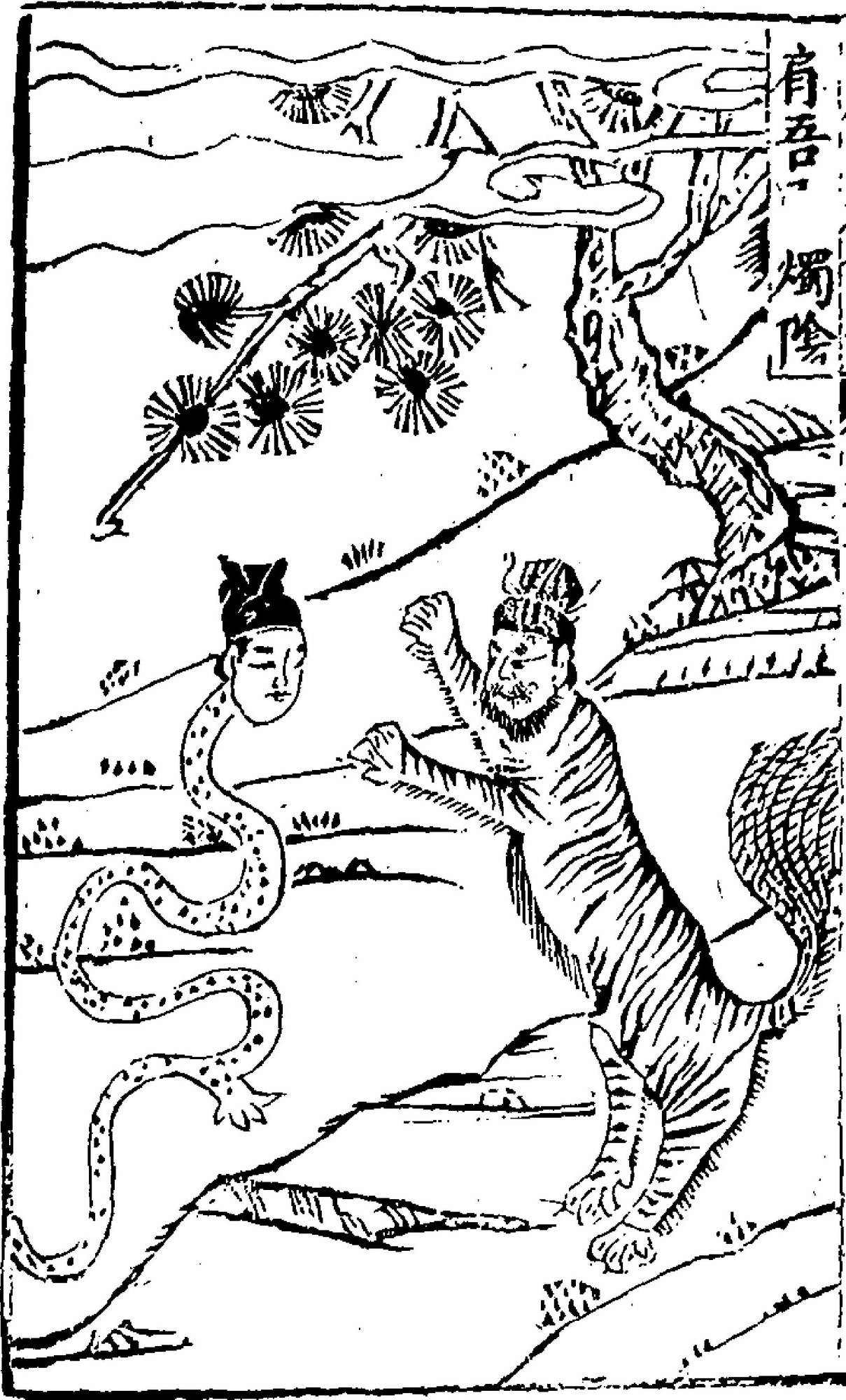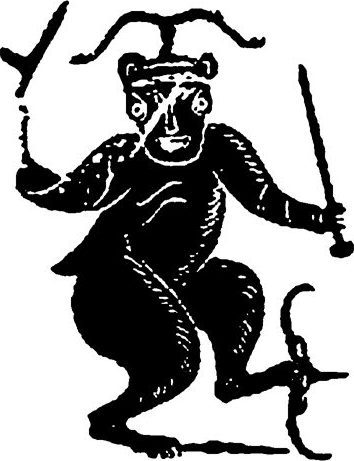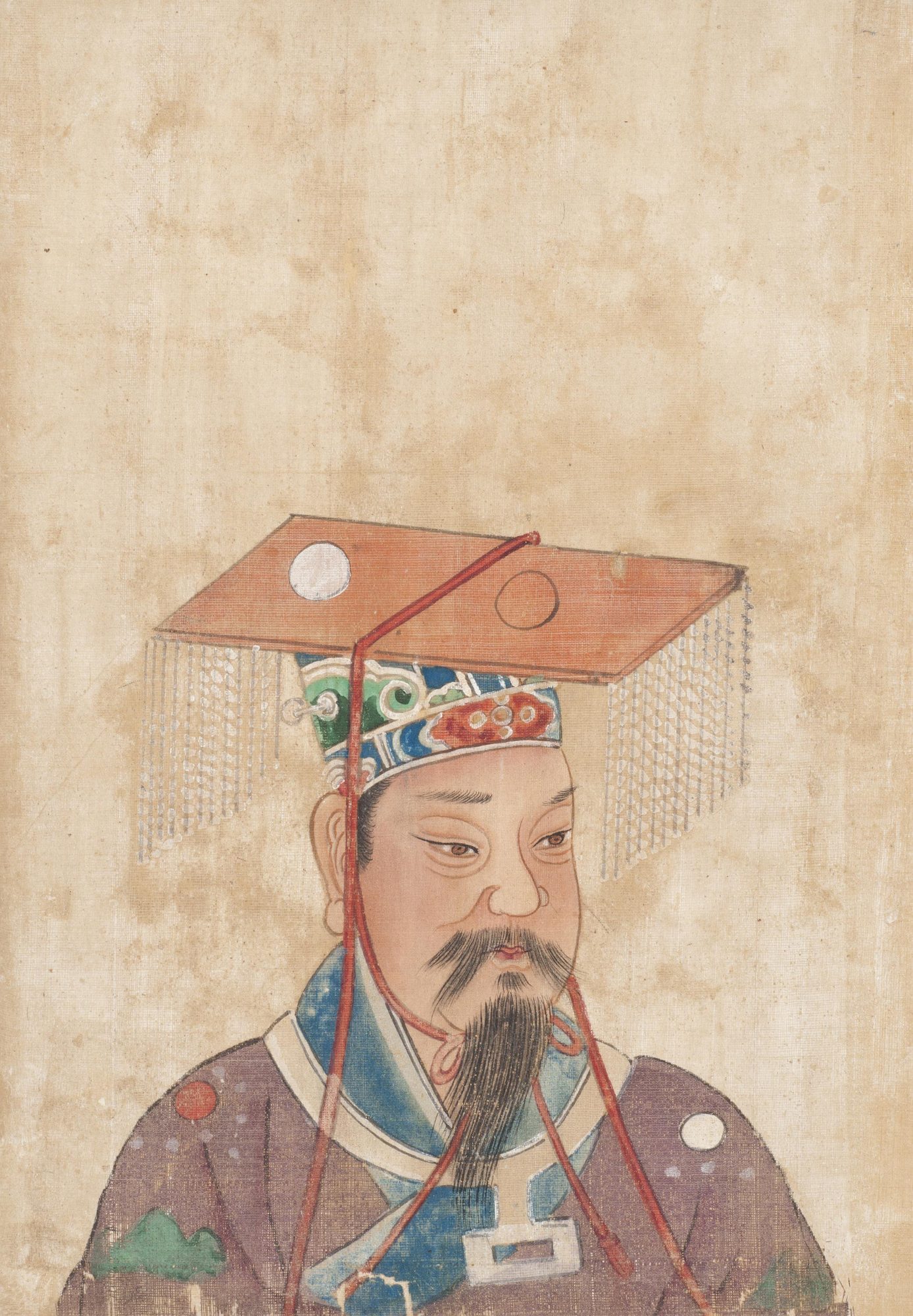
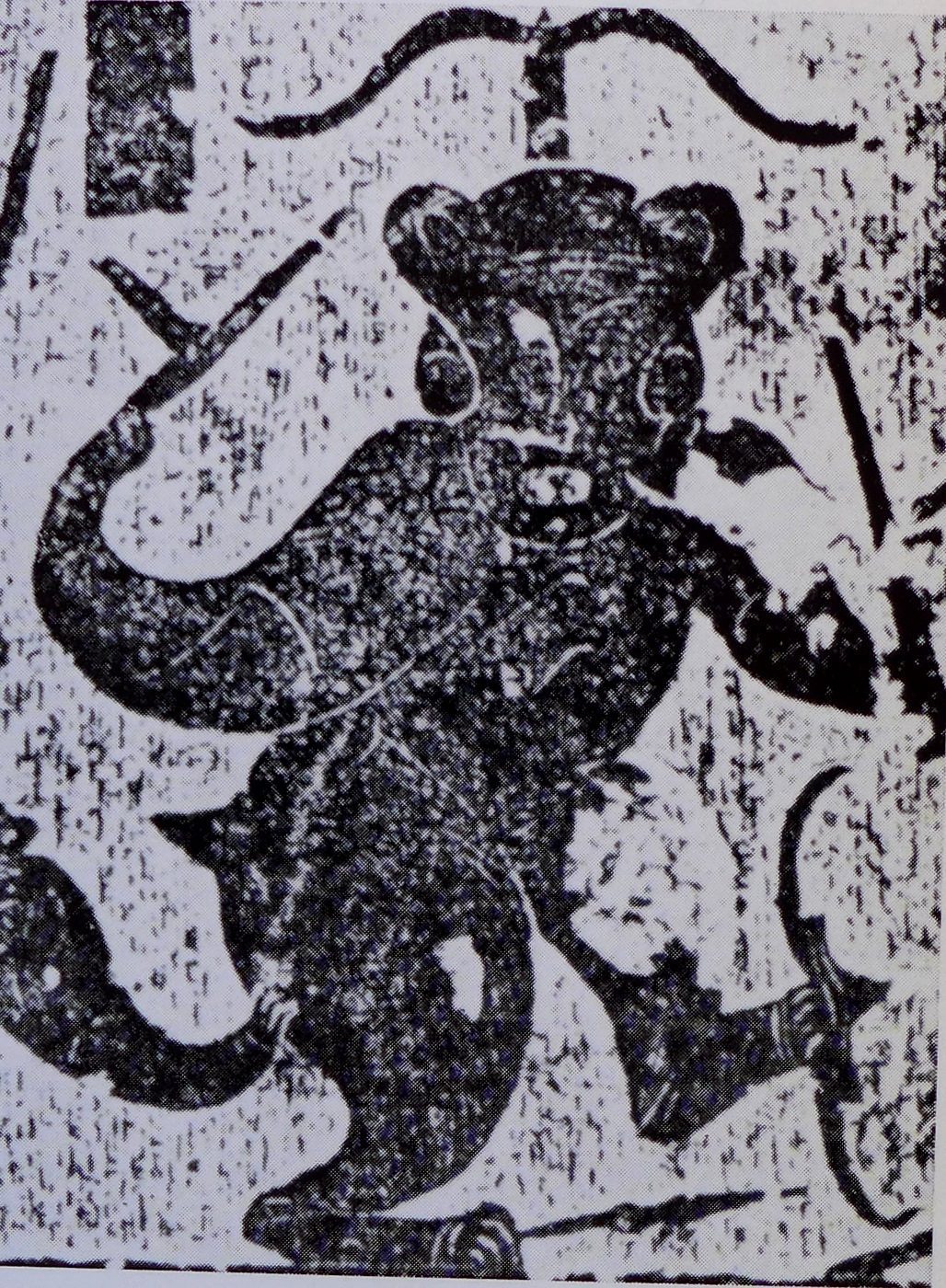
The rain came down like the end of the world, and it was meant to. Chiyou had made war on the sovereign of heaven, and when the winged dragon sent against him met him in the northern wilds, the storm-monster reached past mortal armies for the powers of the sky itself. He begged the Wind Earl and the Rain Master to fight for him, and they loosed a great wind and a great rain over the field, a deluge with a will behind it, thrown against the sovereign’s advancing dragon. This is the war the Classic of Mountains and Seas remembers: not a clash of levies and dagger-axes but a duel of weather, fought for mastery of the world between a god of order and a monster who could command the storm.
A dragon who hoarded the waters
It begins, in that oldest supernatural telling, with a single flat sentence of aggression. Chiyou made weapons and attacked Huangdi, the Yellow Emperor. The sovereign answered by sending his lieutenant, the Responding Dragon named Ying Long, to strike the rebel down in the northern wilds. And the dragon’s opening move was itself a weapon made of weather: he hoarded the waters.
The verb the text uses can be read two ways, and it will not settle which, so that the dragon is either withholding the rain to leave the enemy dry or storing up a flood to loose against him. It was against that dammed sky that Chiyou called in the Wind Earl and the Rain Master, and they answered the hoarded water with a storm of their own, a great wind and a great rain summoned down onto the field. The first exchange of the battle is water against water, a dragon’s dammed flood against a monster’s stolen tempest, the whole sky enlisted on both sides.
Drought made flesh
Then the sovereign of heaven plays the card that decides everything, and it is not another flood. It is a drought. He sends down out of the sky a heavenly woman, and the text pauses on the threshold of the fight to dress her for us: there was a figure in blue-green clothing, it says, named Ba, the Yellow Emperor’s daughter.
She is the drought made flesh, and the instant she touches the earth the rain simply stops. The storm that Chiyou borrowed from the sky-spirits dies in the sudden heat, the deluge fails, and in the parched field left behind him the storm-monster is killed. The decisive weapon in the war for the world turns out to be the absence of rain, a green-clad woman who walks the wet air dry.
Who struck the killing blow the oldest text will not quite say, and its honesty is worth keeping rather than smoothing. In one passage the rain stops and the Yellow Emperor himself kills Chiyou. In another, in the eastern reaches of the same Classic, the deed goes to the dragon: Ying Long, it says plainly, killed Chiyou, and Kuafu the giant besides. The book distributes one death between the sovereign and his dragon across a few lines and never reconciles them, and a faithful retelling should not pretend to a single hand on the blade. What both versions agree on is the shape of the victory. The storm was broken by drought, and in the drought the monster fell.
Struck with the bone of a thunder-beast
There is a third instrument of that war, and it is the strangest of all, though the oldest text is careful about exactly what it claims for it. Somewhere in the Eastern Sea stands Mount Liubo, and on it lives a beast like an ox with a single leg and no horns, its hide a stormy grey. When it goes in and out of the water it brings wind and rain; its light is like the sun and moon, and its voice is like thunder. Its name is Kui. The Yellow Emperor took this creature, made a drum from its hide, and beat that drum with the bone of a thunder-beast, and the sound carried five hundred li and awed all under heaven.
It is the founding image of the war-drum in Chinese myth, a drumhead cut from a one-legged thunder-ox and struck with a bolt of stored lightning. The old text guarantees two things and leaves a third open: that the Yellow Emperor made the drum, and that with it he cowed the whole world beneath him. Whether that thunder rolled over Chiyou’s own field the passage does not actually say. The drum and the storm-monster meet only when a later reader sets the two beside each other, and the honest join is to hold them a breath apart, the sovereign’s thunder and the sovereign’s enemy, near neighbours the source never quite introduces.
Fetters that took root
When the monster was down, the earth kept the shape of his binding. On Mount Song in the southern wilds grows a stand of maples, and the Classic gives them an unforgettable origin: they are what Chiyou cast off. The fetters that shackled the captured storm-monster were flung down there, and where they fell they took root and became the maple trees, so that the red-leaved wood is the manacles of the slain rebel grown living out of the ground.
It is one of those images the old geography does best, an aftermath you can walk into: a whole grove that is really a discarded chain, the blood-red autumn of the maple standing in for the bonds of the thing that once commanded the rain.
Where the battle got its place-name
Set against this weather-haunted account is a second, wholly sober one, and the sources keep them apart on purpose. In Sima Qian’s Records of the Grand Historian, written around the turn of the first century BCE, there is no dragon and no drought-goddess at all. There is a collapsing political order, the house of the Divine Farmer fallen into decline and the lords preying on one another, and there is Chiyou as the most violent of them, the warlord none could punish. The future Yellow Emperor, Xuanyuan, first fights a different enemy entirely, the Flame Emperor, whom he beats only after three battles on the wilderness of Banquan.
That is a separate war against a separate foe, and the Records never folds it into what comes next. Only afterwards does Chiyou rebel and refuse the emperor’s command, and Xuanyuan muster the feudal lords, meet him on the wilderness of Zhuolu, and there capture and kill him. It is a clean sentence of statecraft: the legitimate ruler puts down the rebel, and the lords raise him up as the Son of Heaven. This is the passage that gives the battle its place-name. The supernatural Classic sets the fight in the wilds of Jizhou; it is the Records that plants it at Zhuolu, where the victor would later build his city at the bend of the river.
The two accounts are not one story and its summary but two different ancient treatments of the same founding, and the drama lives in the gap between them. Strip the Records down and you have a general capturing a rebel and being crowned. Open the Classic and the same victory becomes a war of the elements, a hoarded flood against a stolen storm, decided by a girl in blue-green who carries the drought in the hem of her dress. The battle for mastery of the world was won twice over, once by an army and once by the sky, and the tradition never chose between them.
Weapons marooned on the earth
Neither did it let the victors go home clean. The drought that broke Chiyou’s storm could not be sent back where it came from. Ba, having burned the tempest out of the air, found she could not climb again to heaven, and wherever she settled the rain would not fall. Shujun carried word of her to the sovereign, who banished her north beyond the Red Water; and because a stranded drought always drifts back toward the fields, the people learned to drive her off, clearing the water-channels to open the way and then crying after her, Spirit, go north!
The dragon fared no better. Ying Long, who had killed Chiyou, likewise could not ascend, so that the country where he came to rest ran dry, and in later droughts people would fashion his image to call the great rain back. Both weapons that won the war stayed marooned on the earth as the origin of drought itself. The storm-monster was slain, the world was made to obey a single sovereign, and the price of that order was a thirst in the land that no one has ever fully sent away.
The Yellow Emperor then sent down a heavenly woman called Ba, and the rain stopped; and so he killed Chiyou. Ba could not ascend again, and where she dwelt no rain fell. Shujun told this to the sovereign, who set her north of the Red Water. Shujun then became Lord of the Fields. When Ba would stray, and the people wished to drive her off, they would say: “Spirit, go north!” (Classic of Mountains and Seas, “Great Wilderness: North”; author’s rendering from the Chinese)
- **Classic of Mountains and Seas (山海經, Shanhaijing), “Great WildernessNorth” (大荒北經), Warring States–Han:** the central weather-war passage. Chiyou makes weapons and attacks Huangdi (蚩尤作兵伐黄帝); Huangdi orders the Responding Dragon Ying Long to attack him in the wilderness of Jizhou (黄帝乃令應龍攻之冀州之野); Ying Long hoards the waters (應龍畜水); Chiyou begs the Wind Earl and the Rain Master, who loose a great wind and rain (蚩尤請風伯雨師,縱大風雨); Huangdi sends down the heavenly woman called Ba (黄帝乃下天女曰魃), named in the same section as a figure in blue-green clothing,
the Yellow Emperor’s daughter Ba
(有人衣青衣,名曰黄帝女魃); the rain stops and Chiyou is killed (雨止,遂殺蚩尤); Ba then cannot ascend again, and where she dwells it does not rain (魃不得復上,所居不雨); Shujun (叔均) reports her plight, she is placed north of the Red Water and the drought-banishing rite criesSpirit, go north!
(神北行); and a parallel line credits Ying Long with killing both Chiyou and Kuafu (應龍已殺蚩尤,又殺夸父). Chinese read verbatim (zh.wikisource.org/wiki/山海經/大荒北經). For a citable English sentence, quote a named translation (e.g. Birrell, The Classic of Mountains and Seas, Penguin) and re-verify; the wording above is the author’s own literal rendering from the Chinese. - **Classic of Mountains and Seas (山海經, Shanhaijing), “Great WildernessEast” (大荒東經), Warring States–Han:** the war-drum passage and the parallel killer-variant. On Mount Liubo (流波山) in the Eastern Sea lives a one-legged, hornless, grey ox-like beast named Kui (夔), whose going in and out of the water brings wind and rain, whose light is like the sun and moon and whose voice is like thunder; the Yellow Emperor took it, made a drum of its hide and struck it with the bone of the thunder-beast (雷獸), the sound carrying five hundred li, and by it awed all under heaven (以威天下). This passage names Kui and the drum but does NOT name Chiyou as the enemy against whom the drum was used, so the link
drum used at Zhuolu
is an interpretive join across passages, not a claim of the text. The chapter also states that Ying Long, dwelling at the southern pole, killed Chiyou and Kuafu and could not ascend again, so the lands below suffer drought and people make his image to bring great rain (應龍處南極,殺蚩尤與夸父,不得復上,故下數旱,旱而為應龍之狀,乃得大雨). Chinese read verbatim (zh.wikisource.org/wiki/山海經/大荒東經). - **Classic of Mountains and Seas (山海經, Shanhaijing), “Great WildernessSouth” (大荒南經), Warring States–Han:** the maple-tree aftermath. On Mount Song (宋山) grows a tree called the maple (楓木); the maple is what Chiyou cast off as his fetters, which became the maple (蚩尤所棄其桎梏,是爲楓木), implying that Chiyou was bound and captured and that his discarded shackles took root as the maple wood. Chinese read verbatim (zh.wikisource.org/wiki/山海經/大荒南經).
- Sima Qian (司馬遷), Shiji (史記), ch. 1,
Annals of the Five Emperors
(五帝本紀第一), c. 91 BCE: the euhemerised historical register and the source of the place-name Zhuolu. In the time of Xuanyuan (軒轅) the house of the Divine Farmer had declined and the lords attacked one another; Chiyou was the most violent, whom none could punish (蚩尤最爲暴,莫能伐). Xuanyuan first defeated the Flame Emperor at Banquan after three battles (與炎帝戰於阪泉之野。三戰,然後得其志), a SEPARATE war against a separate foe, not to be conflated with Zhuolu. Chiyou then made rebellion and would not obey the emperor’s command (蚩尤作亂,不用帝命); Xuanyuan levied troops from the feudal lords, fought Chiyou in the wilderness of Zhuolu, and captured and killed him (與蚩尤戰於涿鹿之野,遂禽殺蚩尤); the lords honoured him as Son of Heaven in place of the Divine Farmer, and he became the Yellow Emperor (是爲黃帝) and settled at the bend of Zhuolu (邑于涿鹿之阿). Chinese read verbatim (zh.wikisource.org/wiki/史記/卷001, which reproduces the received text with the 三家註 apparatus flagged as non-original). For a citable English sentence, quote a named translation (e.g. Nienhauser, ed., The Grand Scribe’s Records, vol. 1) and re-verify; the wording above is the author’s own literal rendering from the Chinese.