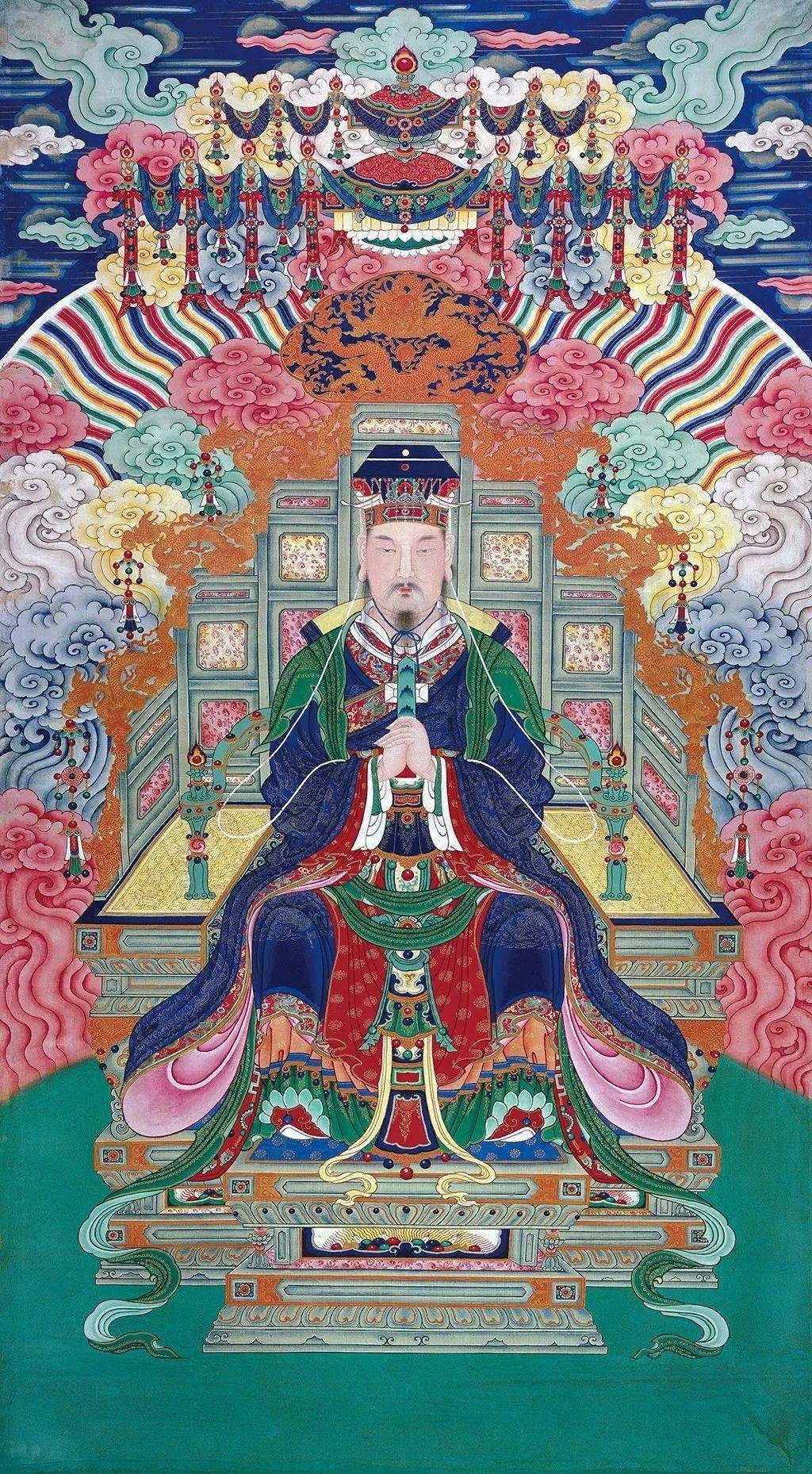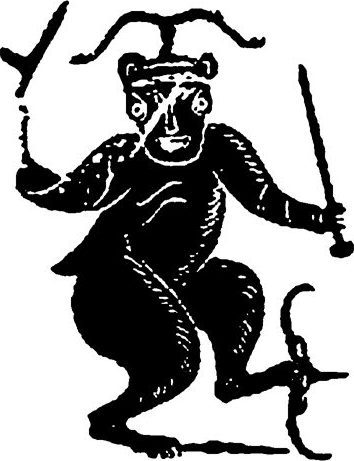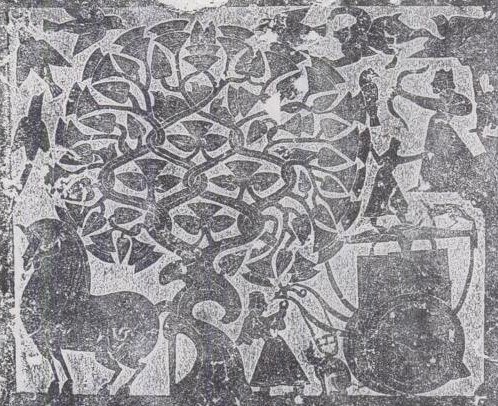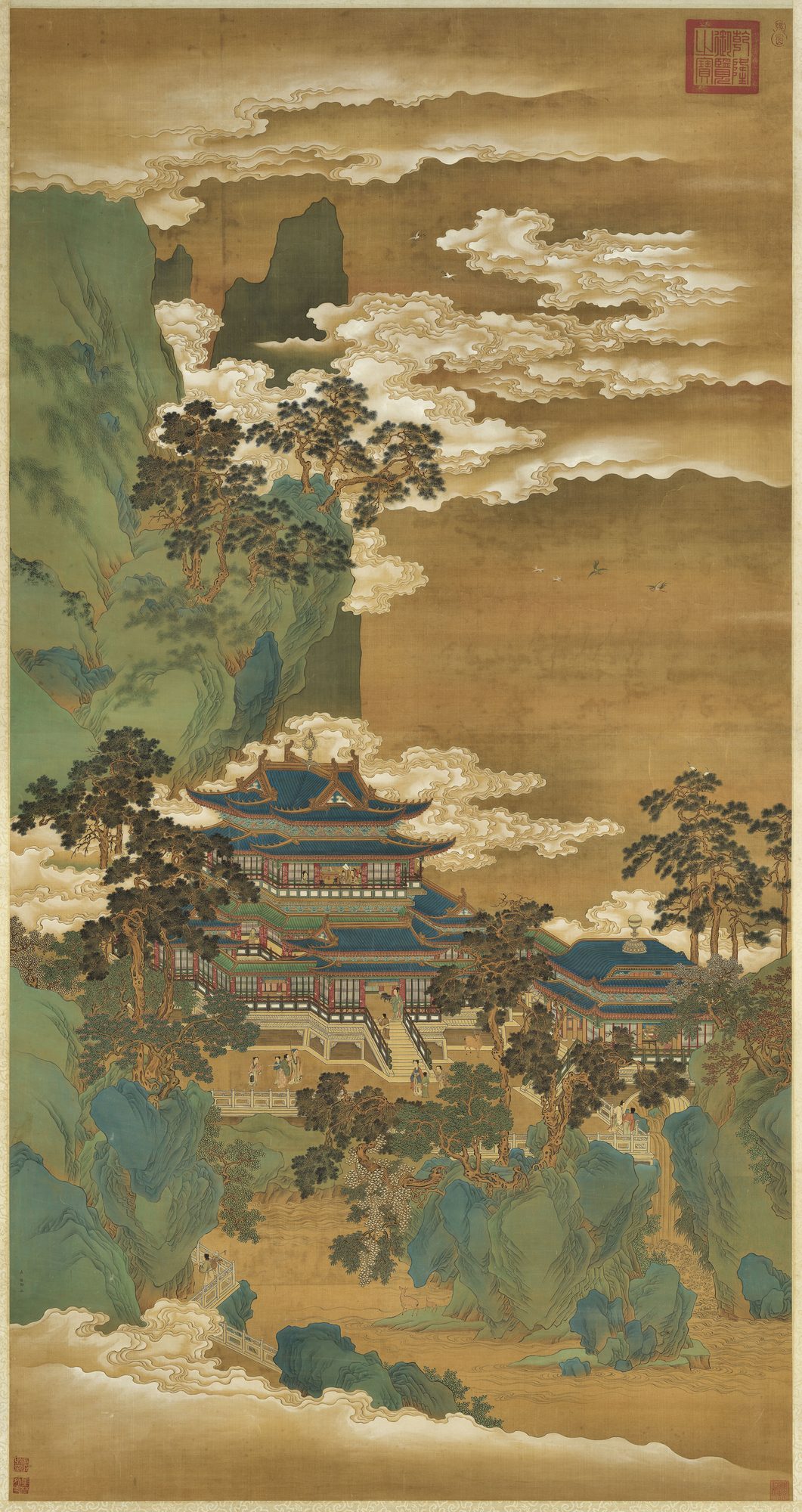
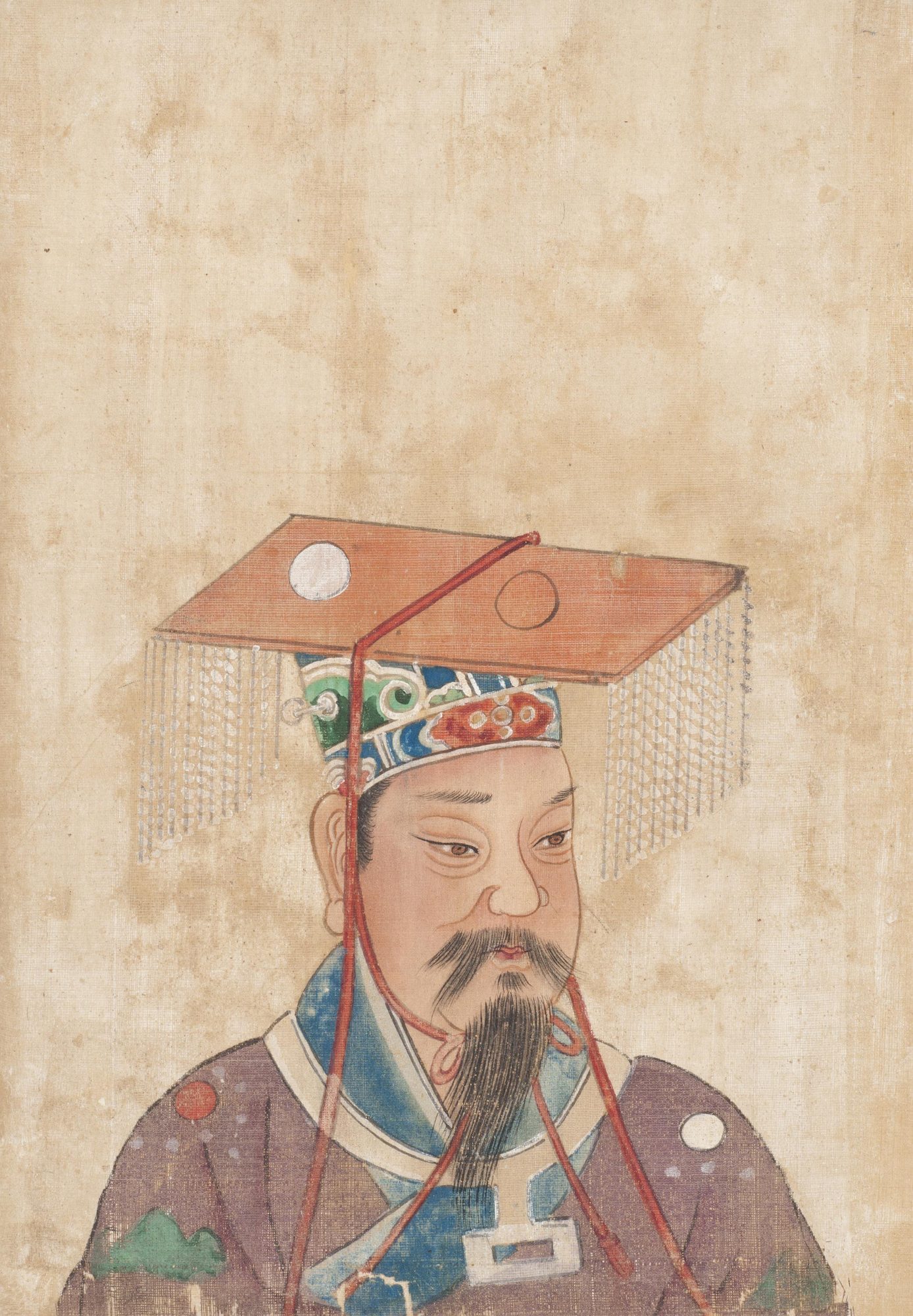
The world was coming apart, and the old farmer-king could no longer hold it. In the days of Xuanyuan, the house of the Divine Farmer had fallen into decline, and with its authority gone the feudal lords turned on one another and on the people beneath them, raiding and brutalising as they pleased. Into that collapse walks a strange child. The oldest connected account of him, Sima Qian’s Records of the Grand Historian, opens by telling us he was born numinous and could speak while still an infant, a boy of the Gongsun clan named Xuanyuan. He did not inherit a throne. He made himself into a weapon, training in the use of the shield and the dagger-axe so that he could march against the lords who would not submit, and one by one they were brought to heel.
Beast-battalions sent into the field
All but one. Chiyou was singled out by the text as the most violent of them all, the warlord none could subdue. Before that reckoning came, though, there was another war, and it is worth being exact about it, because the two are constantly run together and the sources keep them firmly apart. Xuanyuan’s first great campaign was not against Chiyou at all. It was against the Flame Emperor, a rival sovereign of the fading age, fought out on the wilderness of Banquan.
The Records is careful with its names here: it is the house of the Divine Farmer whose authority has decayed, and the Flame Emperor whom Xuanyuan meets in the field, two separate referents the text never openly folds into one. The account gives it a shape that stays in the mind: he trained bears and brown bears, the pixiu and the chu and tigers, and sent these beast-battalions into the field, and only after three separate battles did he at last get his way. Banquan is the war against the old world. Zhuolu, still to come, is the war against chaos itself.
For chaos wore Chiyou’s face. In the sober, political telling of the Records, Chiyou simply made rebellion and would not obey the emperor’s command, so Xuanyuan mustered the feudal lords, met him on the wilderness of Zhuolu, and there captured and killed him. It is a single clean sentence, the founding act of a state rendered as an act of law: the legitimate sovereign puts down the rebel who defies him. But this same battle survives in a wholly different register, and the Classic of Mountains and Seas preserves it as a war fought with weather.
Between the powers of storm and drought
In that account the fight is not between armies but between the powers of storm and drought. Chiyou raises arms and attacks Huangdi, and Huangdi answers by ordering the Responding Dragon, Ying Long, to attack the rebel on the wilderness of Jizhou. Ying Long begins by hoarding the waters, damming the rain against the enemy. Chiyou counters by recruiting the storm-spirits, begging the Wind Earl and the Rain Master to loose a great wind and a great rain that sweep the dragon’s advantage away.
And then Huangdi plays his last card. He sends down out of heaven a woman called Ba, and the text pauses to dress her: there was a figure in blue-green clothing, it says, named Ba, the Yellow Emperor’s daughter. The rain stopped dead, and in the sudden drought Chiyou was killed. The same victory, told twice: once as a general capturing a rebel, once as a dragon and a drought-goddess breaking a storm.
The reader should not flatten these into one. They are two ways of looking at the same founding, and the Classic of Mountains and Seas even lets its own places drift, setting the fight at Jizhou where the Records names Zhuolu. Han geographers sometimes folded Zhuolu inside the larger region of Jizhou, so the two can be reconciled on a map, but the words on the page differ by source, and honesty means citing whichever text you are standing in. What is not in dispute is the outcome. Chiyou falls, and with him the last power that could not be brought to order.
Why the emperor is yellow
Victory made the man an emperor. After Zhuolu, the Records says, the lords with one voice honoured Xuanyuan as the Son of Heaven, in place of the Divine Farmer, and this is the moment he becomes Huangdi. The name is not a description of his face. He received the omen of the Earth power, and in the five-phases cosmology that runs through all of this the colour of earth is yellow, so he is titled the Yellow Emperor: a claim about which element his rule embodies, the steady centre on which the four directions turn.
Offices named for clouds
He did not then sit still and enjoy it. The account insists he never settled, opening the mountains and clearing the roads, criss-crossing his realm to pacify it. Once pacified, it had to be ordered, and here the war-leader gives way to the civiliser. He regulated the five phases, planted the five grains, soothed the myriad people and surveyed the four quarters, and gave his officials cloud-names, so that his very administration read like a sky: he was the Cloud Master, and his offices were named for clouds. What had been a landscape of raiding warlords became a world with a calendar, a harvest and a court.
The Huainanzi, that great second-century compendium, gives the reign as its own age imagined it, and the picture is frankly utopian. With his ministers Limu and Taishan Ji to help him, the Yellow Emperor ranked high and low so that the strong did not oppress the weak, and the people kept their lives and did not die young while the harvests ripened without famine. The cosmos itself fell into step: the sun and moon shone bright, the stars held their courses, the wind and rain came in season. This is less a description of governance than a portrait of what governance is for: order pressed so deep into the world that even the weather keeps the law.
A rite against the dry spirit
One thread of the storm-war refuses a happy ending, and it is the most human part of the whole cycle. The drought-goddess Ba, having burned Chiyou’s storm out of the sky, could not climb back to heaven. She was left stranded on earth, and wherever she settled the rain would not fall. Shujun carried word of her plight to the emperor, who placed her away in the north beyond the Red Water, and Shujun himself became the Lord of the Fields, the god of agriculture.
Because a stranded drought will always drift back, the people learned a rite against her: when the dry spirit appears, they first clear out the irrigation channels to open the water’s road, then drive her off with a single shouted command, Spirit, go north! The weapon that won the founding war became the drought that farmers must forever chase back to the cold country at the top of the world. There is a hard justice in it. The order the Yellow Emperor built is not free; some part of the violence that made it can never be sent all the way home.
He was mortal in the end, for all that he began by speaking from the cradle. The account closes his life in four characters: the Yellow Emperor died, and was buried at Mount Qiao. Between the strange child in the collapsing world and the grave on the mountain lies everything the Chinese tradition would come to mean by civilisation: a realm hammered out of warlords, a rebel broken, a calendar and a harvest and a court of clouds, and a peace deep enough that the phoenix would come down to the yard.
The Yellow Emperor governed the world, and Limu and Taishan Ji assisted him. He distinguished male and female, ranked the noble and the base, and made it so the strong did not oppress the weak nor the many the few; the people kept their lives and did not die young, and the harvests ripened and there was no dearth. The sun and moon shone bright, the stars kept their courses, the wind and rain came in season, and the five grains ripened. (Huainanzi, “Lanming xun”; author’s rendering from the Chinese)
- Sima Qian (司馬遷), Shiji (史記), ch. 1,
Annals of the Five Emperors
(五帝本紀第一), c. 91 BCE: the foundational connected prose account. Xuanyuan (軒轅) of the Gongsun (公孫) clan, son of Shaodian, born numinous and able to speak in infancy (生而神靈,弱而能言); the decline of the Shennong house (神農氏世衰) and the warlords brutalising the people; Xuanyuan’s training in shield and dagger-axe (習用干戈); Chiyou singled out as most violent, whom none could subdue (蚩尤最爲暴,莫能伐); the three battles against the Flame Emperor on the wilderness of Banquan (與炎帝戰於阪泉之野。三戰,然後得其志), fought with battalions of bears, brown bears, pixiu, chu and tigers (教熊羆貔貅貙虎); the war on Chiyou at Zhuolu, where Chiyou is captured and killed (與蚩尤戰於涿鹿之野,遂禽殺蚩尤); the enthronement as Son of Heaven in place of the Divine Farmer (諸侯咸尊軒轅爲天子,代神農氏,是爲黃帝); the ceaseless pacifying of the realm (披山通道,未嘗寧居); the civilising institutions (治五氣,蓺五種,撫萬民,度四方); the cloud-named offices (官名皆以雲命,爲雲師); the Earth-virtue omen that gives him the Yellow name (有土德之瑞,故號黃帝); the principal consort Leizu (嫘祖), daughter of Xiling; and the burial at Mount Qiao (黃帝崩,葬橋山). Chinese read verbatim (zh.wikisource.org/wiki/史記/卷001, which reproduces the received text with the 三家註 apparatus flagged as non-original). For a citable English sentence, quote a named translation (e.g. Nienhauser, ed., The Grand Scribe’s Records, vol. 1) and re-verify; the wording above is the author’s own literal rendering from the Chinese. - **Classic of Mountains and Seas (山海經, Shanhaijing), “Great WildernessNorth” (大荒北經), Warring States–Han:** the supernatural register of the Chiyou war. Chiyou raises arms and attacks Huangdi, who orders the Responding Dragon Ying Long (應龍) to attack him on the wilderness of Jizhou (冀州之野); Ying Long hoards the waters (應龍畜水); Chiyou begs the Wind Earl and Rain Master (風伯雨師) to loose great wind and rain (縱大風雨); Huangdi sends down the heavenly woman Ba (魃), named in the same section both as a figure in blue-green clothing,
the Yellow Emperor’s daughter Ba
(有人衣青衣,名曰黄帝女魃), and asa heavenly woman called Ba
(下天女曰魃) without reconciling the two; the rain stops and Chiyou is killed (雨止,遂殺蚩尤). Ba then cannot ascend again, and where she dwells it does not rain (魃不得復上,所居不雨); Shujun (叔均) reports her plight to the emperor, who places her north of the Red Water, and Shujun becomes Lord of the Fields (後置之赤水之北。叔均乃為田祖); the drought-banishing rite first clears the water-channels and criesSpirit, go north!
(先除水道…令曰:『神北行!』); and Ying Long, having killed Chiyou and Kuafu, departs to dwell in the south, which is why the south has much rain (應龍已殺蚩尤,又殺夸父,乃去南方處之,故南方多雨). Chinese read verbatim (zh.wikisource.org/wiki/山海經/大荒北經). - Huainanzi (淮南子), ch. 6,
Lanming xun / Peering into the Obscure
(覽冥訓), c. 139 BCE: the idealised-governance portrait of the reign. With the ministers Limu (力牧) and Taishan Ji (太山稽) to assist him, the Yellow Emperor distinguished male and female and ranked the noble and the base so that the strong did not oppress the weak nor the many the few, the people kept their lives and did not die young and the harvests ripened without dearth (別男女,異雌雄,明上下,等貴賤,使強不掩弱,眾不寡,人民保命而不夭,歲時孰而不凶); the cosmic order restored (日月精明,星辰不失其行,風雨時節,五穀登孰); the pacified beasts, the phoenix in the courtyard and the qilin on the outskirts (虎狼不妄噬,鷙鳥不塾搏,鳳皇翔于庭,麒麟游於郊); and the no-crime utopia in which nothing lost is picked up, prices are not rigged, the city walls go unlatched and the towns have no bandits (道不拾遺,市不豫賈,城郭不關,邑無盜賊). Chinese read verbatim (zh.wikisource.org/wiki/淮南子/覽冥訓). - Huainanzi (淮南子), ch. 15,
Binglüe xun / On the Military
(兵略訓), c. 139 BCE: lists the Zhuolu battle among the archetypal just wars of the sage-kings — the Yellow Emperor once fought the Flame Emperor, and so the Yellow Emperor fought on the wilderness of Zhuolu (黃帝嘗與炎帝戰矣…故黃帝戰于涿鹿之野) — confirming Zhuolu as the canonical battlefield of the Chiyou war in the Han imagination. Chinese read verbatim (zh.wikisource.org/wiki/淮南子/兵略訓).