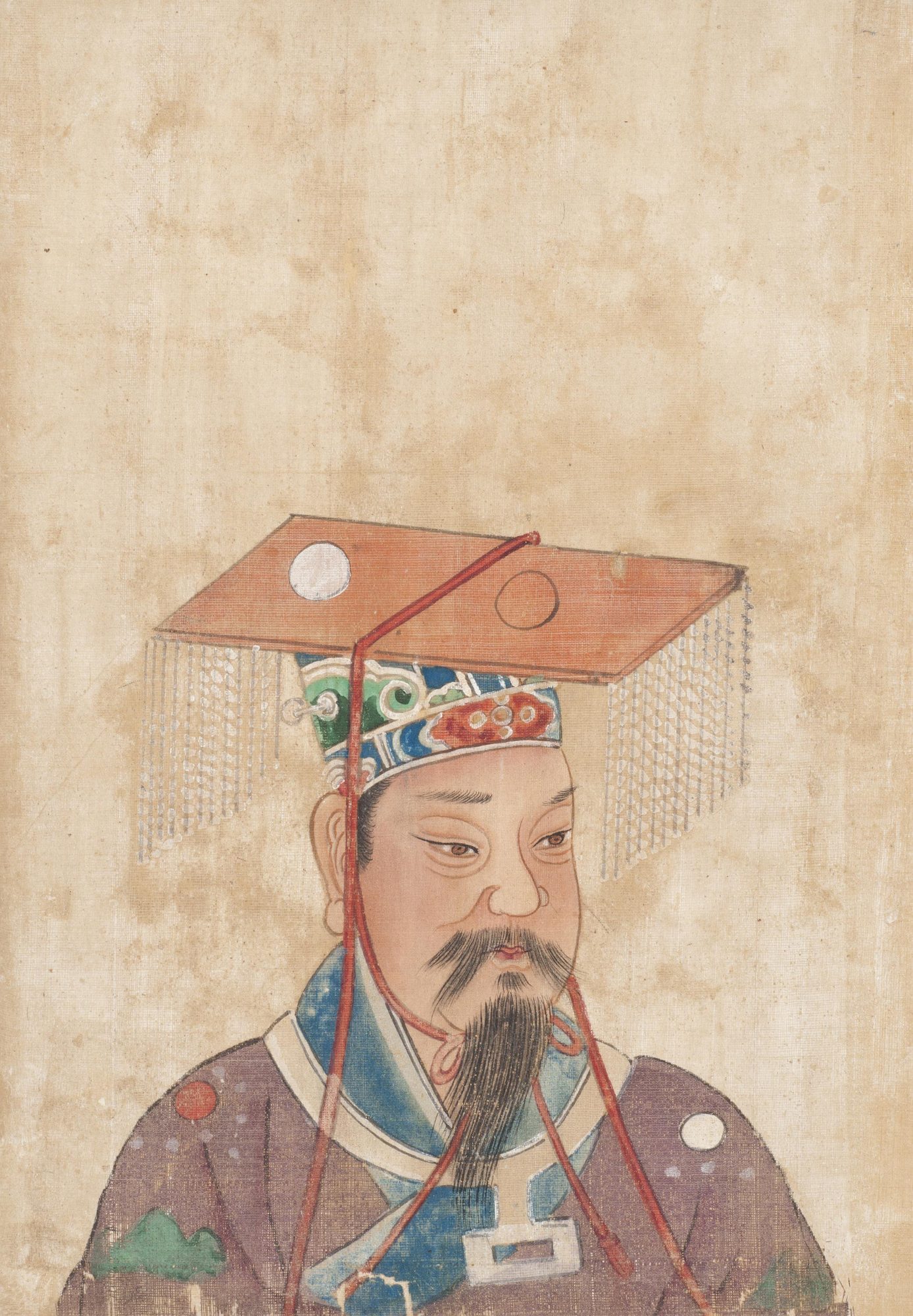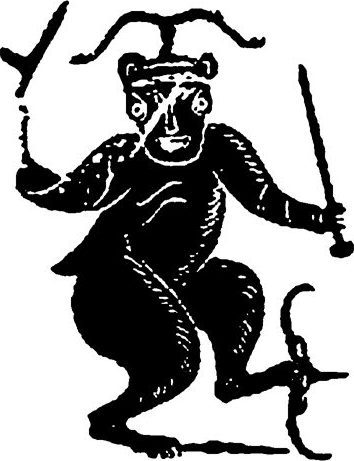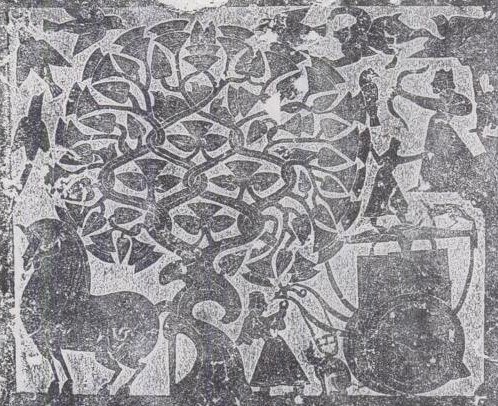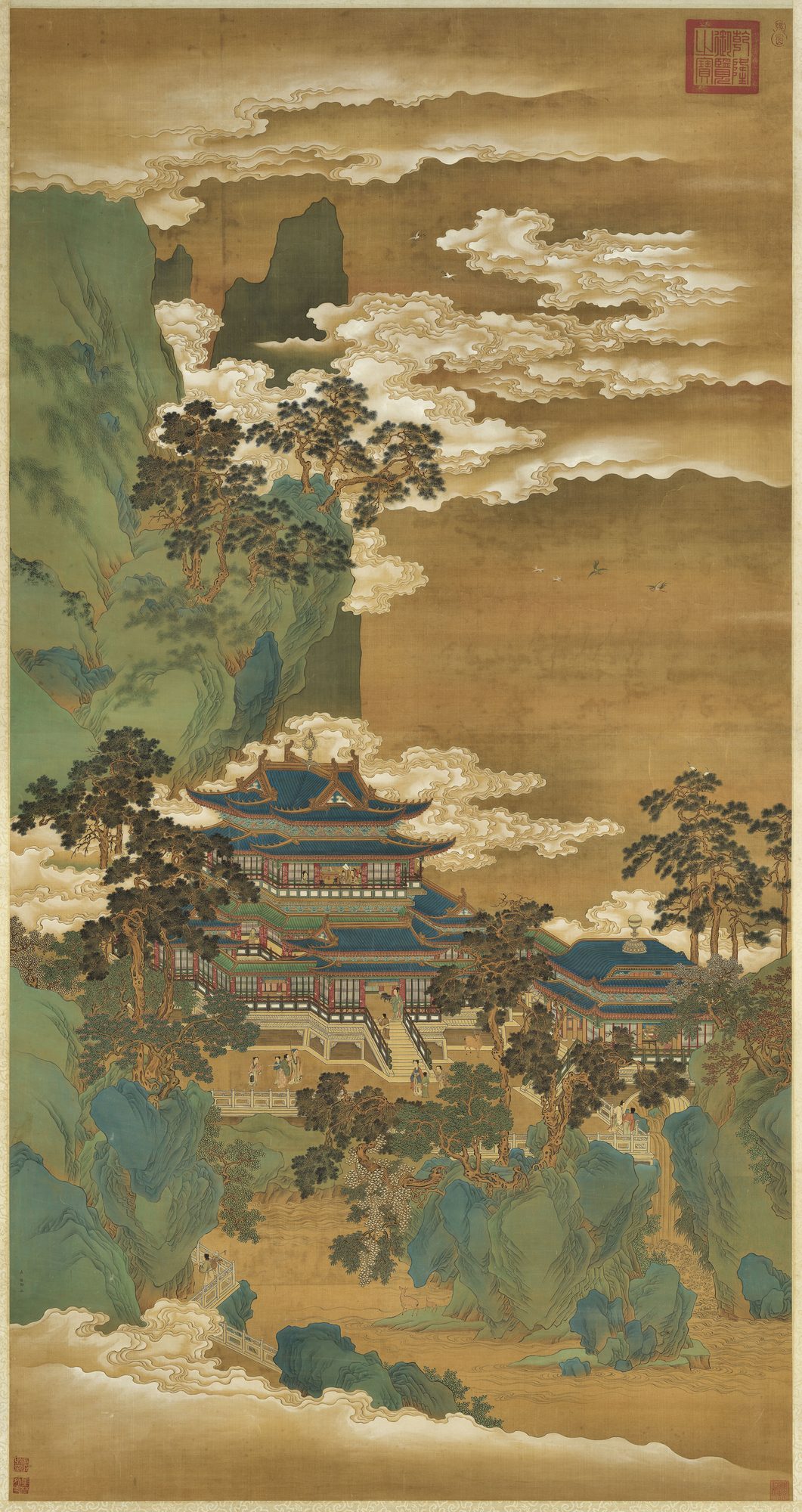
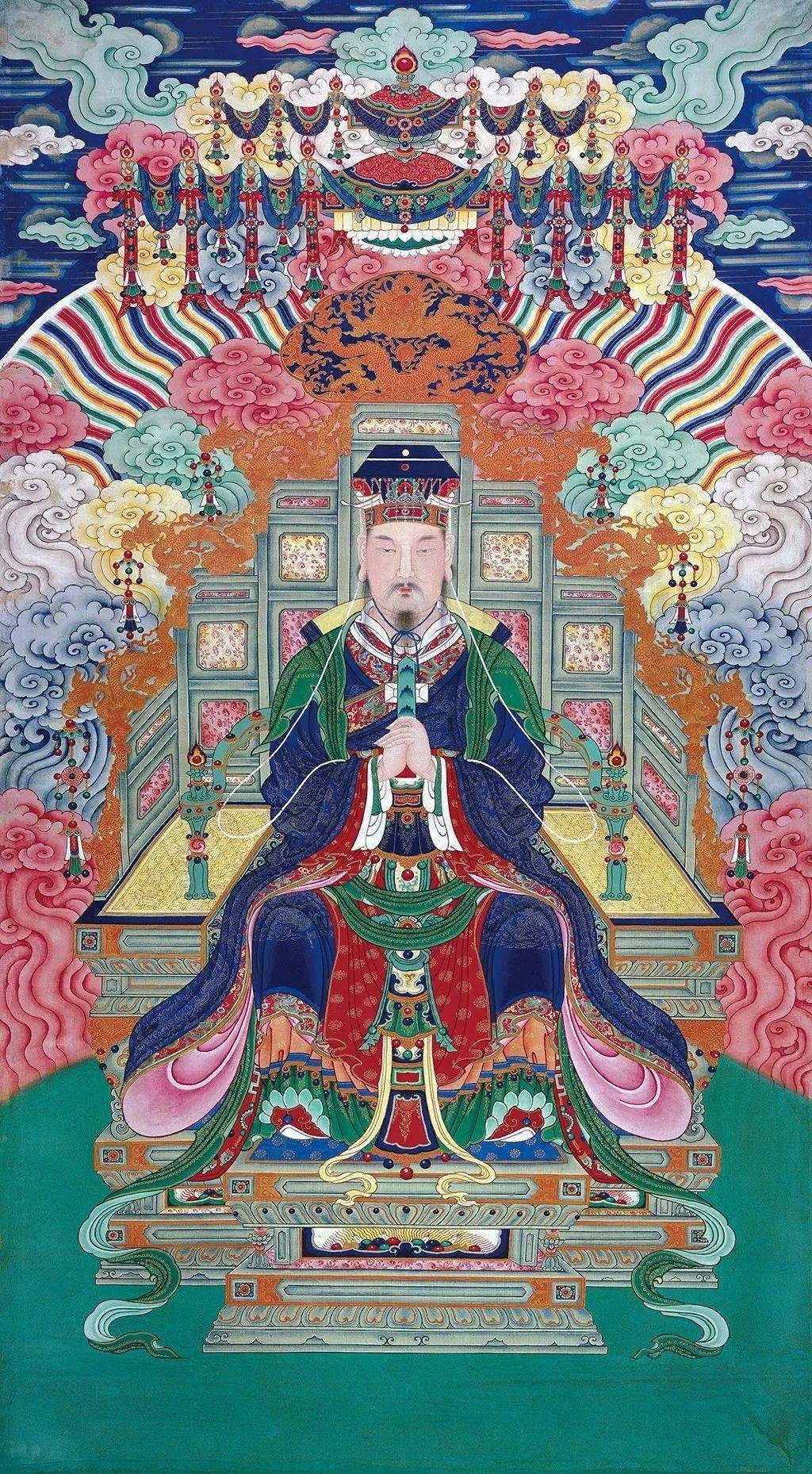
He held court in a hall called the Precious Hall of Divine Mists, inside the Cloud Palace of the Golden Gate, and every detail proclaims absolute order: jade doors studded with golden nails, vermilion gates where painted phoenixes seemed to dance, corridors so finely worked they were crystalline and see-through in every part. This is the seat of the Jade Emperor, supreme sovereign of Heaven. His ceremonial style runs to a mouthful of honorifics, the Most Exalted Sage of High Heaven, the Most Compassionate and Benevolent, the Great Heaven-Honoured Jade Emperor, Lofty Sovereign of the Profound Vault. Below him spreads a Heaven organised exactly like the empire that imagined it: a hierarchy of gods, immortals, star-officials, dragon-kings and department-spirits, arranged into ranks and offices, a celestial civil service with him at its apex. The most famous story ever told about that court is the story of how it broke.
The trouble arrives as a light in the sky. When a stone on a mountain splits and a monkey is born from it, the radiance of the event reaches Heaven, and the Jade Emperor commands his scouts, Thousand-Mile Eye and Fair-Wind Ear, to open the South Heaven Gate and look. They see only a young creature bowing to the four quarters. The empire of Heaven notes it and moves on, and that is the first mistake, a bureaucratic one: the system logs an anomaly and files it.
Keeper of the Heavenly Horses
By the time Sun Wukong has mastered immortality and terrorised the dragon-kings and the lords of the dead for his own convenience, the anomaly has become a complaint working its way up the chain. The Jade Emperor’s instinct is not to destroy the monkey but to administer him, to fold the disorder into the org chart where it can be managed. On the advice of a star-officer he offers Wukong a post: Bimawen, Keeper of the Heavenly Horses.
It sounds like an honour until Wukong discovers what every clerk in Heaven already knows: it is unranked, not even entered into the nine grades of office, a job shovelling for a thousand celestial horses with blame falling on the keeper if any beast grows thin. It is a promotion designed as humiliation. When Wukong realises he has been managed rather than honoured, he walks out and declares war.
Left off the guest list
What follows is the heart of the tale, and it is a portrait of power that cannot make itself felt. To buy peace the Jade Emperor grants Wukong the grand-sounding title he demands, Great Sage Equal to Heaven, an office, as the novel dryly notes, with rank but no salary and no duties, and hands him a sinecure minding the Garden of Immortal Peaches.
Then the Queen Mother of the West holds her Peach Banquet at the Jasper Pool, the fruit of immortality laid out for the great gods, and the guest list, which is really a map of who matters in Heaven, leaves the new Great Sage off it. He asks a serving-maid whether he has been invited. Not that she has heard, she says. He wrecks the banquet, devours the peaches, drinks the wine, steals Laozi’s elixir, and rebels outright.
Blade, axe, fire and thunder
Now the machinery of Heaven turns on him in earnest, and here the novel makes its sharpest point. The Jade Emperor sends the Heavenly King Li and Prince Nezha, and they fail. He sends a hundred thousand celestial troops, and, in the novel’s own flat phrase, they still could not subdue him.
Wukong is caught at last only through a trick by Laozi and the god Erlang, and then the executions begin, and they too fail: blade, axe, fire and thunder leave him unmarked. Laozi seals him in the Eight-Trigrams furnace for forty-nine days, and Wukong bursts out stronger than before and starts smashing his way toward the throne room itself. The supreme sovereign of the cosmos has emptied his arsenal and cannot stop one monkey.
The wager of the open palm
So he does the one thing left. The matter being urgent, the novel says, the Jade Emperor specially invited the Tathāgata, the Buddha, to rescue the throne. The Buddha wagers Wukong that he cannot leap out of an open palm, and offers, if he can, to have the Jade Emperor vacate Heaven and give it to him.
Wukong cannot escape the hand, and is pinned under the Mountain of Five Elements, and Heaven, saved, holds a Grand Festival of Peace in gratitude. The theology hidden in the plot is not subtle, and it is not a modern imposition: the Daoist sovereign of Heaven cannot save his own house, and must be rescued by a Buddhist power from the west. The pecking order is written into the story.
Three hundred and sixty-five spirits
That order runs the other way too, upward past the throne. In Investiture of the Gods, the sister-novel of the celestial bureaucracy, the supreme-heaven figure appears under his older name, Haotian Shangdi, August Heaven Supreme Sovereign, the same cosmic office wearing a different title. The whole hundred-chapter engine of that book turns on a single decree of his: that the twelve chief immortals declare themselves his vassals.
From that command flows the investiture, in which the sage Yuanshi Tianzun deputes Jiang Ziya to descend and enrol three hundred and sixty-five spirits into divine office, sorted into eight departments of thunder and fire and plague and stars. It is the clearest picture in Chinese fiction of Heaven as a staffed civil service, populated by imperial-style appointment. And note who conducts it: not the supreme sovereign, but Yuanshi Tianzun, one of the Three Pure Ones who stand, in Daoist theology, metaphysically above the Jade Emperor. He is the administrator of the cosmos, not its ultimate source.
A canon of late fiction
Whether he is the highest god depends entirely on where you stand. In institutional Daoism the answer is no: he is the emperor of the machine, subordinate to the Three Pure Ones who are its first principles. In popular folk religion the answer is closer to yes, for there he is effectively the supreme god of the pantheon, merged over centuries with Shangdi, the archaic high god of the ancient Chinese, until the two were widely treated as one being. Both answers are true in their own register, which is why flattening them into a single verdict misses him.
On the ninth day of the first lunar month his birthday is still kept in Chinese homes, the household kneeling before a tiered altar of offerings to Heaven itself. And one honesty is owed: there is no ancient scripture behind him as there is a Homer behind Zeus. He crystallised in the Daoist milieu of the Tang and Song and reached his full popular form only in these Ming novels. His canon is late fiction and living liturgy, and that lateness is not a gap in the record. It is the record.
If he can leap clear of my right palm, we will invite the Jade Emperor to go and dwell in the West, and yield the Heavenly Palace to him. (Journey to the West, ch. 7; author’s rendering from the Chinese)
- Wu Cheng’en (attrib.), Journey to the West (西遊記), esp. chapters 1 and 3–7: the
Havoc in Heaven
arcthe Jade Emperor’s court in the Precious Hall of Divine Mists within the Cloud Palace of the Golden Gate; his ceremonial title; the scout-gods Thousand-Mile Eye and Fair-Wind Ear; the Bimawen (Keeper of the Horses
) appointment and itsunranked
status; the empty title Great Sage Equal to Heaven; the Peach Banquet at the Jasper Pool hosted by the Queen Mother of the West; the failed suppression (Heavenly King Li and Nezha, the hundred thousand troops, the executions, the Eight-Trigrams furnace); the summons to the Buddha and the palm-wager; the Grand Festival of Peace. Chinese text read verbatim: Project Gutenberg eBook #23962. For a quotable English sentence, cite a named translation (Anthony C. Yu, Univ. of Chicago Press; or W. J. F. Jenner, Foreign Languages Press) and re-verify; the wording above is the author’s own literal rendering from the Chinese. - (Xu/Chen) Zhonglin (attrib.), Investiture of the Gods (封神演義 / 封神榜), esp. juan 15: the decree of Haotian Shangdi that the twelve chief immortals declare themselves his subjects, and the staffing of the celestial bureaucracy365 spirits enrolled into divine office in eight departments (four upper: thunder, fire, plague, dipper/stars; four lower: the constellations, the Three Mountains and Five Peaks, the wind-and-rain spirits, and the gods of good and evil), invested by Jiang Ziya under Yuanshi Tianzun. Chinese text read verbatim: Chinese Wikisource, 封神演義/卷015. English translation: Gu Zhizhong, Creation of the Gods (1992), Beijing.
- Lin Meirong,
Jade Emperor,
Encyclopedia of Taiwan (Council for Cultural Affairs, 2011)the Jade Emperor’s Birthday on the ninth day of the first lunar month and the 拜天公 household ritual. A later interpretation, not a primary source. - Rodney Stark, Discovering God (2007) p. 252the incorporation of the archaic high god Shangdi’s worship into the Jade Emperor. Scholarship, not a primary source.
- **Jo Forty, MythologyA Visual Encyclopedia** (2004) p. 226: the Jade Emperor as assistant and subordinate to Yuanshi Tianzun of the Three Pure Ones. Scholarship, not a primary source.