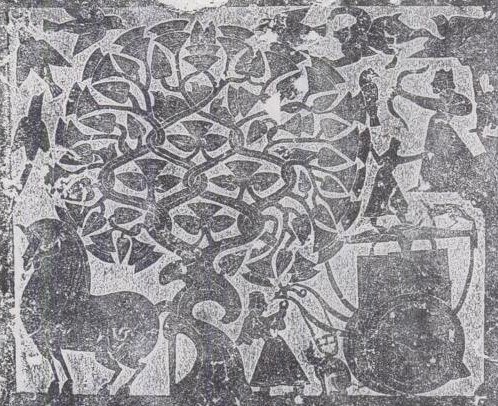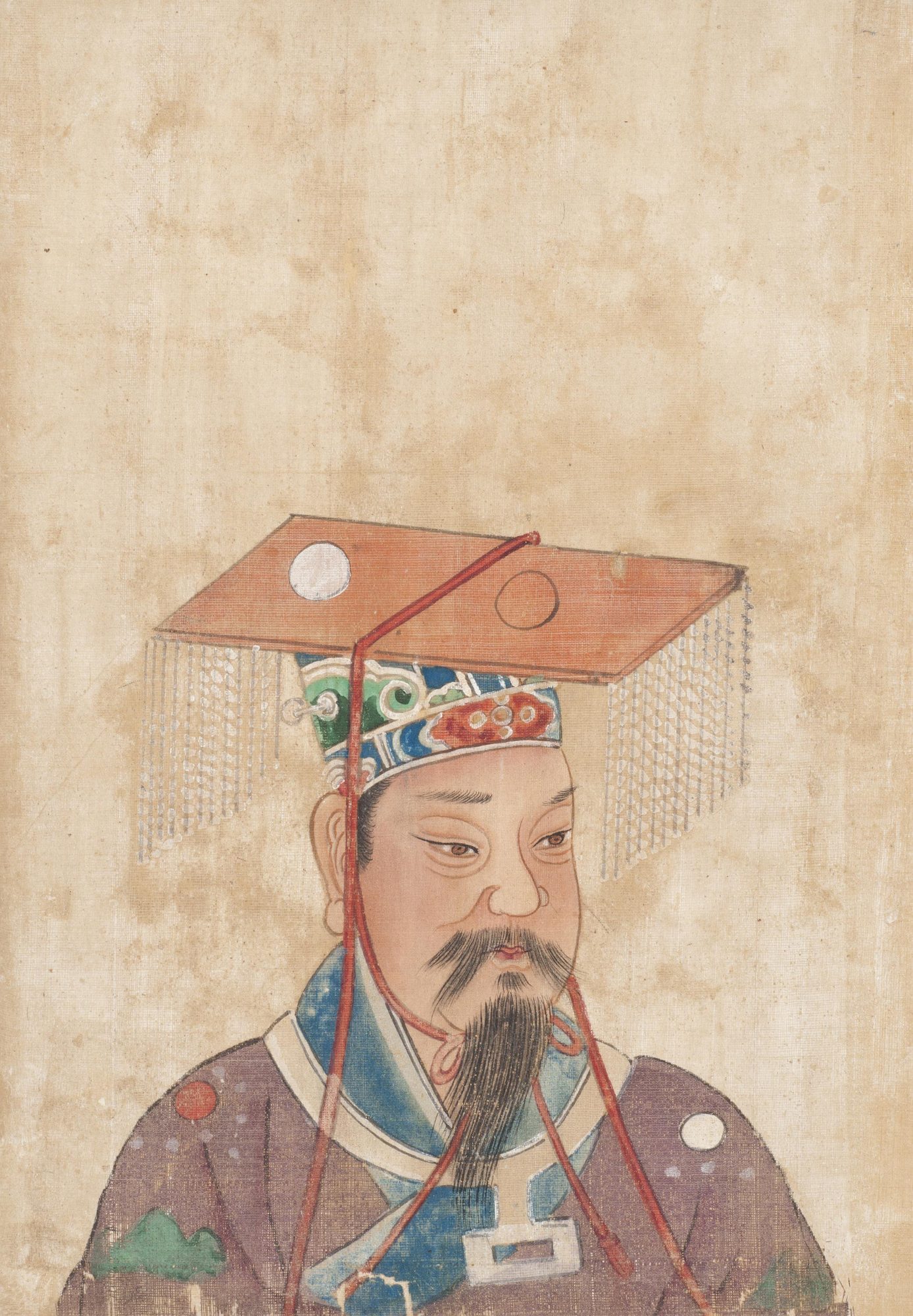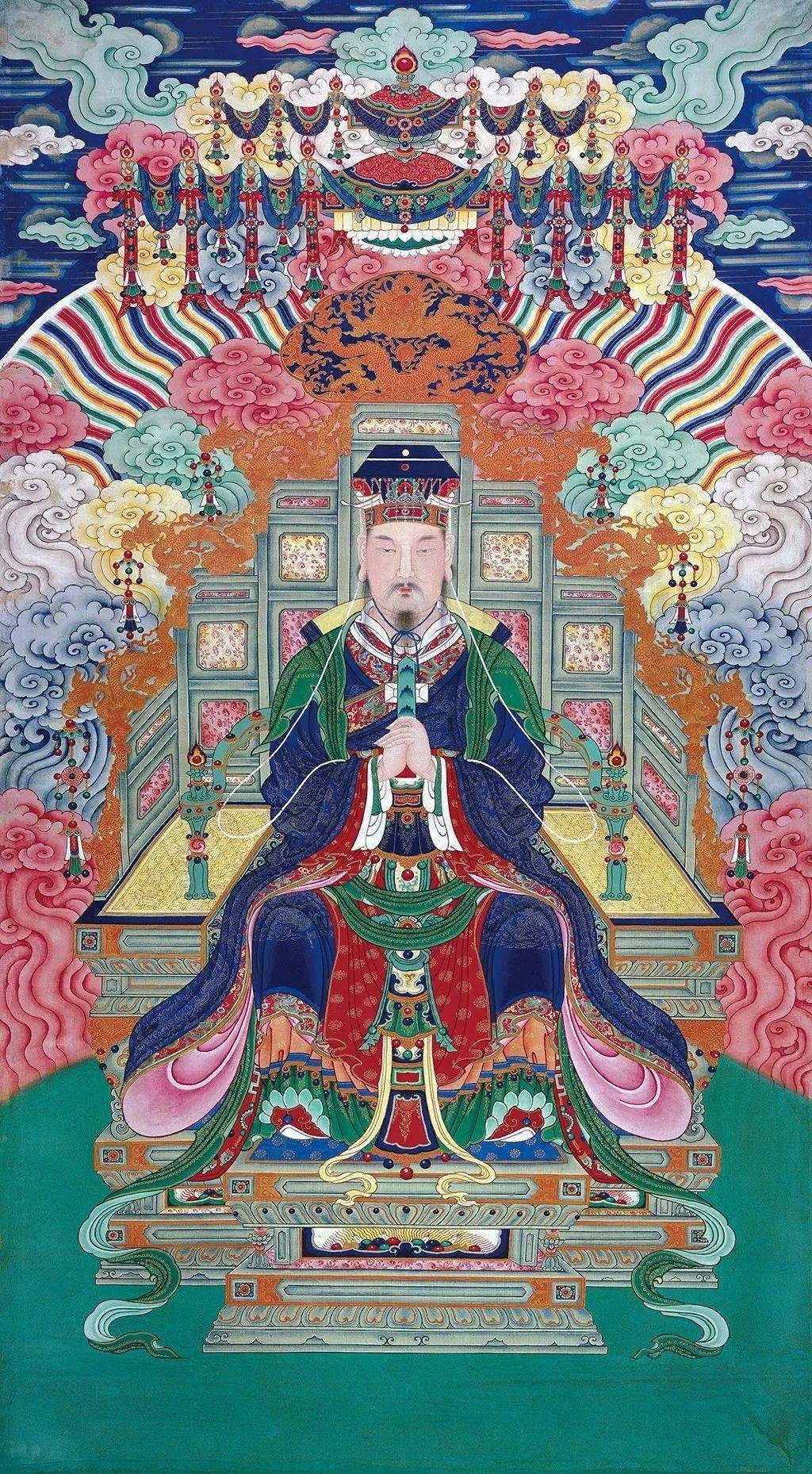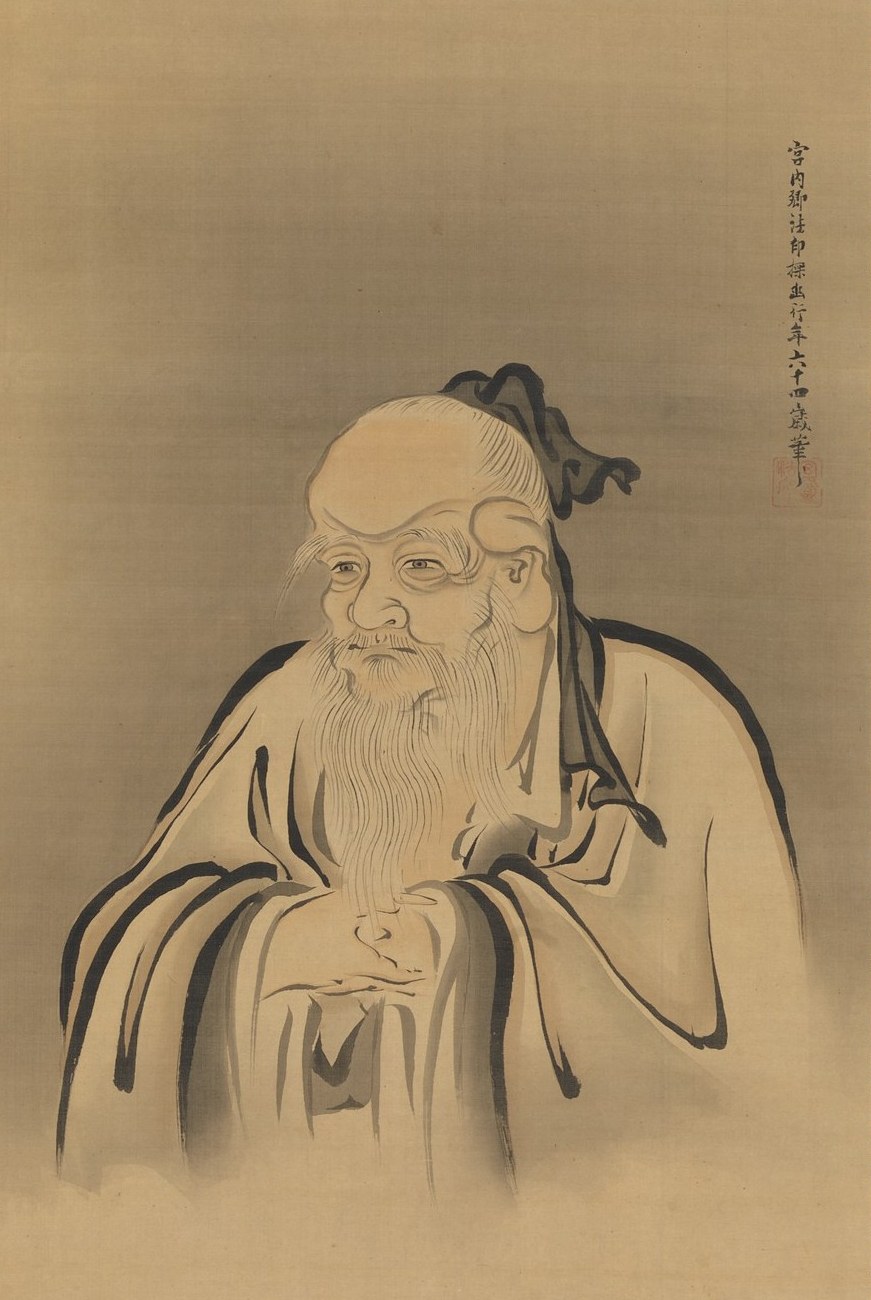
Somewhere in the old north country, the story went, you could dig the monster up. Turn the soil of Jizhou and now and then a skull came out of it hard as cast bronze, ringing under the spade like metal, and these, people said, were Chiyou’s bones. There were his teeth too, when you found them, each a good two inches long and so hard that no hammer would break one. It is a strange thing to say of a god, that his remains lay scattered under the ploughland waiting to be turned up, but that was exactly the point. Chiyou was the enemy the sovereign of heaven had killed and could not stop killing, the war-monster whose body kept surfacing centuries after his death, harder in the ground than he had ever been in life.
Start where the oldest text starts, though, and there is no monster at all, only a war. The Classic of Mountains and Seas is the earliest source to name him, and it is blunt: Chiyou made weapons and attacked Huangdi, the Yellow Emperor. What follows is a duel of weather. The sovereign sends his winged dragon Ying Long against the rebel; the dragon hoards up the waters; Chiyou answers by calling down the Wind Earl and the Rain Master, who loose a great wind and a great rain over the field.
Then the Yellow Emperor plays the card that ends it, a heavenly woman named Ba whose heat is drought itself, and the moment she touches the earth the rain stops and Chiyou is killed. That is the whole of him in the ancient book: a foe who could command the storm and was undone by a stronger one. The Classic never once describes his face, his hands, or his skin. The bronze-headed horror everyone remembers is not in it.
Bronze heads and iron foreheads
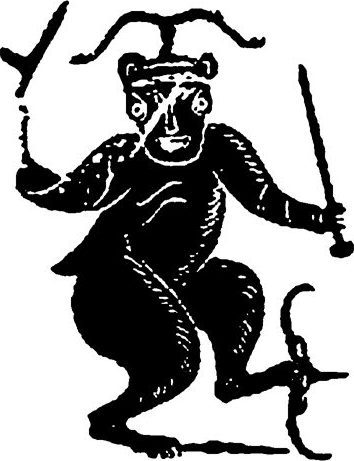
That horror was assembled later, and it is worth being honest about where each piece comes from. The fullest portrait waits until the sixth century, in the Records of the Strange attributed to Ren Fang, and it reads like a bestiary entry proper. Chiyou and his brothers, the Records says, had bronze heads and iron foreheads, and they ate iron and stone. Their ears and the hair at their temples stood out like swords and halberds; their heads bore horns.
As for the rest, the book is careful to hedge it as hearsay: it is popularly said, it writes, that Chiyou had a human body, the hooves of an ox, four eyes and six hands. This is the many-armed, bronze-headed
god of the popular imagination, and every line of it is centuries younger than the war it decorates. The Classic of Mountains and Seas, the primary source most often blamed for the image, gives Chiyou no body to hang it on.
Even the count of those brothers refuses to settle, and the split is old enough that it should be kept rather than smoothed. The Records of the Strange gives Chiyou seventy-two brothers. The Dragon-Fish River Chart, a Han apocryphon that survives only in other men’s quotations, gives him eighty-one, with beast bodies and human speech, and adds that they ate sand and stones and forged the five weapons of war.
Seventy-two or eighty-one, an inedible mineral diet either way: the traditions agree on the strangeness and disagree on the arithmetic, and later readers have often guessed that the numbers were never brothers at all but a tally of allied clans marching under one horned banner. That is a reading, not a source, and the texts themselves simply hold the two figures apart.
A wall of mist across the plain
What no version doubts is that he was made for war. The Dragon-Fish River Chart credits Chiyou and his kin with making the five weapons, the whole armoury of the metal age set loose on the world at once, and the Records of the Strange keeps a memory of his signature trick on the battlefield: Chiyou could make clouds and fog. Picture the war-monster raising a wall of mist across the plain, blinding the sovereign’s host so that order itself lost its bearings, and you have the reason his enemies needed dragons and drought-goddesses to bring him down.
In the sober historian’s version the marvels fall away and only the menace is left. Sima Qian’s Records of the Grand Historian, writing around the turn of the first century BCE, keeps no fog and no bronze skin, just a verdict: Chiyou was the most violent, and none could punish him. He made rebellion, would not obey the sovereign’s command, and was met at last in the wilderness of Zhuolu, where he was seized and killed.
What the ground would not forget
The killing did not end him, and this is the part that makes him a proper monster rather than a defeated general. The Classic of Mountains and Seas leaves the strangest relic of the war standing on a southern mountain: a stand of maples that are not really trees. They are what Chiyou cast off.
The fetters struck from the captured rebel were flung down there, and where they fell they took root and grew, so that the red-leaved wood is the shackles of the slain war-god turned living, a whole grove that is really a discarded chain. And in the north the ground itself would not forget him, giving up those bronze-hard skulls and unbreakable teeth to anyone who dug deep enough. A god you can bury and keep unearthing is a god who has not entirely died.
Strapping ox-horns and butting heads
He had not entirely stopped fighting, either. In Jizhou, the Records of the Strange says, the people kept a game called the Chiyou Play: two or three at a time, they would strap ox-horns to their heads and butt one another, and from this the wrestling shows of the Han dynasty were said to descend.
Long after the storm-monster fell, the country he was killed in was still putting on his horns and charging, half in memory and half in sport, the horned war-god surviving as a village entertainment. That is the truest shape of Chiyou in the end: not a beast slain once in a founding age, but a hardness left in the world after the war, in the maples and the buried bones and the men lowering their horned heads to run at each other in the old northern fields.
Chiyou and his seventy-two brothers had bronze heads and iron foreheads, and they ate iron and stone. It is popularly said that Chiyou had a human body, the hooves of an ox, four eyes, and six hands. (Records of the Strange, attrib. Ren Fang; author’s rendering from the Chinese)
- **Classic of Mountains and Seas (山海經, Shanhaijing), “Great WildernessNorth” (大荒北經), Warring States–Han:** the core war, which describes NO body for Chiyou at all. Chiyou makes weapons and attacks Huangdi (蚩尤作兵伐黄帝); Huangdi orders the Responding Dragon Ying Long to attack him in the wilderness of Jizhou (黄帝乃令應龍攻之冀州之野); Ying Long hoards the waters (應龍畜水); Chiyou begs the Wind Earl and the Rain Master, who loose a great wind and rain (蚩尤請風伯雨師,縱大風雨); Huangdi sends down the heavenly woman Ba (黄帝乃下天女曰魃); the rain stops and Chiyou is killed (雨止,遂殺蚩尤). Chinese read verbatim (zh.wikisource.org/wiki/山海經/大荒北經). For a citable English sentence, quote a named translation (e.g. Birrell, The Classic of Mountains and Seas, Penguin) and re-verify; the wording above is the author’s own literal rendering from the Chinese.
- **Classic of Mountains and Seas (山海經, Shanhaijing), “Great WildernessSouth” (大荒南經), Warring States–Han:** the maple-tree aftermath. A tree called the maple (楓木) grows on the mountain; the maple is what Chiyou cast off as his fetters, which became the maple wood (蚩尤所棄其桎梏,是爲楓木), implying that Chiyou was bound and captured and that his discarded shackles took root. Chinese read verbatim (zh.wikisource.org/wiki/山海經/大荒南經).
- Sima Qian (司馬遷), Shiji (史記), ch. 1,
Annals of the Five Emperors
(五帝本紀第一), c. 91 BCE: the euhemerised register, with no fog and no bronze body. Chiyou was the most violent, whom none could punish (蚩尤最爲暴,莫能伐); Chiyou made rebellion and would not obey the emperor’s command (蚩尤作亂,不用帝命); Xuanyuan fought Chiyou in the wilderness of Zhuolu and captured and killed him (與蚩尤戰於涿鹿之野,遂禽殺蚩尤). Chinese read verbatim (zh.wikisource.org/wiki/史記/卷001). For a citable English sentence, quote a named translation (e.g. Nienhauser, ed., The Grand Scribe’s Records, vol. 1) and re-verify; the wording above is the author’s own literal rendering from the Chinese. - Ren Fang (任昉, attrib.), Records of the Strange (述異記, Shu Yi Ji), Liang dynasty, 6th c.: the fullest form-and-cult description, all LATER than the Shanhaijing. Chiyou and his seventy-two brothers, bronze heads and iron foreheads, eating iron and stone (蚩尤氏兄弟七十二人,銅頭鐵額,食鐵石); the popular report (
俗云
) of a human body, ox hooves, four eyes and six hands (人身牛蹄,四目六手); ears and temple-hair like swords and halberds, and a head bearing horns, attributed toQin–Han accounts
(耳鬢如劍㦸,頭有角,秦漢間説); Chiyou could make clouds and fog (蚩尤能作雲霧); in Jizhou people digging the earth find skulls hard as bronze and iron, said to be Chiyou’s bones, and his teeth two inches long, so hard they cannot be smashed (掘地得髑髏如銅鐵者即蚩尤之骨也;蚩尤齒長二寸,堅不可碎); and the Chiyou horn-butting Play of Jizhou (蚩尤戲), from which the Han wrestling shows (角觝戲) are said to descend. Chinese read verbatim (zh.wikisource.org/wiki/述異記). - Dragon-Fish River Chart (龍魚河圖, Longyu Hetu), a Han
weft
/apocryphal text, now lost: survives only as quotations (notably in the Shiji Zhengyi 史記正義 commentary and the Taiping Yulan 太平御覽). The eighty-one-brother variantChiyou’s eighty-one brothers, with beast bodies and human speech, bronze heads and iron foreheads, eating sand and stones, making the five weapons (蚩尤兄弟八十一人,並獸身人語,銅頭鐵額,食沙石子,造五兵). Cited via a later quotation, NOT read in the original quoting-source; the count81
and the exact phrasing should be re-verified against a Zhengyi or Taiping Yulan edition before any specific is relied upon.