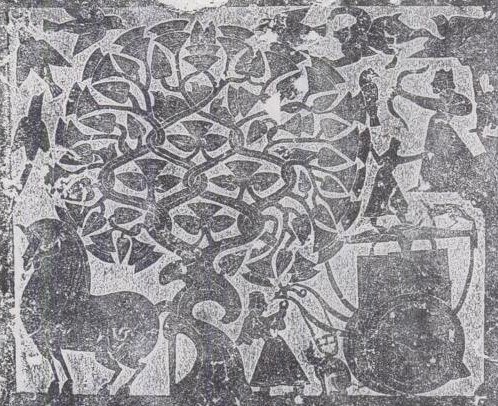
Ten suns came up at once, and the world began to burn. There should have been one, rising out of the east and crossing the sky and setting, and then another the next morning in its place. Instead all ten of them climbed into the heavens together and hung there, ten furnaces where there should have been a single lamp, and the heat of them fell on the fields until the grain charred where it stood. The plants died. The trees died. The metal ran and the stone fused in another old line about that sky. And the people, in the time of the sage-emperor Yao, had nothing left to eat.
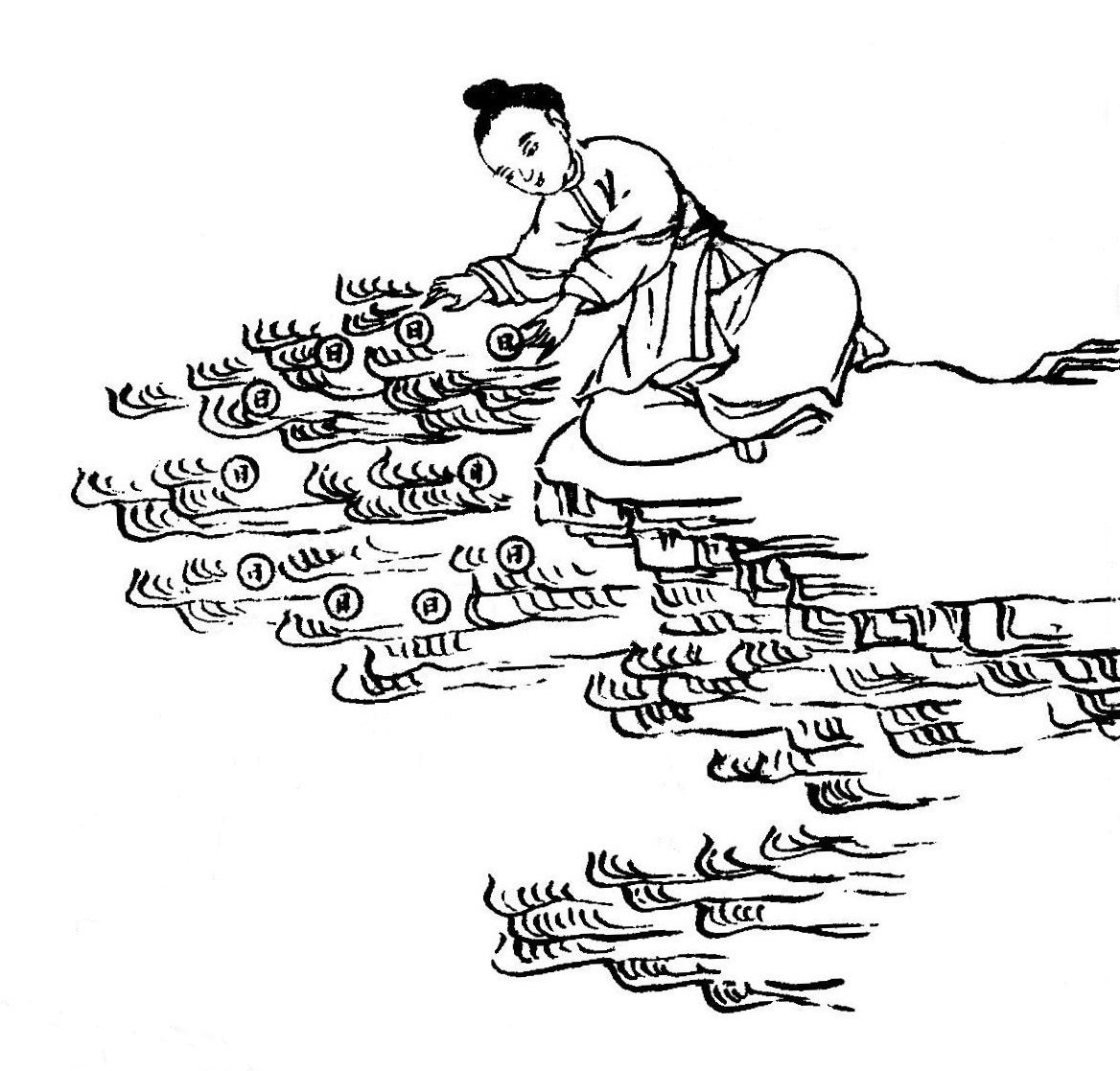
This is where the oldest telling puts us, in a scorched world under too many suns, and it does not pause to explain how the extra nine got up there. It only tells us who they were. The suns were birds. Far in the east, in the water of the Boiling Valley, stood a colossal mulberry called the Fusang, and the ten suns roosted in it: nine perched on the lower branches and one waiting on the topmost bough, each of them a crow, and in the crows’ three-legged shape the daylight itself.
By custom they took turns. Their mother was the goddess Xihe, wife of the high god Di Jun, and she bathed them in the Sweet Gulf and sent them out one at a time, so that a single crow flew the arc of the day while the other nine waited in the branches. Something broke that order. Ten took wing at once, and stayed.
Against a sky on fire, Yao did not pray. He sent for an archer.
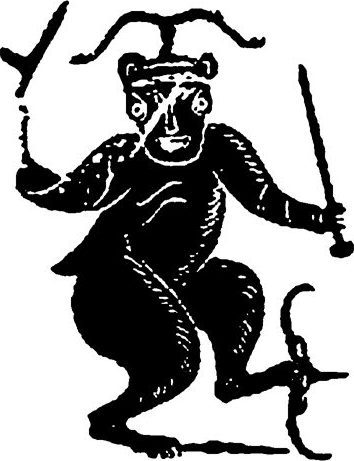
The man he sent was Yi, and the earliest sources are spare about him: a name, a bow, and a commission. In one ancient account the Emperor sends him down expressly to relieve the sufferings of the people below. He came armed with a bow tipped in ivory and a sharp thumb-ring for the draw, the exact gear of a real archer, the kind of detail the old poem preserves when it preserves almost nothing else about him. And the task Yao set him was not the suns alone. The land was plagued at the same time by six monstrous scourges, and Yi was sent to deal with all of them.
So he went hunting, and the list of what he killed reads like a map of the ancient world laid out in disasters. He put down Zaochi, the chisel-toothed one, in the wilds of Chouhua. He killed Jiuying at the Xiong River. He snared the great storm-wind Dafeng, given a body, in the marsh of Qingqiu.
He cut the vast serpent Xiushe in two at Lake Dongting, and he took the giant boar Fengxi alive in the Mulberry Forest. And somewhere in that campaign, set down by the earliest text as one labour among the others, he shot at the ten suns overhead and killed the monster Yayu below. The people, when it was over, rejoiced, and they set up Yao as the Son of Heaven.
Notice what the oldest version does not say. It says Yi shot at the ten suns. It does not say how many fell. In the received text of the Huainanzi, the shooting of the suns is a single line in a hero’s list of labours, no more dwelt upon than the boar or the serpent, and it never gives us the number that everyone now remembers. That number arrives later, in the encyclopedias. Centuries on, a compiler quoting the same tradition fills in the tally we know: Yao commanded Yi to shoot upward at the ten suns, and nine of the crows died, their feathers falling.
That is the earliest place the count is written down plainly, and it comes with the most striking image in the whole story, black feathers drifting out of a cooling sky as the extra suns dropped one by one, until a single crow was left to carry the day. But it is worth being honest about where that picture comes from. The nine are commentary laid over an older text that only says he shot; they are how a later age chose to finish the sentence.
And the tidiest part of the tale, the part everyone tells, may be the least ancient of all. The familiar version says the last sun was spared, held back on purpose so the earth would keep its light and warmth. Some retellings have Yao and the suns’ own mother Xihe beg for the final arrow to be stayed; others have a boy steal it, so Yi cannot loose the tenth shot. These are lovely, and they are late.
No ancient source cited here says the tenth sun was deliberately left alive. What the ancient sources do have, long before anyone shot anything, is that image in the Fusang: nine suns on the lower branches, one on the upper. The pattern of nine-and-one was already sitting in the tree, waiting, and the story of nine shot and one remaining may simply be that older picture set into motion. That is a plausible root, not a stated cause, and the honest telling holds it as such.
There is also the matter of the archer’s name. Later ages call him Hou Yi, and later ages fold other men and other tales into him: a Xia-dynasty strongman who usurped a throne, an elixir of immortality won from the Queen Mother of the West, a wife named Chang’e who swallows that elixir and floats up to the moon. All of that is a different cycle, stitched onto the sun-shooter by centuries of retelling.
The Jade Emperor who commands him in the popular version is a Daoist god who had not yet been imagined when these texts were written. Strip the accretions away and what remains is stark and strange and complete on its own: a world with too many suns, a mother-goddess who could not keep her children in order, an emperor who answered a cosmic catastrophe by hiring a marksman, and an archer good enough to shoot the sky back into balance.
Where did Yi shoot the suns? Where did the crows shed their feathers? (Chuci, “Tianwen”; author’s rendering from the Chinese)
- Huainanzi (淮南子), Benjing xun (本經訓), 2nd c. BCE: the core narrative — in Yao’s time ten suns rise together and scorch the crops, kill the plants and trees, and leave the people with nothing to eat (十日並出,焦禾稼,殺草木,而民無所食); the six scourges (猰貐、鑿齒、九嬰、大風、封豨、修蛇); Yao sends Yi (羿), who executes Zaochi at Chouhua, slays Jiuying at the Xiong River, snares Dafeng at Qingqiu,
shoots at the ten suns above and kills Yayu below
(上射十日而下殺猰貐), cuts Xiushe in two at Dongting, and takes Fengxi at the Mulberry Forest; then the people rejoice and install Yao as Son of Heaven (萬民皆喜,置堯以為天子). The received text says only that Yi shot at the ten suns (射十日); it gives no number felled, and the shooting is one item in a list of labours, not a standalone tale. Chinese read verbatim. Standard EnglishMajor, Queen, Meyer & Roth, The Huainanzi (Columbia UP, 2010), ch. 8. - Shanhaijing (山海經), Haiwai dong jing (海外東經): the Fusang tree in the water of the Boiling Valley (Tanggu, 湯谷) where the ten suns bathe, with nine resting on the lower branches and one on the upper (九日居下枝,一日居上枝) — the ancient nine-below/one-above image that sits behind the later nine-and-one motif, independent of any shooting. Chinese read verbatim. EnglishAnne Birrell, The Classic of Mountains and Seas (Penguin, 1999).
- Shanhaijing (山海經), Dahuang nan jing (大荒南經): Xihe (羲和), wife of Di Jun (帝俊), mother of the ten suns, bathing them in the Sweet Gulf (Ganyuan, 甘淵) — the suns’ parentage and the solar goddess who tends them. Chinese read verbatim. EnglishBirrell 1999.
- Chuci (楚辭), Tianwen (天問), Heavenly Questions, c. 3rd c. BCE: the earliest textual link of Yi to the sun, posed as a question and telling no story —
Where did Yi shoot the suns? Where did the crows shed their feathers?
(羿焉彃日,烏焉解羽?); the Emperor sends Yi down to reform the woes of the Xia people (帝降夷羿…革孽夏民); Yi’s ivory-tipped bow and sharp thumb-ring (馮珧利決); and the separate episodes in which he shoots Hebo and takes the Luo goddess (胡䠶夫河伯,而妻彼雒嬪), distinct from the sun-shooting. Chinese read verbatim. EnglishDavid Hawkes, The Songs of the South (Penguin, 1985). - Taiping Yulan (太平御覽), juan 3 (天部三·日), 983 CE: the variant preserving the explicit count — Yao commands Yi to shoot upward at the ten suns, and nine of the crows die, their feathers falling (堯命羿仰射十日,其九烏皆死,墮羽翼); juan 4 quotes the Chuci image of ten suns melting metal and fusing stone (十日並出,流金鑠石). This encyclopedic witness quotes the earlier Huainanzi/Chuci tradition; the number
nine
is commentarial here, not in the received Huainanzi main text. Chinese read verbatim.