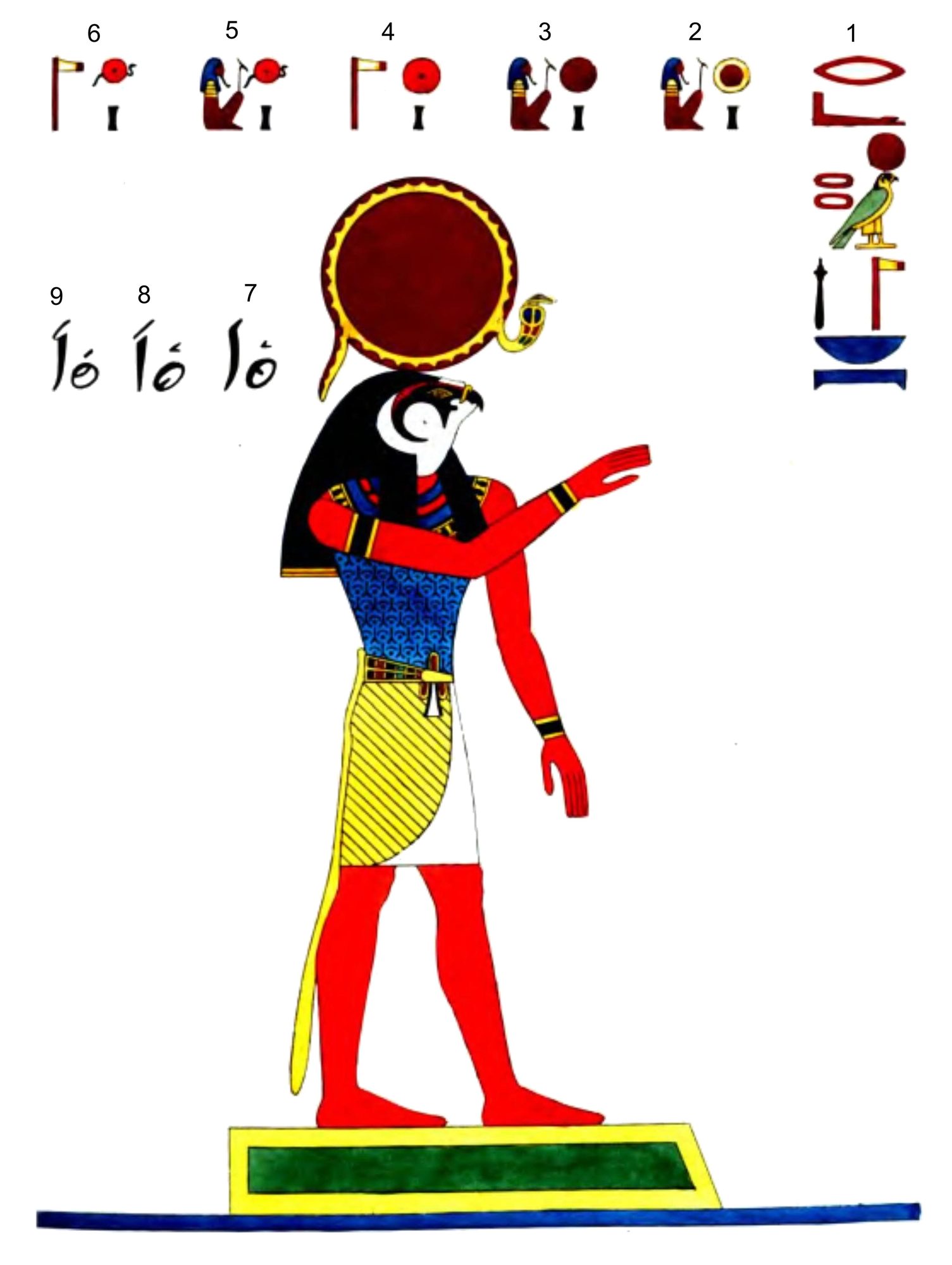
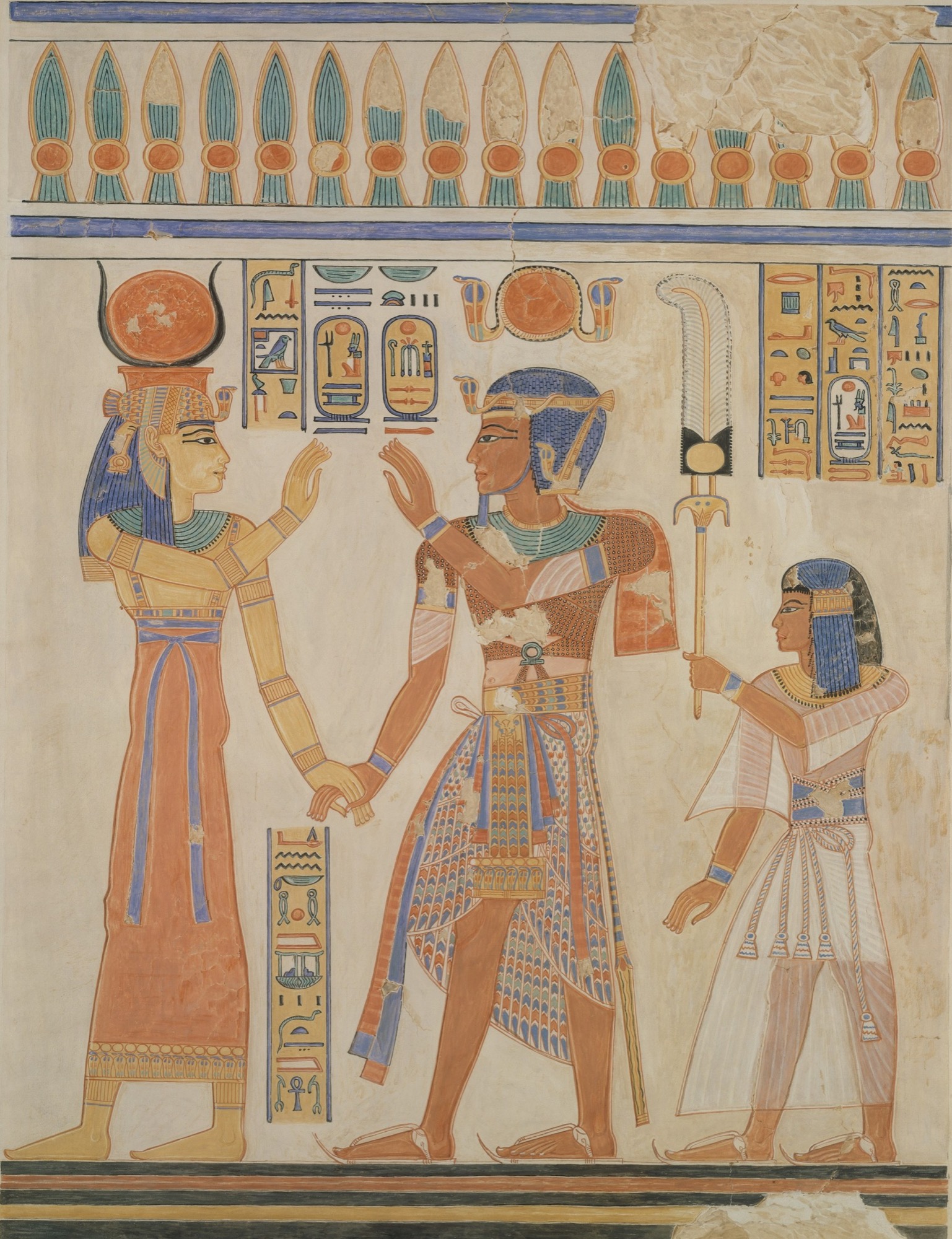
The god has grown old, and it is killing everyone. His bones have turned to silver, his limbs to gold, his hair to real lapis-lazuli, a body going to precious metal the way a mortal’s goes grey, and mankind has noticed. They mutter against him, they plot, and when he learns of it Ra summons the eldest gods to his Great House at Heliopolis, the primeval powers who were with him in the first waters, and shuts the doors to take counsel in secret.
He tells them he will not strike until he has heard their advice. The advice, when it comes, is a single terrible instrument. Loose your Eye, they say, for there is no eye that can stand before it. And so the sun-god sends his own burning power down among the people as a goddess, and she goes out to do what she was made to do, and the trouble of this story is not that she fails. The trouble is that she succeeds, and then will not stop.
The counsel behind the shut doors
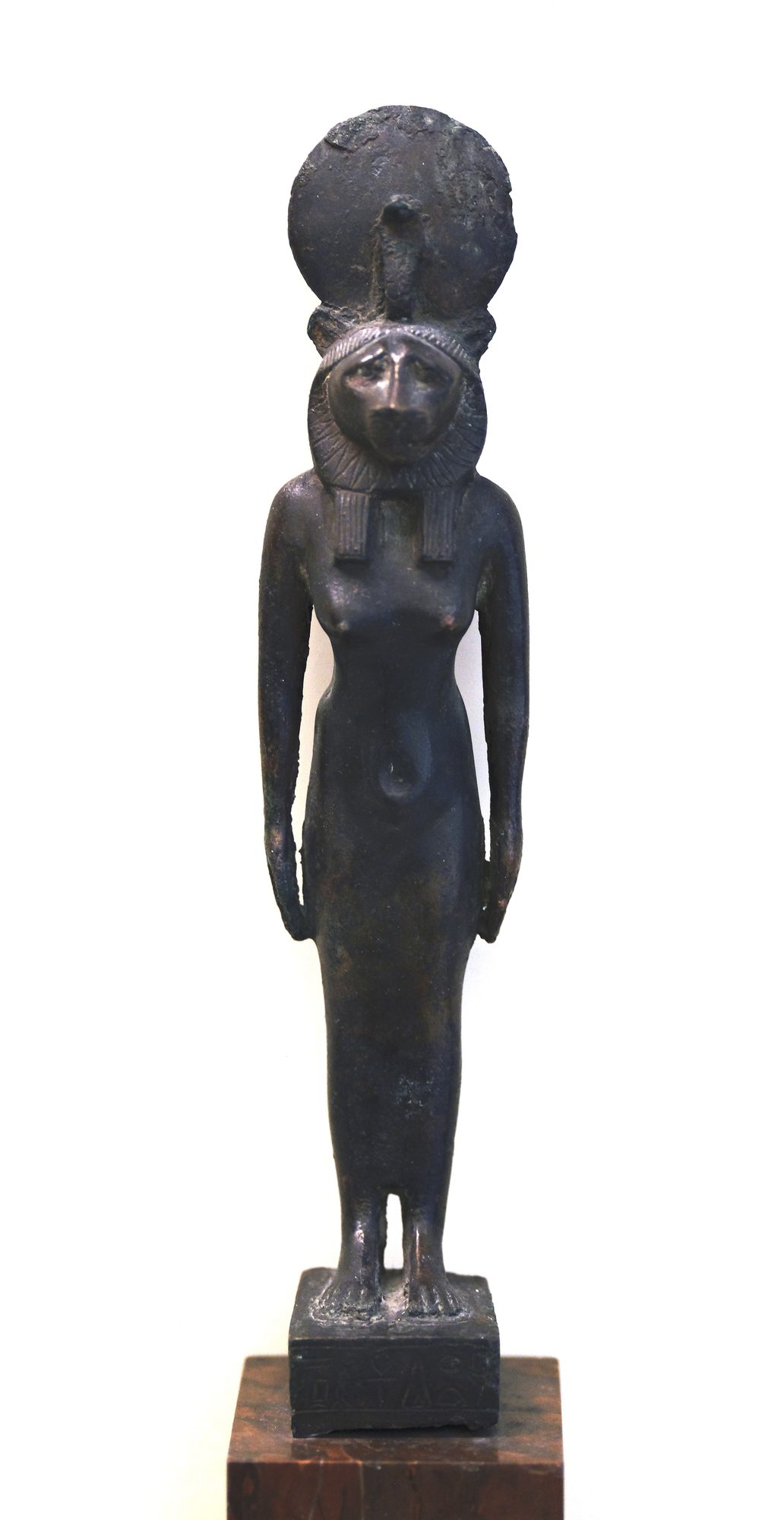
There is a small honesty to settle before the blood, because it lives in the text itself. The one long ancient telling of this rampage, the composition Egyptologists call the Book of the Heavenly Cow, was painted on the walls of the royal tombs of Seti I, Ramesses II and Ramesses III, with an earlier fragment on a gilded shrine packed around Tutankhamun. In it, the goddess Ra sends forth is named Hathor, the same Hathor otherwise known as the gentle mistress of love, music and drunkenness.
Only later, at the worst moment, does the older translation call her by another name. The gods of Egypt are not always separate persons in the way we expect. The raging power that goes out from the sun was understood to wear two faces, a mild one called Hathor and a savage one called Sekhmet the lioness, and the standard reading is that the killer here is that savage face showing through the gentle one. What the doors of Heliopolis shut on, then, is a council deciding to send the kindest goddess in Egypt out in her cruellest aspect.
Blood at the gates of Herakleopolis
She is very good at it. The rebels flee into the high desert and she pursues them there and cuts them down, and when Ra greets her, telling her the work is accomplished, she answers that mastery over men had been sweet to her heart. That is the sentence that turns the story. He meant a punishment; she has found a pleasure. By night the goddess wades about in the blood of the people she has killed, beginning at the city the text calls Suten-henen, which is Herakleopolis, working outward from there through the dead.
She is winning, and that is precisely the danger, because a goddess who enjoys the killing and has no reason to stop will not leave a single living subject for the sun to be king over. Ra had wanted the rebels dead. He had not wanted the human race erased, and now the weapon he forged out of his own anger is set on erasing it, and anger, he is discovering, does not answer to orders. He cannot simply command her home. He has to outwit a part of himself.
A red flood poured in the dark
The counter-plan is a trick, and it is aimed exactly at what his Eye has become. Ra sends messengers racing south to Abu, at Elephantine by the first cataract, swift runners able to go like the wind, to fetch a great quantity of a red plant. The old translators guessed at mandrakes; the identification is genuinely uncertain, and the safe thing to say is that it was red and that it was to be crushed. Back at Heliopolis it is ground down and worked into beer that serving-women are brewing from grain. Here the two versions of the tale part, and both deserve naming.
In the ancient text read closely, the red comes from the crushed plant together with some of the actual blood of the slain, stirred into the vats; in the reading most modern handbooks follow, the plant is red ochre and the beer is merely dyed to the colour of blood, so that the goddess will drink it believing it is blood. Either way the number is fixed and worth holding: seven thousand vessels of beer. Ra approves the work, says he will protect mankind after all, and has the jars carried out to the killing-ground. In the deep of the night the beer is poured across the low fields until, the text says, the meadows of the Four Heavens, the four quarters of the sky, lie flooded, and the whole country waits under a shining red water for the dawn.
Drunk before she could finish
At first light the goddess returns to finish her slaughter and finds the fields drowned in what looks exactly like the blood she has spent the night wading through. She is pleased at the sight. She drinks. Her heart rejoices, and she becomes drunk, and she gives no further attention to the men and the women. That is the whole of the rescue. The bloodlust is not beaten out of her and not argued away; it simply dissolves into drink, and mankind survives in the narrow gap between the goddess’s thirst and her stupor. Ra welcomes her back gentled, greeting her with a new and kindly name, and beautiful women, the text adds, came into being in her city.
Then he turns the near-catastrophe into a custom. Ever after, at his festivals, sleep-bringing beer is to be brewed in the same measure and drunk in the same way, so that the very night the world was almost emptied of people becomes a yearly feast of drinking. This is how Egypt chose to remember the day its maker nearly unmade it: not with a monument to the dead but with a cup. The lioness who could not be commanded down off the mountain could, it turned out, be coaxed down with beer, and they went on coaxing her every year.
And it came to pass that when this goddess arrived at the dawn of day, she found these [Heavens] flooded [with beer], and she was pleased thereat; and she drank [of the beer and blood], and her heart rejoiced, and she became drunk, and she gave no further attention to men and women. (The Book of the Heavenly Cow, tr. Budge 1912)
- The Book of the Heavenly Cow (
The Legend of the Destruction of Mankind
)New Kingdom mortuary composition, possibly of Middle Kingdom origin (its language is Middle Egyptian; Lichtheim, Ancient Egyptian Literature II, 197–198). Painted in the royal tombs of the New Kingdom: the earliest, incomplete copy on the outermost gilded shrine of Tutankhamun, fuller versions in the tombs of Seti I, Ramesses II and Ramesses III, with a niche excerpt under Ramesses VI and a Ramesside papyrus fragment in Turin (provenance and four-part structure: Erik Hornung, The Ancient Egyptian Books of the Afterlife, 1999, pp. 148–151). English translation read here from E. A. Wallis Budge, Legends of the Gods: The Egyptian Texts (London, 1912),The Legend of the Destruction of Mankind
, rendering the hieroglyphic text of É. Lefébure (Tombeau de Séti Ier, Pt. IV, pll. 15–18), which in turn followed É. Naville’s editio princeps (Transactions of the Society of Biblical Archaeology IV, 1874/76). Public-domain full text: Project Gutenberg ebook 9411 (https://www.gutenberg.org/cache/epub/9411/pg9411.txt). Everything specific in the narrative above is read word-for-word from this translation: the aged Ra of silver, gold and lapis-lazuli; the secret council of the primeval gods; the Eye sentin the form of Hathor
; the slaughter and thesweet to my heart
reply;Sekhet of the offerings
wading in bloodbeginning at Suten-henen
(Herakleopolis); the messengers to Abu (Elephantine); the seven thousand vessels of beer; the meadows of the Four Heavens; the dawn drinking; and the festal-beer decree. Two cautions ride with it. First, Budge is a dated translator, and his transliterations (Sekhet, Suten-henen, Abu, Amit) are his own and are quoted as his, while modern forms (Sekhmet, Herakleopolis, Elephantine) are used in the prose. Second, the naming split is real: Budge’s text calls the destroyer Hathor throughout andSekhet
/Sekhmet only at the blood-wading line, and never contains an explicit sentence in whichSekhmet turned back into Hathor.
The tidy arc of a lioness reverting to a gentle goddess is a synthesis of the Eye-goddess theology, true to it but not a quoted line of the tomb text. - On the colour of the beerthe ancient text as translated says the beer was mixed with the crushed red plant and with some of the real blood of the slain, and does not say it was dyed to imitate blood. The now-standard modern reconstruction, in which the plant is red ochre (didi) and the seven thousand jars are dyed red so that the goddess drinks them believing they are blood, follows Geraldine Pinch, Egyptian Mythology (Oxford, 2002), pp. 74–75, and Nadine Guilhou,
Myth of the Heavenly Cow,
UCLA Encyclopedia of Egyptology (2010), who further reads the red beer as an echo of the red-tinted Nile inundation silt. Both traditions are named above and kept apart rather than blended; Pinch and Guilhou are cited for the modern reading and were not read word-for-word here.