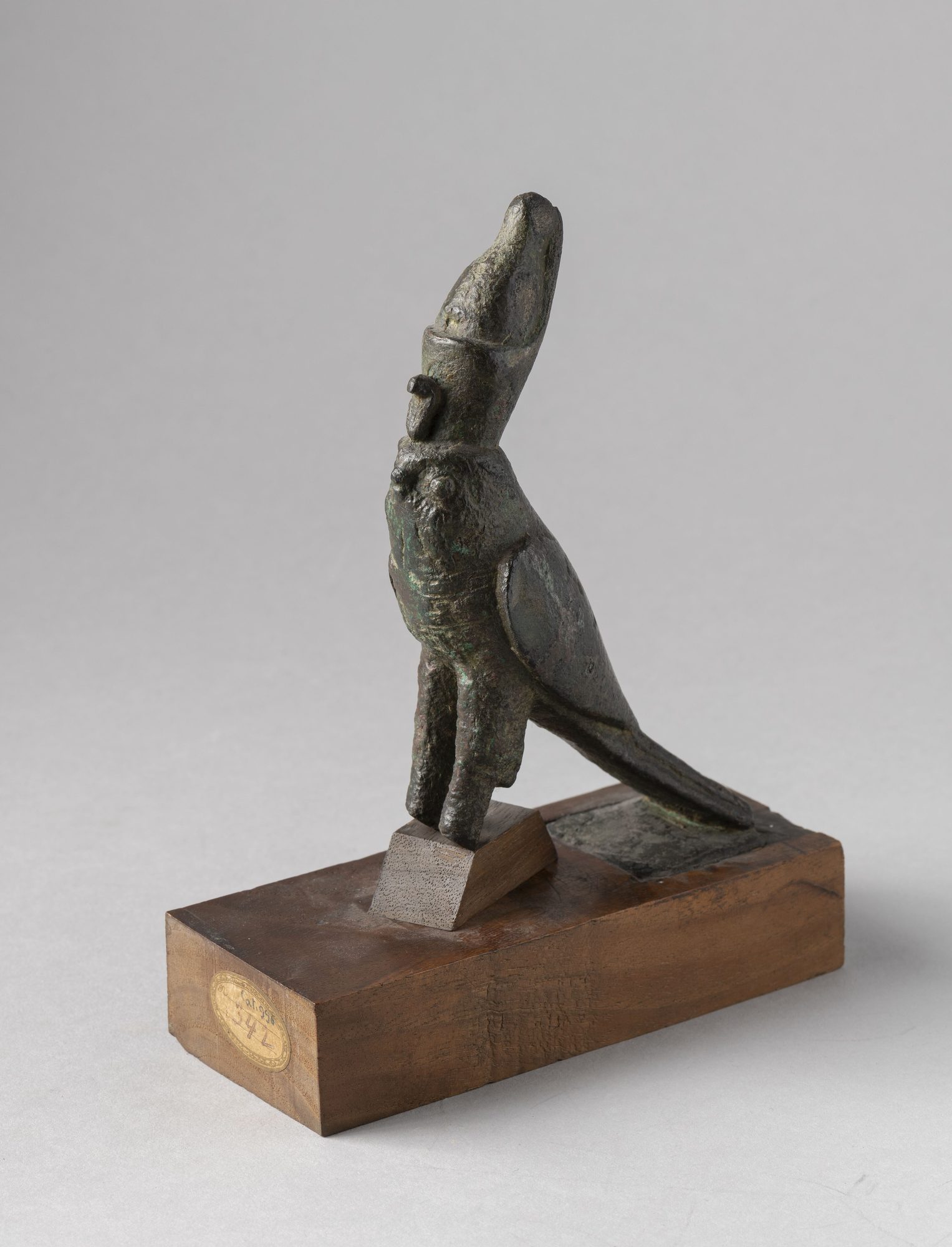
The old king had made his son a soldier before he loosed him upon the world. Osiris was dead by then, murdered and dismembered by his own brother, but in the Greek priest Plutarch’s telling he came back up out of the land of the dead for one purpose, to train the boy Horus in the discipline of war. He set the child questions the way a drillmaster sets them. What is the finest thing a man can do? To avenge a father and mother wronged, the boy answered. Which beast is most useful to a soldier going into battle? Not the lion, Horus said, but the horse, because a horse runs down a fleeing enemy and scatters him. The father was satisfied. The son was ready. And the whole of Horus, the falcon god of Egypt, is folded into that exchange: he is the avenger-heir, the rightful king made to take back a throne that a murderer had stolen.
The buried claimant near Buto
The theft came first. Set, whom the Greeks called Typhon, had killed the good king Osiris, sealed him in a fitted chest and later torn the recovered body into pieces scattered the length of Egypt. It fell to Isis, sister and wife of the dead god, to gather him and conceive from him a son, and then to hide that son from the uncle who would certainly kill an heir if he could find one.
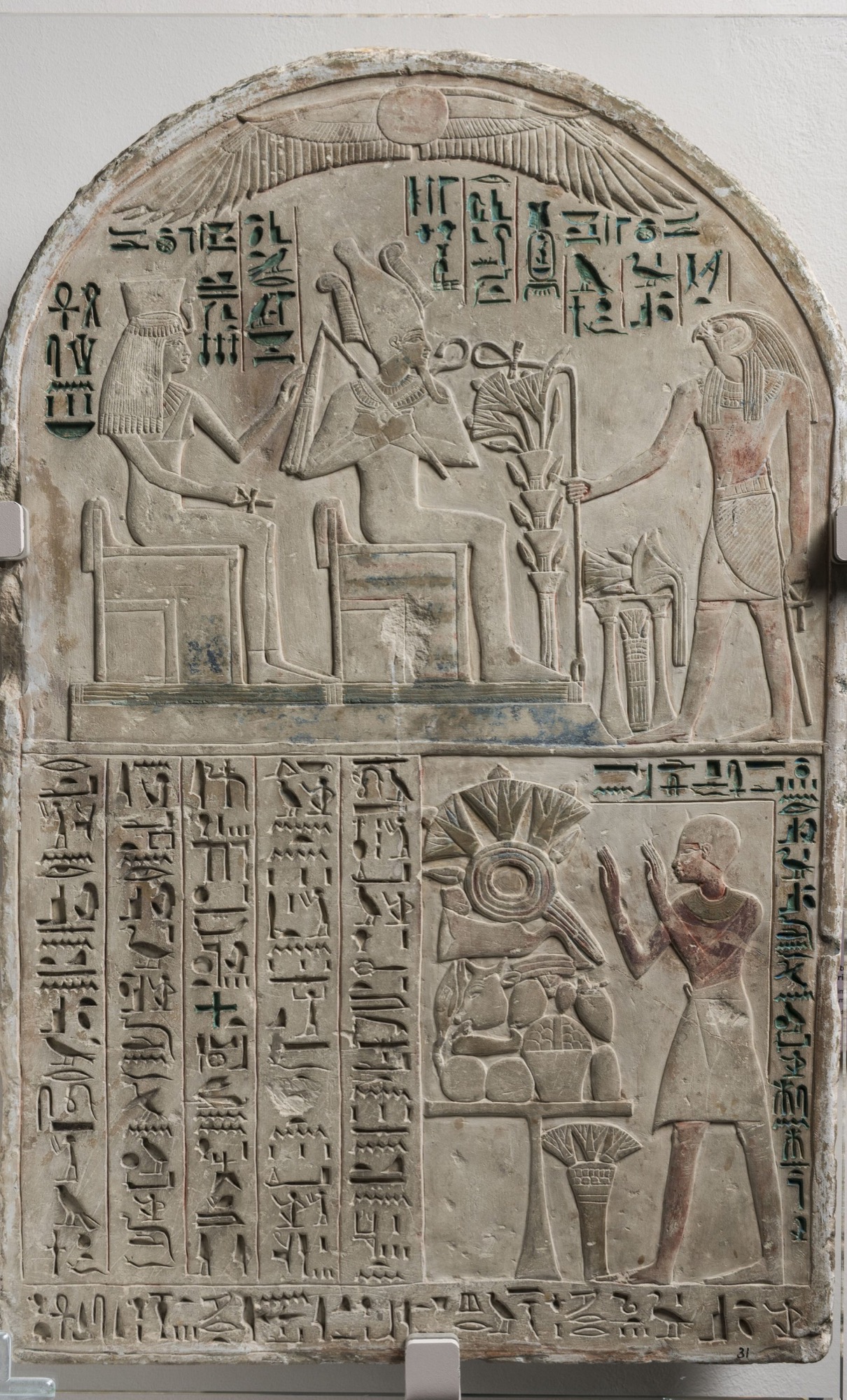
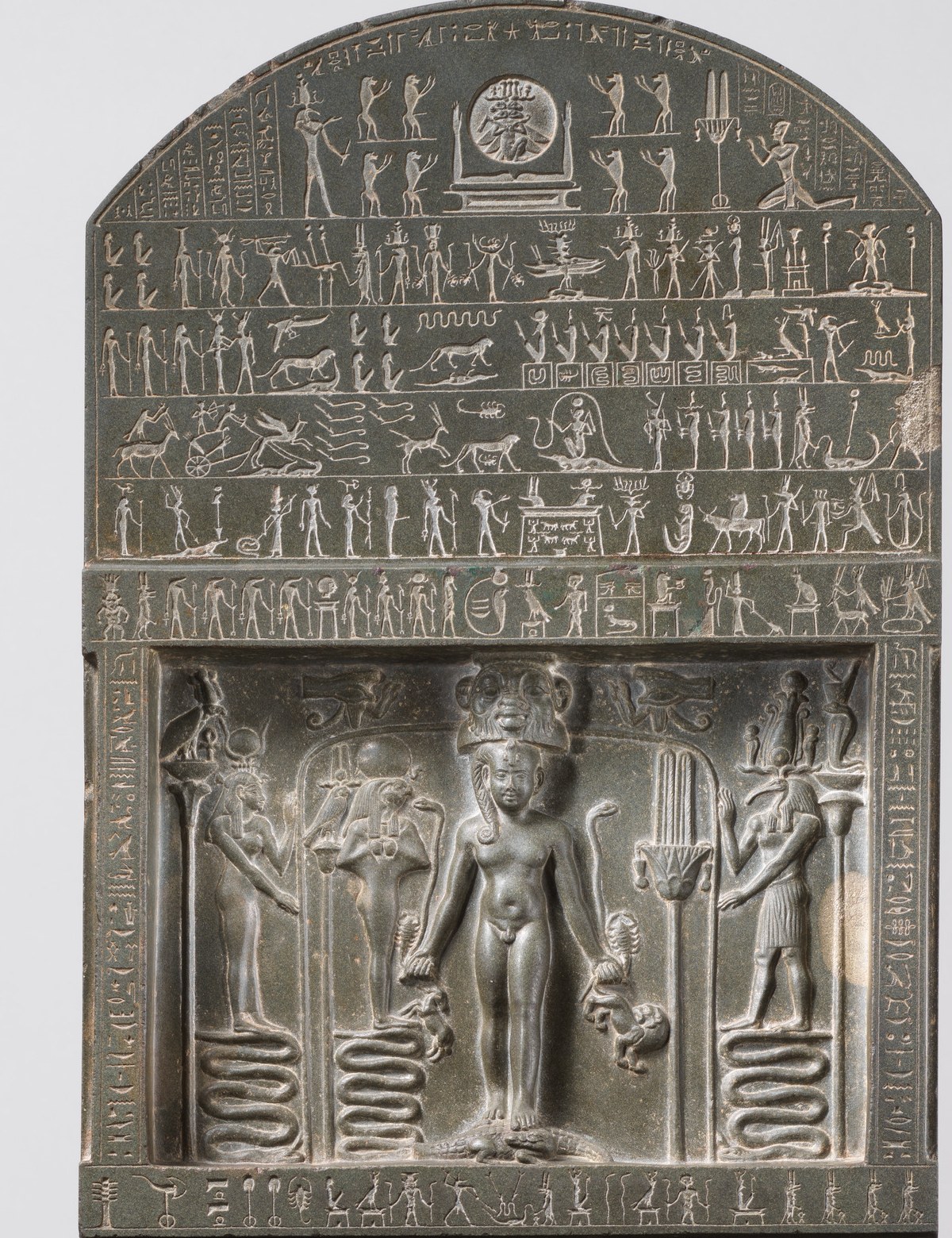
She bore Horus in the papyrus marshes of the Delta, in a reed-thicket the Egyptians named Akh-bity, the nest of Horus, near Buto, a place of seclusion so bound up with the child that it is one of the few backdrops Egyptian art bothers to draw. Plutarch, coming to the story from the outside more than a thousand years later, knew the tradition and set the infant at nurse near Buto. There Horus grew up in secret, the buried claimant, until he was old enough to press his claim.
Which Horus this was
Which Horus this was is worth a pause, because Egyptian religion carried at least two. There is Haroeris, Horus the Elder, an ancient sky-god sometimes ranked as a brother of Osiris and Set; and there is Harsiese, Horus son of Isis, the child-avenger raised in the marsh. Later tradition let the two blur together, and in some tellings it is the elder Horus who is Set’s victim and the younger who avenges him.
Plutarch registers the doubling in his own idiom, making Arueris, the elder Horus, a sibling born on the second of the five intercalary days, distinct from the son of Isis. The figure most people mean by Horus, and the one this story follows, is the second: the boy begotten of a dead god, hidden, reared, and trained to reclaim what was his.
What is his is the kingship itself, and here Egyptian theology is at its most precise. The living pharaoh on the throne of Egypt was Horus; the dead pharaoh, gone west, was Osiris. So the myth of the son avenging the father was also the machinery of every royal succession, the reason the whole cycle mattered to a state and not only to a temple.
The Pyramid Texts, carved inside Old Kingdom burial chambers at Saqqara around the twenty-fourth century BCE and older than any other source for the story, already turn on the strife of Horus and Set and the death and restoration of Osiris. They are allusive and ritual rather than narrative, and no full account of the war survives from them, but they fix the pattern at the very root of Egyptian religion: the wronged father, the avenging son, the throne restored.
Settled by lawsuit, not by duel
The fullest Egyptian narrative of the quarrel is far younger and far stranger. In the New Kingdom tale known as The Contendings of Horus and Seth, preserved on a papyrus written under Ramesses V around 1147 BCE, the dispute is settled not by a duel but by a lawsuit. Horus and Set argue their claims before the assembled gods, the Ennead, and the case drags on for the better part of a divine lifetime because the presiding judge, the sun-god Ra, keeps favouring Set.
Isis works the tribunal with cunning and magic on her son’s behalf. Horus wins a string of contests. And in the end the gods award him the kingship, though the tale is irreverent, even bawdy, closer to satire than to scripture, and its Set is often not destroyed at all but reconciled, given a place beside Ra to thunder in the sky. It is a mistake to read it as solemn holy writ; the Egyptians could laugh at their own gods and still mean the ending.
Tearing the diadem from his mother
Plutarch tells the war very differently, and because his is the fullest single ancient account it is worth hearing on its own terms, so long as it is not mistaken for the Egyptian version. In his telling the quarrel is a campaign. The fighting lasts several days; defectors cross to Horus, among them Set’s own concubine Thueris, and a serpent that pursues her is chopped to pieces by Horus’s men. Set is beaten at last and delivered up bound.
But then the story turns on its own hero. Isis, given the captive, sets him free, and Horus is enraged at his mother for it, tearing the royal diadem from her head, until the god the Greeks called Hermes, Egypt’s Thoth, claps a cow’s head on her in its place. The legitimacy of Horus is finally settled in court, not in the field: Set impeaches him as a bastard, Thoth serves as his advocate, and, in Plutarch’s words, Horus was judged legitimate by all the Gods.
Same headdress, different crime
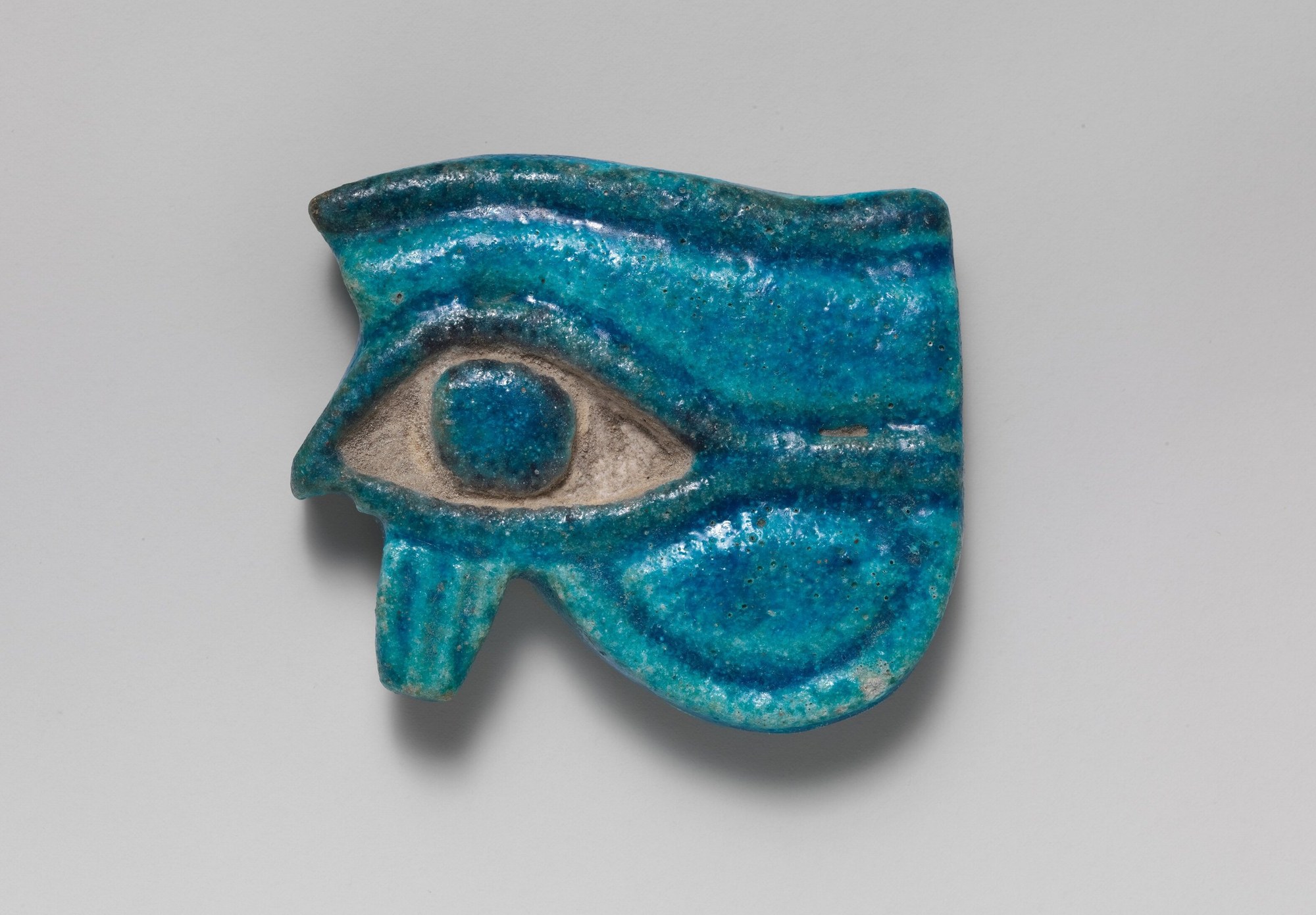
That cow-headed image has an Egyptian counterpart, and the two must not be merged. In the Contendings it is not a spared enemy but a stray harpoon that provokes the horror: during a duel fought as hippopotami, Isis’s weapon strikes her own son Horus by mistake, and the enraged boy cuts off his mother’s head, which Thoth restores as a cow’s. Same headdress, different crime. The eye is the same kind of trap. Egyptian tradition tells of Set gouging out, tearing, or stealing Horus’s eye, later healed or retrieved by Thoth, its restoration standing for the return of kingship, the full moon, and the right order of things called maat.
Plutarch flattens all of this onto the moon alone, having Typhon smite and swallow the eye and give it back to the sun, glossed as a lunar eclipse. For the Egyptians the right eye was the sun and the left the moon; the loss and healing could mean either. Plutarch reads only the moon into it. The wedjat, the single stylised Eye of Horus worn as an amulet against harm, is genuinely ancient and belongs to Horus; the modern occult readings of it, the all-seeing eye and its like, do not, and have no source in any of this.
A great winged solar disk
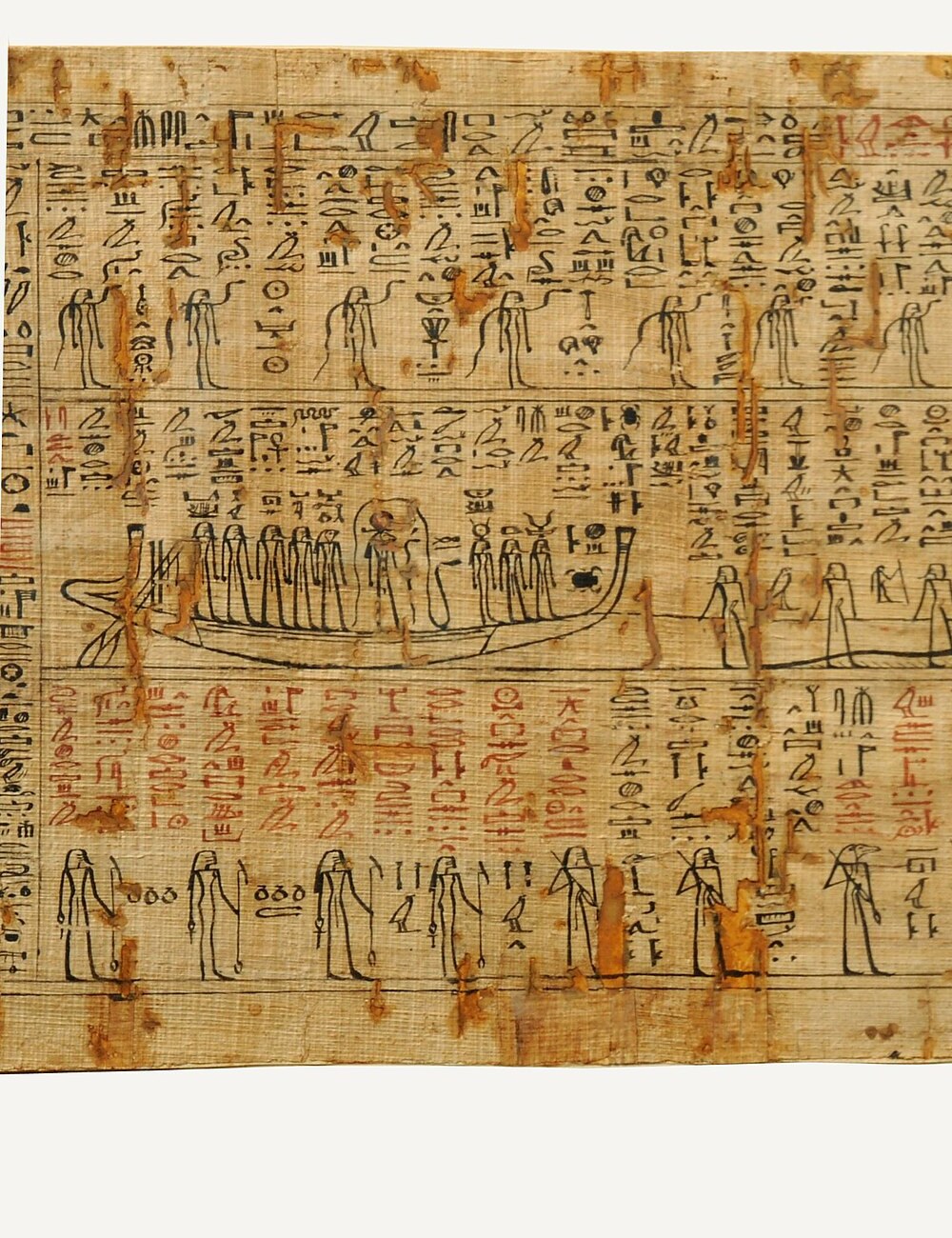
There is one more Horus, a warrior burning at the front of the sun’s own barque. In the Edfu temple’s Legend of Horus of Behutet and the Winged Disk, Horus fights as the champion of the aged sun-god Ra. In the three-hundred-and-sixty-third year of Ra’s reign, as the god sails up from Nubia, Horus takes the form of a great winged solar disk and flies up to take the place of the sun. He dazzles the rebels so utterly that they can neither see nor hear, and they fall on one another and die, and then he hunts Set the length of Egypt, spearing him in the shapes of hippopotamus and crocodile.
This is a distinct strand, Horus of Edfu the solar champion rather than Harsiese the marsh-reared heir, and it ends not in a courtroom or a reconciliation but in slaughter before Ra. Which is exactly the point about Horus: there is no single ending. The Contendings reconcile Set, Plutarch has Isis spare him and Horus rage, Edfu has him cut down. The one thing the whole tradition agrees on, from the oldest carved utterance to the latest temple wall, is that the falcon is the rightful king, and that the throne of Egypt is his.
“And Heru-Behutet flew up into the horizon in the form of the great Winged Disk, for which reason he is called ‘Great god, lord of heaven,’ unto this day.” (Legend of Horus of Behutet and the Winged Disk, trans. Budge)
- Pyramid Texts (Fifth–Sixth Dynasty, c. 24th c. BCE), utterances on the pyramid burial-chamber walls at Saqqarathe earliest attestation of the Horus–Set strife and of the death and restoration of Osiris. Cited here via J. G. Griffiths, The Conflict of Horus and Seth (1960), pp. 1, 4–7, and G. Pinch, Egyptian Mythology (2004), pp. 78–83 — scholarship, not read verbatim (standard editions: Faulkner 1969, Mercer 1952). No Pyramid-Text line is quoted here.
The Contendings of Horus and Seth,
Papyrus Chester Beatty I (Twentieth Dynasty, reign of Ramesses V, c. 1147 BCE; from Thebes; now the Chester Beatty Library, Dublin), editio princeps A. H. Gardiner, The Library of A. Chester Beatty (Oxford, 1931)the fullest Egyptian narrative of the throne-dispute and the tribunal before the Ennead — the ~80-year suit, Ra’s favouring of Set, Horus’s contests, Isis’s harpoon and the cow’s-head restoration, and Set’s eventual reconciliation. Read here via the summaries in M. Lichtheim, Ancient Egyptian Literature vol. 2 (2006 ed.), pp. 214–223, and H. te Velde, Seth, God of Confusion (1967), pp. 43–46 — in copyright, not read verbatim, so no Contendings wording is quoted and its numbers are given only as scholarship reports them.Legend of Horus of Behutet and the Winged Disk,
hieroglyphic text on the walls of the temple of Edfu (Ptolemaic period, older matter), read verbatim in **E. A. Wallis Budge, *Legends of the GodsThe Egyptian Texts* (London, 1912; Project Gutenberg ebook 9411)**, translating the wall text published by Naville, Mythe d’Horus (1870): Horus of Edfu as Ra’s warrior-champion in the 363rd year of Ra’s reign, the winged-disk transformation, the rout of the blinded-and-deafened rebels, and the spearing of Set in hippopotamus and crocodile form. Budge’s English is quotable; his own name-derivations he callsvalueless,
so none is used.- Plutarch, De Iside et Osiride (Of Isis and Osiris), Moralia (early 2nd c. CE), §§12, 13, 18 and 19, with §§54–55 on the eye, trans. William Watson Goodwin (1878), reformatted by Brady Kiesling, ToposText work/274 (CTS URN urn:cts:greekLit:tlg0007.tlg089)the fullest single ancient account — the epagomenal-day births and
the elder Horus
(Arueris); Osiris returning from the dead to train Horus and the horse-versus-lion catechism; the several-day war, Thueris’s desertion, and Set delivered up bound; Isis sparing the captive and Horus’s rage; the bastardy trial in whichHorus was judged legitimate by all the Gods
; and the eye rationalised as the waning moon. A late, foreign, Platonising retelling whose distinctive framing has, per Griffiths (1970), pp. 51–52, 98, no known Egyptian parallel: quotable as Plutarch, never asthe Egyptian myth.