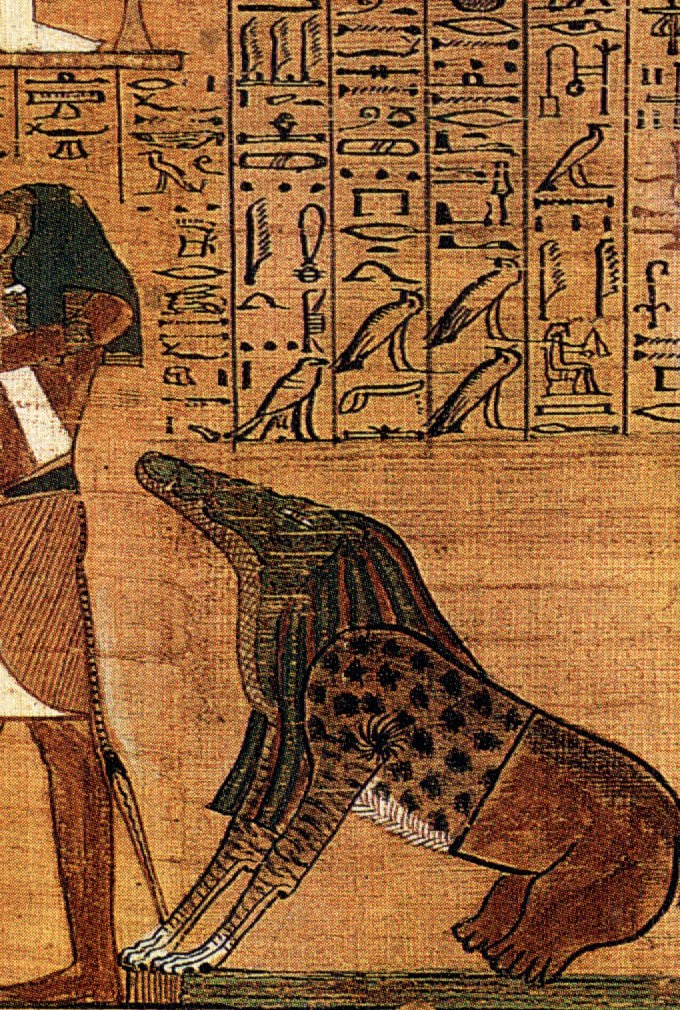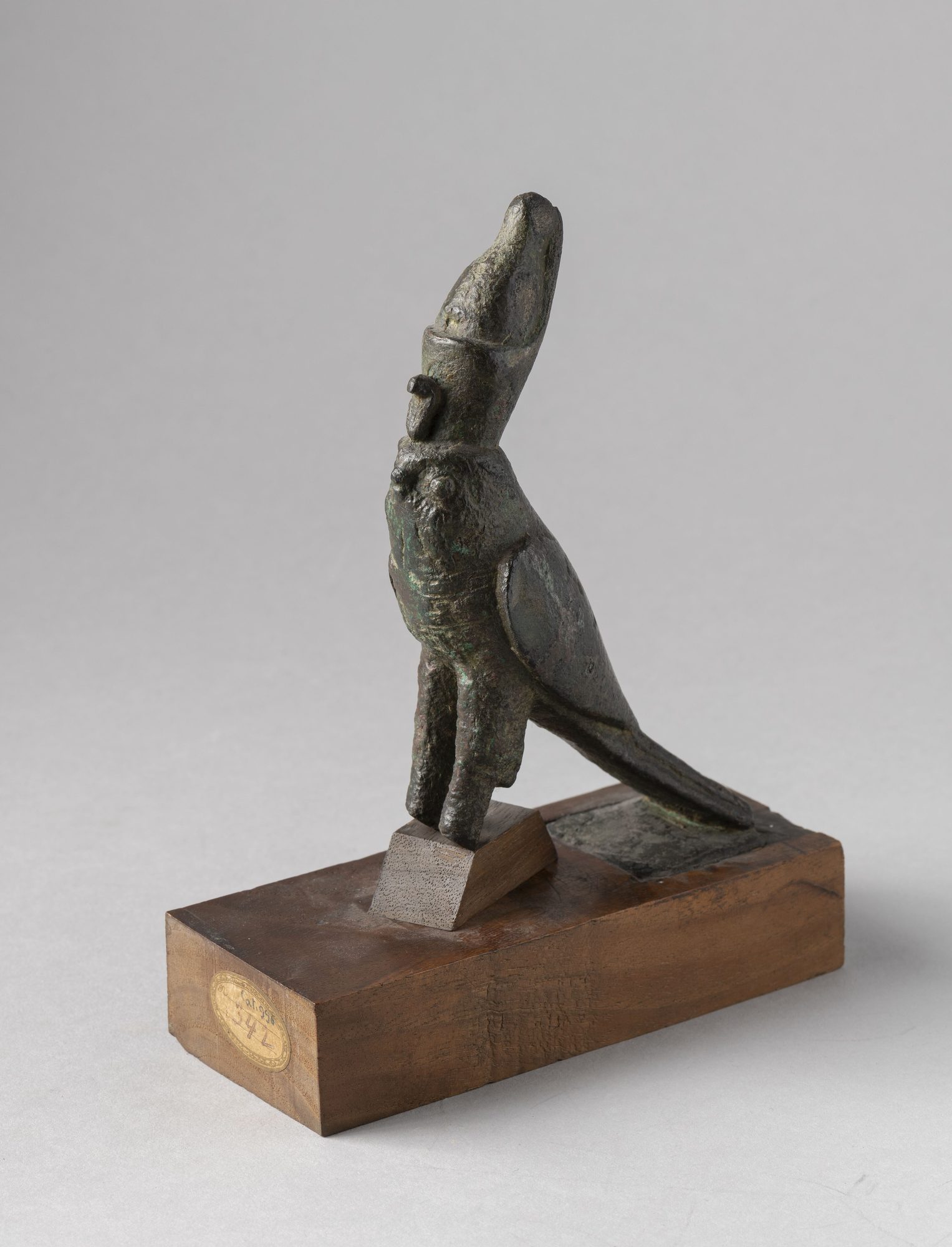
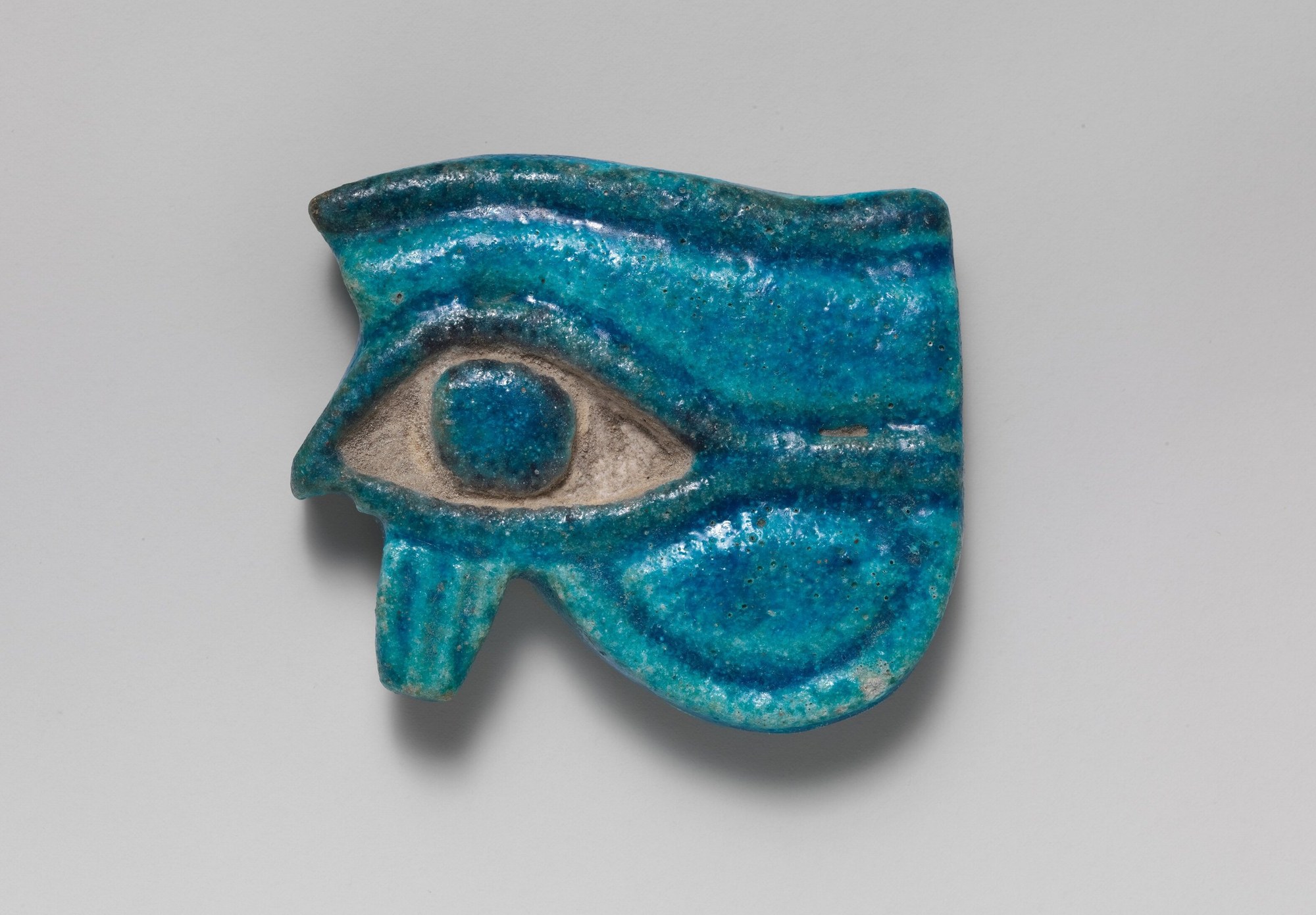
Ra points, and the god looks where he is told. There is a black pig on the ground, and the moment Horus fixes his eye on it the daylight tears open into a storm, and something goes into the eye like a blow of fire. When it clears he can hardly see. My eye, he tells the sun, feels as though Set had struck it. He is right. The pig was Set all along, wearing the shape to get close, and the wound in the falcon’s eye is the same wound the Egyptians told a hundred ways for three thousand years: the eye of the rightful king, put out by the god of disorder, and then, against every expectation, made whole again. The healed eye even keeps the memory in its name. They called it the wedjat, the sound one, the whole one, the eye that came back.
Two answers to who put it right
Here is the honest difficulty at the centre of a much-loved story. If you go looking for the myth in which Set tears out the eye and Thoth heals it, you will not find it, because no single ancient text tells it that way. The Egyptians told the wounding twice, in two separate strands that later readers have quietly stitched into one. In the one continuous narrative, it is the goddess Hathor who restores Horus’s sight, and she does it with gazelle’s milk.
In the older ritual strand, carved over the dead and murmured over offerings, the healer is Thoth, the moon-god and scribe, and there is no gazelle’s milk at all. Both are ancient. Both are true. The seamless version most people know, Set out, Thoth in, is a modern harmony that flattens two voices into one, and it is worth keeping them apart to hear what each was actually saying.
Both eyes buried in the mountain
The strand that reads like a story comes from a single Ramesside papyrus, the Contendings of Horus and Seth, set down after Horus and Set had long been at law over the throne of Egypt. In the middle of that long, often grotesque contest, Set finds Horus asleep. He does not fight him. He gouges out both of the young god’s eyes while he lies helpless, carries them off, and buries them in the mountain, and by the next morning they have grown up out of the ground as lotus flowers.
Horus wakes blind. It is Hathor, the cow-goddess, who comes upon him in his blindness and pours gazelle’s milk into the two empty sockets until his sight is restored. It is a strange, tender image set inside a brawl of a text: the loveliest cure in Egyptian myth, milk from a wild creature poured into the ruin Set has left, and the buried eyes flowering behind him in the hills.
Not Set who seizes it
The older strand does not narrate at all; it insists. In the Pyramid Texts, the oldest religious writing Egypt has, the eye is not the subject of a tale but the pivot of a ritual, asserted over the body of a dead king as an accomplished fact. Here the one who takes the eye away from Set and secures it is Thoth. N. is Thot who avenges thee, the spell says of the eye, N. is not Set who seizes it. The line is doing two things at once, standing the dead king in Thoth’s place and standing Set out of it, and its whole force is that the eye will not be left in the hands of the one who stole it.
The Book of the Dead keeps the same actor and adds the mood. Thoth brings the wedjat, it says, and made it to be at rest after it had departed from the storm. That is the older imagination’s idea of healing: not stitching a wound but calming one, quieting the eye after the violence has passed over it, the way you would gentle a frightened animal. The chapter closes on a line that folds the god’s eye and the human worshipper into a single restored thing, I am sound, and it is sound; I am sound, and it is sound.
The eye that feeds a dead man
Whichever hand mends it, the restored eye does not stay with Horus. He gives it away. In the great funerary liturgy of the Pyramid Texts, repeated as each offering is set down before the dead, the healed eye is carried to Osiris, Horus’s murdered father, to revive him: take to thyself the eye of Horus, the priest says over the bread and the beer and the meat, the eye wrested from Set, which was taken from thee.
This is the deep logic that made the wedjat the most powerful symbol Egypt had. The eye that Set tore out and the gods made whole becomes the first and the model of every offering ever laid before a god or a dead king; to give the eye is to give life back to the one who has lost it. When the same liturgy murmurs the eye of Horus is sound; thou art sound, the soundness of the eye and the soundness of the dead are the same soundness. Restore the eye and you restore the man.
A whole eye, a waxing moon
The name says everything the story means. Wedjat is built from the word for whole, sound, uninjured: it is not the eye
but the eye made complete,
wholeness itself worn as a symbol. That is why the healed eye of Horus outgrew its own myth and became a charm painted on coffins and cut into amulets, a piece of restored wholeness you could carry against harm. Later Egyptian priests read the moon into it, the eye put out and slowly filled again mirroring the dark moon swelling back to full, and elaborated the filling into a scheme of gods and days; but that lunar arithmetic is a late refinement, and the equation of Horus’s eye with the moon is itself disputed by scholars for the earliest periods, so it is best held loosely rather than stated as timeless fact.
Beware, too, the tidy modern flourishes that have grown up around the wedjat like barnacles: the claim that its hieroglyphic pieces are fractions summing to a fraction short of one, with the missing sliver supplied by Thoth’s magic,
and the notion that the eye on the American dollar is the Eye of Horus. Neither is ancient. What is ancient, and older than any of them, is the plain shape of the thing: an eye torn out by the enemy of order, and given back whole, so that a wound at the heart of the world could be answered with soundness.
The god Thoth hath brought the Utchat, and he hath made it to rest after it departed, [O] Ra. It was grievously afflicted by storm, but Thoth made it to be at rest after it had departed from the storm. I am sound, and it is sound; I am sound, and it is sound. (Book of the Dead, Chapter CLXVII, tr. Budge)
- Pyramid Texts, Utterance 524, §§ 1233–1234, trans. Samuel A. B. Mercer, The Pyramid Texts (Longmans, Green & Co., 1952); public-domain scan, archive.org id
THEPYRAMIDTEXTSTRANSLATIONthe oldest naming of the eye’s healer as Thoth. Source forN. is Thot who avenges thee (the eye); N. is not Set who seizes it
(§1233b) and the crowning eye,crowned with the white crown, the eye of Horus wherewith he is powerful
(§1234b). The brief’s hintPT 1233
is this exact paragraph. Cited by utterance and paragraph in the canonical manner; Mercer prints the dead king asN.
- Pyramid Texts, offering liturgy (§§ 19a, 21a, 39a, 40a and passim), Mercer 1952the restored eye given to the dead as the model of every offering. Source for
take to thyself the eye of Horus
(§19a), the eyewrested from Set, which was [taken]
(§39a), and the soundness-formulathe eye of Horus is sound; thou art sound
(§21a). - Book of the Dead, Chapter CLXVII (
Bringing the Utchat
), trans. E. A. Wallis Budge, The Book of the Dead (Theban Recension, 1898); public-domain scan, archive.org idbookdeadanengli01budggoog; Papyrus of NebseniThoth brings the wedjat andmade it to be at rest after it had departed from the storm
, with the closing refrainI am sound, and it is sound; I am sound, and it is sound.
Budge’s dated spellingUtchat
is modernised to wedjat in the prose; the sense is verbatim. - Book of the Dead, Chapter CXII (
Knowing the Souls of Pe
), Budge 1898the black-pig aetiology of the injury. Source for Ra bidding Horus look at a black pig, whereuponstraightway an injury was done unto his eye, [namely,] a mighty storm
; the pig thatwas Suti who had transformed himself into a black pig
andaimed the blow of fire which was in the eye of Horus
; and Ra’s gift of the city of Pein return for the injury in his eye
. Budge’sSuti
is Set,Ra
is Re. - The Contendings of Horus and Seth, Papyrus Chester Beatty I (20th Dynasty, reign of Ramesses V, c. 1149–1145 BCE; from Thebes, now Chester Beatty Library, Dublin), first ed. Alan H. Gardiner, The Library of A. Chester Beatty (Oxford, 1931); standard translation Miriam Lichtheim, Ancient Egyptian Literature vol. II (1976), pp. 214–223the sole narrative telling of the loss and cure, in which Seth gouges out both of the sleeping Horus’s eyes and buries them (they grow as lotuses) and Hathor heals the blinded god with gazelle’s milk. The papyrus is in copyright and was not read verbatim in this pass; the episode follows the summary in Geraldine Pinch, Egyptian Mythology (2002), pp. 131–132, and should be re-verified against Gardiner or Lichtheim before any exact wording, number or line is printed.