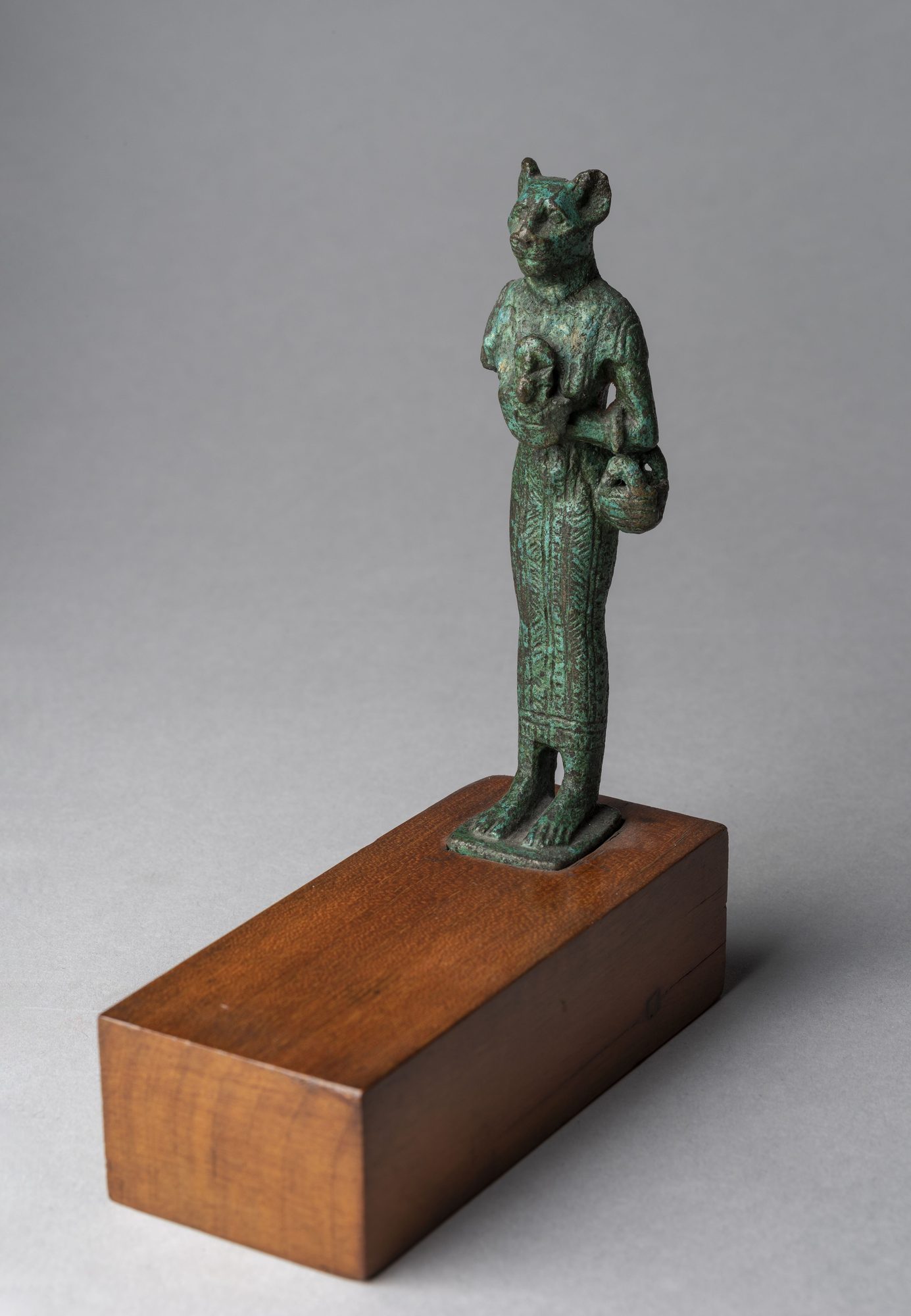
The dead king, climbing toward the sky in the oldest funerary spells Egypt wrote, pauses to swear that he has not offended her. Among the wrongs he lists as never done, one is simply he has not respected Bastet,
offered as proof of his innocence: to have failed to respect her would have been a danger, and he wants it known he ran no such risk. This is the earliest Bastet the texts give us, and she is not the cat of a thousand souvenir bronzes. She is a lioness of the sun, a power a man about to face the gods is careful to say he never crossed. The soft-eyed goddess with a litter of kittens at her feet comes much later. First there is the lioness, and the fear.
The heart a king borrows
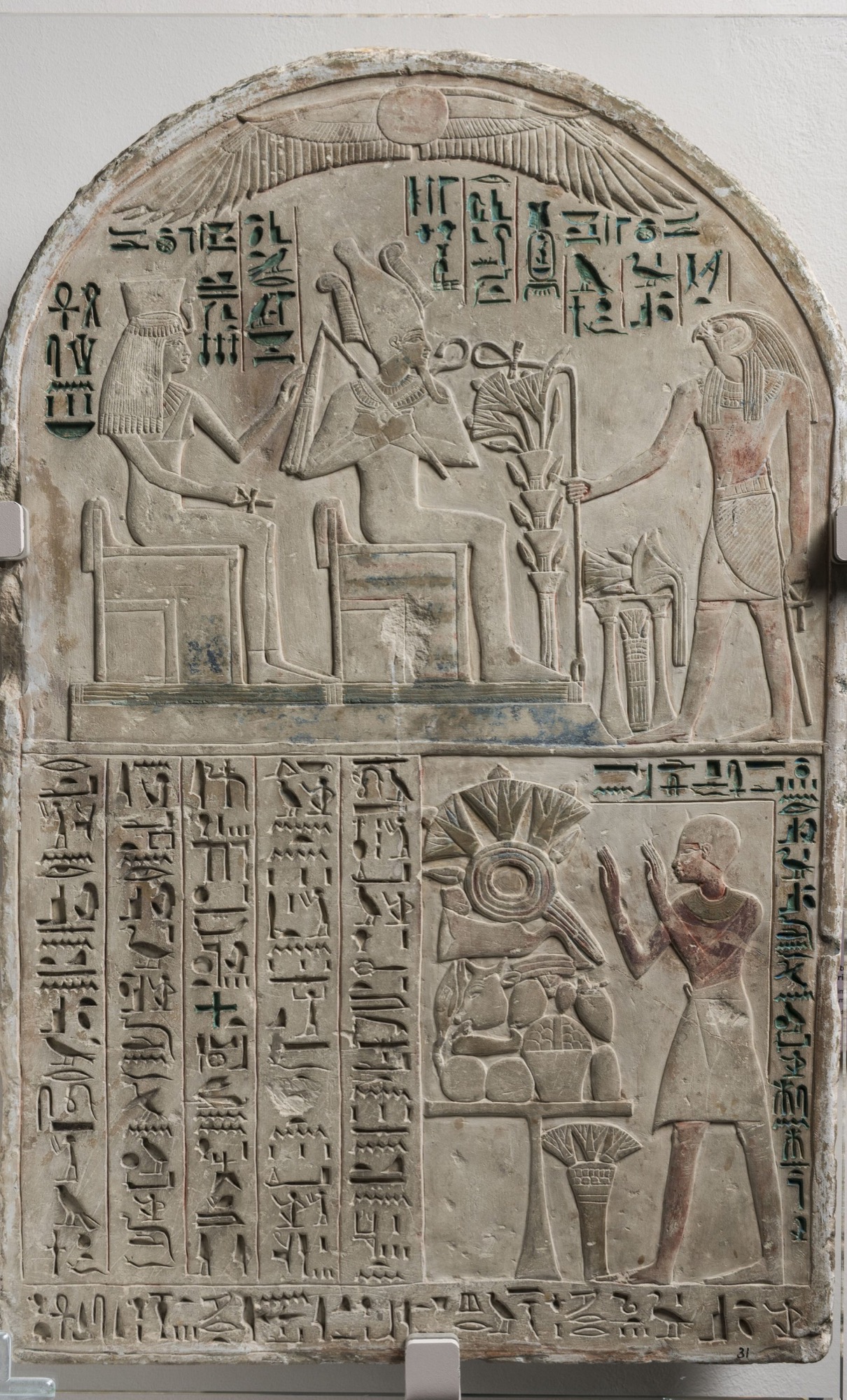
In the Pyramid Texts she is close to the crown, and she is close to it as a nurse and as a fury at once. One spell has the goddess of Bubastis suckle the king: his mother has nourished him, she of Bubastis, while she who dwells in el-Kab has reared him and she who dwells in Buto has given him her arm. She of Bubastis
is Bastet, and the company she keeps in that line tells you her rank. El-Kab is Nekhbet the vulture, Buto is Wadjet the cobra, the two tutelary goddesses of Upper and Lower Egypt who guard the king’s brow, and Bastet stands among them as one of the royal nurses who raise the living god.
Yet the same body of spells reaches for her when it wants an image not of tenderness but of ferocity. The heart of the king, one line says, is like the heart of Bastet when he ascends and lifts himself to the sky. To climb into heaven the king borrows her courage, not her gentleness. She is the goddess you want nursing the crown and the goddess whose heart you want beating in your chest when you go up to meet the sun.
Rage and calm in one eye
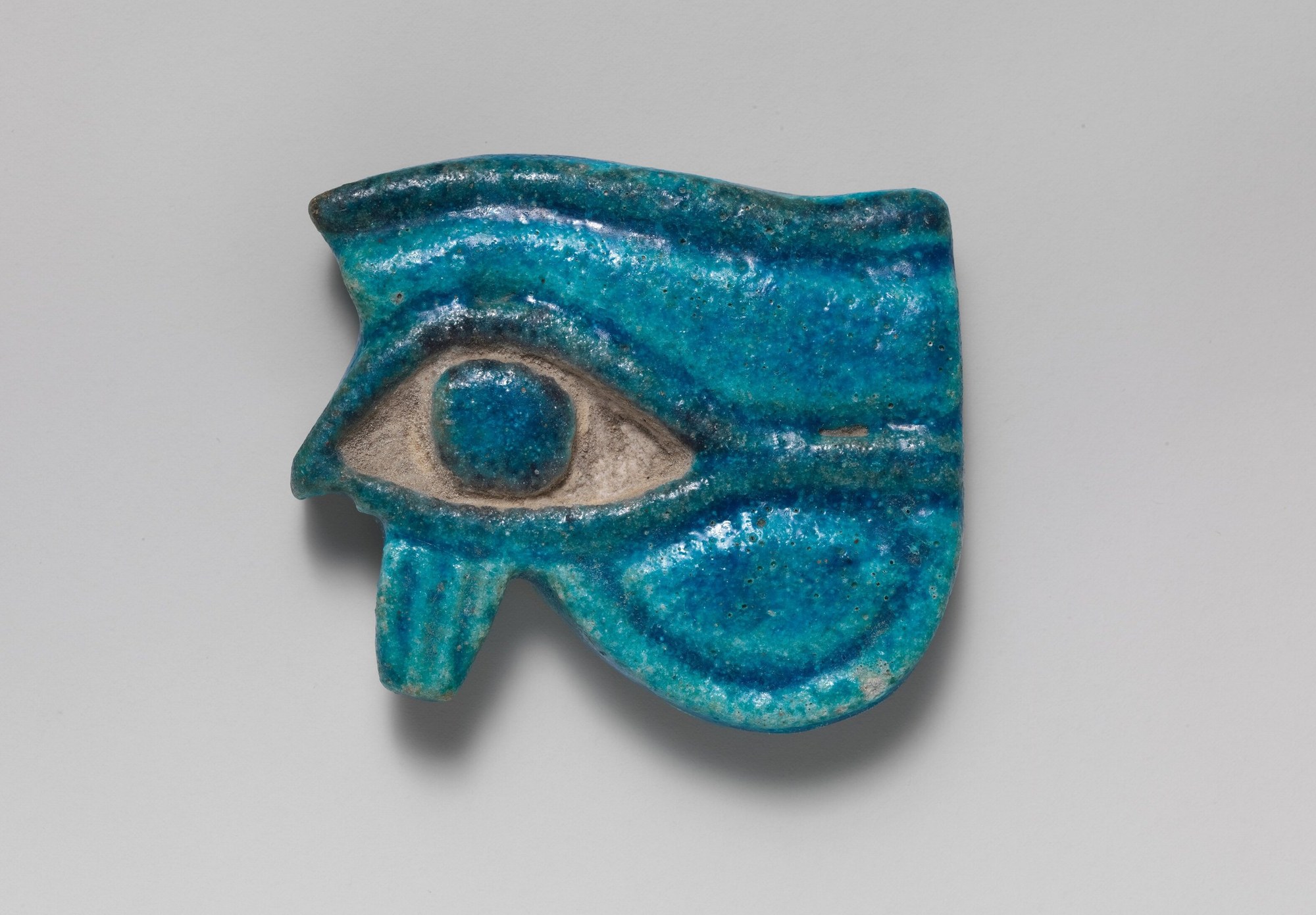
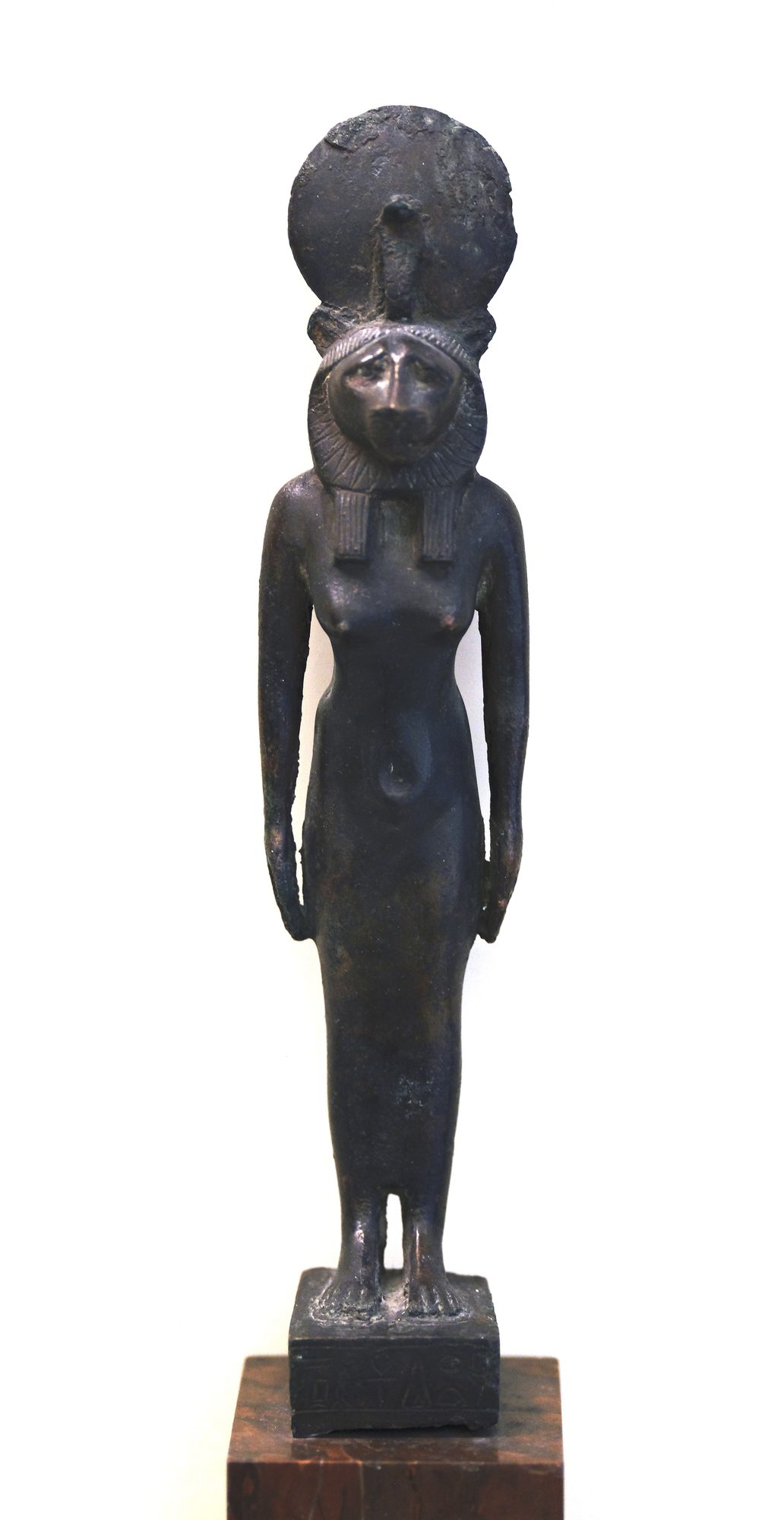
To understand why one goddess could be nurse and fury together, you have to place her in the sun. Egyptian theology spoke of the Eye of Ra, the sun’s own power personified as a daughter and a weapon, a goddess who could be loosed against the god’s enemies and who burned when she was angry. That Eye had more than one face. Its raging face was Sekhmet the lioness, the ferocious warrior-face of the goddess; its gentler face, increasingly drawn as a cat, was Bastet.
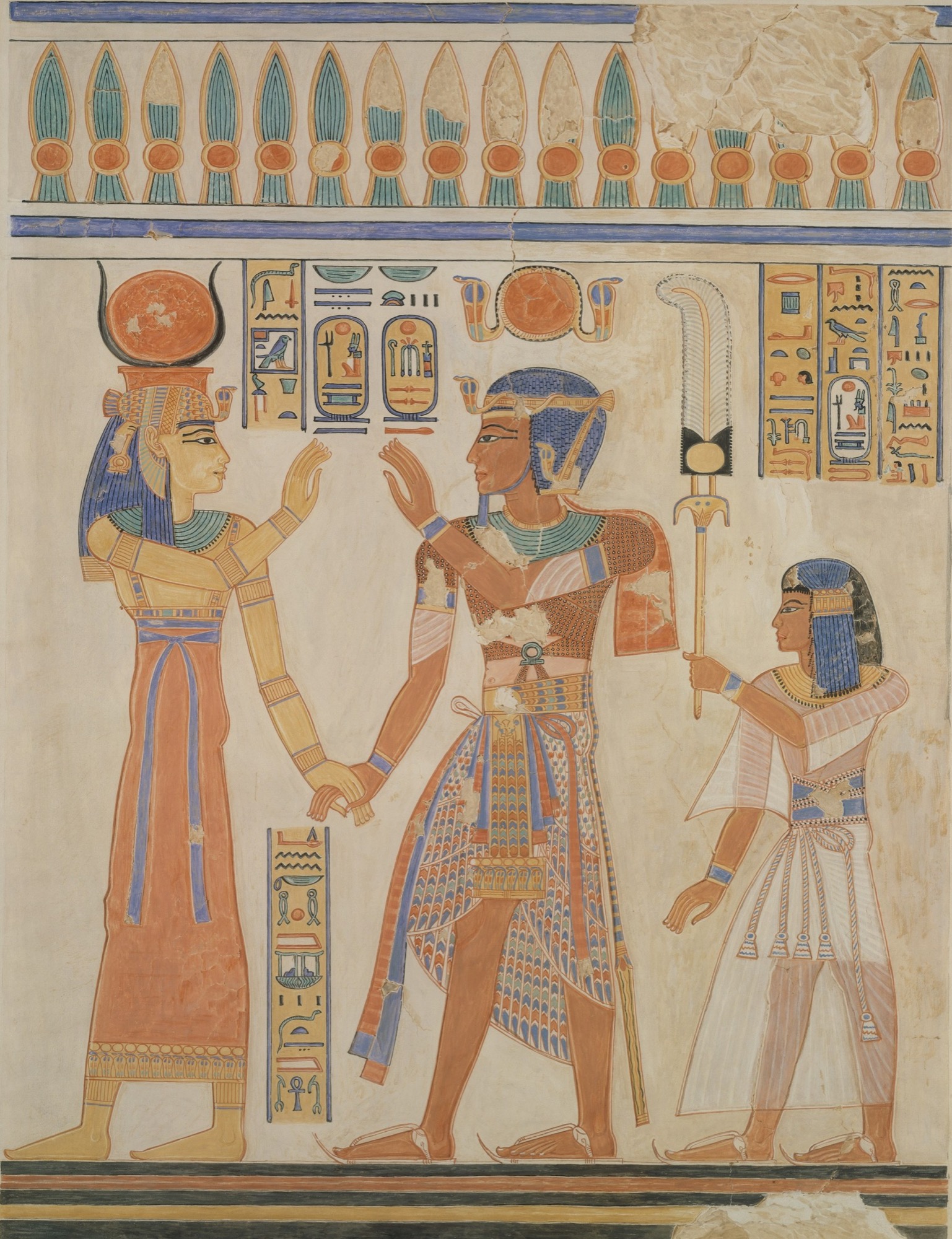
One Delta tradition even told the change as a story, a wrathful lioness cooled by the water of a sacred lake until she settled, tamed, into a cat who took up residence in the temple. The two were understood as aspects of a single Eye-goddess, rage and calm, and Bastet held the calm end without ever quite losing the claws. As a solar defender she belonged with Hathor, Sekhmet and Isis among the goddesses who fought Ra’s enemies, and she is named among those who turn on the serpent Apep (Greek Apophis), the chaos-snake the sun destroys each night. The cat that Egypt loved was, at bottom, a solar avenger.
The cat with the knife
That avenger has a famous portrait, though it does not carry Bastet’s name. On a single plate of the Papyrus of Ani, a great cat sits before the sacred persea tree of Heliopolis with a knife, taking the head off a serpent, and the caption reads that the cat is emblematic of the Sun, cutting off the head of the serpent Apep, typical of darkness.
This Great Cat of Ra is the sun’s daily victory over the night rendered as a single frozen kill, and it is the mythic root of the whole idea Bastet grew from: the cat not as a pet but as the light that severs the dark. It would be a mistake to read the housecat backward onto the earliest goddess. The domesticated, kitten-flanked Bastet of bronze and faience dominates only from the Third Intermediate Period onward, as her Bubastis cult surged; the lioness and the solar Eye came first, by more than a thousand years.
More wine than all the year
By the time the Greeks came to look, the cat had won, and her festival was the loudest in Egypt. Herodotus reckoned the feast at Bubastis the greatest and most popular of all Egyptian festivals, and he described the pilgrimage to it with a reporter’s delight. They came by river in packed boats, the women shaking rattles and the men playing flutes while the rest sang and clapped; at every riverside town the boats put in, the women shouted and jeered at the local women, danced, and pulled up their garments in ribald display. On arrival they made great sacrifices, and they drank, Herodotus says, more wine of grapes than during the whole of the rest of the year.
He puts the crowd at seventy myriads, seven hundred thousand men and women, besides children. The number is his, and it counts people, not cats; keep it apart from the round modern estimate of the mummified cats later dug from the site, which is a different and unrelated figure. What the drinking was, beneath the fun, was old solar theology in a wine-cup: the burning Eye-goddess pacified with drink, her rage dissolved into festival, matching the attested Egyptian feasts of drunkenness said to soothe the fierce lioness-face of the solar Eye.
A grove you looked down into
The temple that received all this was, to Herodotus’s eye, the most pleasing in Egypt even if not the largest. Because the city of Bubastis had been banked up higher and higher over the centuries while the temple was left at its old level, the sanctuary sat in a bowl you could look down into from every side. Two tree-shaded channels of the Nile, each about a hundred feet broad, ran up to it but did not meet, ringing it with water. A stone wall carved with figures enclosed a grove of very tall trees around the shrine that held the goddess’s image, the whole precinct a furlong square, and a stone-paved processional road about three furlongs long ran east through the marketplace toward the sanctuary of Hermes, by whom he meant Thoth.
This was the house of the cat, and the cat’s own were carried home to it in death. When a house-cat died a natural death, Herodotus reports, the household shaved off their eyebrows in mourning; in a house fire the Egyptians would guard the cats rather than fight the flames. The dead cats were embalmed and brought to Bubastis to be buried, and the pits the excavators later opened there were full of them, cat bones with embalming resin, beads and bronzes and small statues of the goddess, the physical residue of a devotion that had begun, a very long time before, with a lioness in the sun.
The cats when they are dead are carried away to sacred buildings in the city of Bubastis, where after being embalmed they are buried. (Histories 2.67, tr. Macaulay)
- Pyramid Texts, Utterances 508 and 512 (S. A. B. Mercer, The Pyramid Texts in Translation and Commentary, 1952; read verbatim, archive.org id
THEPYRAMIDTEXTSTRANSLATION). Three passages carry the earliest, fierce Bastet used above. §892b listshe has not respected Bastet
among the transgressions the ascending king declares he has not committed, marking her as a power not to be offended. §1111a–c names her as royal nurseHis mother has nourished him, she of Bubastis; she who dwells in el-Kab has reared him; she who dwells in Buto has given him her arm,
bracketing Bastet with Nekhbet (el-Kab) and Wadjet (Buto). §1310c gives the king Bastet’s own courage:The heart of N. is like that of Bastet, when he ascends and lifts himself to the sky.
The §-paragraph is the canonical citation unit; Mercer’s §1111 falls near his Utterance 508–512 numbering. - Herodotus, Histories 2.59–60, 2.66–67, 2.137–138 (G. C. Macaulay translation, read verbatim on ToposText, work/22). 2.59–60 makes Bubastis the foremost Egyptian festival and supplies the boat procession, the flutes and rattles, the riverside jeering and exposure, the drinking of
more wine of grapes than during the whole of the rest of the year,
and theseventy myriads
(700,000) of pilgrims; it also glosses Bastet as Artemis, a Greek interpretation and not an Egyptian identity. 2.66–67 gives the eyebrow-shaving mourning, the guarding of cats in a house fire, and the embalmed cats buried at Bubastis. 2.137–138 describes the templethe mound the city was banked above, the encircling hundred-foot channels, the carved wall around the tall grove and shrine, the furlong-square precinct, and the three-furlong processional road east to the sanctuary of Hermes (Thoth). The numbers (seventy myriads,
a hundred feet,
a furlong,
three furlongs
) are all in the text as read. - Book of the Dead, Chapter 17 (Papyrus of Ani), vignette caption (E. A. Wallis Budge tr., 1898/1901; caption read verbatim, archive.org id
bookdeadanengli01budggoog)The Cat, emblematic of the Sun, cutting off the [head of] the serpent Apep or Apepi, typical of darkness.
This Great Cat of Ra beside the Persea tree of Heliopolis is the solar-avenger image from which Bastet’s cat form descends; the caption is quoted here, not the accompanyingthe male Cat is Ra himself
gloss, which was not read word-for-word in preparing this piece.