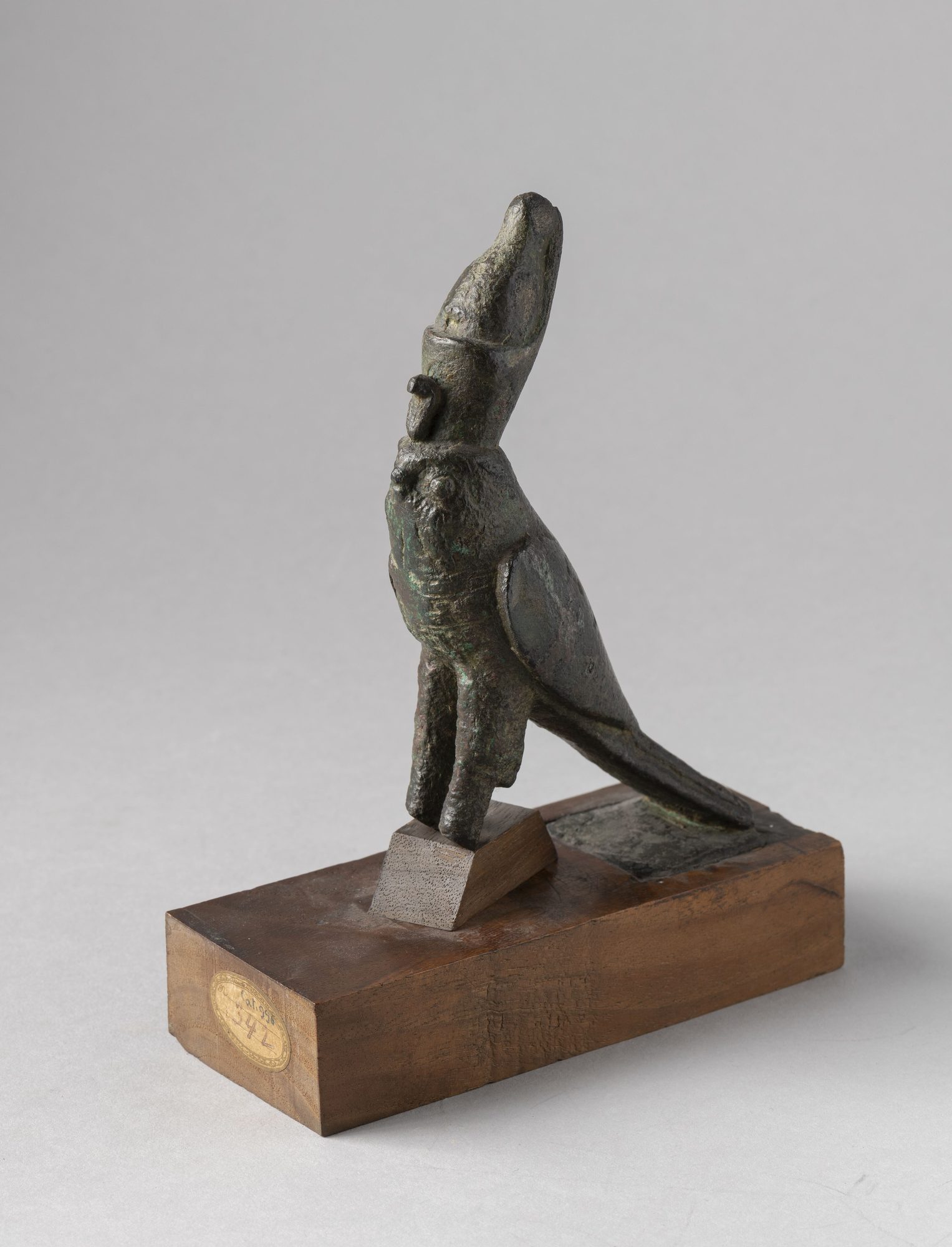
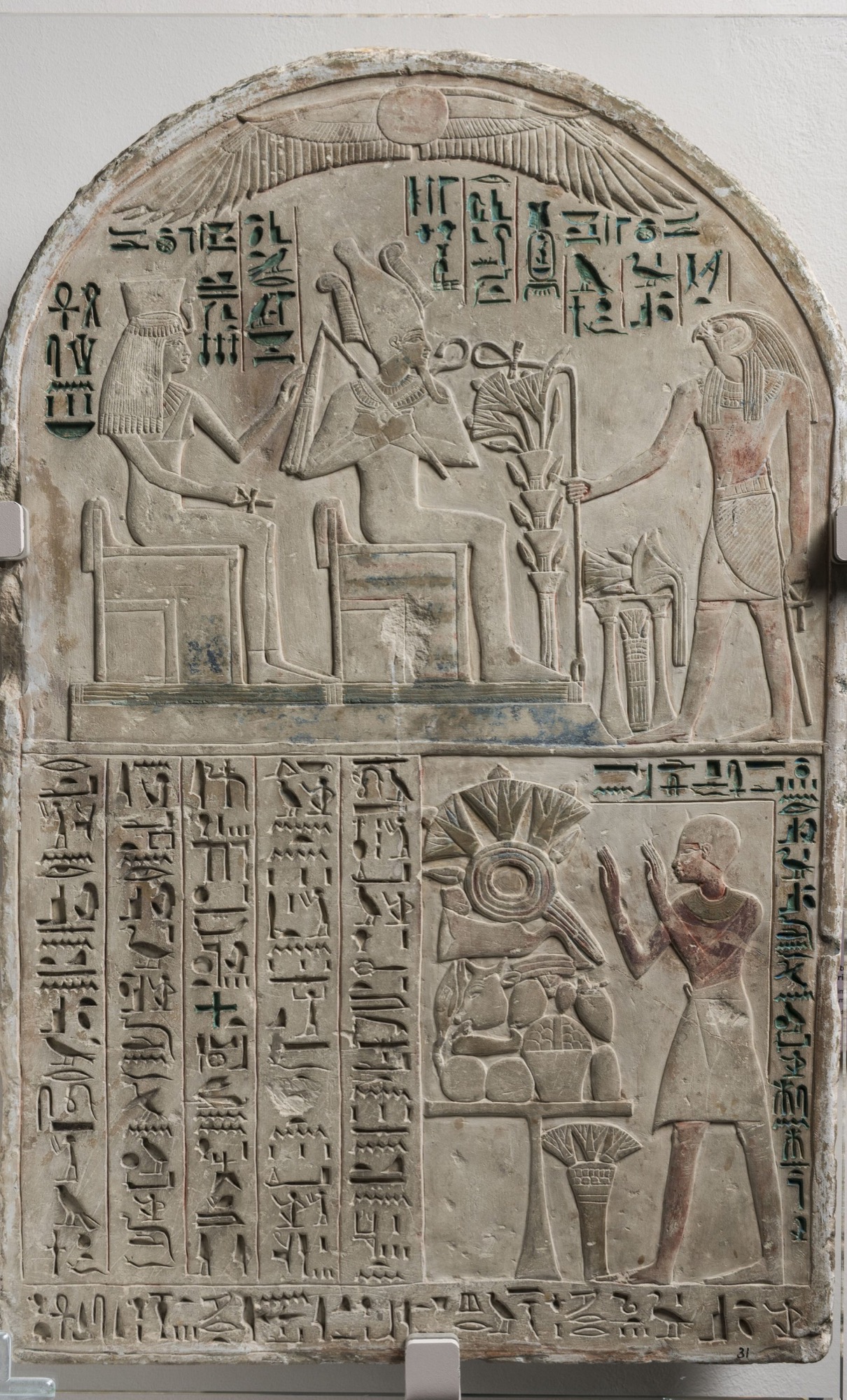
The mother hid the child in the marshes. She had drawn him out of a dead man, a husband murdered by his own brother, and she reared the boy in solitude, the hymn says, in the place where he was being unknown. She did it because the man who killed his father would kill the heir too, given the chance. So Horus grew up in secret, a falcon-child among the reeds, learning that the throne of Egypt was his by right and held by his uncle by murder. The whole of the vengeance turns on a single quiet line the Egyptians repeated for two thousand years: Isis brought him into the hall of the gods only when his arm was strong.
Three traditions, one throne
What kind of vengeance he then took depends entirely on which Egyptian you ask, and across three thousand years they did not agree. This is the honest difficulty at the centre of the story, and it is worth naming before the swords come out, because there is no single ancient Horus fights Set and wins
epic to retell. There are three traditions, and they do not describe the same event.
The oldest of them barely narrates at all. In the Pyramid Texts, carved into the walls of Old Kingdom tombs and chanted over dead kings, the vengeance is not a story with a beginning and an end; it is an accomplished ritual fact, asserted again and again like a heartbeat. Horus has avenged thee,
the spells tell the dead Osiris. It was not long till he avenged thee.
The son’s name itself is the deed: he is called, in so many words, Horus, the son, who avenges his father.
The earth-god Geb, Osiris’s father, is the one who commissions it, bringing Horus forward to take vengeance and to claim the great white wrr.t-crown by the restored eye. The oldest Egyptian answer to how did Horus avenge his father?
is simply: he already has.
Jointed like an offering-beast
When those same spells do let the violence show, it is nothing like a duel. In one image Set is bound and forced beneath Osiris as a beast of burden, made to carry the dead king on his back and to quake under him like the quaking of the earth. In another he is not fought but butchered. I have smitten for thee him who smote thee as an ox,
the avenger declares over his father’s body. I have killed for thee him who killed thee as a wild-bull.
Then comes an inventory a slaughterman would recognise: the head cut off, the tail cut off, the two hands, the two feet. Thoth, the scribe of the gods, does the executing, seizing the enemy and beheading him together with his followers, sparing not one of them. This is vengeance as sacrifice, the murderer laid out and jointed like an offering-beast, not a hero meeting a villain blade to blade.
The word of Horus was true
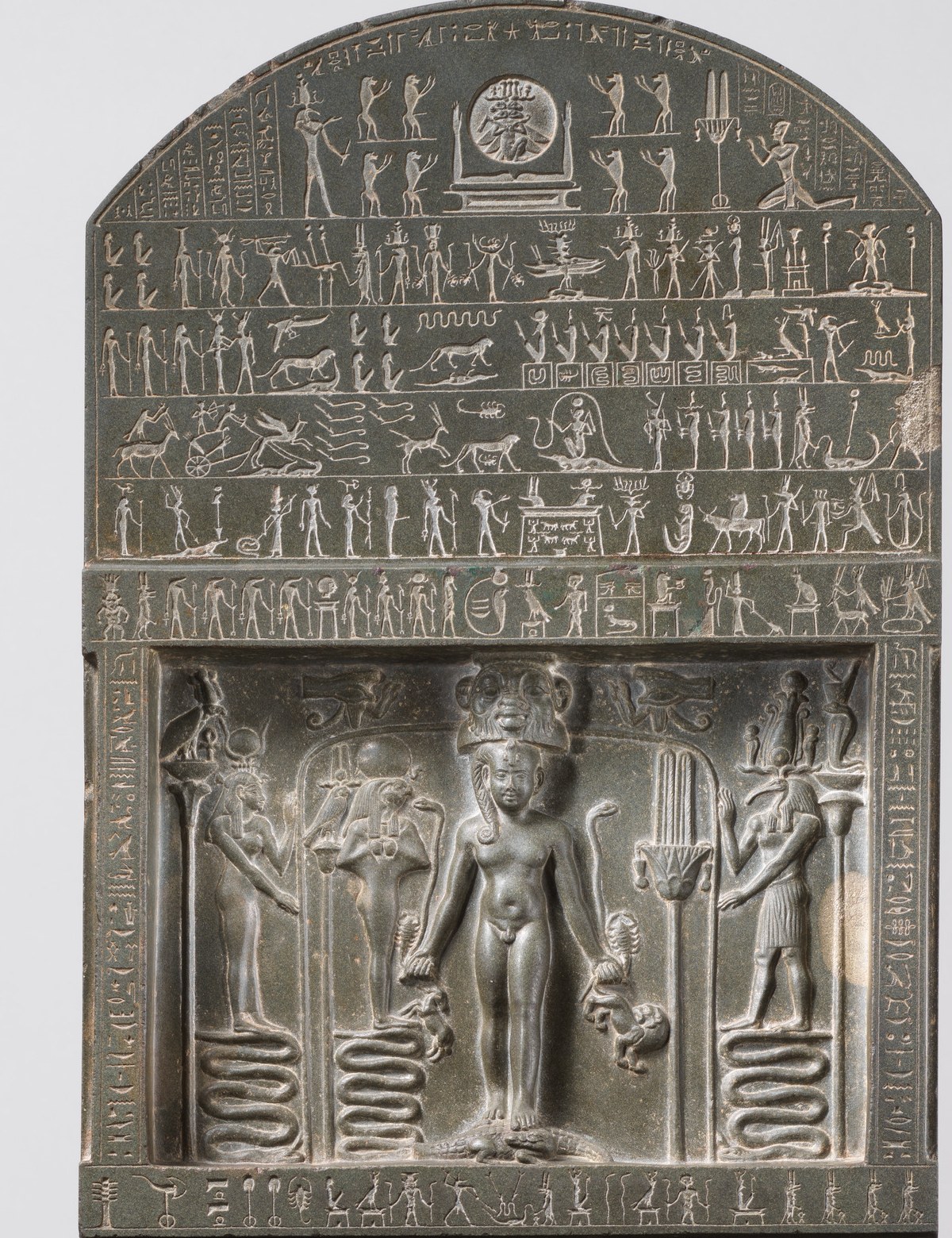
The fullest connected native telling refuses the battlefield altogether. In the Great Hymn to Osiris, inscribed on a New Kingdom stela, Isis rears the hidden child until his arm is strong, then brings him into the hall of Geb, and the assembled gods break into acclamation: Welcome, Horus, son of Osiris! Stalwart hearted, justified! Son of Isis, heir of Osiris!
The vengeance that follows is a verdict. The Tribunal of Truth convenes, weighs the case, and finds for the boy.
The word of Horus was true,
the hymn says, and the office of his father was given unto him.
He comes forth crowned by the command of Geb, and the crown rests securely on his head. The enemies are handed over, not slain in the field: They have given his enemies to the son of Isis.
This is the tradition the great lawsuit-text, the Contendings of Horus and Seth, tells at length, eighty years of argument before the gods, settled by judgement rather than by war.
The war that lasted many days
Only one ancient source gives what a modern reader expects, an actual battle, and it is the latest and the least Egyptian of them. Around 100 CE a Greek priest, Plutarch, set the story down in his own idiom. In his version Osiris comes back from the other world expressly to train his son for the fight, and asks the boy what he holds the noblest thing. Horus answers: to avenge one’s father and mother for the evil done to them. The war, Plutarch writes, lasted many days, and Horus prevailed. But even here the ending refuses to be clean.
Set, called Typhon in the Greek, is taken alive and handed in chains to Isis, and she, the dead man’s wife and his avenger both, lets him go. Horus, enraged that his father’s murderer should walk free, tears the royal diadem from his mother’s head. And the war is not the end of it: Set formally accuses Horus of being a bastard, the gods have to rule on his legitimacy, and only then are there, in Plutarch’s flat phrase, two other battles.
The victory is a thing won three times over and never quite finished.
What the falcon really lost
Beneath all three runs an older, stranger kernel that the tidy hero-slays-villain arc smooths away. The Pyramid Texts preserve it as a chant: Horus falls because of his eye; the bull collapses because of his testicles.
The conflict, in its most ancient form, is a mutual maiming. Horus loses an eye, Set is unmanned, and neither walks away whole; the eye is restored and offered to the dead father, and the kingship is settled, but the price is written on both bodies. The later, richer episodes of eye-gouging and grotesque humiliation grow from this couplet. The vengeance was never a matter of one god cleanly killing another. It was a wound given for a wound, and then a judgement.
So the falcon-child does come out of the marshes, and Osiris is avenged, and the throne is restored to its rightful line. On that the Egyptians never wavered. What they would not do was agree on the shape of it. Chant it as done before it is told, butcher the murderer like an ox, try him in a court of gods, or fight him for days and let him live: the ancient world kept every one of these and never chose. The land, in the hymn’s closing relief, is happy under its lord. How its lord got there was a question three thousand years never closed.
Welcome, Horus, son of Osiris! Stalwart hearted, justified! Son of Isis, heir of Osiris! (Great Hymn to Osiris, Stela of Amenmose, Louvre C286, tr. Blackman)
- Pyramid Texts, Utterances 277, 355–369, 580 and 606, trans. Samuel A. B. Mercer, The Pyramid Texts (Longmans, Green & Co., 1952); public-domain scan, archive.org id
THEPYRAMIDTEXTSTRANSLATIONthe oldest evidence for the vengeance, carried as liturgical fact rather than narrative. Source for the name-as-deed,Horus, the son, who avenges his father
(Utt. 366 §633b); the refrainHorus has avenged thee; it was not long till he avenged thee
(Utt. 357 §591a, repeated Utt. 364 §618b); Geb commissioning the vengeance and the wrr.t-crown claimed by the restored eye (Utt. 367 §634); Thoth seizing and beheading the enemywith his followers
, sparing no one (Utt. 367 §635c); Set bound and made to carry Osiris,quaking like the quaking of the earth
(Utt. 355 §581a; Utt. 356 §587b); the ox-slaughter with head, tail, hands and feet cut off (Utt. 580 §§1544–1545); and the reciprocal-wound couplet,Horus falls because of his eye; the bull collapses because of his testicles
(Utt. 277 §418). Cited by utterance and paragraph in the canonical manner. - Great Hymn to Osiris, Stela of Amenmose (Louvre C286), New Kingdom (18th Dynasty), trans. Aylward M. Blackman in Adolf Erman, The Literature of the Ancient Egyptians (Methuen, 1927), pp. 140–145; public-domain scan, archive.org id
in.ernet.dli.2015.532519the fullest connected native account of Horus’s rearing, vindication and coronation, and the source for the tribunal resolution. Source for Isis whotook in his seed and provided an heir
and reared the childin solitude, the place where he was being unknown
until she brought himwhen his arm was strong, into the hall of Keb
(p. 143); the Ennead’s cry,Welcome, Horus, son of Osiris! Stalwart hearted, justified! Son of Isis, heir of Osiris!
(p. 143); the Tribunal of Truth,the word of Horus was true, and the office of his father was given unto him
, the crown thatrested securely on his head
, andThey have given his enemies to the son of Isis
(p. 144); and the closing relief,Wickedness hath vanished, and evil hath fled. The land is happy under its lord
, withRe, he speaketh, Thoth, he writeth
(p. 145). Quoted here in Blackman’s public-domain 1927 wording; theC286
designation and the object-nameStela of Amenmose
are the standard Egyptological identification (Lichtheim, AEL vol. II, 1976, pp. 81–86, in copyright, not quoted here). - Plutarch, De Iside et Osiride (Of Isis and Osiris) §19 (358D–358E), trans. Frank Cole Babbitt, Loeb Classical Library vol. V (1936), via LacusCurtiusthe only continuous ancient battle narrative of the vengeance. Source for Osiris returning
from the other world
to train Horus, the boy naming the noblest deed asto avenge one’s father and mother for evil done to them
, the war thatlasted many days and Horus prevailed
, Isis sparing the captured Typhon, Horus tearing the diadem from her head, and, after a legitimacy trial the gods decide in Horus’s favour with Thoth’s help,two other battles
. A 1st–2nd century CE Greek philosophical retelling using Greek god-names (Typhon for Set, Hermes for Thoth), late and interpretive, not an Egyptian primary text. - Papyrus Chester Beatty I, recto,
The Contendings of Horus and Seth
(Ramesside, c. 1150s BCE), first ed. A. H. Gardiner (1931); standard translation Miriam Lichtheim, Ancient Egyptian Literature vol. II (1976), pp. 214–223the sole extended primary narrative of the succession conflict, a lawsuit-and-contest text settled by the Ennead’s verdict rather than by war, named here for the tribunal tradition it shares with the Great Hymn. Its individual contest-episodes are treated in a companion post, not narrated here; in copyright, not quoted.