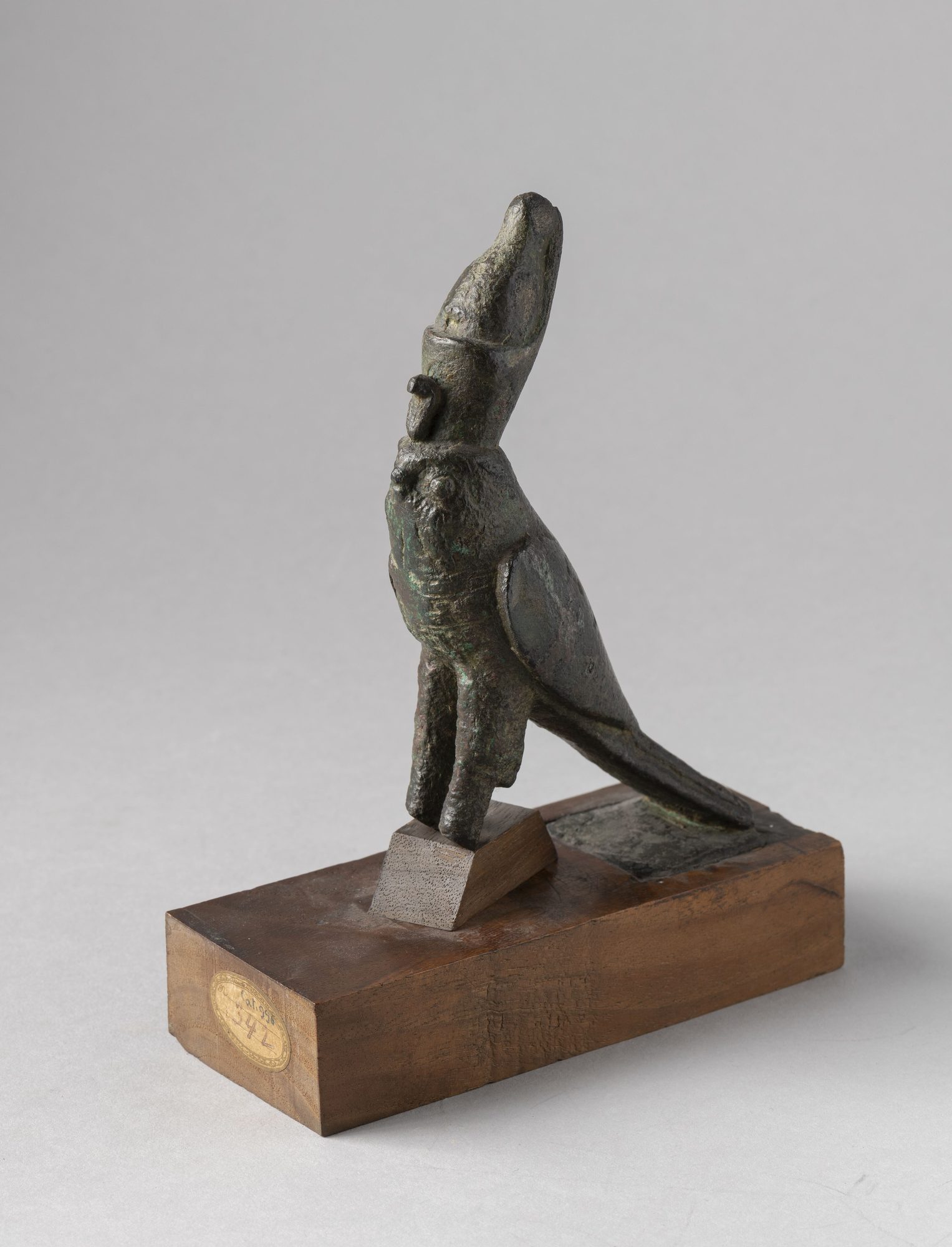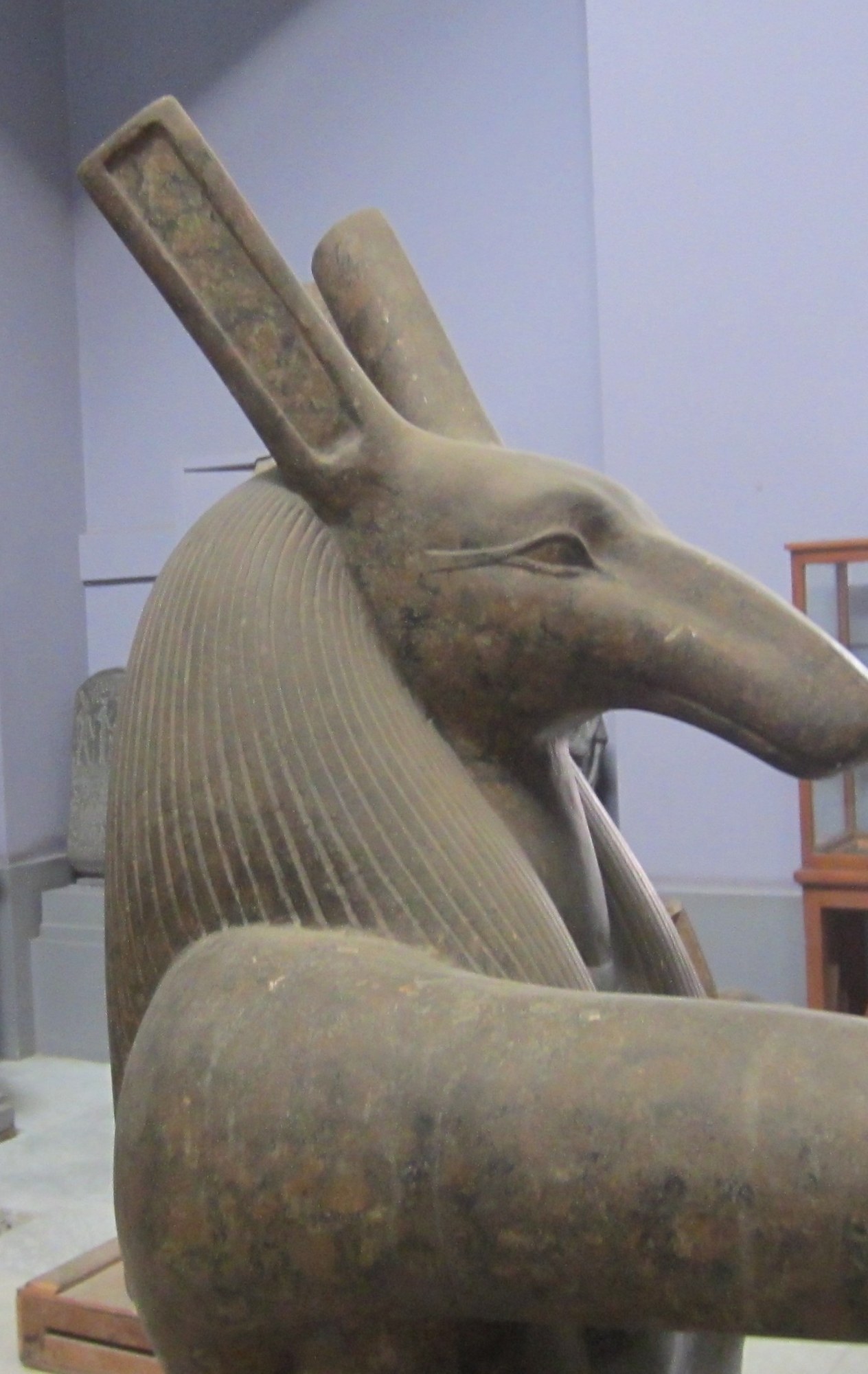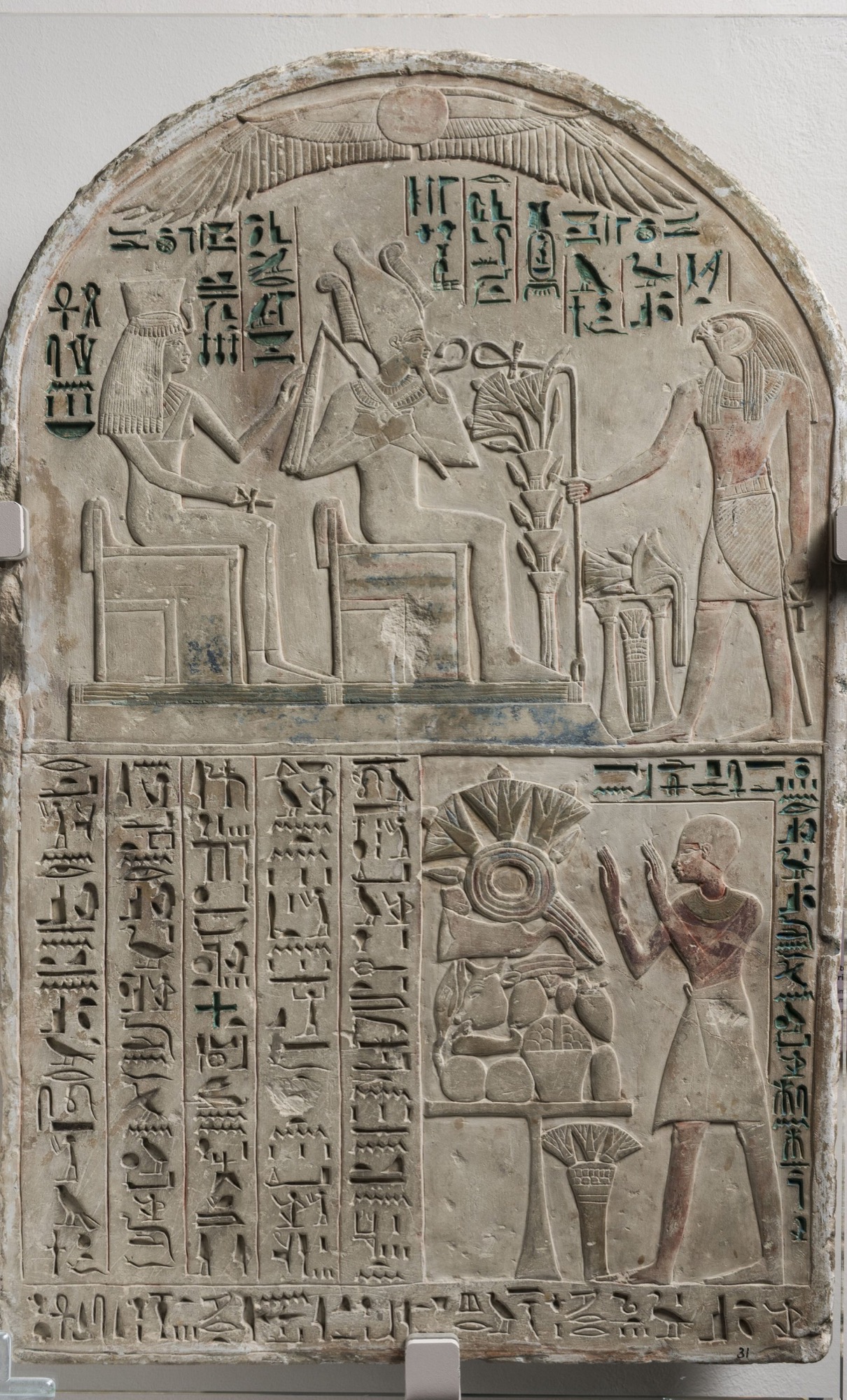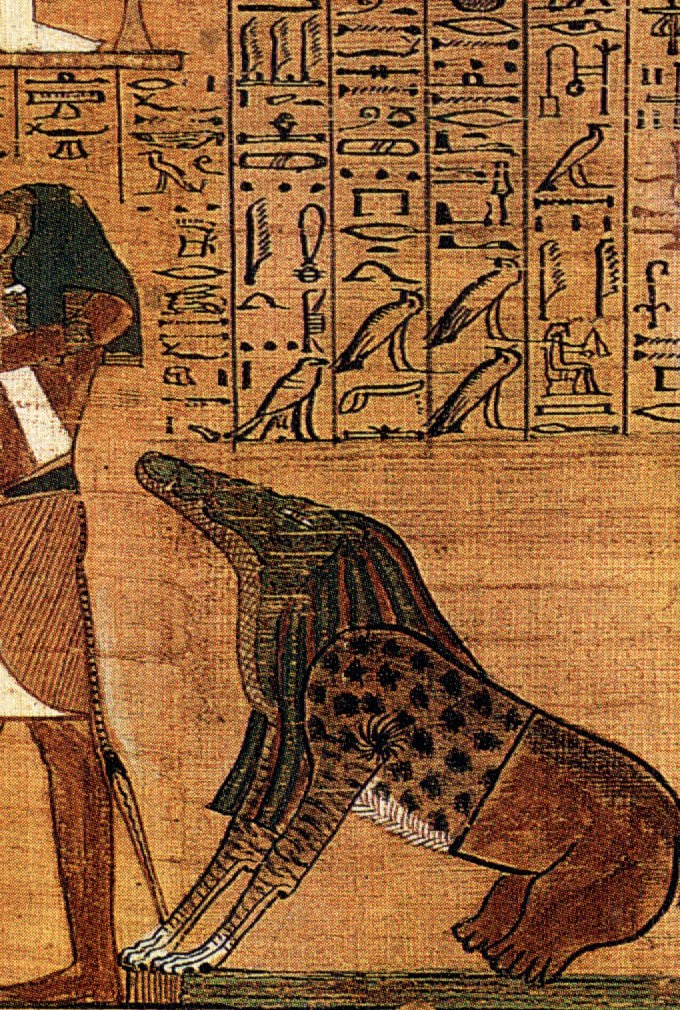
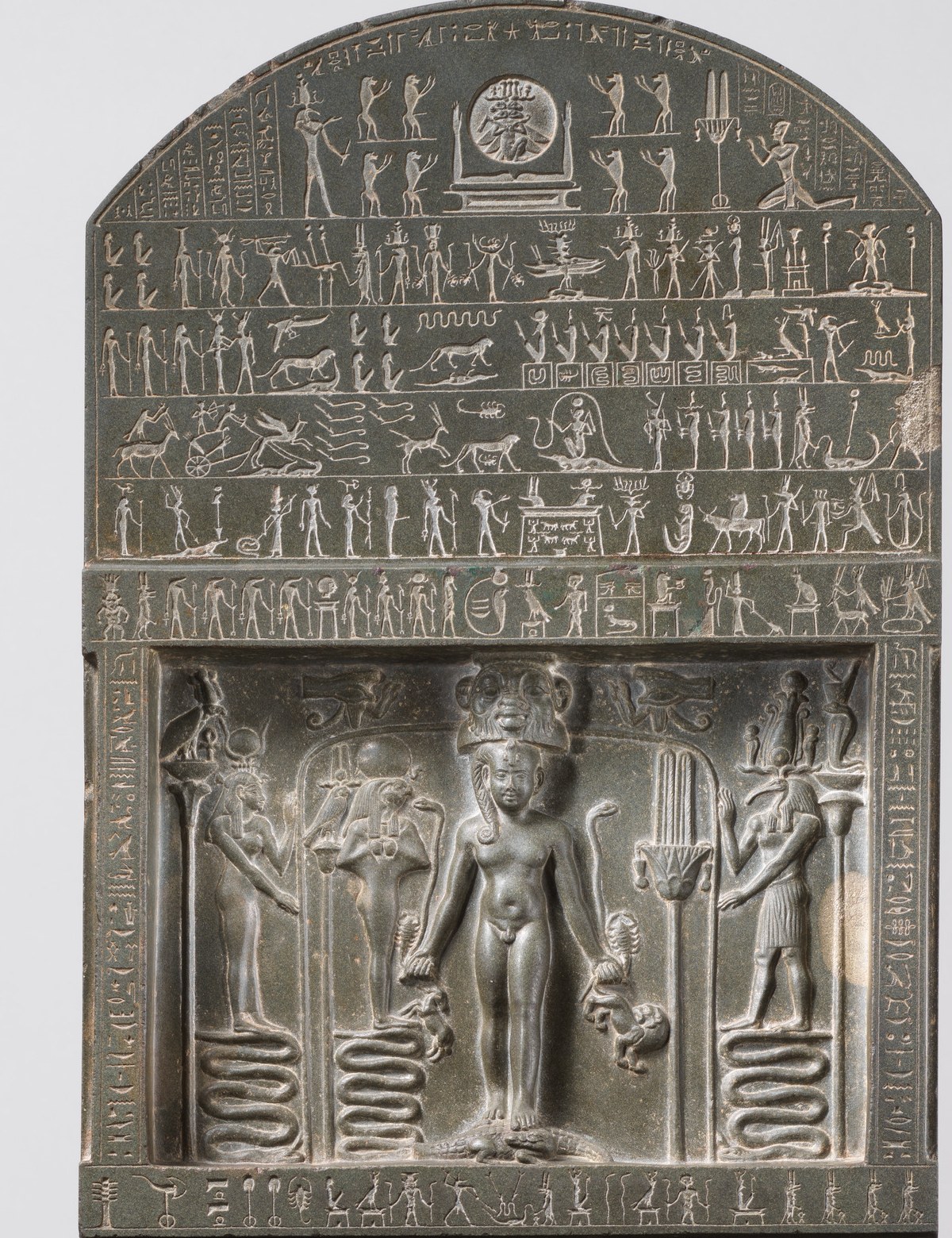
The gods had been sitting on this case for eighty years, and they were no closer to a verdict than on the first day. Osiris was dead and gone to rule the country of the dead, and his throne in the land of the living stood between two claimants who would not yield: Horus, the murdered king’s son, and Set, the murdered king’s brother, who was also his killer. The one had youth and right on his side. The other had age and strength and a voice that carried in the assembly. And the bench of gods, the great tribunal of the Ennead with the sun-god presiding, kept splitting down the middle, because the judge himself could not decide whether a kingdom should go to the rightful heir or to the strongest arm.
One papyrus, now kept in Dublin
That is the situation the one surviving Egyptian telling of this myth drops us into. It is a single manuscript, a papyrus written out under Ramesses V in the twelfth century BCE and now kept in Dublin, and it does not read like sacred scripture at all. It reads like a courtroom farce: gods losing their tempers, trading insults, storming off in a sulk, writing one another letters, and behaving with a pettiness that many Egyptologists take for deliberate comedy.
What follows is that story as scholarship reconstructs it, since the papyrus itself is under copyright and was consulted here at second hand rather than read word for word. Where a much later Greek witness, Plutarch, tells the same conflict differently, it is worth setting the two side by side rather than blending them into one.
Sending to Neith for a ruling
The tribunal favoured the boy. The sun-god favoured his rival. Deadlocked, the gods did what a stalled court does: they sought a higher opinion, and wrote to Neith, the ancient creator-goddess older than any of them. Her answer came back plain. Give the office to Horus, and compensate Set with wealth and foreign brides and dominion over the storm. It should have ended there. It did not, because the presiding god still would not sign the boy’s warrant, and so the contest slid out of the courtroom and into a series of trials by ordeal, each one an attempt to settle by trickery or brute force what argument could not.
The most dangerous advocate
Through all of it moves Isis, the dead king’s widow and the living heir’s mother, the most dangerous advocate any defendant ever had. When the gods shifted their court to an island and forbade the ferryman to carry her across, she went in disguise and crossed anyway, and once among them she talked Set into pronouncing his own condemnation, luring him with a parable about a stranger stealing a dead herdsman’s son’s cattle until he ruled, indignantly, against himself. That is her method throughout. She does not win her son’s case by force. She wins it by getting the strong to trip over their own words.
Then there were the duels. In one, the two combatants became hippopotami and sank beneath the river to see who could stay under the longest, a contest of raw endurance. Isis, watching from the bank with a harpoon, flung it into the water and struck her own son by mistake before she found her mark in Set, and then, because Set was her brother too, her heart failed her and she called the weapon back and let him go.
Her mercy cost her. Horus surfaced in a fury at being spared his kill, and turned on his mother. Here the surviving Egyptian text is more graphic than the version most readers know: the boy took his mother’s head. What was restored to her, and by whom, the summaries give variously, and this is one of the beats no verbatim reading was available to pin down.
Milk poured into the empty sockets
The cruelties ran both ways. Set caught Horus and tore out his eyes, burying them in the mountain, and the boy lay blinded until a goddess healed him by pouring milk into the empty sockets. And then came the strangest trial of all, the one that turns the whole solemn succession into something closer to bawdy satire. Set tried to shame his nephew by mounting him, to prove himself the dominant male before the court.
But Horus, coached by his mother, turned the assault back on its author. When the gods summoned the seed of each god to testify to who had mastered whom, Set’s seed answered from the marsh, but Horus’s seed answered from inside Set’s own body and rose out of him as a disk of light before the whole assembly, and the contest for the throne became, absurdly and decisively, a contest over which god had shamed the other.
Timber plastered to look like stone
Even that did not close it. Set demanded a race in boats of stone, and Horus built a boat of timber and plastered it to look like stone, so that his floated while Set’s true stone vessel went straight to the bottom. Trick after trick, wound after wound, and still the bench would not rule. What finally broke the deadlock was not a contest at all. It was a letter.
Osiris wrote to the living gods from the realm of the dead, and his was the one voice the assembly could not out-argue, for he reminded them that every god who eats grain must one day come down into his kingdom and stand where the dead stand. Against that, the sun-god’s preference for the stronger claimant had nothing to say. The verdict came down at last for Horus. The throne of the living was his. Set was taken up into the sky to be the god of thunder in the storm, roaring where he could do the kingdom no harm.
What Plutarch left out
The Greek Plutarch, writing a thousand years later for readers who had never seen the papyrus, kept the same skeleton and lost the flesh. In his telling too Isis takes pity on the captured Set and lets him go, and her enraged son wrenches the royal diadem from her head, whereupon Thoth crowns her with a cow’s-head helmet in its place. In his telling too there is a legitimacy trial, and Thoth pleads Horus’s cause, and the gods judge the boy the true heir.
But Plutarch has no eighty years, no letter to Neith, no lettuce, no stone boats. He knew there were darker episodes and said so, admitting that he left out the dismemberment of Horus and the decapitation of Isis
as too infamous to repeat. His squeamishness is itself a kind of evidence: the Egyptian originals were more brutal, and more comic, than the philosophical Greek retelling that carried this myth to the wider world.
“…with the omission of the most infamous of the tales, such as that about the dismemberment of Horus and the decapitation of Isis.” (Plutarch, De Iside et Osiride §20, trans. Babbitt)
The Contendings of Horus and Seth,
Papyrus Chester Beatty I, recto (Ramesside, 20th Dynasty, reign of Ramesses V, c. 1150s BCE; from Thebes; now Chester Beatty Library, Dublin)the sole extended primary narrative of the succession-trial — the tribunal before the Ennead with the sun-god presiding, the eighty-year deadlock, the letter to Neith and her judgement for Horus, the island court and the barred ferryman, Isis’s disguise and the self-condemning parable, the hippopotamus contest and the harpoon, the beheading of Isis, Set’s blinding of Horus and the milk-healing, the lettuce-and-seed episode, the stone-boat race, and Osiris’s decisive letter from the dead. Editio princeps A. H. Gardiner, The Library of A. Chester Beatty (Oxford, 1931); standard translations M. Lichtheim, Ancient Egyptian Literature vol. 2 (1976), pp. 214–223, and W. K. Simpson & R. K. Ritner, The Literature of Ancient Egypt (Yale, 2003). Consulted here through Egyptological summary; the papyrus text is in copyright and borrow-locked, was not read verbatim, and none of its wording is quoted.- Plutarch, De Iside et Osiride (Of Isis and Osiris), Moralia §§12–20 (esp. §§19–20), trans. Frank Cole Babbitt, Loeb Classical Library (public domain), via Wikisourcethe Greek allegorical variant of the succession conflict, c. 100 CE, read verbatim — the battle in which Horus prevails and Isis is given the chained Typhon (Set); her release of him; Horus wresting the royal diadem from her head and Thoth (Hermes) putting on her
a helmet like unto the head of a cow
; the bastardy accusation and the verdict, won for Horus with Thoth’s pleading, that healso was legitimate
; thetwo other battles
; and §20’s explicit omission ofthe dismemberment of Horus and the decapitation of Isis.
Plutarch’s Greek names are translated to their Egyptian equivalents in the retelling (Typhon = Set, Hermes = Thoth). - (Contextual, cited only as it appears in Plutarch’s notes, not read this session)Diodorus Siculus, Bibliotheca Historica i.13–22 — a Greek euhemerised account of the Osiris cycle, invoked by Plutarch for the
sixteen parts
variant of the dismemberment (against Plutarch’s own fourteen), which belongs to the wider Osiris cycle rather than to the Contendings proper.