HomeArchiveThemesAbout

#Healing

Curing sickness, madness or barrenness by drugs, purification or rite.

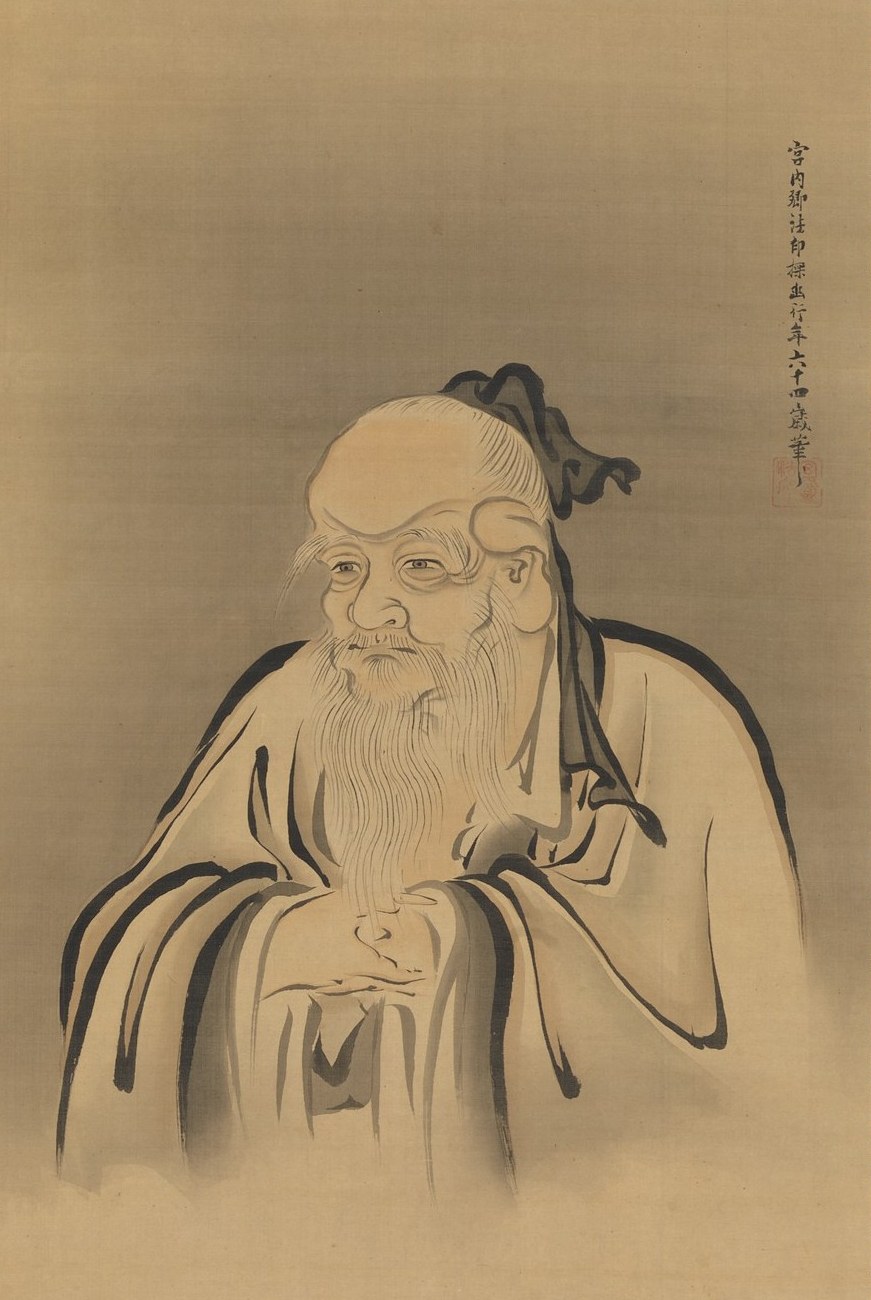
Ink-and-colour portrait of Shennong as a serene white-bearded elder-sage seated with his hands clasped, wild hair bound in a topknot, in a loose pale robe against a plain silk ground, with a brushed inscription and a red seal at upper right.
Chinese

Shennong, the Divine Farmer

The god whose name every herbalist invokes governs a pharmacy of three hundred and sixty-five drugs ranked like a royal court, yet the tradition itself admits he could not have written a word of the book that bears his name.
7 minBaihu Tong
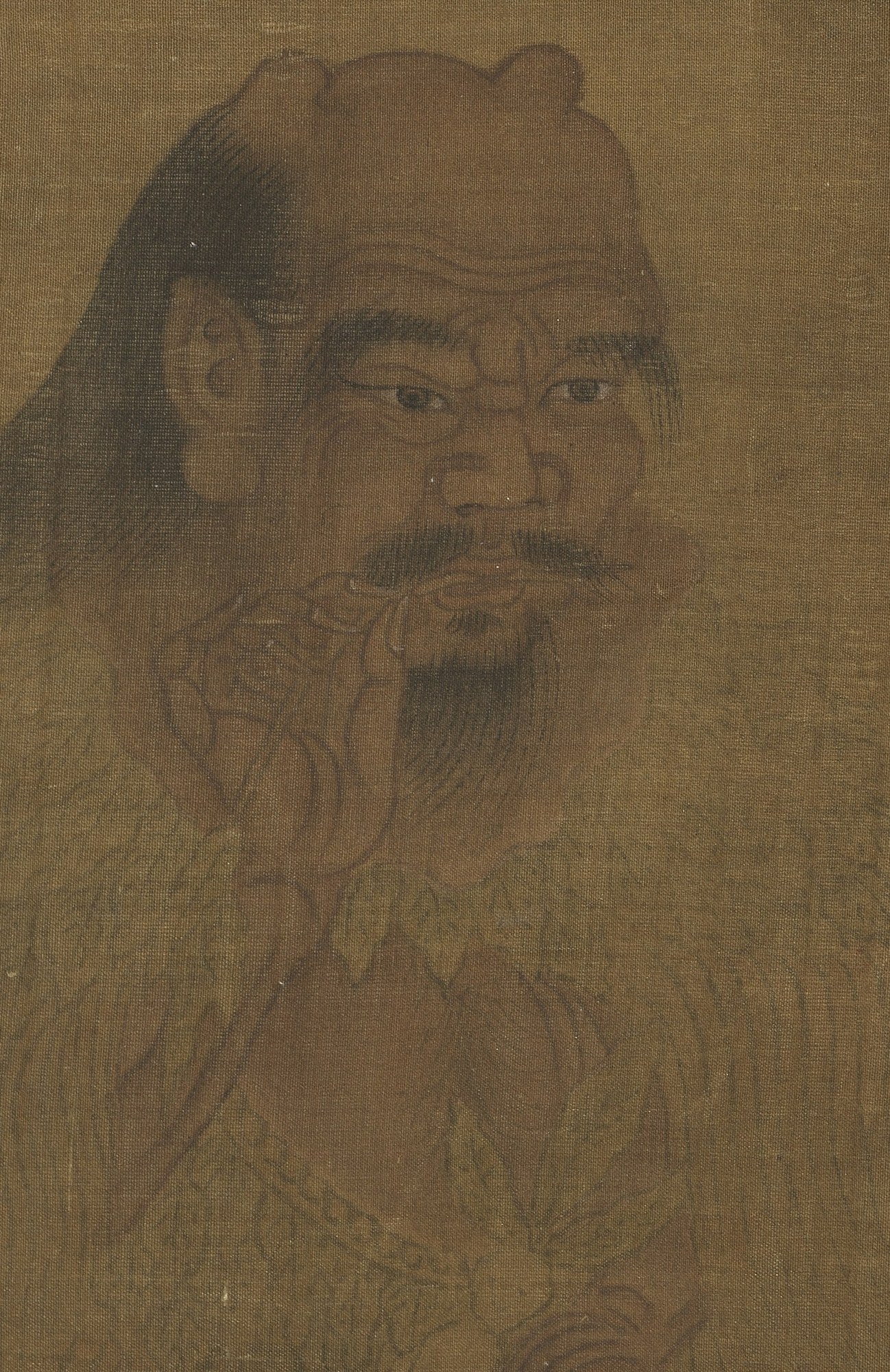
Album-leaf ink portrait on tan silk of the Flame Emperor Shennong as a half-length elder — a broad, wild-eyed bearded face beneath long loose hair, two fleshy horn-like protrusions rising from the crown (the ox-headed 人身牛首 iconography of Yandi), his shoulders clad in a sketchily drawn leaf-and-hide garment; near-monochrome brown line-drawing with no background.
Chinese

Shennong, the Divine Farmer

He hewed the first plough from raw wood, then turned on his own body as a laboratory, tasting the hundred plants and meeting seventy poisons in a single day so that his people would know what to eat and what to fear.

6 minYijing
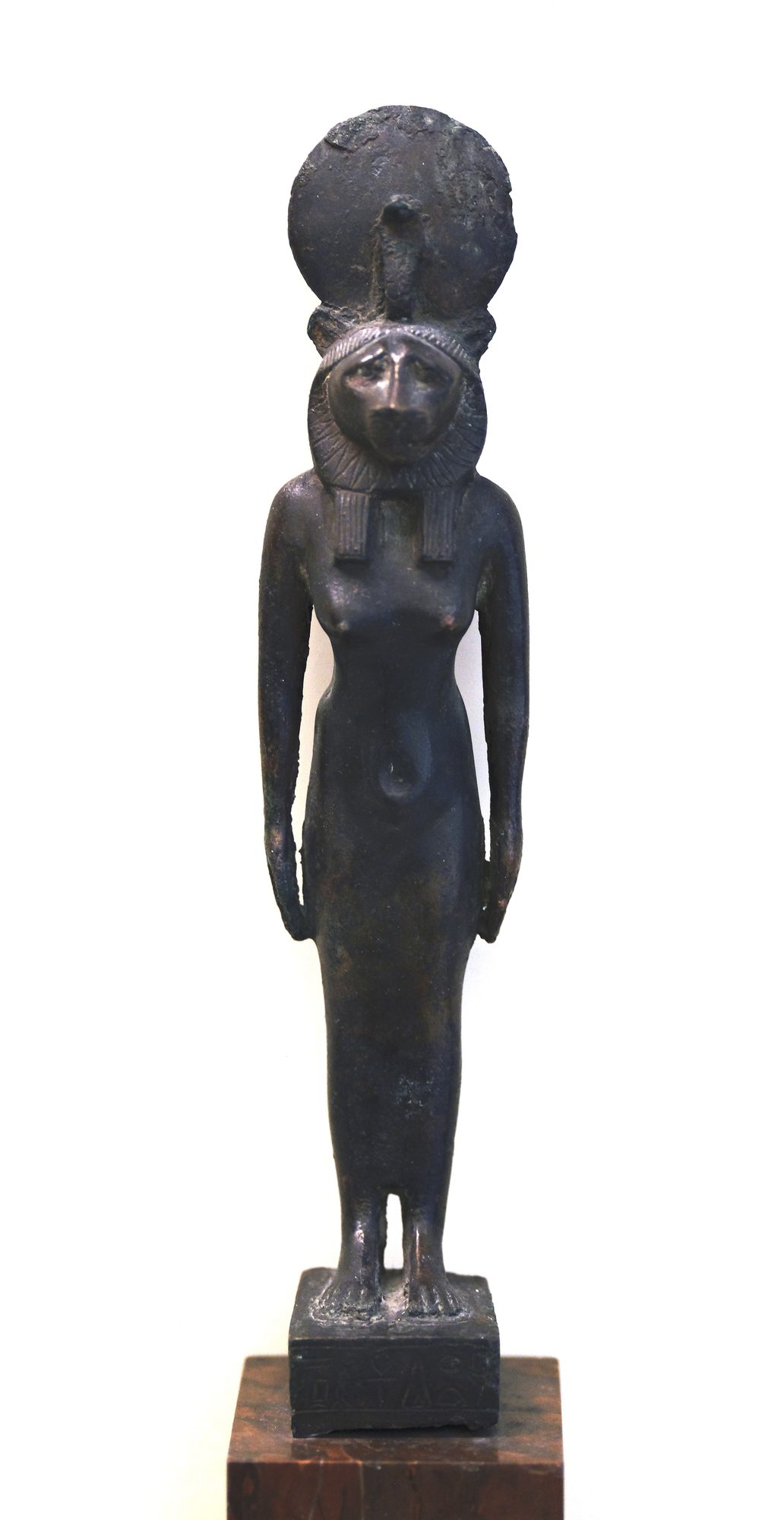
An ancient Egyptian granodiorite statue of the lioness-headed goddess Sekhmet, a slender figure with a sun disk and uraeus at her brow, holding a papyrus sceptre.
Egyptian

Sekhmet: The Powerful

A goddess carved in statues enough to face every day of the year, whose breath was plague and whose priests were physicians: the lioness the Egyptians both feared and begged.

7 minPyramid Texts
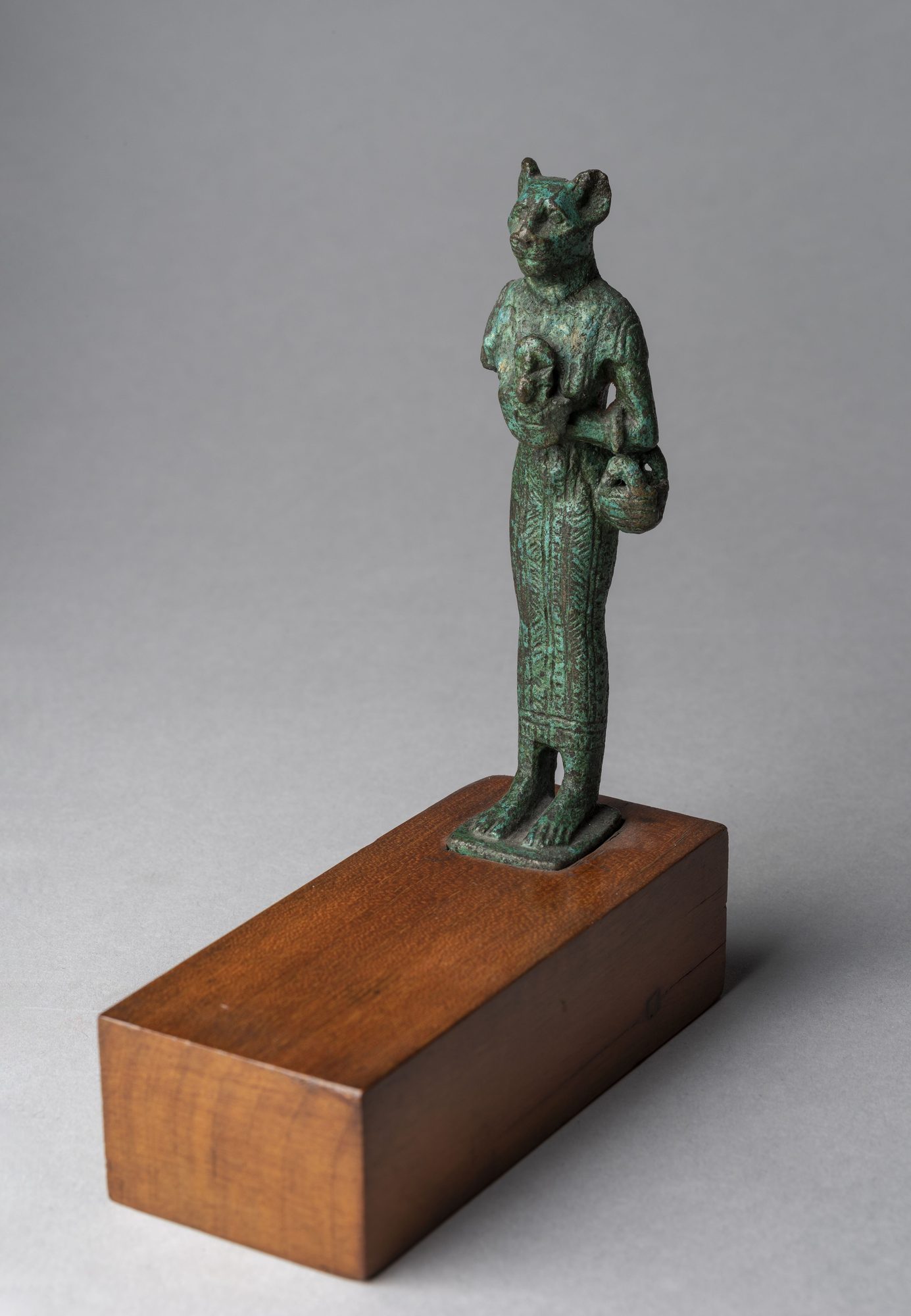
An ancient Egyptian bronze statuette of the goddess Bastet in cat-headed form, a lithe female figure with a lioness-domestic cat head and a broad collar.
Egyptian

Bastet: The Cat of Bubastis

Before she was the gentle cat with kittens at her feet, she was a lioness of the sun a dead king dared not offend. Egypt drank more wine at her festival than in all the rest of the year.

6 minPyramid Texts
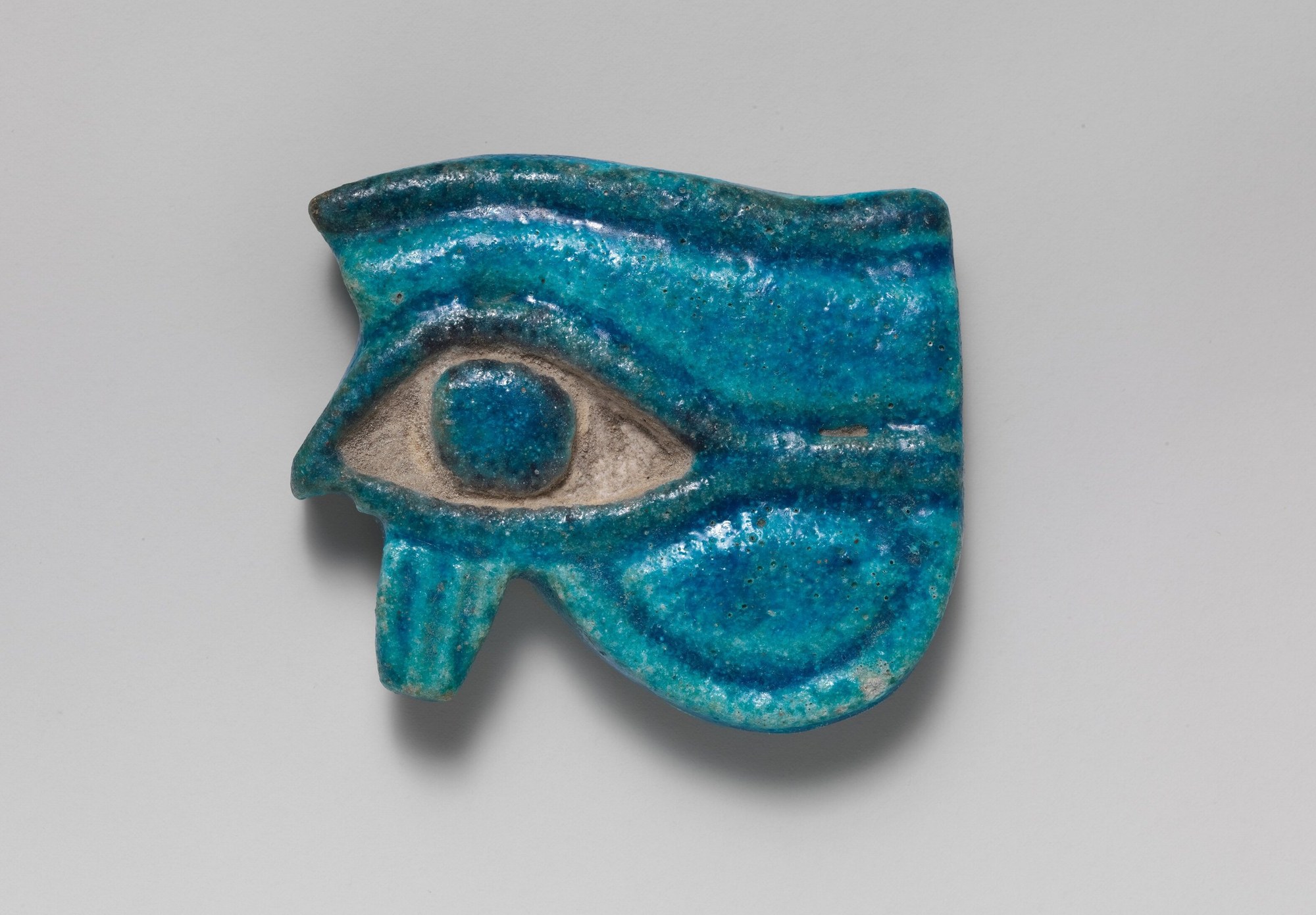
An ancient Egyptian wedjat (Eye of Horus) amulet in brilliant turquoise-blue glazed faience, photographed on a plain neutral ground. The stylised falcon-eye shows the arched brow and dark upper cosmetic-line, the almond eye with a raised round pupil, a vertical striated teardrop marking dropping straight down below the eye, and a curling spiral cheek-marking sweeping out to the right. The glaze is worn to pale matte around the eye socket; the whole amulet is intact.
Egyptian

The Eye of Horus, Torn and Made Whole

A black pig, a mighty storm, an eye put out: how the Egyptians told the wounding of Horus two ways at once, and why the healed eye became the very word for wholeness.

6 minPyramid Texts
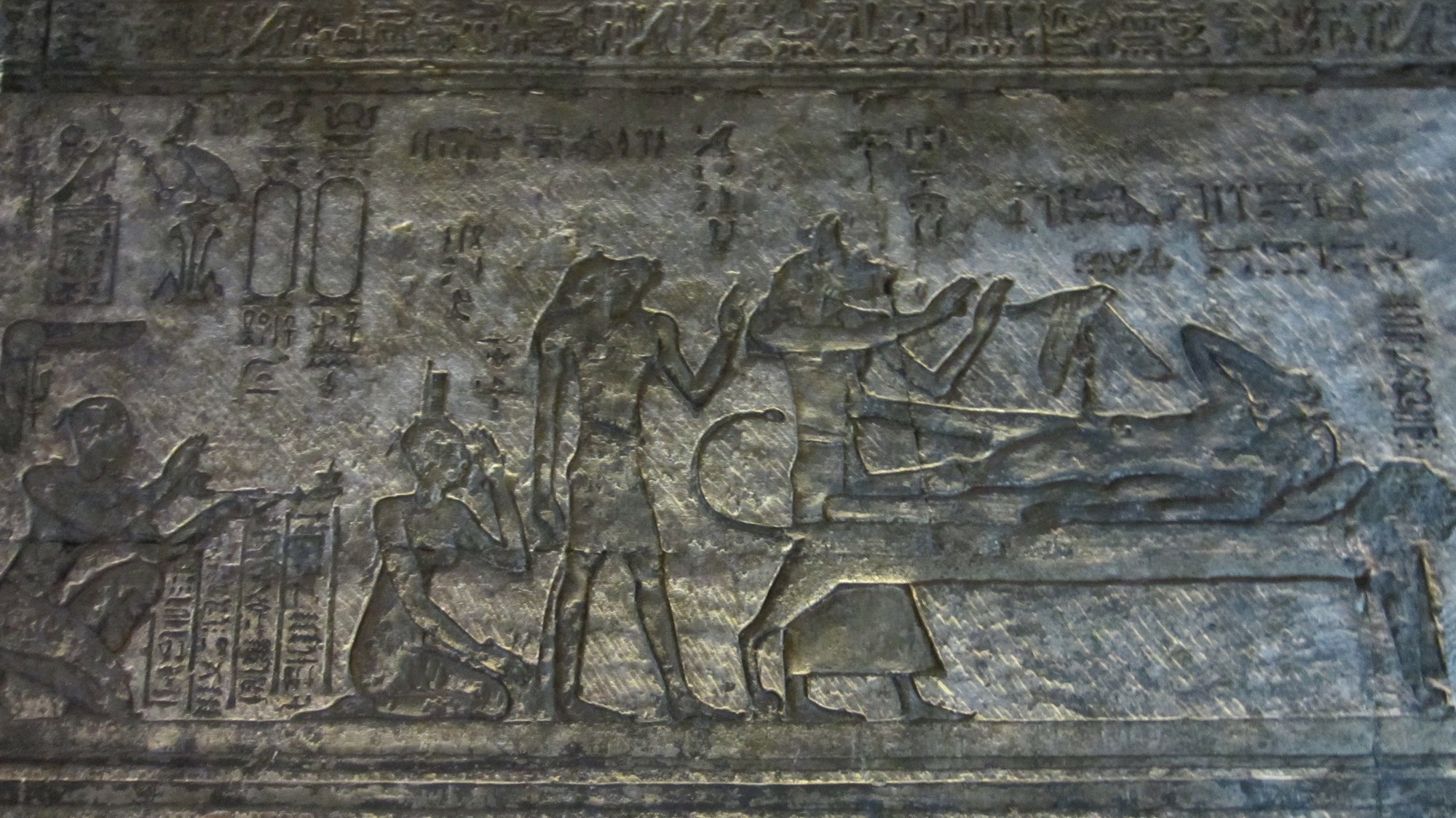
Ancient Egyptian temple relief carved in sunk relief on a chapel wall. At right the god Osiris lies recumbent and ithyphallic on a low bier; above his body the goddess Isis, in the form of a kite with outstretched wings, settles to conceive the heir. The jackal-headed god Anubis attends at the couch, and to the left a standing goddess and a kneeling goddess mourn, with a seated figure at the far edge. Columns of hieroglyphs and royal cartouches fill the field, framed by hieroglyphic border bands above and below.
Egyptian

Isis Conceives Horus over the Slain Osiris

A carrion bird settles over a murdered god at Nedit, beats life back into him with her wings, and draws from the dead body a son sharp as a star: the strangest conception in Egyptian myth, and the making of an avenger.

6 minPyramid Texts §632
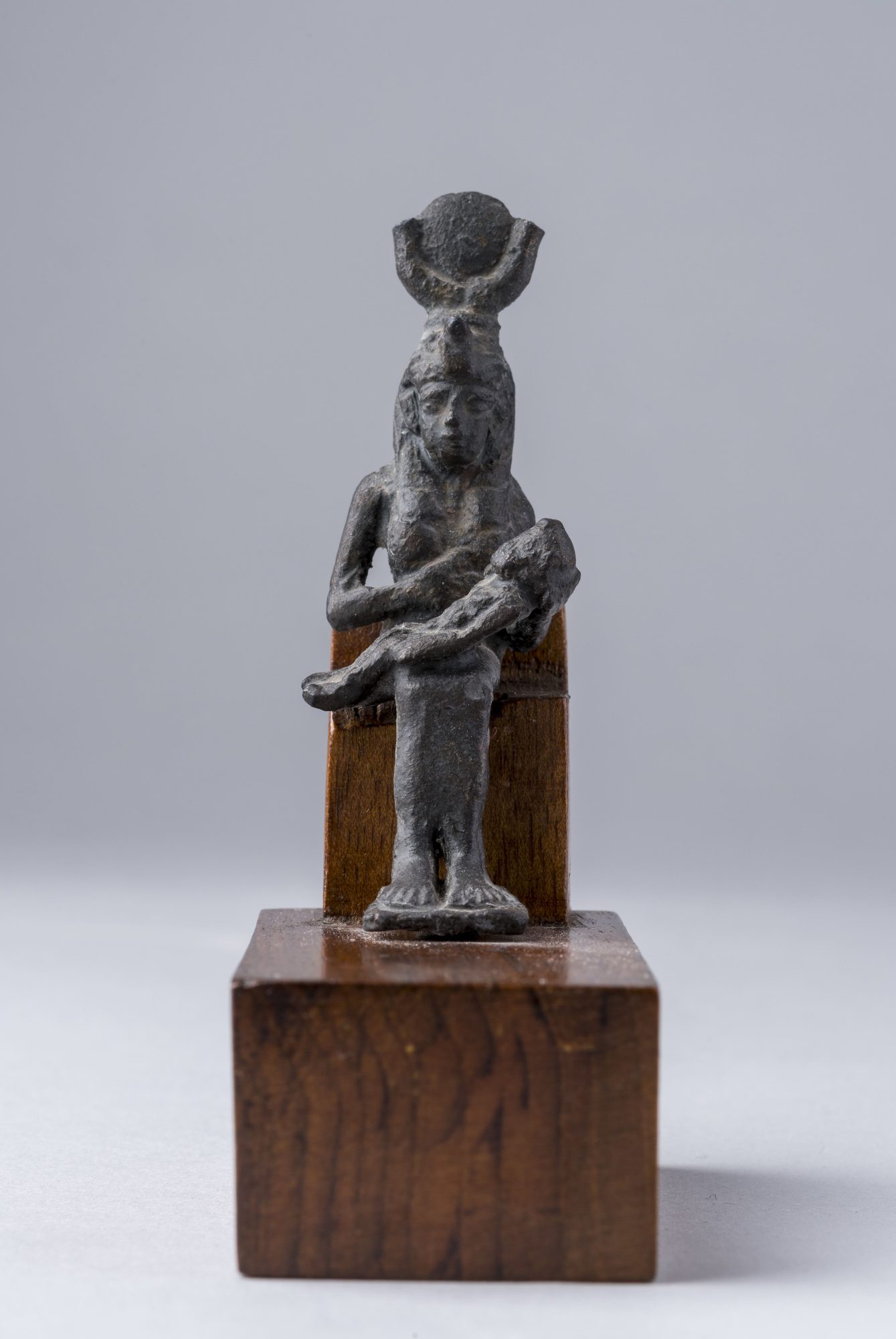
An ancient Egyptian bronze statuette of the enthroned goddess Isis nursing the infant Horus on her lap.
Egyptian

Isis, the Great of Magic

Weret-hekau, Great of Magic: the goddess who reassembled a murdered god, hid her son in a marsh, and wrung the secret name of the sun-god out of his own poisoned body.

6 minThe Legend of Ra and Isis