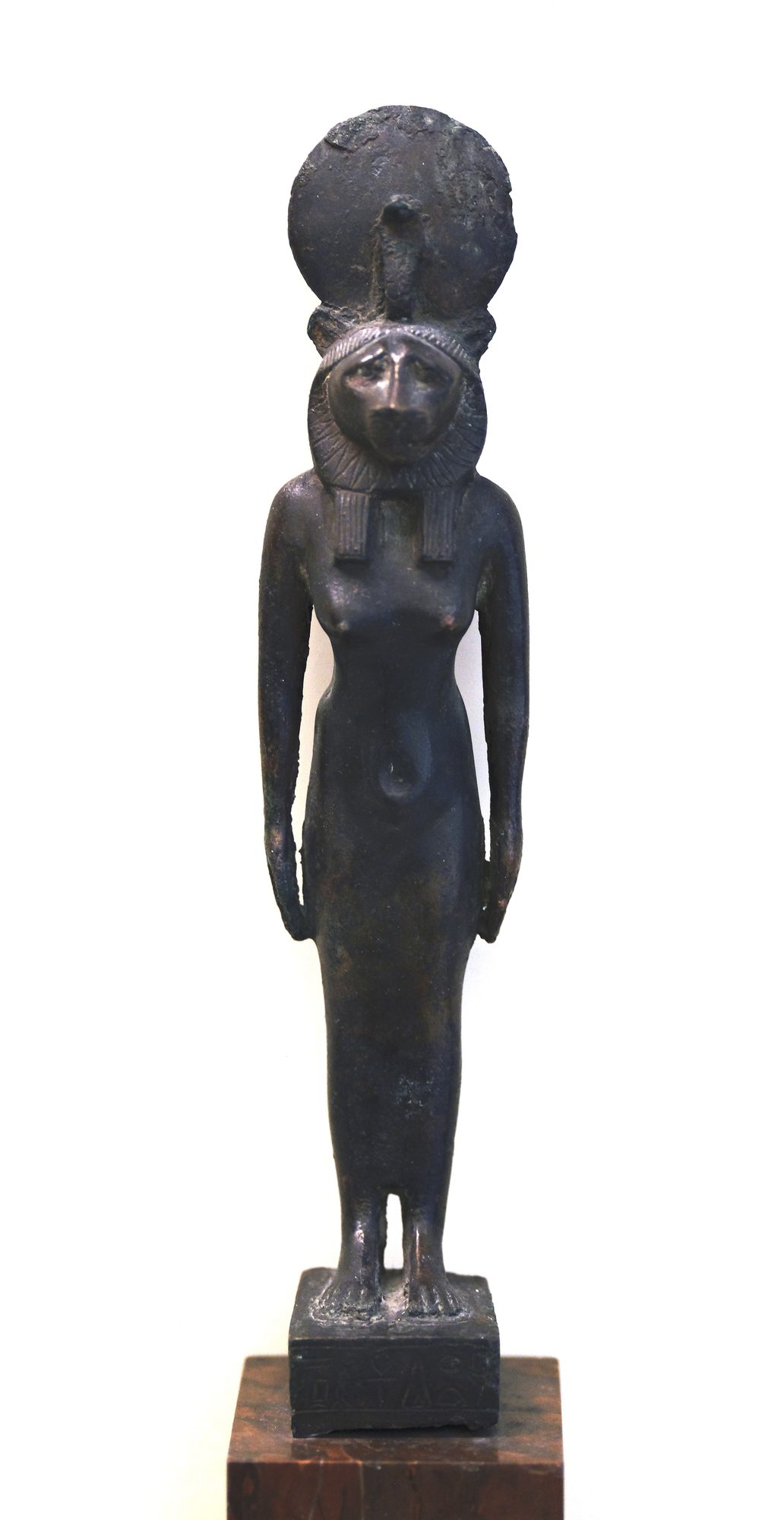
There were once enough of her to fill a year. In the reign of Amenhotep III, in the fourteenth century before the common era, sculptors cut something on the order of seven hundred statues of the lioness-headed goddess, and possibly more, out of hard dark granodiorite. They stood in two great precincts of Thebes: the temple of the goddess Mut at Isheru inside Karnak, and across the river the king’s mortuary temple at Kom el-Hettan. Some sit with their hands on their knees; some stand, a sun-disk on the leonine head and a cobra at the brow.
The pairing of seated and standing series is usually read as a statue-litany, roughly one image for each day of the year with festival doubles. That reading is an interpretation, not a fixed count, but the impulse is plain: here was a goddess whose worship seemed to want a fresh face for every sunrise. This is Sekhmet, whose name is simply the Powerful,
and the surest way to misunderstand her is to meet her only in the one story where she nearly ended the human race.
Seven hundred faces for a year of days
That story is hers, or is read as hers: the Book of the Heavenly Cow, in which the aged sun-god looses his Eye against a rebellious mankind and cannot call the slaughter off until the goddess is made drunk on reddened beer. In the surviving text the destroyer is named Hathor almost throughout, and Sekhmet only at the line about wading in blood, so the attribution is partly a modern reading; whether the red is dye or real blood the sources dispute.
It is told in full next door, in the story posts that own its beats, and this profile leaves it there. But a single myth cannot say what it meant to keep this goddess as a permanent presence across two thousand years. Why Amenhotep III carved so many is not settled; the guess most often made ties the programme to plague or to the king’s jubilee, either plausible, neither told us by the monuments. The statues tell us scale; the rest of her record tells us direction, and it runs, surprisingly, toward the sickbed.
The physician and the priest of Sekhmet
Her home was not Thebes but Memphis, where she was the wife of the craftsman-creator Ptah and the mother of the lotus-child Nefertem, the three worshipped together as the great Memphite household. That family has its own profile and this one defers to it. Ptah made the world by conceiving it in his heart and speaking it with his tongue; married to that pure mind was a pure force.
Sekhmet
is built on the root sekhem, power
or might,
so the wife of the maker-by-word is, quite literally, Power. Her precinct was bound up with the temple the Egyptians called Hut-ka-Ptah, the Enclosure of the ka of Ptah, whose name Greek mouths turned into Aigyptos and gave to the whole country.
It is in the medical papyri that the strangest, most under-told thing about her comes clear: Egypt recognised her priests as a class of healer. The great surgical treatise now called the Edwin Smith papyrus names them in the same breath as the ordinary doctor. When the priests of Sekhmet or any physician lay their hands upon the head, upon the pulse, upon the two feet, the papyrus says, they measure to the heart.
The ordinary doctor was the swnw; beside him worked the wab-priest of Sekhmet, a ritual healer, and the Ebers papyrus adds a third, a priest of a phyle,
to the same diagnostic line. The logic is the whole of her: the goddess who sends the pest is the goddess you petition to withdraw it, her priests healers precisely because she is the sender. The papyri treat that not as a paradox but as the working premise of the profession.
Messengers loosed at the turn of the year
The pest she sends has agents. The verso of the Edwin Smith papyrus is a set of eight incantations against the pest of the year,
an annually recurring epidemic its translator frankly says cannot be identified, and in them the disease travels as her staff. One spell is titled an exorcism of the plague-bearing wind, the demons of disease, the malignant spirits, the messengers of Sekhmet; another declares that her messengers are consumed and her demons retreat, so that the Year does not pass by to work disaster and her breath does not reach the speaker.
Modern handbooks like to fix the number of these agents at seven, the seven arrows of Sekhmet, but the count is not securely attested: the one primary text that names them gives no number, and its incantations run to eight. Safer to say what the papyrus says, that they are her messengers, the diseases she looses among men.
They were loosed above all at one seam in the calendar. The five odd days that fell outside the twelve thirty-day months, the epagomenal days at the turn of the year, were a dangerous time when the goddess’s plague could take hold, and Egypt met it with ritual. A man wore the words against her on his body: the Edwin Smith spells are to be spoken over images of Sekhmet, Bastet, Osiris and Neheb-kau written in frankincense on a band of fine linen and tied at the throat, or over a flower bound with a linen strip, or over two vulture feathers, and the rubric fixes the timing, that a man shall say it at the life of the year.
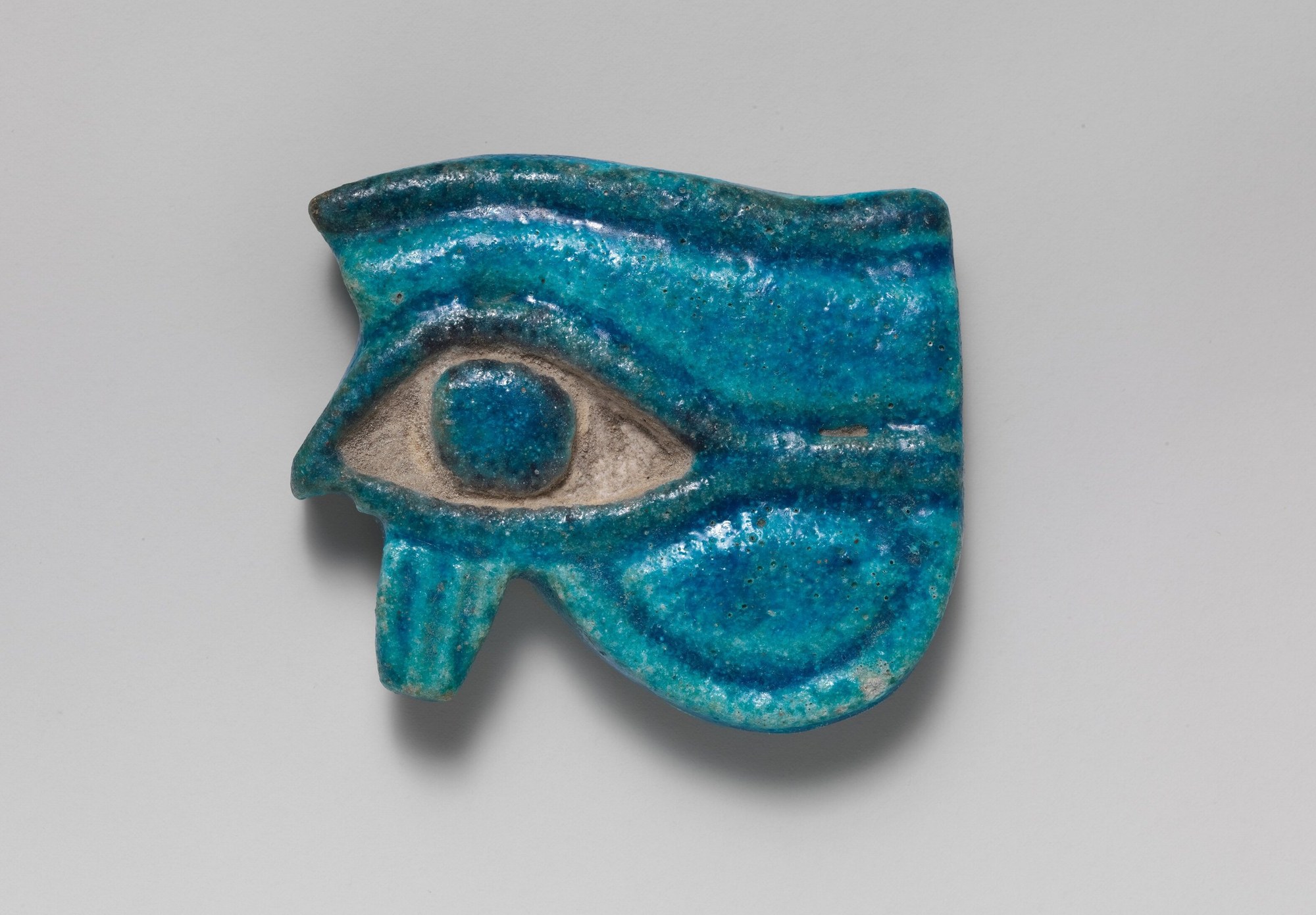
The same anxiety produced a spell later tradition calls the Book of the Last Day of the Year, recited over a cloth worn round the neck as the year passed, while on New Year’s Day amulets of Sekhmet and her gentler counterpart Bastet were exchanged to pacify the pair. The linen strip at the throat and the year’s turning belong together: the power that killed on the mountain is the power you tie against your skin when the calendar leaves its door open.
Sun-disk, red linen, and the flame called Nesret
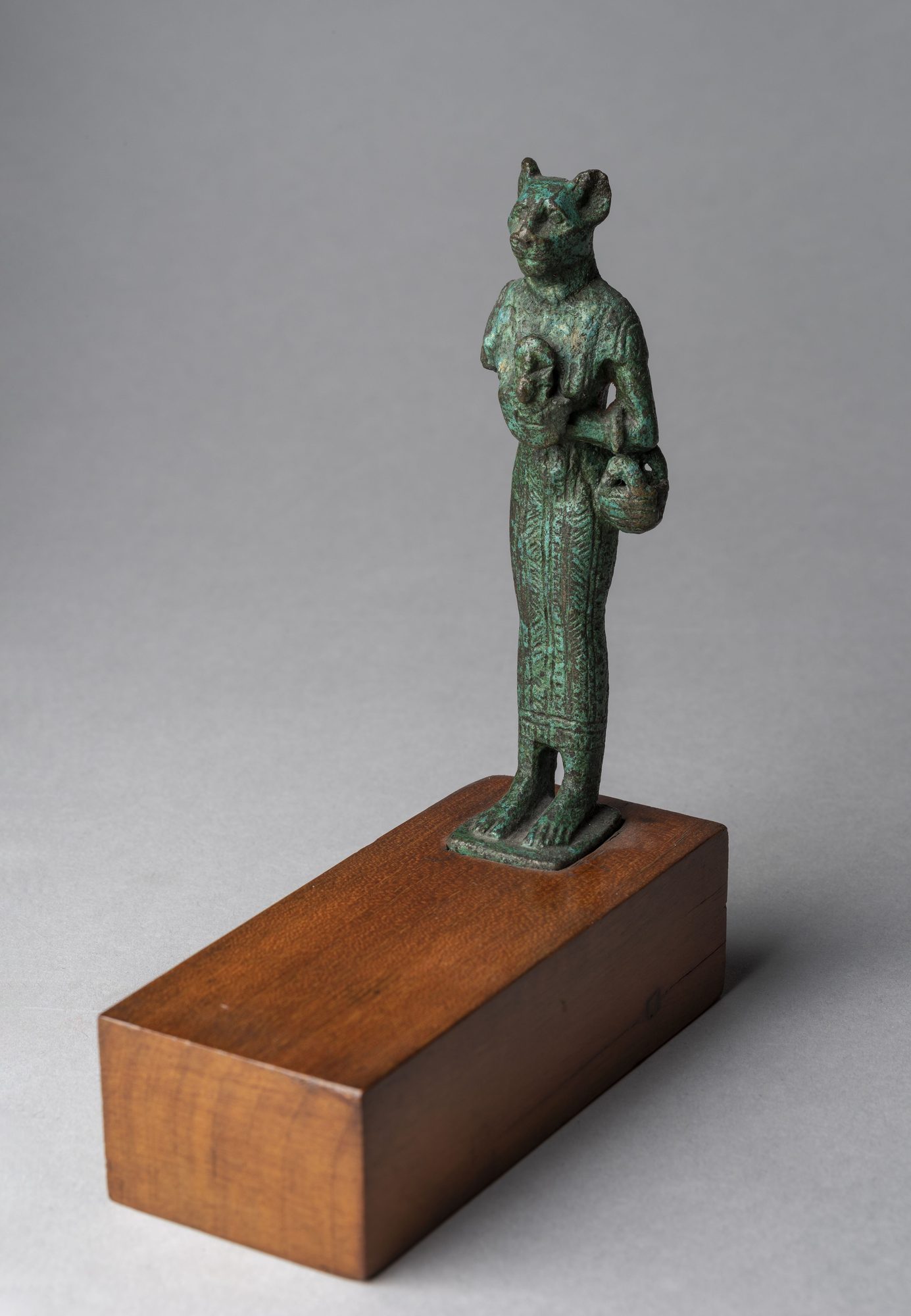
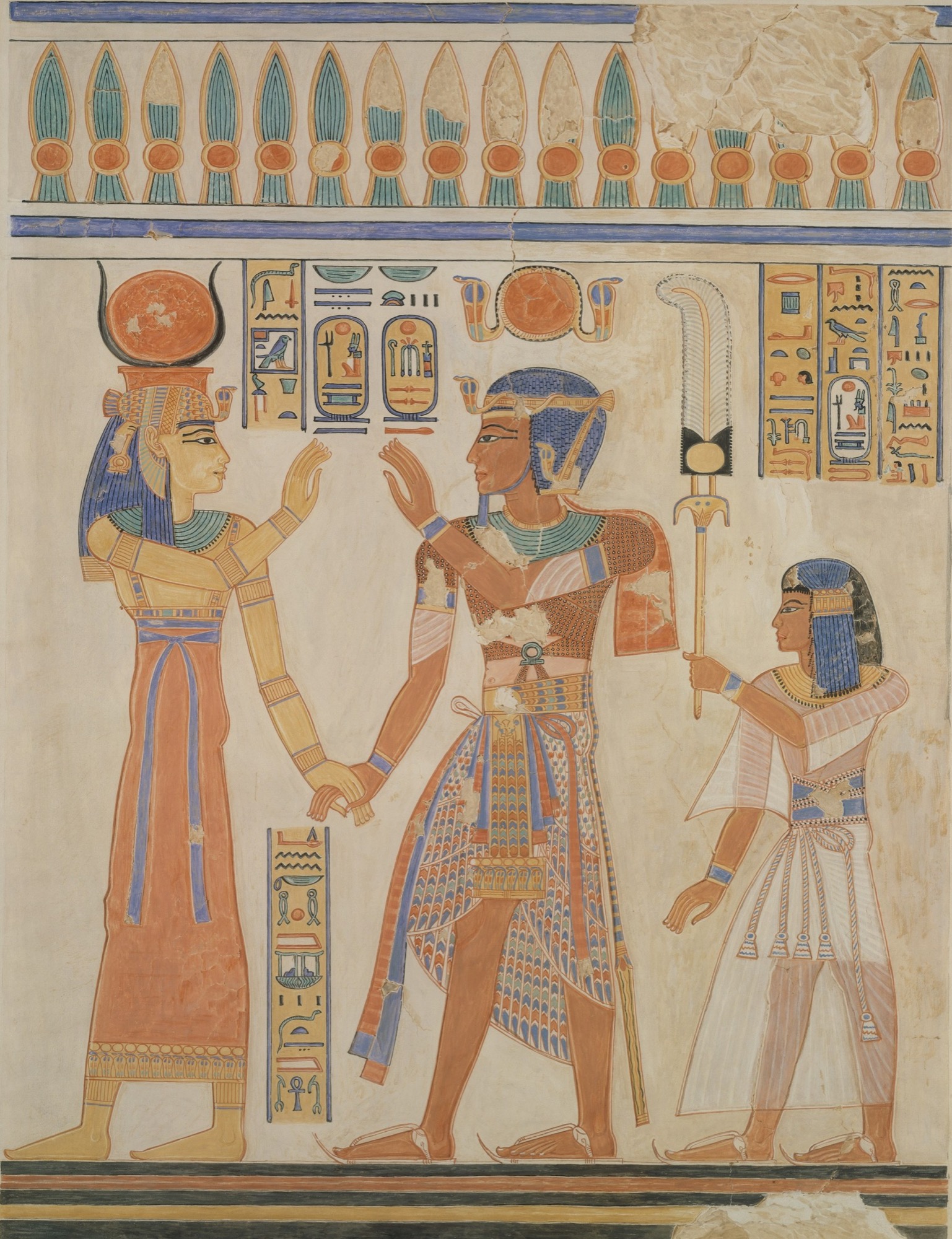
Her image is as fixed as her function. She is a woman’s body under a lioness’s head, and above it the disk of the sun with a cobra rearing at the brow. That disk and uraeus mark her as an Eye of Ra, the sun’s power personified as a fierce daughter, and the cobra is understood to spit flame the way it spits venom. She wears a broad beaded collar and, very often, a sheath dress of red, the colour behind one of her titles, Mistress of the Red Linen: red at once the hue of blood, of flame and of the desert.
In her hands she carries a papyrus sceptre and the ankh, the sign of life held by the goddess who deals in death. The Amenhotep III corpus gives her both seated and standing, the two series feeding the one per day
reading. Tradition also gave her fiery breath, the burning desert wind and the midday sun likened to the exhalation of the lioness, an image that belongs to her epithets rather than to any narrated text.
Old Kingdom mother, war-goddess, and the cat she becomes
To meet her whole is to watch her change over a very long time, for her attested tradition runs from roughly 2350 to 30 BCE, well over two thousand years. Her first clear appearance is in the Old Kingdom, in the mortuary complex of Nyuserre Ini around 2400 BCE, where she is still a minor power.
But in the Pyramid Texts, the oldest religious writing Egypt has left, she already stands close to the crown as the king’s fierce mother: the king, one line says, was conceived by Sekhmet. It matters that this witness is old. The Book of the Heavenly Cow that made her famous is a New Kingdom composition, roughly eight centuries younger, so the myth most people know is not her original character but a later chapter of it.
The Middle Kingdom keeps her alive in the funerary corpus without adding a scene worth quoting. The New Kingdom is where she erupts, in the statues of Amenhotep III and, in the Ramesside age after, in a war-goddess who rides at the pharaoh’s side in battle, the king’s protective fury made divine.
Later, into the Late and Ptolemaic periods, she is folded into other goddesses: assimilated to Mut, the Theban lioness-consort of Amun who becomes an Eye of Ra in her own right, and paired against Bastet, the cat who is her own rage gentled, the two the burning and cooled faces of a single feline power. A minor Delta lioness becomes the mother of kings, then a national war-goddess and the most-represented deity in the world’s museums today, then a name absorbed into her neighbours. No one of those Sekhmets is the real one. She is all of them, held in the one word for power.
What each of her names promises
Her epithets read like a job description written in threats and mercies; they come from the handbook tradition rather than from any line quoted here. She is Nesret, the Flame, for the fire of her breath and her uraeus, and the Lady of Terror, for the dread she inspires. She is, in the same mouths, the Lady of Life and the Great One of Healing, the reverse of the plague-sender and patroness of the physician-and-priest craft that grew up around her.
She is Mistress of the Red Linen, for the red dress and everything red means, and She Before Whom Evil Trembles, her own demons turned back against the demons of disease. Every name points where the whole record points, at a goddess who is one power running in two directions: the hand that strikes and the hand you take hold of to make it stop.
Thy messengers are consumed, O Sekhmet; thy demons of disease retreat, O Bastet. The Year does not pass by to work disaster against me. Thy breath does not reach me. I am Horus over the diseased ones of Sekhmet. (Papyrus Edwin Smith, verso incantation 8, tr. Breasted 1930)
- Pyramid Texts, Utterance 262, §262b (Old Kingdom; carved in the pyramids from late Dynasty 5 / Dynasty 6, c. 2350–2150 BCE) — trans. S. A. B. Mercer, The Pyramid Texts (Longmans, 1952), public domain (archive.org id
THEPYRAMIDTEXTSTRANSLATION), read verbatim. The oldest stratum of the goddessN. was conceived by Sekhmet,
the king claiming her ferocity as his parentage. This near-contemporary Old Kingdom witness is what lets the body date her earliest role and mark the Heavenly Cow (New Kingdom, roughly 800 years younger) as a later chapter, not her original character. - Papyrus Edwin Smith — the healer-priest passage and the verso
Eight Incantations Against Pest
(the surgical papyrus copied c. 1600 BCE, its content older; the verso spells directed againstthe pest of the year
) — trans. J. H. Breasted, The Edwin Smith Surgical Papyrus, vol. I (Oriental Institute Publications 3; Chicago, 1930), public domain (archive.org idoip3_djvu.txt), read verbatim. This is the post’s primary spine. It supplies the wab-priests of Sekhmet named beside the swnw physician in the heart-and-pulse diagnostic line (with the Eberspriest of a phyle
as a third investigator recorded in Breasted’s footnote);the pest of the year
thatcannot be identified
; themessengers of Sekhmet
anddemons of disease
; the Sekhmet-and-Bastet incantation quoted above; the linen-strip amulet written in frankincense over images of Sekhmet, Bastet, Osiris and Neheb-kau, with the flower-and-linen and two-vulture-feather variants; and the rubricA man shall say (it) at the life of the year.
Breasted (1930) is a dated translation but remains the standard full edition of the papyrus. - Papyrus Ebers (medical papyrus, c. 1550 BCE) — cited via Breasted’s collation (his footnote to the heart-vessels commentary), not read independently. Source of the variant healer-professions line that adds a third practitioner, a
priest of a phyle,
beside the physician and the wab-priest of Sekhmet. - The Book of the Heavenly Cow (
Destruction of Mankind
) — a New Kingdom composition (language Middle Egyptian; complete copies in the tombs of Seti I, Ramesses II and Ramesses III, earliest fragment on a gilded shrine of Tutankhamun). Named here only as her signature myth and deliberately not narrated; its beats belong to the sibling story posts. EditionsHornung, Der ägyptische Mythos von der Himmelskuh (OBO 46; 1982, rev. 1991); English trans. Lichtheim, Ancient Egyptian Literature vol. II (Berkeley, 1976), pp. 197–199 (vol. II covers the New Kingdom, which is where this composition falls; vol. I, 1975, is Old and Middle Kingdoms); older English Budge, Legends of the Gods (1912), a dated translator whose 1912 English should not be mistaken for the ancient text itself. Not read verbatim for this profile. - The Litany of Re (New Kingdom royal funerary text invoking the sun-god in seventy-five forms; first attested in the burial chamber of Thutmose III, KV34, c. 1425 BCE) — trans. A. Piankoff, The Litany of Re (Bollingen, 1964). Cited, per the brief’s hint, for Sekhmet among the fierce leonine solar forms of the sun-god; not read verbatim and no stanza quoted.
- R. H. Wilkinson, The Complete Gods and Goddesses of Ancient Egypt (Thames & Hudson, 2003), pp. 178, 181–182 (secondary, authoritative) — cited, not read verbatim (reached via a source citing these pages). The reference for the Amenhotep III statue corpus and its Mut-precinct (Isheru) / Kom el-Hettan split, the statue-litany
one image per day
reading, the iconography and epithets, theappeasing of Sekhmet
theme, and the Book of the Last Day of the Year with its cloth amulet and the New Year Sekhmet/Bastet amulet exchange. - G. Pinch, Egyptian Mythology (Oxford, 2002), pp. 129–130, 188, 199 (secondary) — cited via a secondary source, not read verbatim. The framing of the disease-messengers as Sekhmet’s
arrows,
the titleMistress of Plague,
and the uraeus-flame. The modern-handbook count ofseven
arrows traces to this page and is not independently confirmed; the body accordingly declines to fix a number. - F. von Känel, Les prêtres-ouâb de Sekhmet et les conjurateurs de Serket (PUF, 1984) (secondary, French) — the standard monograph on the wab-priests of Sekhmet. Cited as the scholarly authority, not read.
- E. Lange-Athinodorou,
The Lioness Goddess in the Old Kingdom Nile Delta,
in Sapientia Felicitas (2016), pp. 303–305; O. Ciaccia,Seeking Sekhmet,
Pomegranate 23 (2022) — cited, not read verbatim. The first unambiguous attestation in the mortuary complex of Nyuserre Ini (Dynasty 5, c. 2400 BCE) and the scale and reading of the Amenhotep III statue corpus.