
HomeArchiveThemesSkyAbout

#Immortality

Deathlessness itself: the food or plant that confers it, and the mortal attempt to seize it.

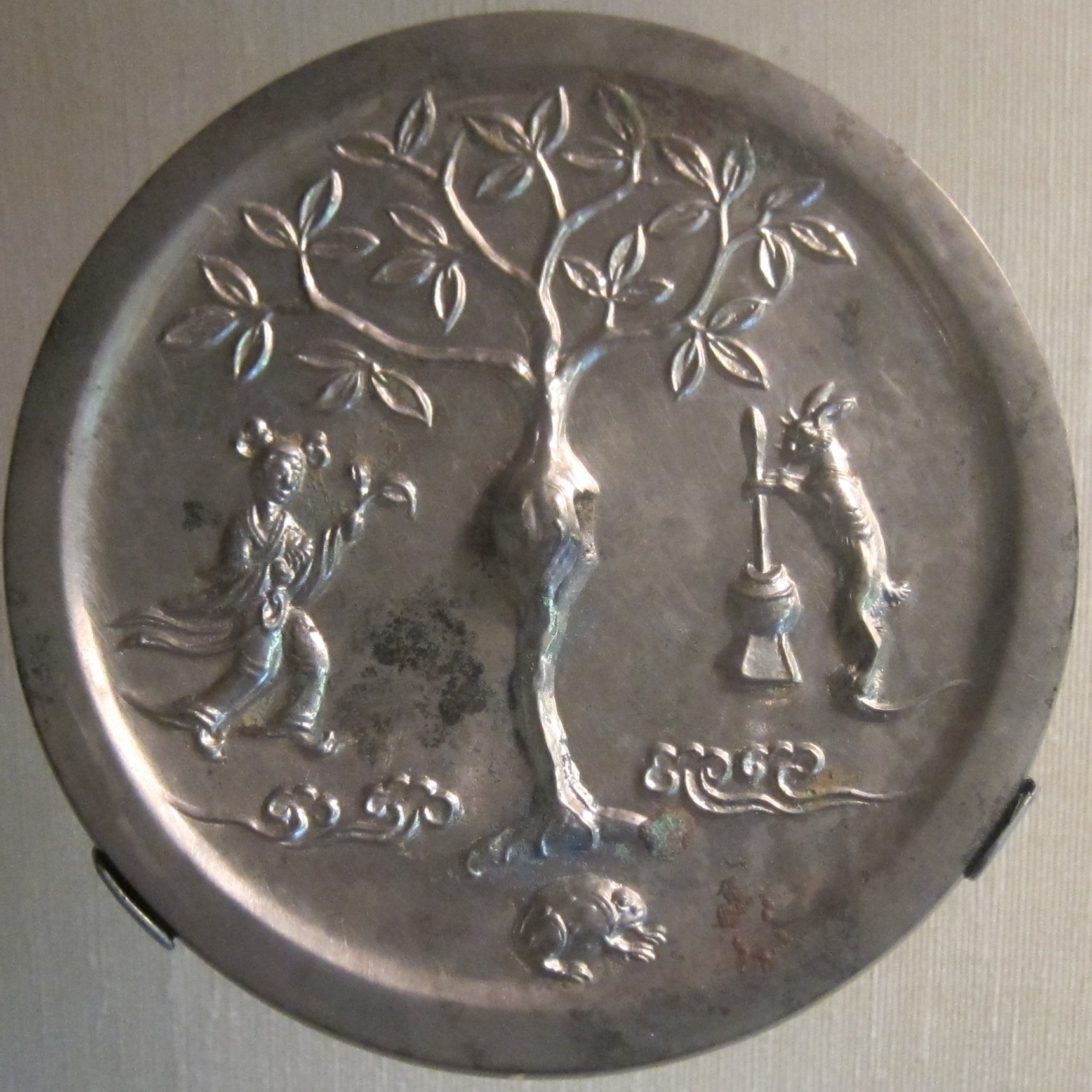
Cast relief on the back of a Tang bronze mirror: the moon goddess Chang'e in flowing robes dances on a cloud at the left of a tall cassia tree, while at the right the jade hare stands upright at a mortar raising a long pestle to pound the drug of immortality; a squat toad crouches at the foot of the tree below.
Chinese

The Jade Rabbit of the Moon

In the moon an exiled woman keeps a white hare that pounds the elixir of immortality. Yet the oldest moon riddle names no hare at all and may mean a toad.
6 minChuci
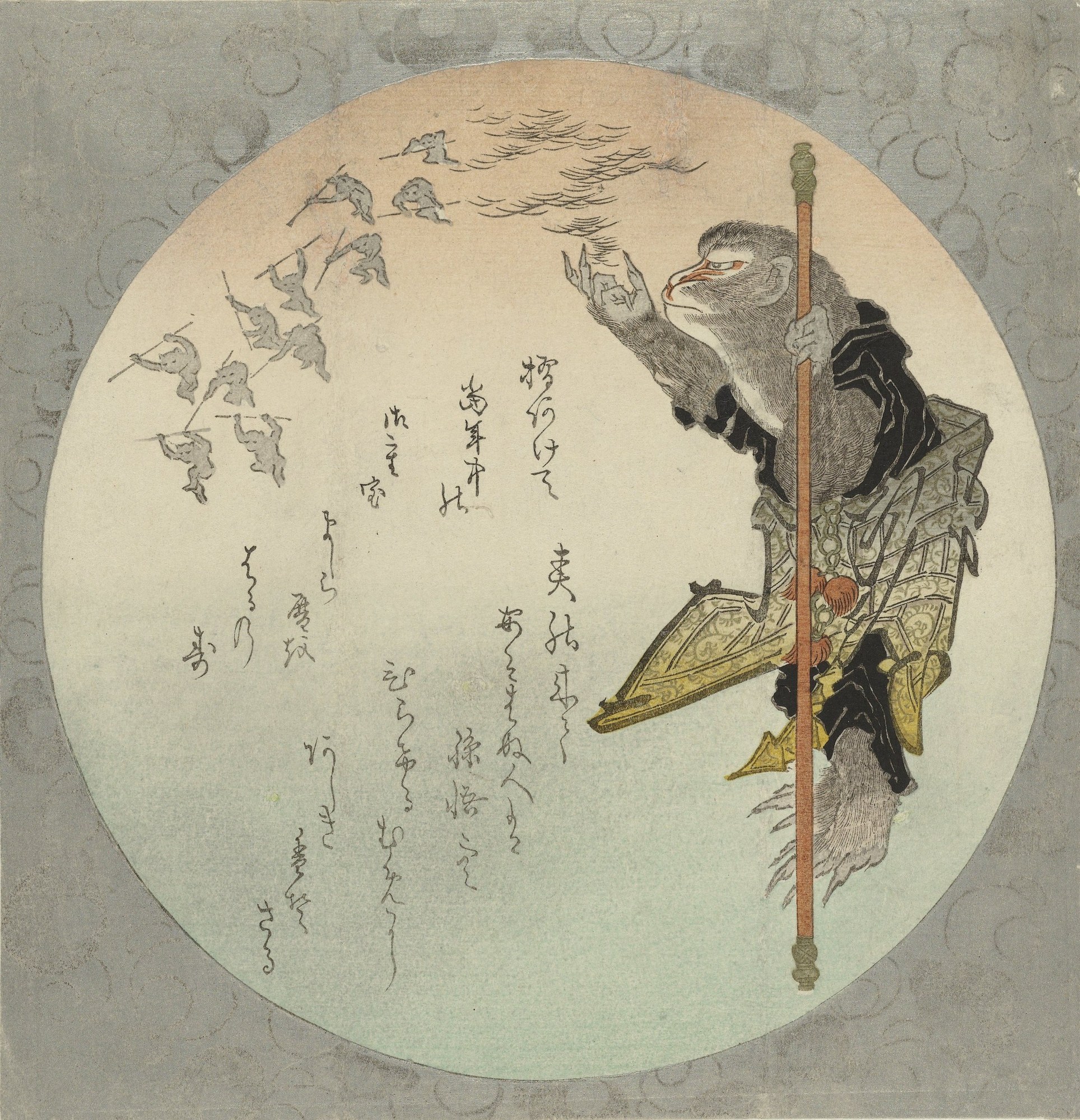
In a circular medallion on a silver monkey-patterned ground, the monkey Sun Wukong in patterned gilt-and-black armour sits astride his vertical gold-banded iron staff and blows a plucked hair from his raised hand; the loosed hairs turn into a swarm of tiny staff-wielding monkey-warriors streaming off to the upper left, with columns of Japanese kyōka verse below — a 19th-century Japanese woodblock surimono of the Monkey King.
Chinese

Sun Wukong, the Monkey King

Before his war with Heaven, Sun Wukong is a stone monkey born from a rock on Flower-Fruit Mountain. At a feast he weeps when he learns the ledger of the dead holds his name, and sails off to learn how not to die.
6 minXiyouji 西遊記
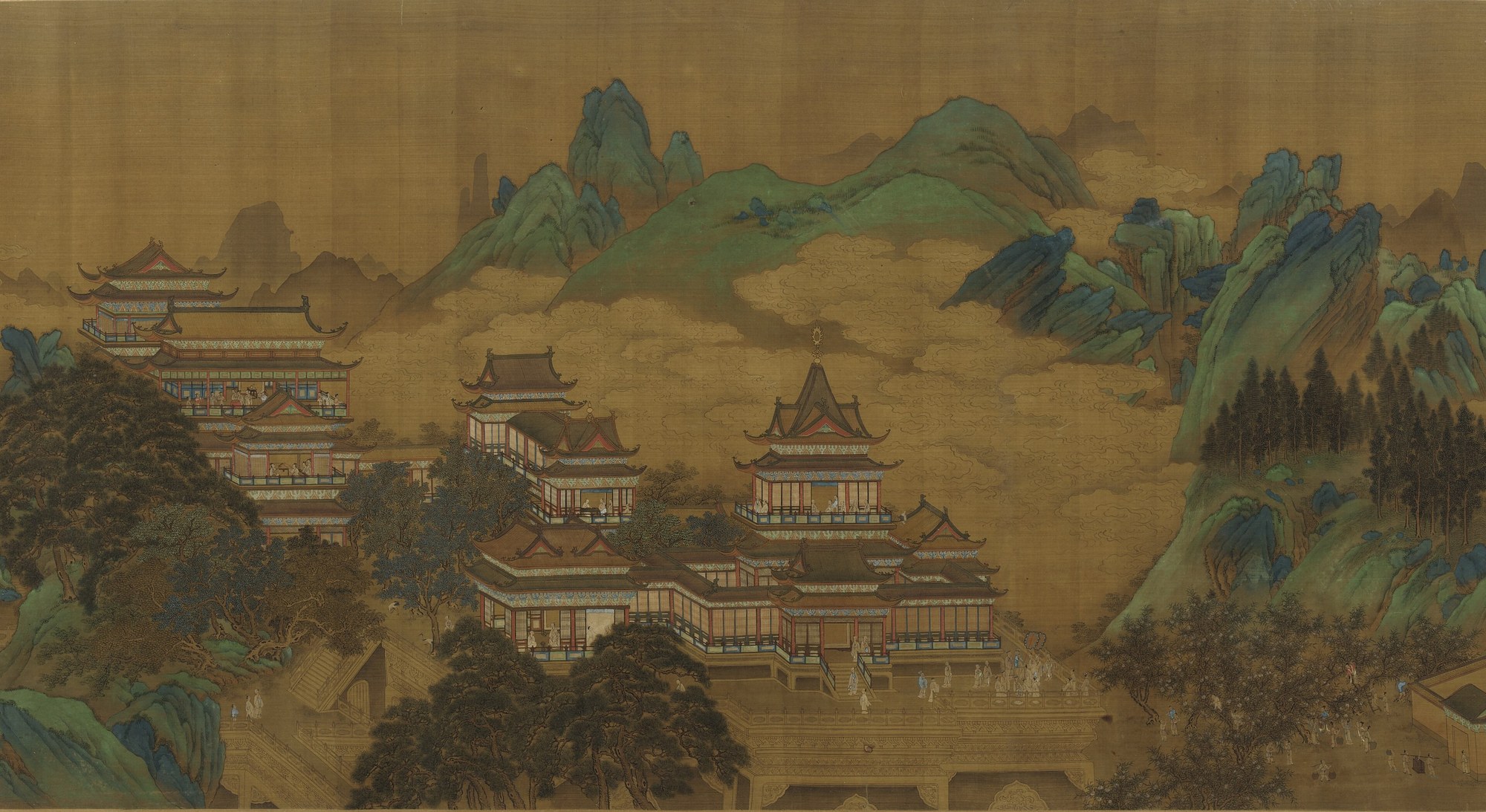
A blue-and-green style Chinese handscroll: the Queen Mother of the West's celestial palace of tiered, bracketed pavilions set among mist-wreathed jade-green and blue mountains, with small robed immortals gathered across the terraces and on a balustraded stone bridge in the foreground — the setting of her peach feast.
Chinese

The Jade Emperor and the Queen Mother of the West

Their heaven is a single administrative fact: her peaches grow in his garden, and he posts a guard over her trees. The paired sovereigns are a late invention, and the primary sources never once call them married.
6 minWu Cheng'en 吳承恩
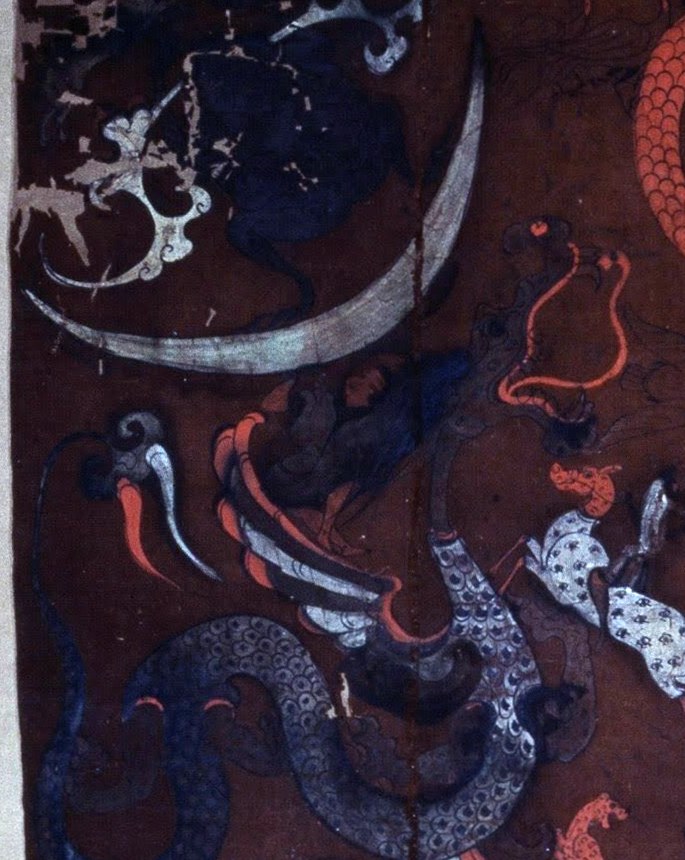
Detail from the top of the Mawangdui Tomb 1 silk funerary banner: a silvery crescent moon carrying the dark lunar toad, with the ascending moon-woman borne aloft on a blue dragon beneath it, painted on the deep red-brown silk of the Western Han heaven register.
Chinese

Chang'e, the Lady in the Moon

The moon's cold lady was not always a lady, and not always called Chang'e. Before the jade palace and the tender wife, she was a name in flux and a creature crouched on the lunar face.
6 minHuainanzi
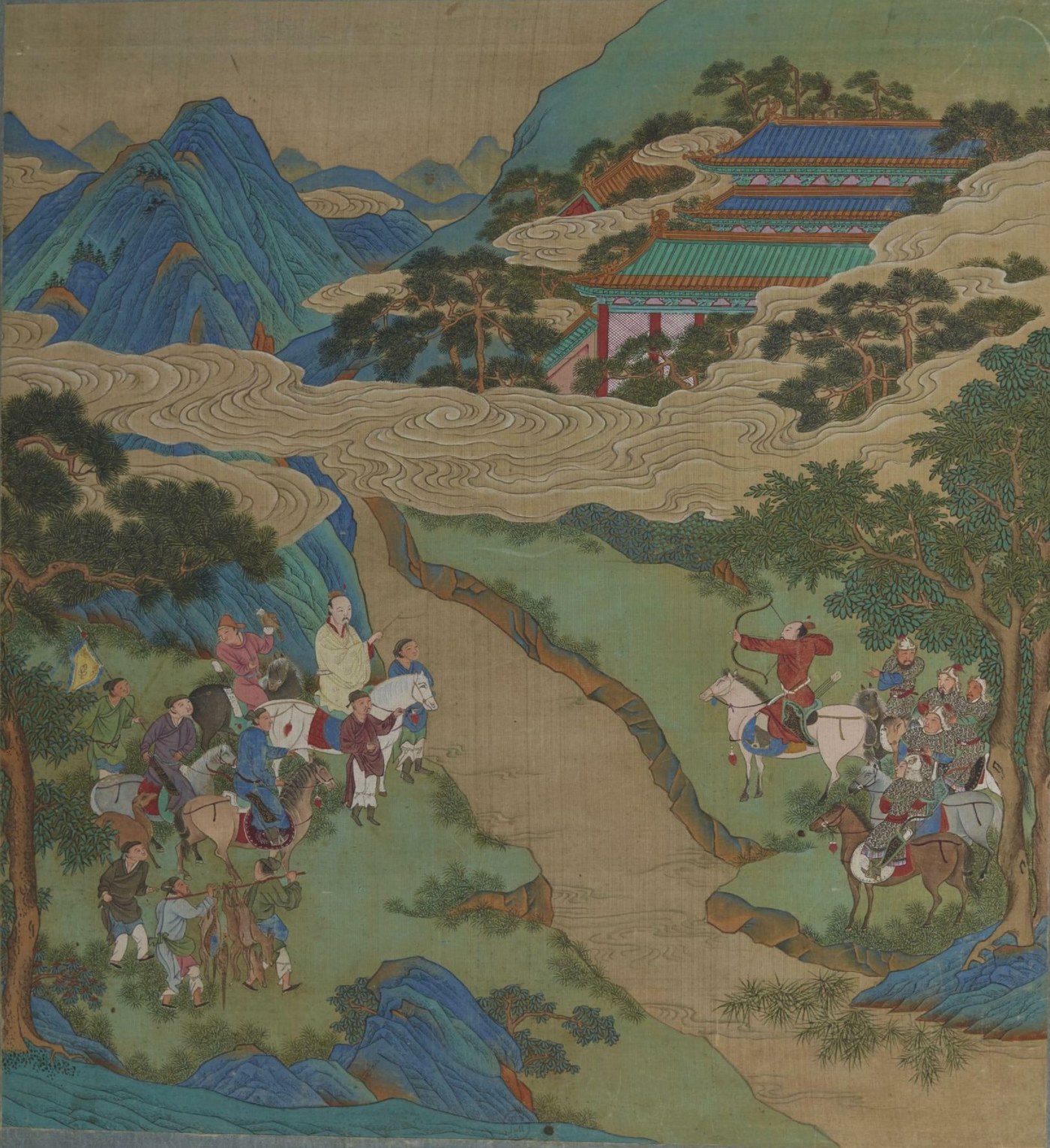
A blue-green silk painting: the archer Yi on a white horse drawing his bow, ringed by armoured horsemen, with a falconing party at left and a palace set among mountains beyond
Chinese

Hou Yi, Archer of the Ten Suns

Every child knows the archer who shot down the suns. Almost no one can say who he was: a god sent from heaven, a mortal who seized a throne, or two men fused into one by centuries of retelling.
6 minHuainanzi
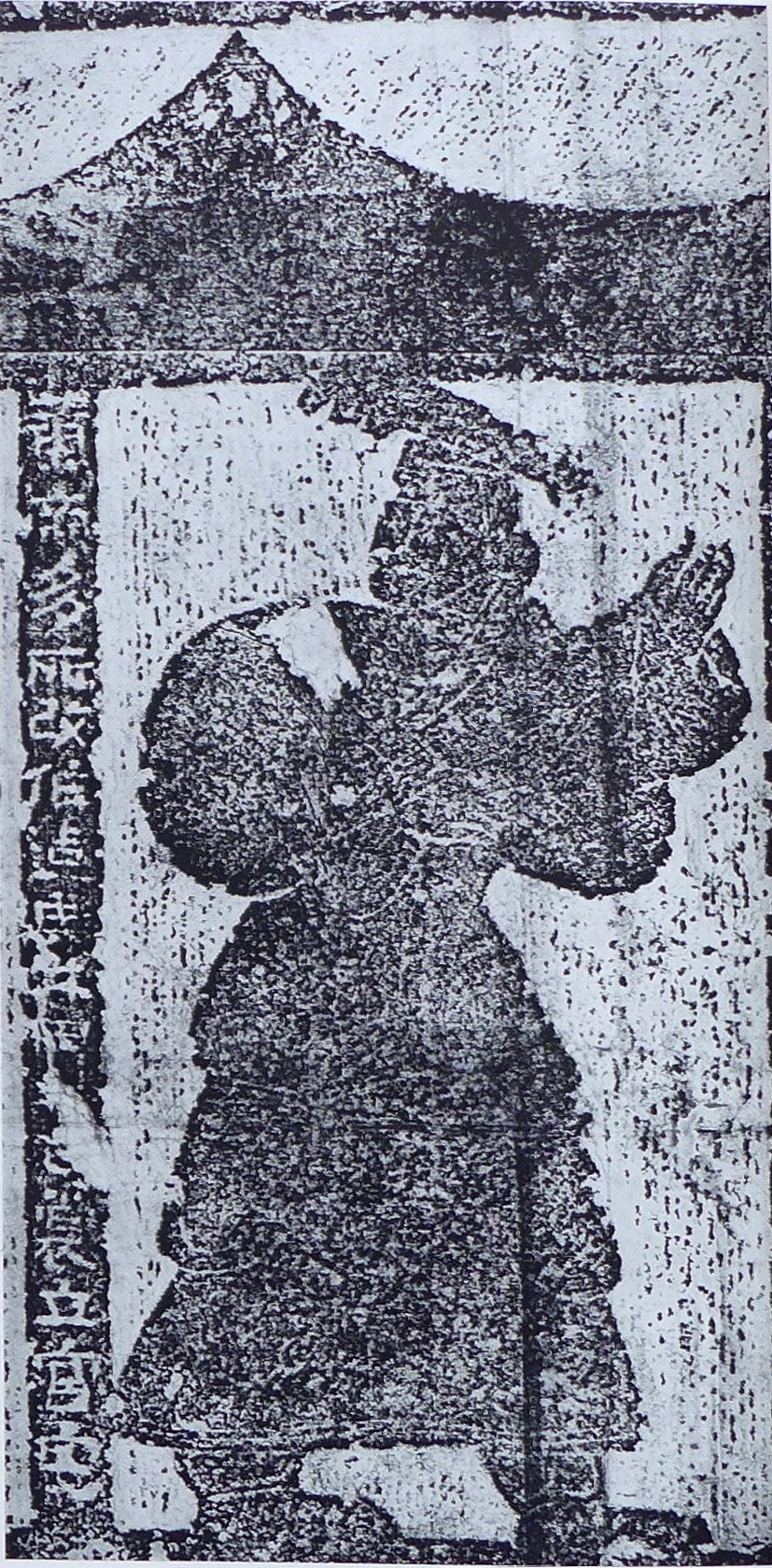
Ink rubbing of a Han-dynasty carved stone relief from the Wu Family Shrines showing the Yellow Emperor as a robed standing sovereign beneath a gabled canopy, one hand raised, a vertical cartouche of incised characters down the left edge naming him and his inventions; the figure and inscription read as light forms against the mottled dark ground of the rubbing.
Chinese

Huangdi, the Yellow Sovereign

Huangdi conquered the four quarters, named his ministers after clouds, and fathered the whole line of emperors. Then he cast a cauldron, mounted a whiskered dragon, and rose into heaven while the people below clutched at his falling bow.
9 minSima Qian
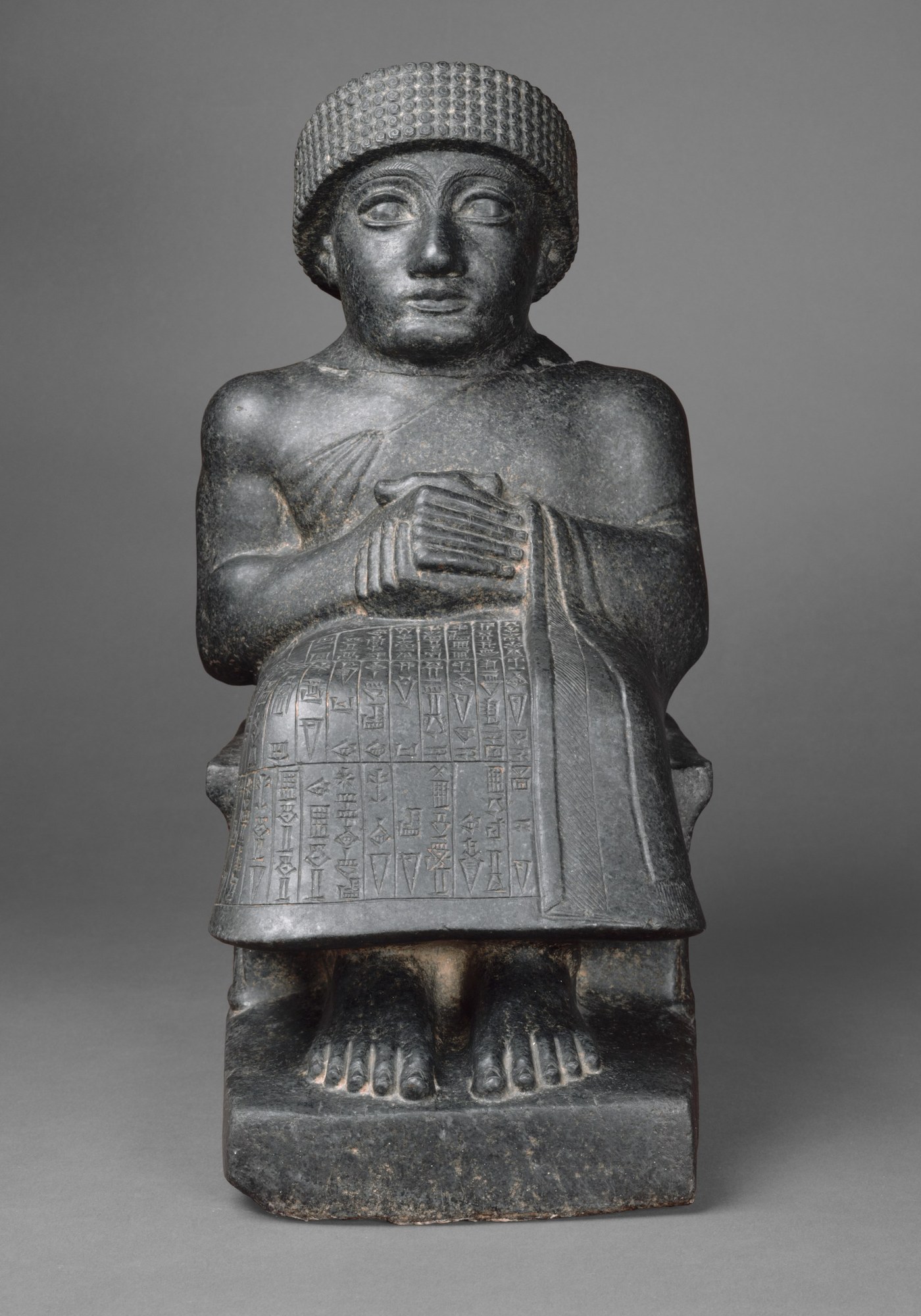
Neo-Sumerian diorite statue of the ruler Gudea of Lagash, seated with hands clasped in prayer at his chest, wearing a brimmed fleece cap and a fringed cloak over one shoulder; his lap and skirt are covered with columns of cuneiform, his bare feet resting on the base.
Mesop.

The Death of Gilgamesh

Dying in his bed, Gilgamesh dreams he must stand before the gods and hear them decide what even he can keep.

7 minThe Death of Gilgameš