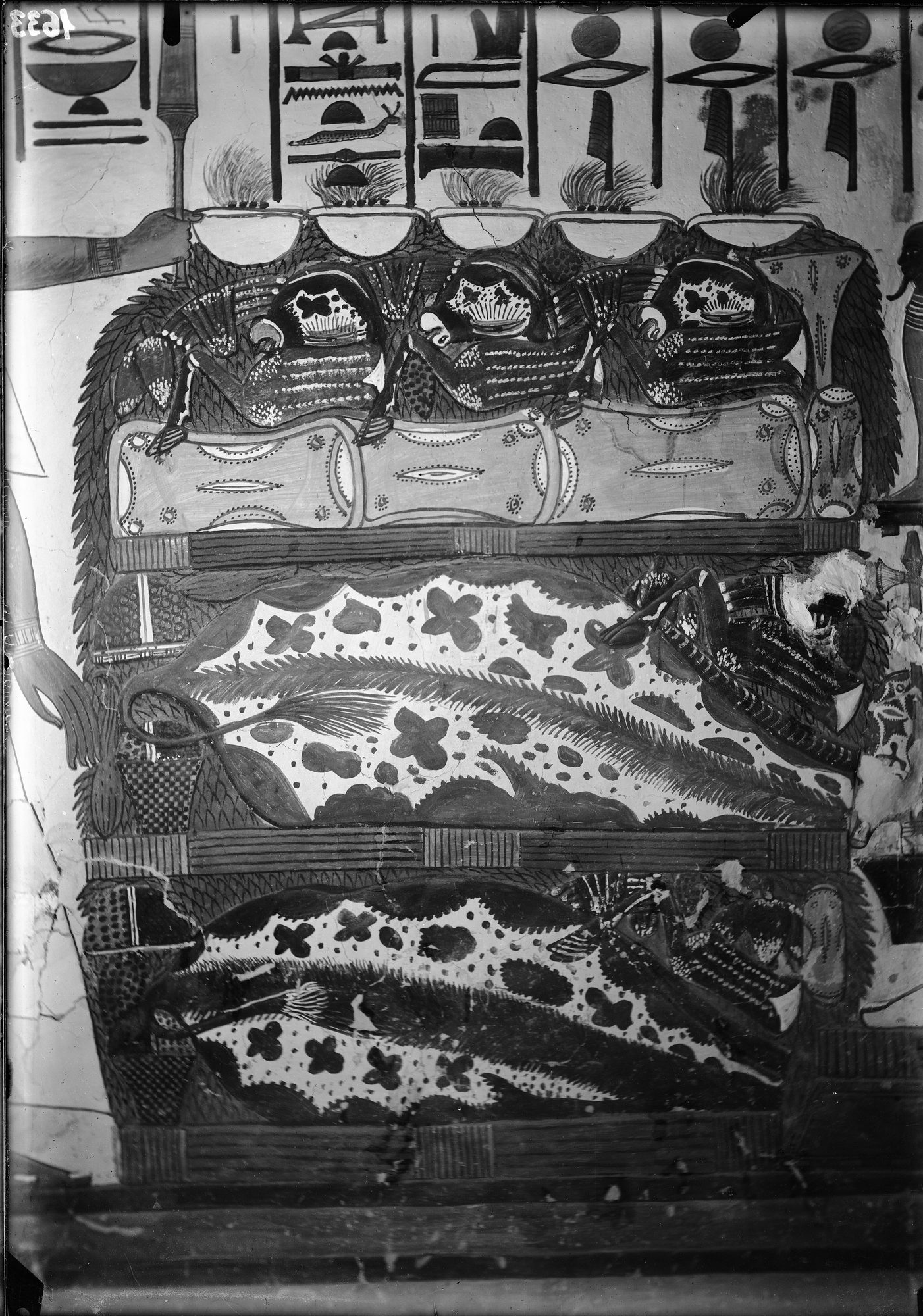
The chest was built to a dead man’s measurements, though the man was not yet dead. Set had taken his brother’s dimensions in secret, and the coffin was made to fit Osiris and no one else, worked over with gold and finery until it was the loveliest thing at the banquet. When Set carried it in and swore, laughing, that he would give it to whichever guest lay down and filled it exactly, the guests took their turns and climbed out again, each a little too short or too broad. Then the king of Egypt got in. He fitted as if the box had been poured around him. The conspirators rushed the lid, drove home the nails, and ran molten lead along every seam until the coffin was sealed as tight as a tomb, and the good king lay inside it, alive in the dark and unable to move, while they carried him to the river and let the Nile take him out to sea.
A king undone at his zenith
There were seventy-two of them in the plot, so the story goes, with a foreign queen named Aso, and they had chosen their moment. Osiris had been the gentlest of rulers. In the only continuous account that survives from antiquity, written by the Greek priest-scholar Plutarch more than two thousand years after Egypt first carved the god’s name, Osiris is a civiliser who drew his people out of a beggarly and half-animal life, gave them grain and law, taught them to honour the gods, then travelled the world winning it not by armies but by persuasion, poetry and music.
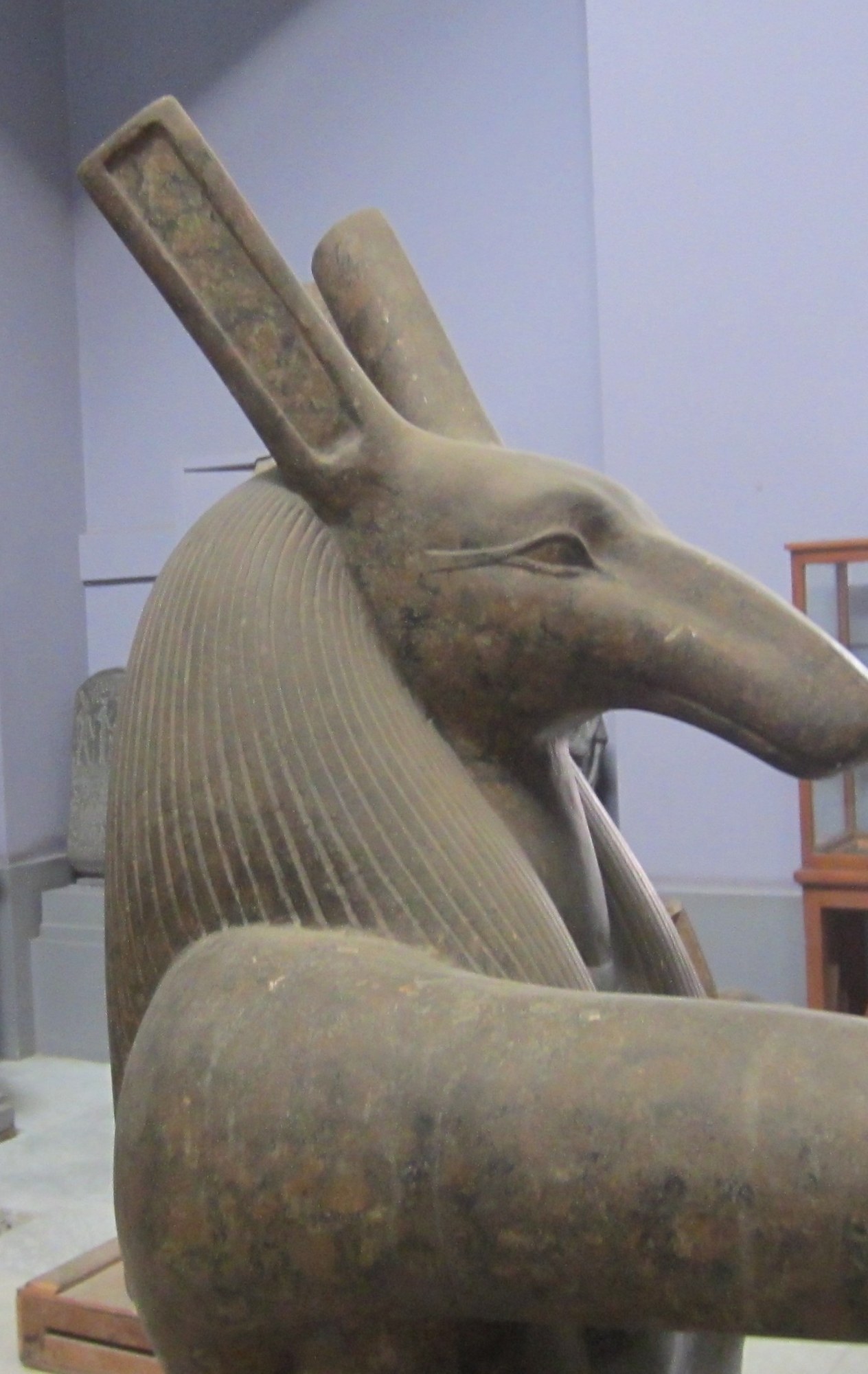
His brother waited at home. The Greeks called that brother Typhon and the Egyptians called him Set, and he struck at the height of the reign: the seventeenth of the month Athyr, Plutarch records, the sun in Scorpio, the twenty-eighth year of the kingship. It is a Greek author’s exactness, not an Egyptian ritual date, but the shape underneath it is old as the sand: the bright king undone at his zenith, by his own blood, at a feast.
Sealed inside a house-beam
What follows is a search. Isis cut off a lock of her hair, put on a garment of mourning, and went after the coffin, which had drifted across the sea to Byblos on the Phoenician coast. A shrub had shot up and swallowed the chest into its trunk, and the trunk, admired for its size and beauty, had been felled to make a pillar for the local king’s roof, so that the dead god stood sealed inside a house-beam in a foreign court.
Isis took service there as nurse to the queen’s infant, and by night, the tale says, she burned the child’s mortality away in a lambent fire and turned herself into a swallow to flutter wailing round the pillar that held her husband. Then she begged the pillar, cut the coffin out of it, and shipped Osiris home. This Byblos episode belongs to Plutarch alone. No Egyptian text knows it; it reads as an origin-story grafted onto the cult of Isis in Phoenicia, and it is worth flagging as such rather than passing it off as ancient Egyptian lore.
The worst came by moonlight
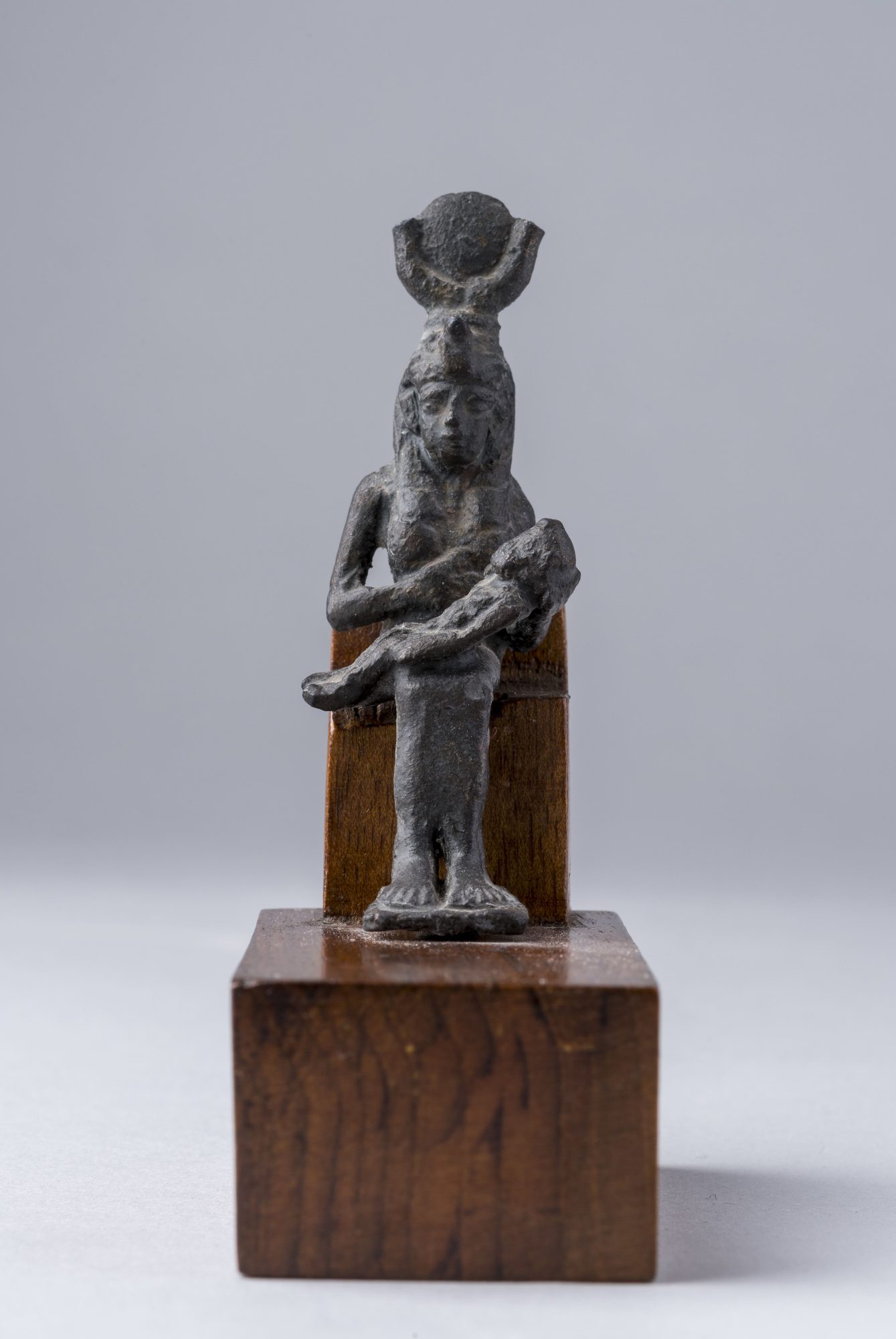
The worst was still to come, and it came by moonlight. Set was out hunting when he found the recovered body, and this time killing was not enough. He tore Osiris into fourteen pieces and flung them the length of Egypt. Now the search began again, and this is the labour on which the whole myth turns. Isis went through the marshes in a barge of papyrus, gathering her husband part by part, and where she found each member she raised a tomb for it, which is why, the Egyptians said, the god has so many graves. She recovered all of him but one.
The phallus had been thrown into the Nile and eaten by three fish, the lepidotus, the phagrus and the oxyrynchus, which were taboo to eat ever after; and so Isis fashioned a replica of the missing part and consecrated it in its place. The lost-and-eaten phallus, like Byblos, is Plutarch’s; Egyptian accounts have the body found intact. Even the tidy count of fourteen is his. The native tradition never fixes a number, and where it does reckon the scattered parts it runs as high as forty-two, one for every nome of Egypt, so both should be held loosely rather than printed as fact.
Two Kites over the body
Beneath the Greek narrative lies something some two and a half thousand years older and far stranger, and it does not tell the murder at all. Inside the pyramid of King Unas, the oldest witness to this myth, the story survives only as ritual command and assertion, spoken over a dead pharaoh to make him live. There the two sisters are summoned to close ranks over the corpse, Isis and Nephtys, come together, come together, unite, and the reassembling is a sacred imperative: bring together his members.
The resurrection is not described so much as insisted upon, declared god by god down the whole family of heaven until it becomes true by being said: Osiris, whom you have preserved alive, he lives. He is not dead. He judges. The two mourning goddesses appear there not as women but as birds, the Two Kites, hawks whose thin far-carrying cry the Egyptians heard as lament, their wings passing over the body to efface its injuries. This is the bedrock the Greek story sits on, and it confirms the skeleton, a violent death, the sisters’ mourning and reviving, the restoration, without any of Plutarch’s furniture. Byblos, the chest, the fourteen pieces, the fish: none of it is here.
Quickening the dead god for an heir
And out of that restoration comes an heir. In the Egyptian tradition Isis conceives Horus from the revived body itself, quickening the dead god long enough to get his son and rightful successor, the child who will grow up to challenge Set for the throne and win it. The Pyramid Texts already give Horus his part in the miracle, for it is the son who completes what the sisters begin: his mouth has been opened by his son Horus, his beloved; his members have been reckoned by the gods. Here the traditions part again, and the fork is worth marking rather than smoothing.
Plutarch tells it otherwise: in his version the avenging Horus was born before Osiris ever died, and the union of Isis with the dead god instead produces a second, premature and weak-legged child. The native Egyptian line is the one that makes the posthumously conceived Horus the heir and avenger, and it is that version the brief follows. Either way the point holds. The murdered king does not simply come back to reign as before. He becomes lord of the dead, king of another country, and returns to the living world only through his son, whom he trains for the war of vengeance and then leaves to fight it.
That is the resurrection the Egyptians actually believed in. Not a man reassembled like a broken jar and set back on his throne, but a god remade by the magic and grief of a wife and made permanent through a child, so that every pharaoh who died afterward could hope to be spoken over in the same words, and made whole, and told that he had not died.
“Osiris, whom you have preserved alive, he lives. He is not dead. He is not gone down. He judges.” (Pyramid Texts of Unas, Utterance 219, Piankoff trans.)
- Plutarch, De Iside et Osiride (Of Isis and Osiris), Moralia §§12–19, trans. William Watson Goodwin (1878), ToposText work/274 (CTS URN urn:cts:greekLit:tlg0007.tlg089)the single continuous ancient narrative of the myth — Osiris the beneficent civiliser-king; Typhon’s conspiracy of 72 with the Ethiopian queen Aso; the exactly-fitted chest sealed with molten lead and cast out at the Tanaitic mouth on the 17th of Athyr, sun in Scorpio, the 28th year of the reign; the drift to Byblos, the heath-tree that swallowed the chest and the roof-pillar cut from it; Isis’s lock of hair, her service as nurse and her turning to a swallow; the dismemberment into fourteen parts; the phallus lost to the three fish (lepidotus, phagrus, oxyrynchus) and replaced by an effigy; the papyrus barge and the many tombs; and Osiris returning from the realm of the dead to train Horus for the war against Set. A Greek retelling composed more than two millennia after the earliest Egyptian sources, and the only place the connected plot survives.
- Pyramid Texts of Unas (Old Kingdom, c. 2350 BCE, Saqqara), Utterances 217 and 219 and the kite/gathering lines, read via pyramidtextsonline.com (a modernised version of Alexandre Piankoff, The Pyramid of Unas, Bollingen/Princeton, 1968)the oldest evidence, ritual allusion rather than narrative — Isis and Nephthys summoned to unite over the dead (
Isis and Nephtys, come together, come together, unite!
); the resurrection asserted god by god (Osiris, whom you have preserved alive, he lives… he is not dead… He judges!
); Horus opening his father’s mouth and the membersreckoned by the gods
; the Two Kites standing by the bier, their wings effacing the body’s injuries; and the imperative tobring together his members.
- (Secondary, for framing and variant-flagging, not primary)J. Gwyn Griffiths, Plutarch’s De Iside et Osiride (1970); Geraldine Pinch, Egyptian Mythology (2004); R. H. Wilkinson, The Complete Gods and Goddesses of Ancient Egypt (2003): the Byblos episode and the fish-eaten phallus as elements of Plutarch’s Greek synthesis with no native Egyptian parallel (Egyptian accounts find the body intact); the native reckoning of the scattered parts running as high as forty-two, one per nome, against Plutarch’s fourteen; the posthumous conception of Horus from the revived body as the Egyptian tradition’s heir-and-avenger; and the kite symbolism of Isis and Nephthys as mourning birds of prey.