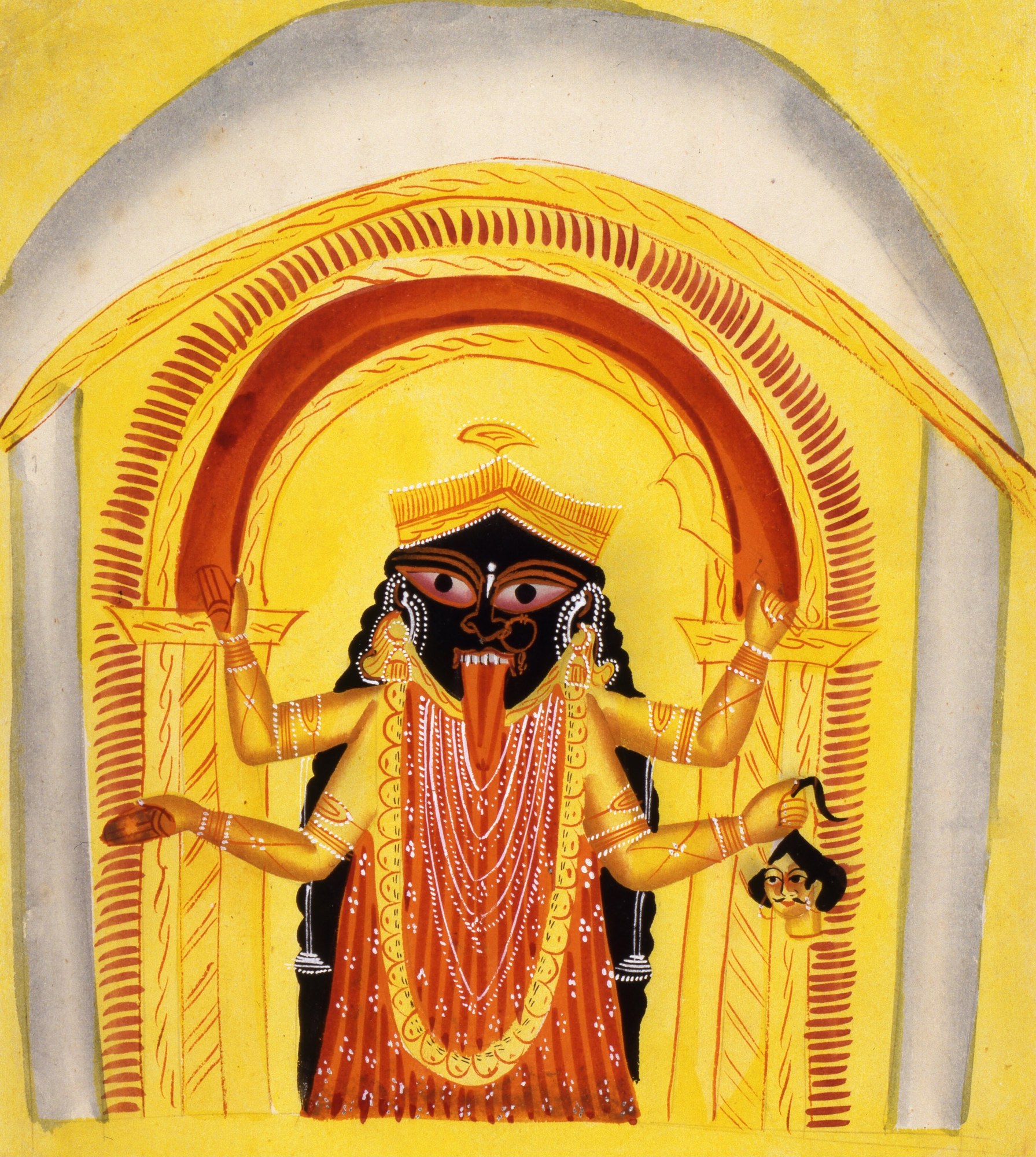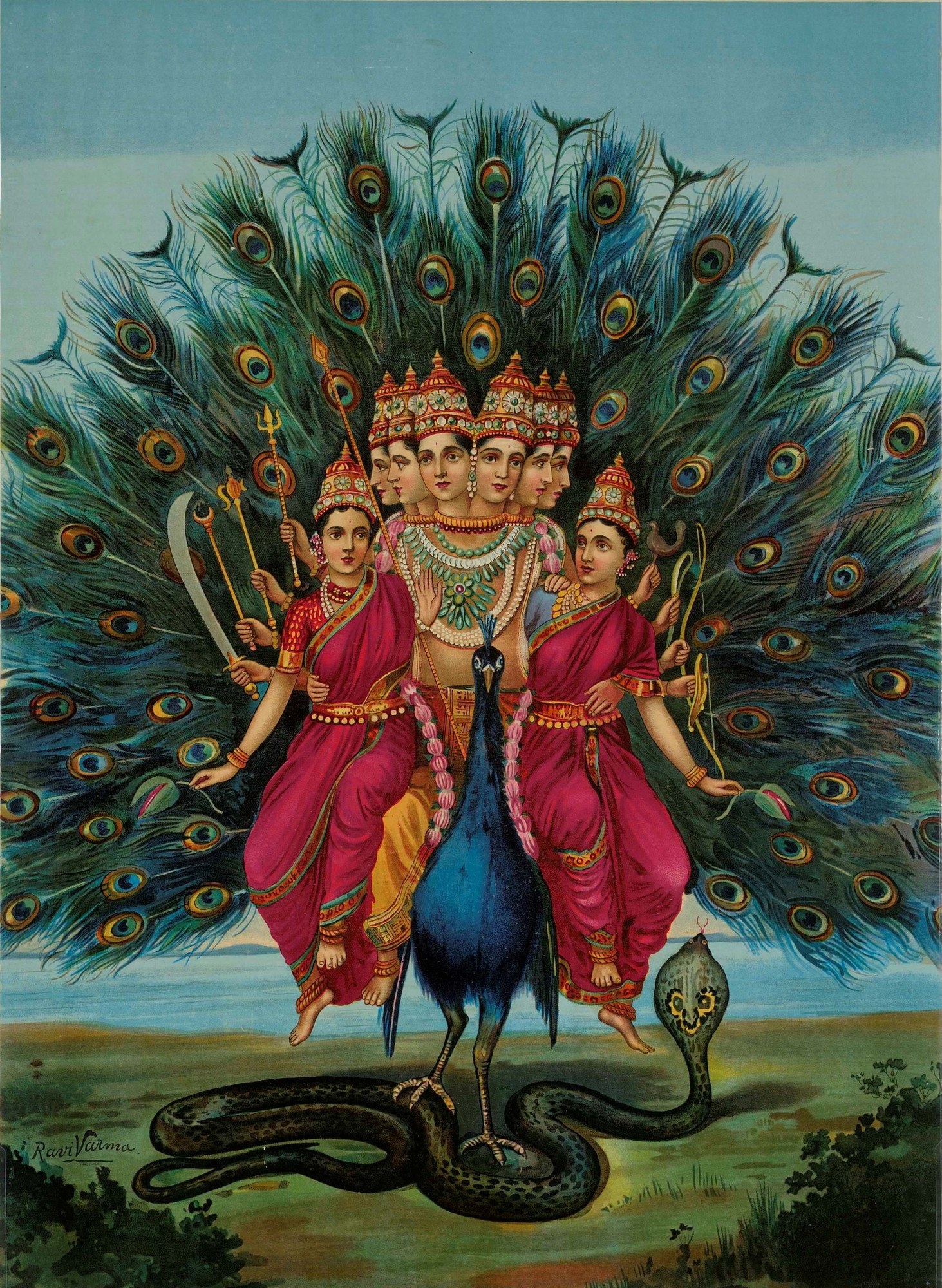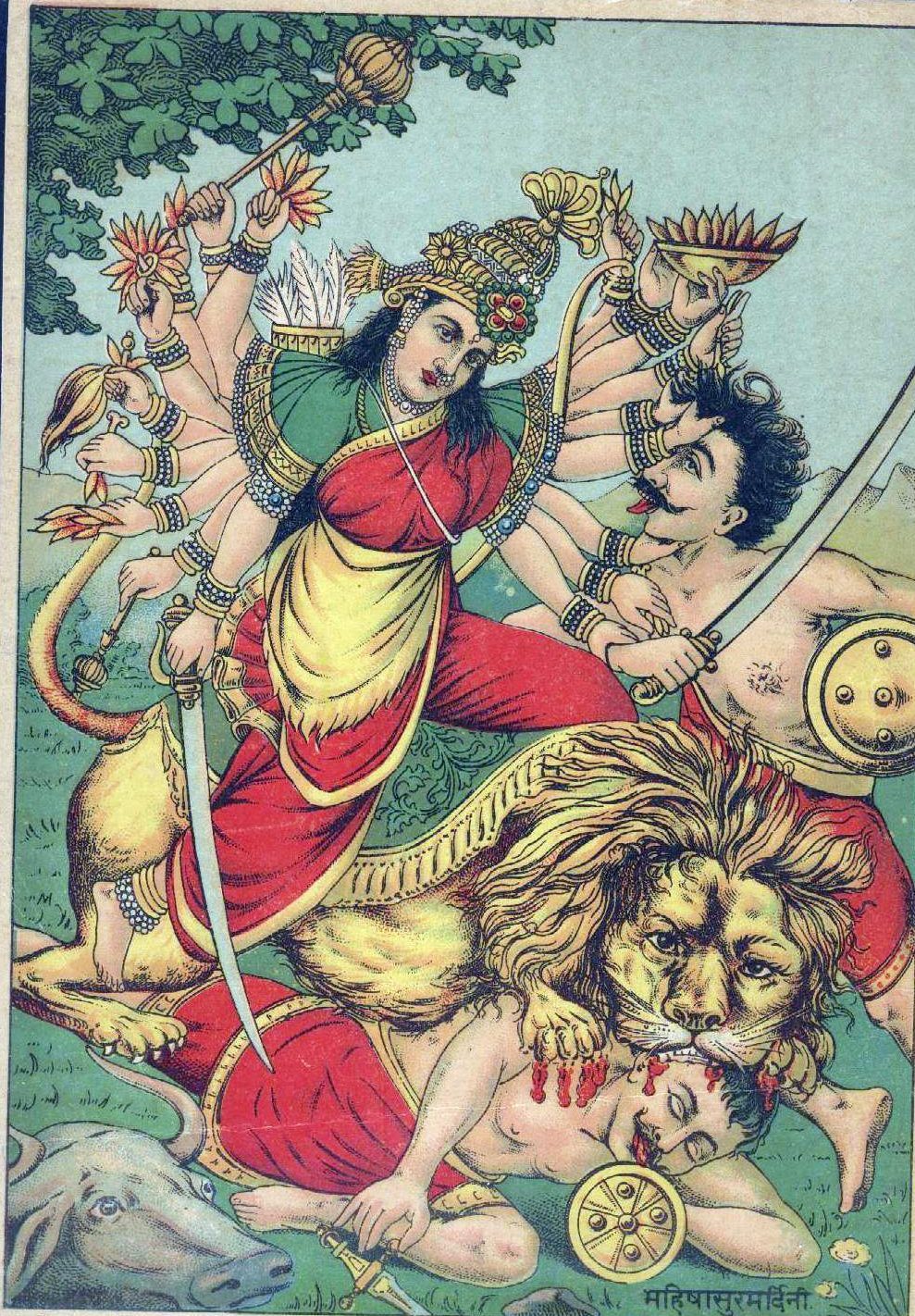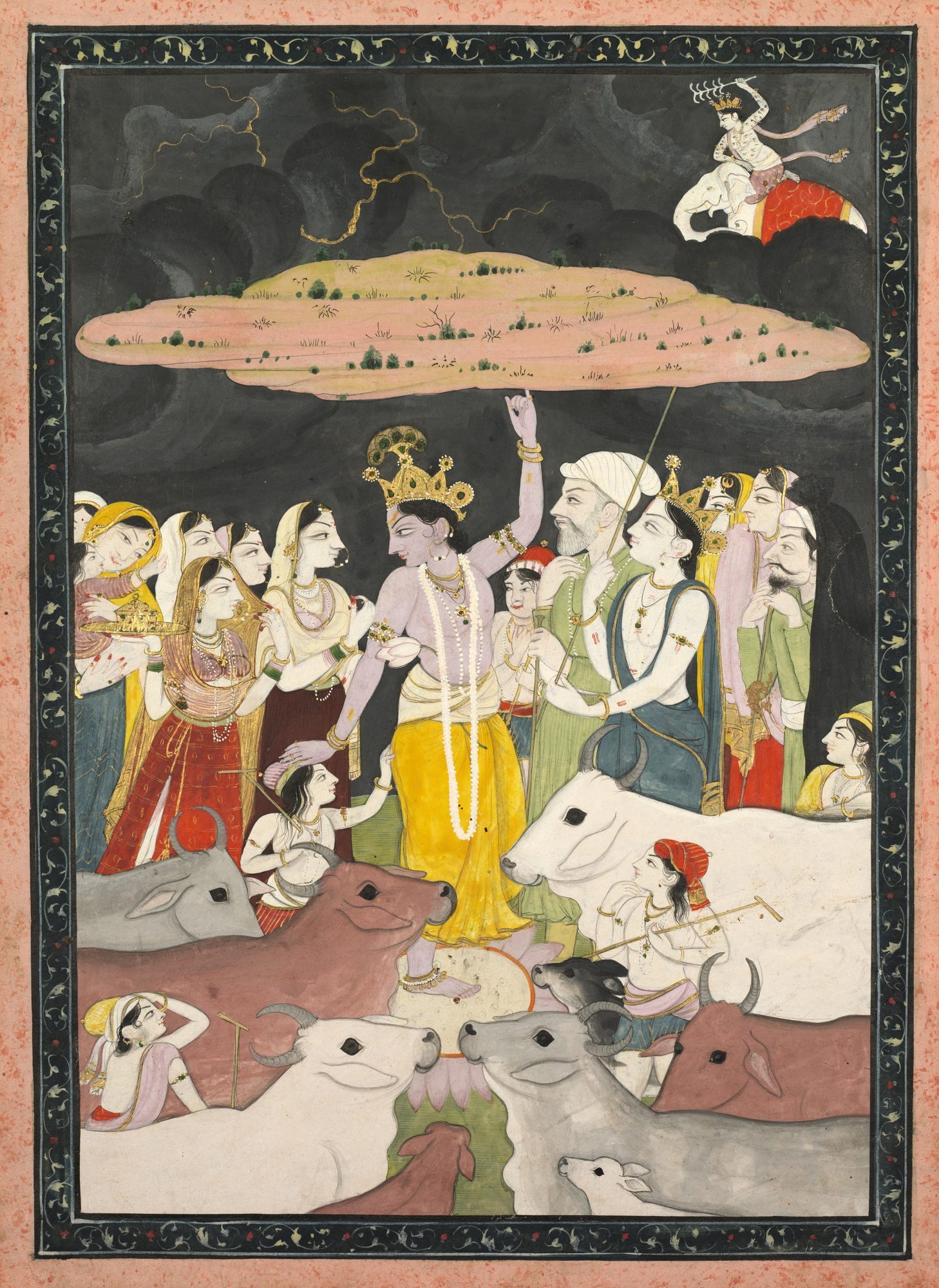
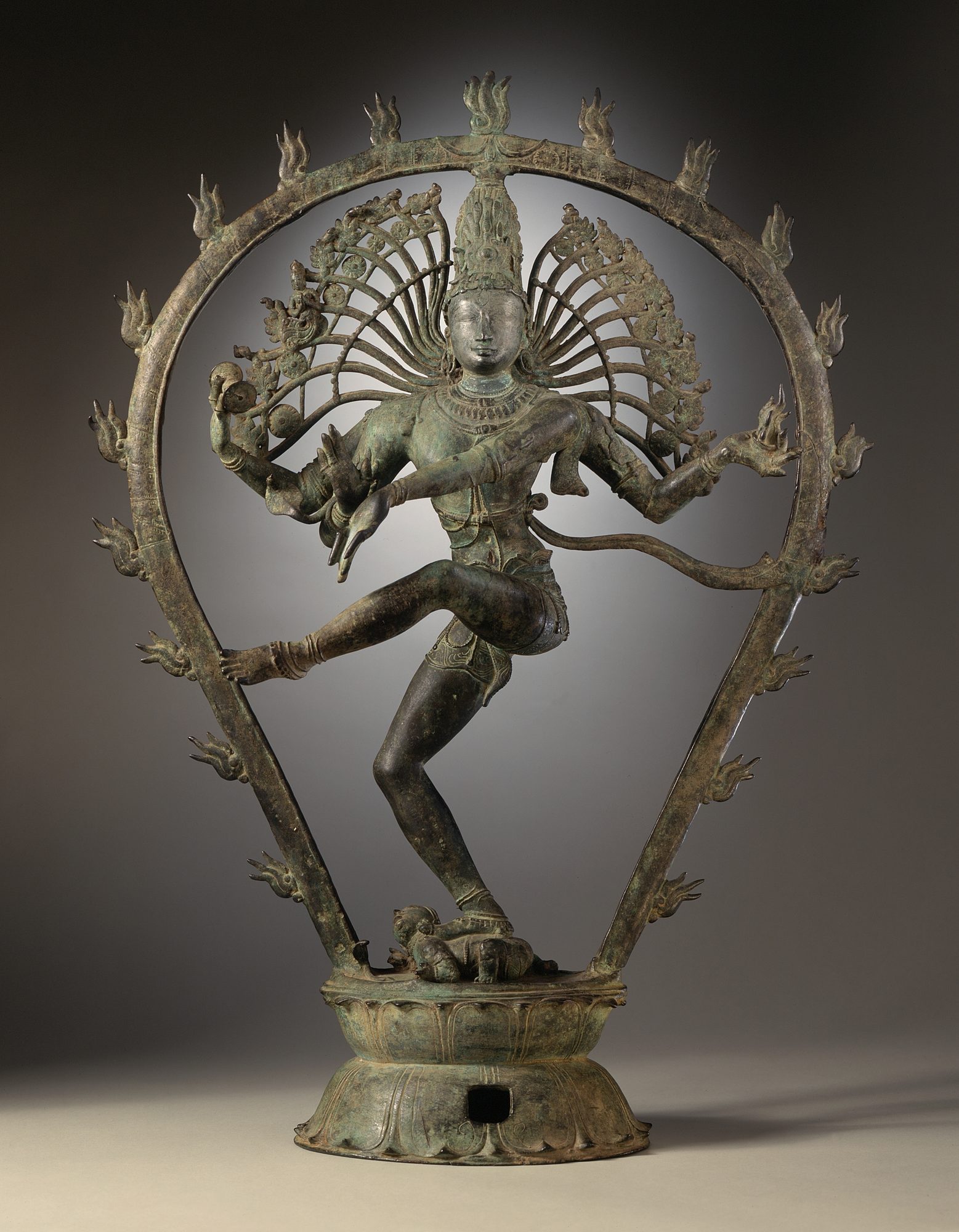
The poison rose out of the churned sea and blazed up like a fire trailing smoke, and the three worlds began to swoon. The gods and demons had been turning the ocean between them, hauling the great serpent back and forth to spin the waters for the nectar of immortality, and what came up first was not nectar but Kālakūṭa, a venom so fierce it stupefied heaven, sky and earth together. Nothing living could hold it. At Brahmā’s plea one god stepped forward, took the world-ending poison into his own mouth, and swallowed it.
He did not let it pass into his body, where it might have destroyed him and everything he touched, but held it forever in his throat, and the burning of it stained that throat a dark blue. From that day, the Mahābhārata says, Maheśvara is called Nīlakaṇṭha, the blue-throated one. It is the perfect emblem of the god the later tradition would name the Destroyer: the one who takes the thing that would end the world into himself, and by holding it makes the world safe.
Harm not the growing boy
For this is the paradox at the centre of Shiva, and it is very old. Long before the epics, in the oldest layer of the Ṛgveda, he is not yet called Shiva at all. He is Rudra, the fierce archer of the storm, the strong Lord of Heroes with the braided, knotted hair, father of the wild Maruts who ride the winds. And the poets who sang to him were afraid of him. He carries a bow and arrows; he is armed with the thunder and cuts each fiend to pieces, mightier than any other; he is chariot-borne and fierce, the hymn says, slaying like a dread beast of the forest.
Yet in the very same breath the same poets call him the best of all physicians, his hand filled full of healing medicines, and they beg him to spare them: harm not the great or the small among us, harm not the growing boy nor the full-grown man, slay not our heroes in the fury of your wrath. Destroyer and healer are not two gods here. They are one god, and the fear and the trust are addressed to the same terrible face.
The name Shiva itself, the auspicious,
began as a careful word, the sort of name you give a dangerous power when you would rather flatter it than provoke it. Over centuries that euphemism became the god’s true name, and the fierce Vedic archer grew into one of the supreme deities of Hinduism, the third of the great cosmic functions: where one god makes the world and another sustains it, Shiva is the one who will unmake it when its time has come.
The continuity from Rudra was felt keenly enough that the old commentators reached back for it; Wilson noted, and Griffith preserved the observation, that even the fair complexion of the later Shiva has its seed in a line of the Ṛgveda that paints Rudra tawny and bright of cheek. That is a scholar’s bridge across the centuries, not a claim the Vedic hymns make of themselves, and it is worth marking as such. But the through-line is real, and it runs straight from the storm-archer whom none could deceive to the god of the burning throat.
Brahmā took up the reins
What that god does with his terrible power fills the great books. When the Asuras, the sons of Tāraka, won for themselves three flying cities, one of gold in heaven, one of silver in the sky, one of iron on the earth, all built by the Asura architect Maya and fated to fall only to a single arrow loosed when the three drifted into a line, it was Shiva the gods armed against them. And the arming is one of the most extraordinary images in the epic. The whole cosmos became his weapon.
The four Vedas turned into the four horses of his chariot; the Earth herself, with all her mountains, became the car; the stars became its ornaments; and Brahmā, the Grandsire of all beings, took up the reins as his charioteer. Onto the string he laid a single shaft born of Soma and Viṣṇu and Agni, a shaft that held the might of the whole universe. When the three cities swam into one, he drew and loosed, and the triple city burned. He flung the Asuras down into the western ocean, and then, the poison of his own wrath rising in him, he checked it and quenched the fire, unwilling to reduce the three worlds to ash. He destroys, but he chooses where destruction stops.
Breaking up the proud rite
That wrath has its own famous target. In Arjuna’s hymn of the god’s names the singer remembers, plainly and without softening, that Shiva of old destroyed the great sacrifice of Dakṣa, breaking up the proud rite that had slighted him. The Mahābhārata leaves the act stark and personal: the god himself is the one who scatters it. Later tradition would elaborate the scene lavishly, giving Shiva a wrath-born warrior to do the work for him, but that is a Purāṇic growth and does not belong to the epic’s own plain words. Here it is simply the god, and the ruin is his.
Gaṅgā broke upon his head
And yet the same god who burns cities and shatters rites is, above all, the great ascetic, and this is the other half of him that the tradition never lets go. He is the wielder of the Pināka bow who sits withdrawn on the cold heights of Kailāsa with Umā beside him, matted-locked, three-eyed, the eye set in his forehead, the trident in his hand, lord of the strange host of beings called the Gaṇas whose eldest is his son. His power is not spent in constant motion; it is banked, held, mastered, like the poison held motionless in the throat.
When the sky-river Gaṅgā had to be brought down to earth and her fall from the third region of heaven would have shattered the ground, it was Shiva who stood to receive her. I shall sustain her, he told the king Bhagīratha, and Gaṅgā came down all of a sudden out of the sky and broke upon his head, and he divided her into three quiet streams and let her run. The destroyer is also the still point that keeps a falling world from breaking.
Disguised as a Kirāta
Even his testing of mortals wears the two faces at once. When Arjuna sat in fierce penance on the mountain, Shiva came to him disguised as a Kirāta, a mountain-hunter, resplendent as a golden tree, with Umā beside him as a huntress, and picked a quarrel over a slain boar. He stood in the storm of Arjuna’s arrows and was not moved; he snatched away the famous Gāṇḍīva bow; when the hero drew his sword and struck the god’s own head, the blade shattered on that crown; and he crushed Arjuna almost to a ball of flesh.
Only then did he let the hunter’s shape fall away and stand revealed as Mahādeva, and to the man he had just broken he gave the Pāśupata, the weapon that destroys the whole universe at the end of the age. The god who nearly killed the hero is the god who arms him. That is the shape of Shiva every time: the annihilating power and the saving gift held in one hand.
He is called the Lord of the Dance, Naṭarāja, and later worshippers would see in that dance the whole turning of creation and destruction, the universe beaten out in the rhythm of his drum and burnt down in the fire of his palm. The oldest sources read here do not narrate that dance, and its details belong to another, later current of the tradition.
But they hardly need to. The god they do give us already dances the same two-fold measure: the archer who heals, the mouth that swallows the poison so the world can live, the wrath that burns the three cities and then refuses to burn the three worlds. Destruction, in his hands, was never the opposite of mercy. It was mercy’s fiercest form.
May he, his hand filled full of sovran medicines, grant us protection, shelter, and a home secure. O Rudra, harm not either great or small of us, harm not the growing boy, harm not the full-grown man… Slay not our heroes in the fury of thy wrath. (Ṛgveda 1.114.5–8, tr. Ralph T. H. Griffith, The Hymns of the Rigveda)
- Ṛgveda 1.114 (Hymn to Rudra; Griffith trans., The Hymns of the Rigveda, Vol. I)Rudra the braided-haired (kapardin)
Lord of Heroes,
father of the Maruts, hishand filled full of sovran medicines
; the plea that heharm not either great or small of us
andslay not our heroes in the fury of thy wrath
— destroyer and healer in a single god. - Ṛgveda 2.33 (Hymn to Rudra; Griffith, same edition)the great Rudra hymn —
armed with the thunder, mightiest of the mighty
yetbest of all physicians
; thebow and arrows,
themany-hued and honoured necklace
; tawny/red and fair of cheek;chariot-borne… fierce, slaying like a dread beast of the forest.
Griffith’s note to 2.33.8 records Wilson’s observation thatthe white complexion of Śiva, the later representative of Rudra, has… its origin in the Rigveda
— cited here as the explicit Vedic-to-Shiva bridge, i.e. as scholarship, not as a claim the hymns make in those words. - Mahābhārata, Ādi Parva (Book 1), Āstīka sub-parva (Kisari Mohan Ganguli trans.)the churning of the ocean and the Kālakūṭa poison —
Then Siva, being solicited by Brahman, swallowed that poison for the safety of the creation. The divine Maheswara held it in his throat, and it is said that from that time he is called Nilakantha (blue-throated).
- Mahābhārata, Vana Parva (Book 3), Kairāta Parva, Sections XXXIX–XL (Ganguli)Shiva as the Kirāta
resplendent as a golden tree,
accompanied by Umā, who withstands Arjuna’s arrow-shower, has his own crown shatter Arjuna’s sword, crushes the heroalmost reduced to a ball of flesh,
then reveals himself as Mahādeva and grants the Pāśupata/Brahmaśira weaponwhich destroyeth, at the end of the Yuga, the entire universe.
Arjuna’s hymn of the god’s epithets (three-eyed,
blue-throated,
of matted locks,
wielder of the Pinaka,
bearer of the trident
); and the lineThou destroyedest of old the great sacrifice of Daksha.
- Mahābhārata, Vana Parva (Book 3), Tīrtha-yātrā sub-parva (Ganguli)Shiva sustaining the fall of Gaṅgā from heaven at Bhagīratha’s request —
I shall sustain that most praiseworthy of rivers when she falls down from the third region of the world (heaven)
— the river coming downall of a sudden from the sky
and separatingherself into three streams.
- Mahābhārata, Karṇa Parva (Book 8) (Ganguli)the Tripura-dahana — Maya’s three flying cities of gold, silver and iron; the cosmic war-chariot whose steeds are
the four Vedas,
whose car is the Earthwith her mountains,
whose ornaments arethe stars,
driven by Brahmā the Grandsire; the single world-arrowborn of Soma and Vishnu and Agni
that burns the triple city and throws the Asurasinto the Western ocean,
after which the god checks his wrath,saying, ‘Do not reduce the three worlds to ashes.’
- Mahābhārata, Anuśāsana Parva (Book 13), Śiva-sahasranāma section (Ganguli, with his notes)the thousand names; Gaṇapati named as
the eldest son of Mahadeva,
the Gaṇas asmighty beings that wait upon Mahadeva.
(Ganguli’s gloss that Shivapursued
andshot his arrow at
Dakṣa’s fleeing sacrifice is editorial commentary, not the verse body, and is not relied on in the narrative above.) - Śiva Purāṇa (named in the brief only)not sourced verbatim in this pass, and so not drawn on for any citable specific. The Naṭarāja/Tāṇḍava cosmic dance, the third eye burning Kāma, the Liṅgodbhava pillar of fire, Ardhanārīśvara and the wrath-born Vīrabhadra are genuine Śaiva material, but Purāṇic, Tamil or iconographic rather than Vedic/epic, and must be re-verified against an actual Purāṇa or Tamil text before any specific of theirs is printed.