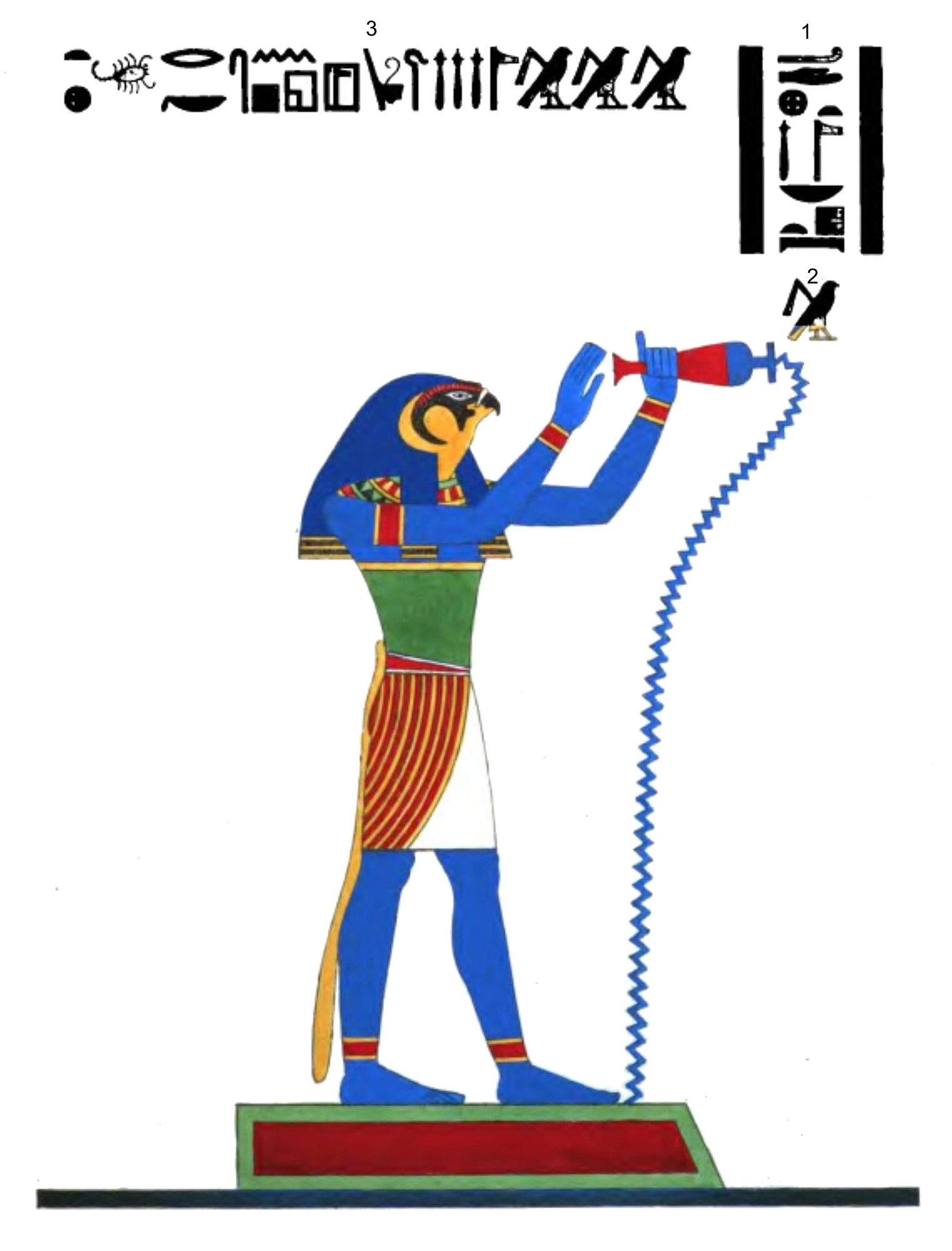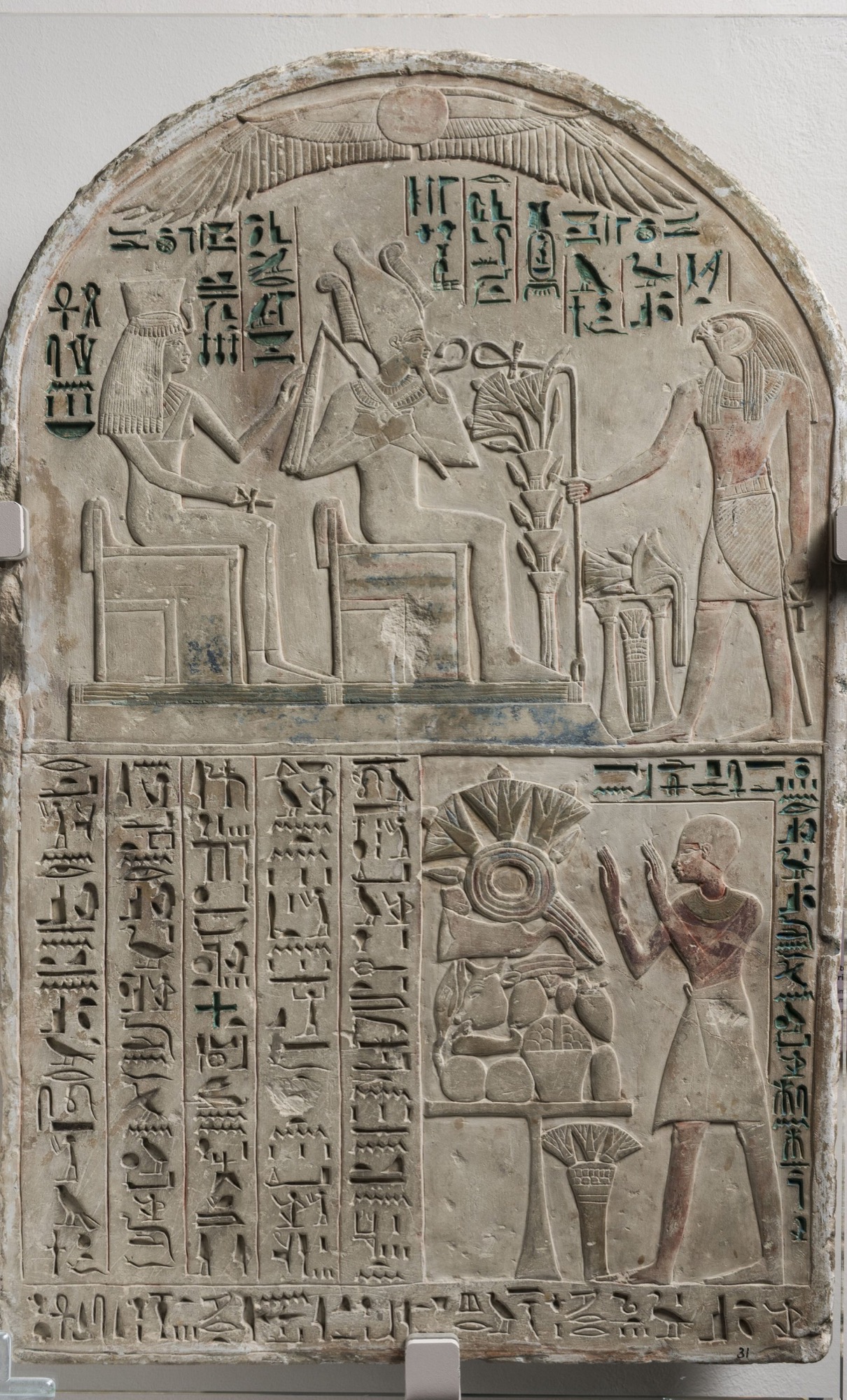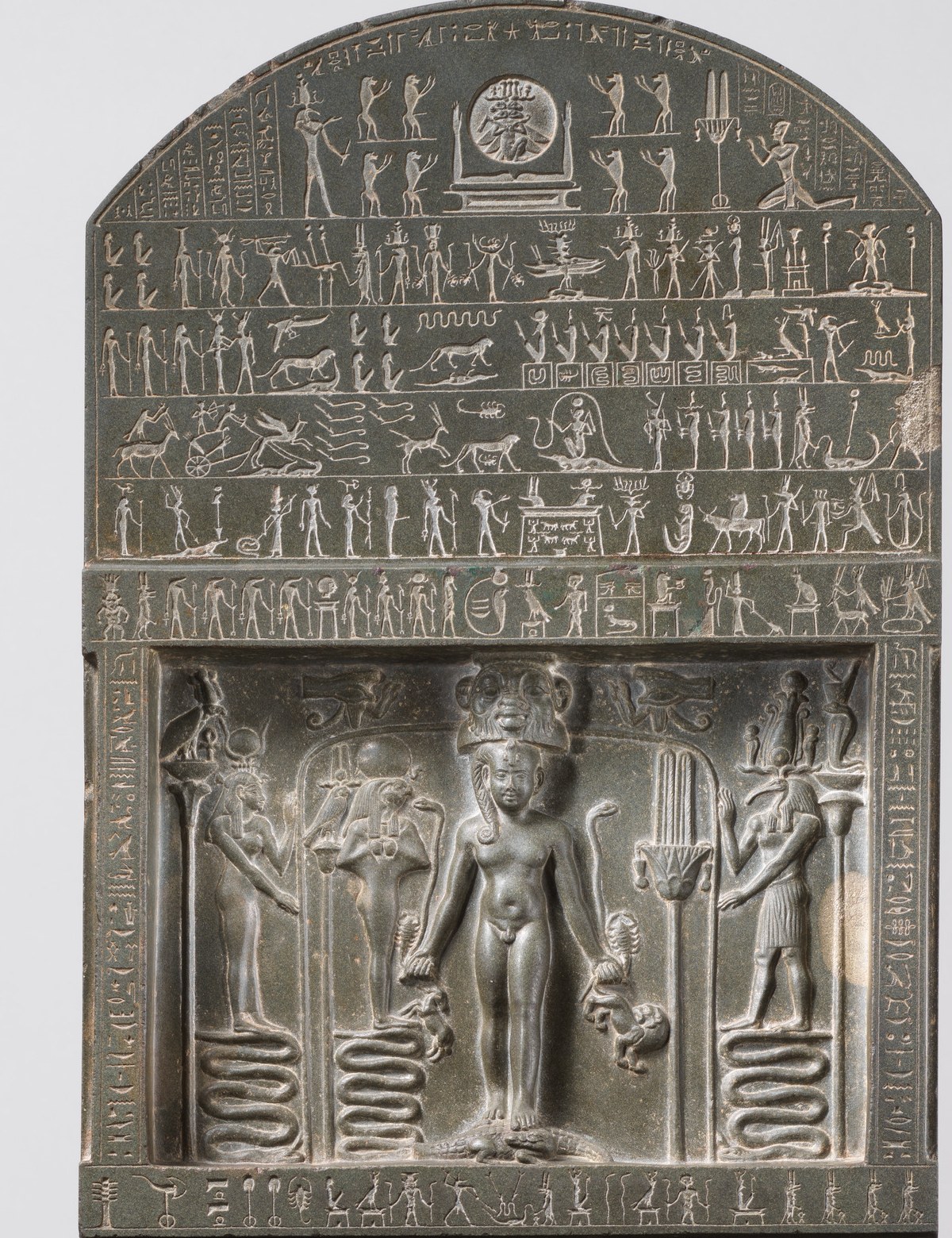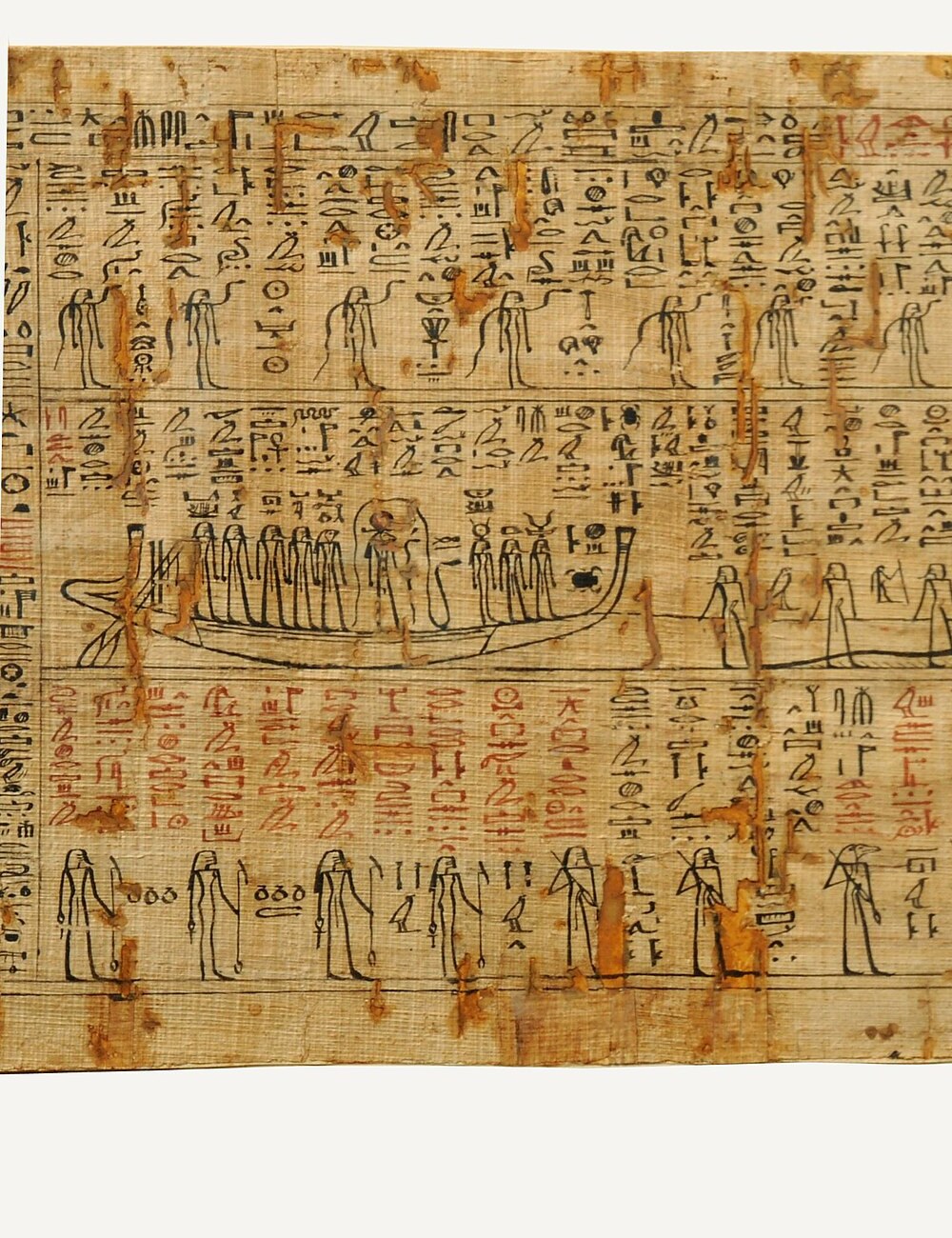
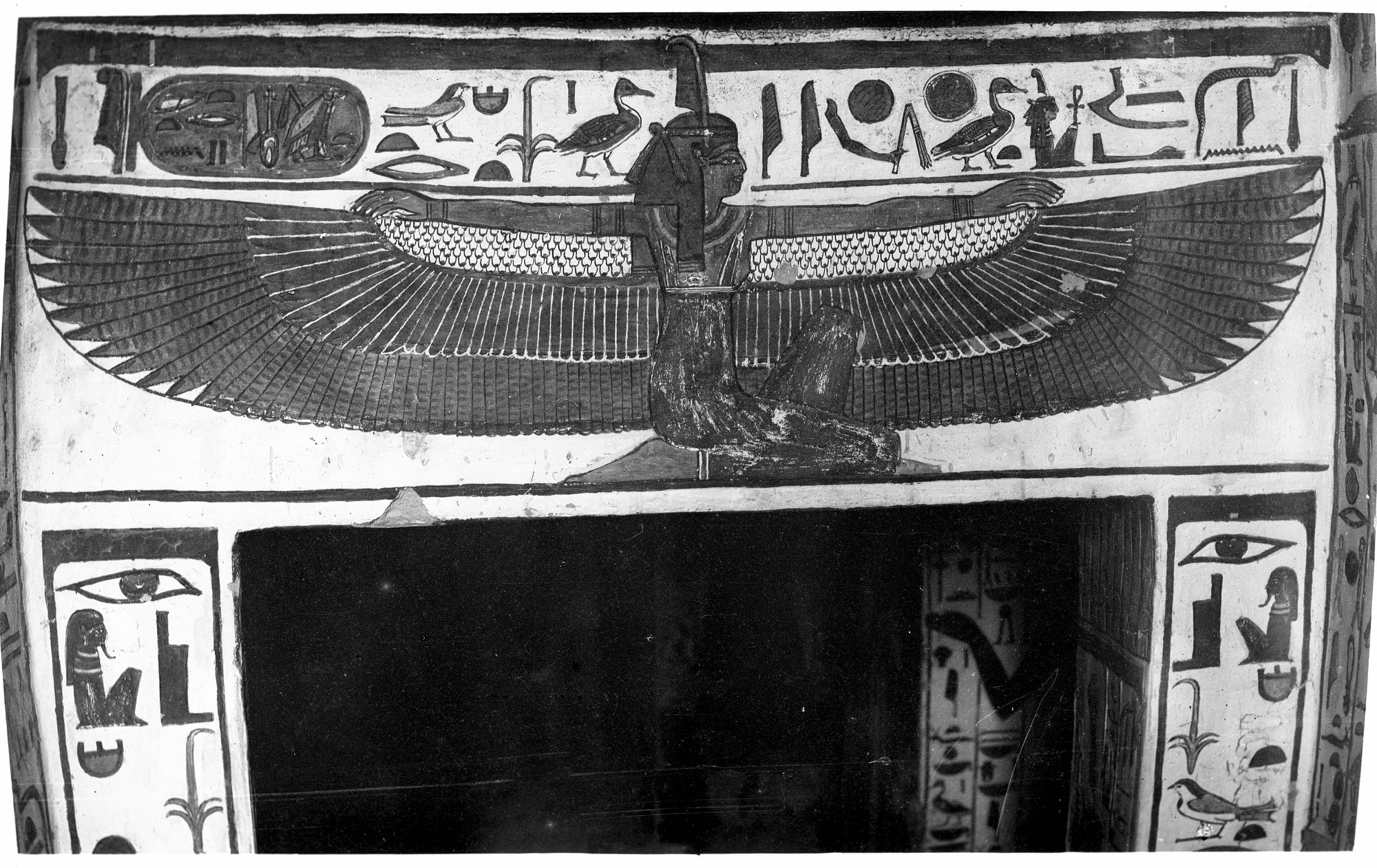
The scales are already set when the dead man comes in. On one pan sits a single ostrich feather, straight and weightless. Into the other his own heart will go, and the reckoning does not need him to outdo the feather: it needs him only to match it. Anubis, jackal-headed, lays a hand on the tongue of the great beam and reads whether it hangs exactly straight. Ibis-headed Thoth stands ready with reed-pen and palette to write down the result. And crouched a little behind the scribe waits a composite horror the Egyptians called Ammit, the Eater of the Dead, watching the empty side of the balance for a heart found wanting. All of this apparatus, the hall and the beam and the two hungry witnesses, exists to test the deceased against one thing: the feather that is also a goddess. Her name is Maat, and she is what a straight balance measures.
Maat is at once a goddess and the principle she personifies, truth and justice and the right order of the whole cosmos, the way things hold together when they are not cheated. The feather she wears is her sign, glossed by the old translators as what is straight, right, law
.
She is not a story-goddess with adventures to recount; she is a standard, worn on the brow and weighed in the pan, and the drama around her is the drama of a heart held against her in judgment: it either passes or fails. The Egyptians felt this so strongly that they built the pedestal of Osiris’s shrine in the very hieroglyph that spells her name, so that order sat literally beneath the throne of the god of the dead.
The hall of the two truths
The room where the heart is weighed is called the Hall of Double Maati, the Maats doubled, Right-and-Truth twinned into a pair of goddesses whom the papyri address as twin-sisters with two eyes, ladies of double Maati
. The dead man enters it declaring himself clean. Thou art pure from all offence and from defect of every kind,
the entry formula runs; ‘Stone of Right and Truth’ is thy name.
Then comes the weighing, and its outcome is pronounced not by threat but by testimony.
Thoth, titled the judge of Right and Truth
, reads the beam and declares the verdict: the heart hath in very truth been weighed, and his soul hath stood as a witness for him; it hath been found true by trial in the Great Balance. There hath not been found any wickedness in him.
The assembled gods ratify the finding, Ammit is denied her prey, and the justified soul is granted a homestead in the fields of the blessed.
It is worth keeping two things straight that popular retellings routinely blur. The heart is weighed against the feather, balanced with it, not required to be lighter than it; Budge’s own commentary is careful that the two pans should hang level. And it is Ammit, not Maat, who devours the heart that fails. The goddess is the measure, never the mouth.
Order stated as a negative
Before the verdict there is a confession, though it runs the opposite way to what that word suggests. The deceased turns to a bench of forty-two gods, each summoned by a strange local name from a particular city, and to each one denies a single specific sin. Hail, thou whose strides are long, who comest forth from Annu, I have not done iniquity.
Hail, thou who art embraced by flame, I have not robbed with violence.
Hail, Neha-hau, who comest forth from Re-stau, I have not slain man or woman.
The denials descend from the great crimes to the small dishonesties of daily trade, and it is there that Maat shows her most ordinary face: I have not made light the bushel,
the dead man swears, having neither added to the weights to cheat the seller nor misread the pointer to cheat the buyer. Truth here is the honest market-measure as much as the cosmic one. Having run the full list, he repeats the refrain that seals it, fourfold: I am pure. I am pure. I am pure. I am pure.
These are best called what they are, declarations or denials of purity, the Negative Confession. Reading them as forty-two laws of Maat
, a positive commandment-code, is a modern tidying-up; the text is a litany of things not done, addressed to gods who, the papyri say, live upon right and truth, and feed yourselves upon right and truth
. Even the great god Amun-Re is called in one hymn the great god who liveth by Maat
. The order the goddess embodies is not a rule the gods impose from outside. It is the thing they themselves are said to eat.
The path laid down at creation
Maat did not stay in the courtroom. Long before a heart was ever painted on a balance, Egyptian teachers made her the ground of how a living person ought to act. The vizier Ptahhotep, instructing his son, sets truth above cleverness and above force: Truth is good and its worth is lasting, and it hath not been disturbed since the day of its creator, whereas he that transgresseth its ordinances is punished. It lieth as a (right) path in front of him that knoweth nothing.
Maat is older than any given wrong and outlasts it, a road already laid down at the making of the world for even the ignorant to walk.
The same conviction drives The Eloquent Peasant, whose robbed hero pleads his case in image after image drawn from the scales. Truth, he insists, endureth unto everlasting, and it descendeth with him that doeth it into the nether world
; a man carries his rightness across death the way the justified carry theirs into the weighing. And he reaches, as the Egyptians so often did, for the balance itself as the last word on what cannot be corrupted: “Is it a hand-balance?
Then it tilteth not. Is it a stand-balance? Then it weigheth not falsely.” A true scale cannot be argued with. That is the whole of Maat in a sentence, and it is why the goddess and the instrument share a single shape. She is worshipped in the hall of the dead and invoked in the market and the vizier’s court, and she is, in every one of them, the point at which the beam hangs level and no one has cheated.
Is it a hand-balance? Then it tilteth not. Is it a stand-balance? Then it weigheth not falsely. (The Eloquent Peasant, 9th petition, tr. Erman/Blackman)
- The Book of the Dead (Papyrus of Ani, Nebseni, Nu and Kerasher), Chapter 125 — E. A. Wallis Budge tr., *The Book of the DeadAn English Translation of the Chapters, Hymns, etc., of the Theban Recension* (London, 1898); public-domain scan, archive.org id
bookdeadanengli01budggoog. Read verbatim for the Hall of Double Maati entry formula (Stone of Right and Truth is thy name
,twin-sisters with two eyes, ladies of double Maati
, Papyrus of Kerasher/Nu); the forty-two Declarations of Purity and the fourfoldI am pure
refrain (Papyrus of Nebseni), including the market denials (I have not made light the bushel
); the address to the forty-two godswho live upon right and truth
(Papyrus of Nu); the heart-speech (My heart my mother…
, actually Ch. 30B on the heart-scarab, Papyrus of Ani); Thoththe judge of Right and Truth
reading the Great Balance and pronouncing the verdict (hath in very truth been weighed… found true by trial in the Great Balance… there hath not been found any wickedness in him
); Anubis testing the tongue of the beam; Ammit the Devourer; andthe great god who liveth by Maat
(Amen-Ra hymn). Budge’s readings are dated (Am-mit = Ammit, Un-nefer = Wennefer, Annu = Heliopolis, Re-stau) and quoted as Budge; his commentary that the heart must balance (not be lighter than) the feather is followed. - The Instruction of Ptahhotep (Papyrus Prisse), §5 — Adolf Erman, The Literature of the Ancient Egyptians, tr. Aylward M. Blackman (Methuen, London, 1927), pp. 56–57; public-domain scan, archive.org id
in.ernet.dli.2015.532519. Read verbatim for maat as good, lasting and creator-given (Truth is good and its worth is lasting, and it hath not been disturbed since the day of its creator… It lieth as a (right) path in front of him that knoweth nothing
). Blackman renders the Egyptian wordtruth / right and truth
; the same concept Budge rendersRight and Truth
. - The Eloquent Peasant (Papyrus Berlin etc.), 9th petition — Erman/Blackman 1927, same volume; public-domain scan, archive.org id
in.ernet.dli.2015.532519. Read verbatim for maat enduringunto everlasting
and descendingwith him that doeth it into the nether world
, and for the balance that cannot cheat (Is it a hand-balance? Then it tilteth not. Is it a stand-balance? Then it weigheth not falsely
). - The Coffin Texts, Spell 80 — the Shu / Tefnut cosmogonic material binding Maat to Shu (air and life). Standard EnglishR. O. Faulkner, The Ancient Egyptian Coffin Texts (Aris & Phillips, 1973–78), archive.org id
ancientegyptianc0000unse_i6e5. NOT read verbatim (borrow-locked;access-restricted-item: true, text endpoints return HTTP 401). Cited only for the Maat-and-Shu cosmogonic association named in the brief; no wording is quoted from it, and no CT-80 line is presented as read.