HomeArchiveThemesAbout

#Wisdom And Knowledge

Forbidden knowledge, prophecy, craft, the price of insight.

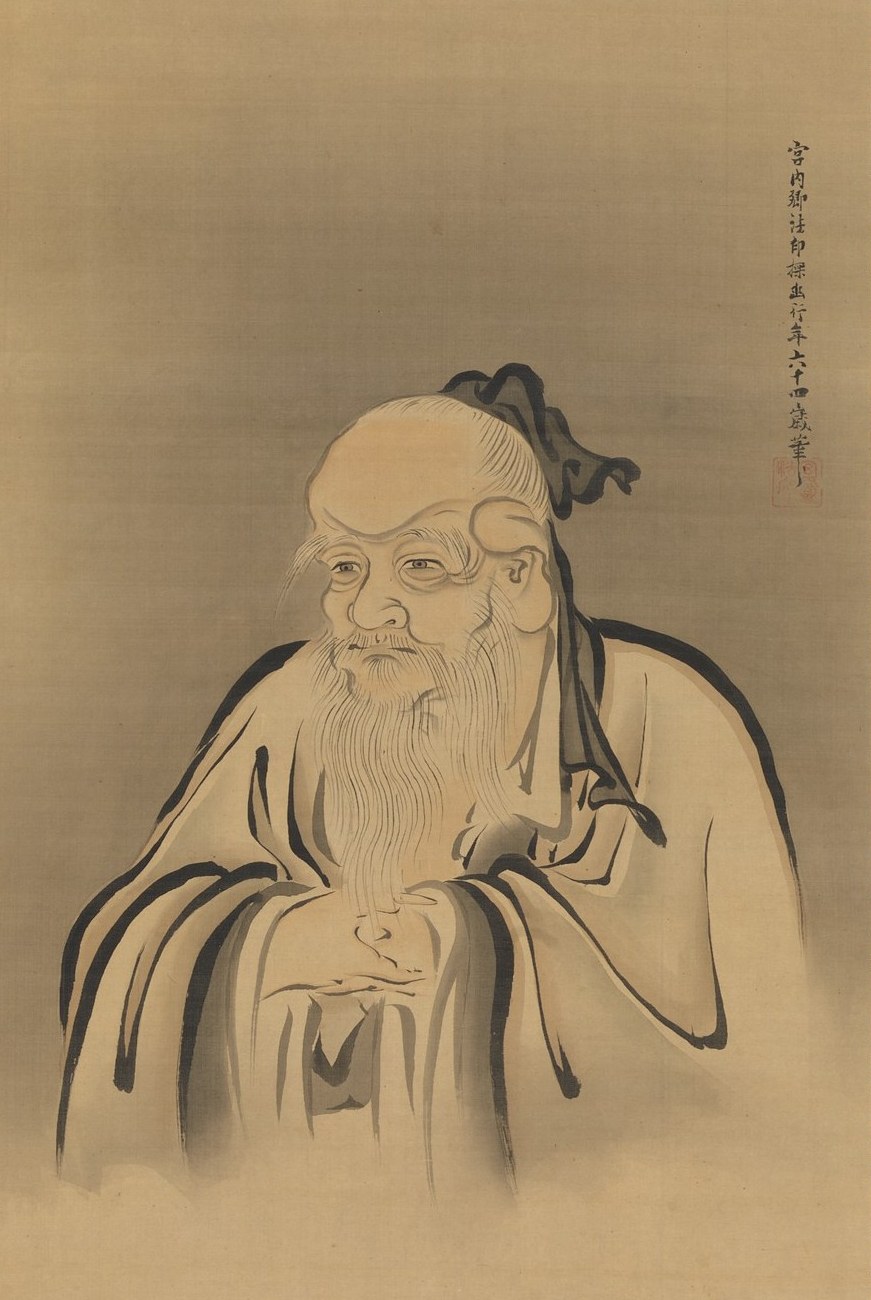
Ink-and-colour portrait of Shennong as a serene white-bearded elder-sage seated with his hands clasped, wild hair bound in a topknot, in a loose pale robe against a plain silk ground, with a brushed inscription and a red seal at upper right.
Chinese

Shennong, the Divine Farmer

The god whose name every herbalist invokes governs a pharmacy of three hundred and sixty-five drugs ranked like a royal court, yet the tradition itself admits he could not have written a word of the book that bears his name.
7 minBaihu Tong
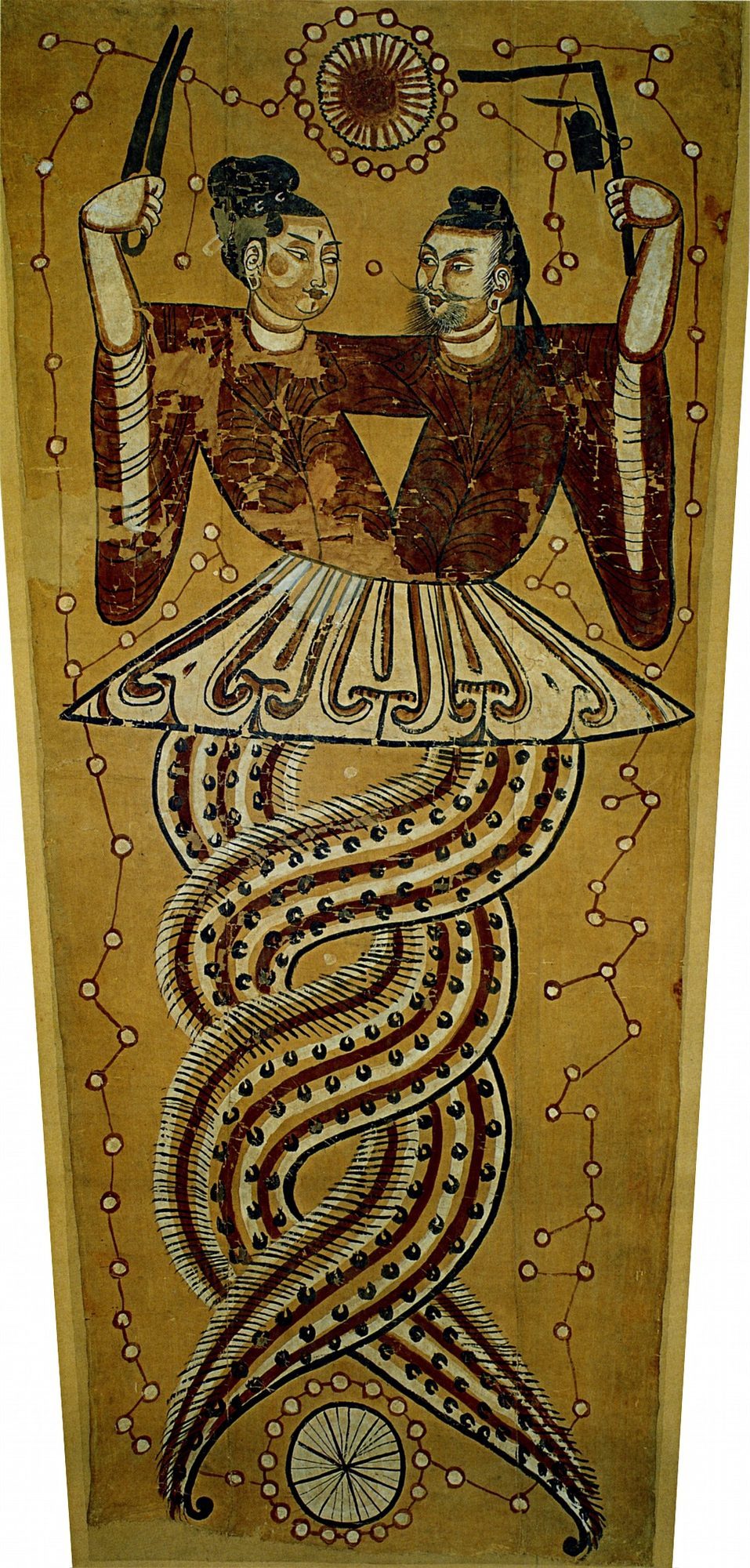
Tang-dynasty silk painting of Fuxi and Nüwa as a human-headed, serpent-bodied pair, their scaled tails entwined in a double helix below a shared white skirt. Nüwa at left raises a compass in her hand; the bearded Fuxi at right raises a carpenter's set-square with an ink-cord; a radiate sun-disc floats above their heads and a spoked moon-disc below the tails, the tan silk ground strewn with linked white dots for the constellations.
Chinese

Fuxi, Bringer of Civilization

He looked up at the images in heaven and down at the patterns on earth, and out of that reading drew the eight trigrams, the fishing-net, and the first law of husband and wife.

5 minYijing
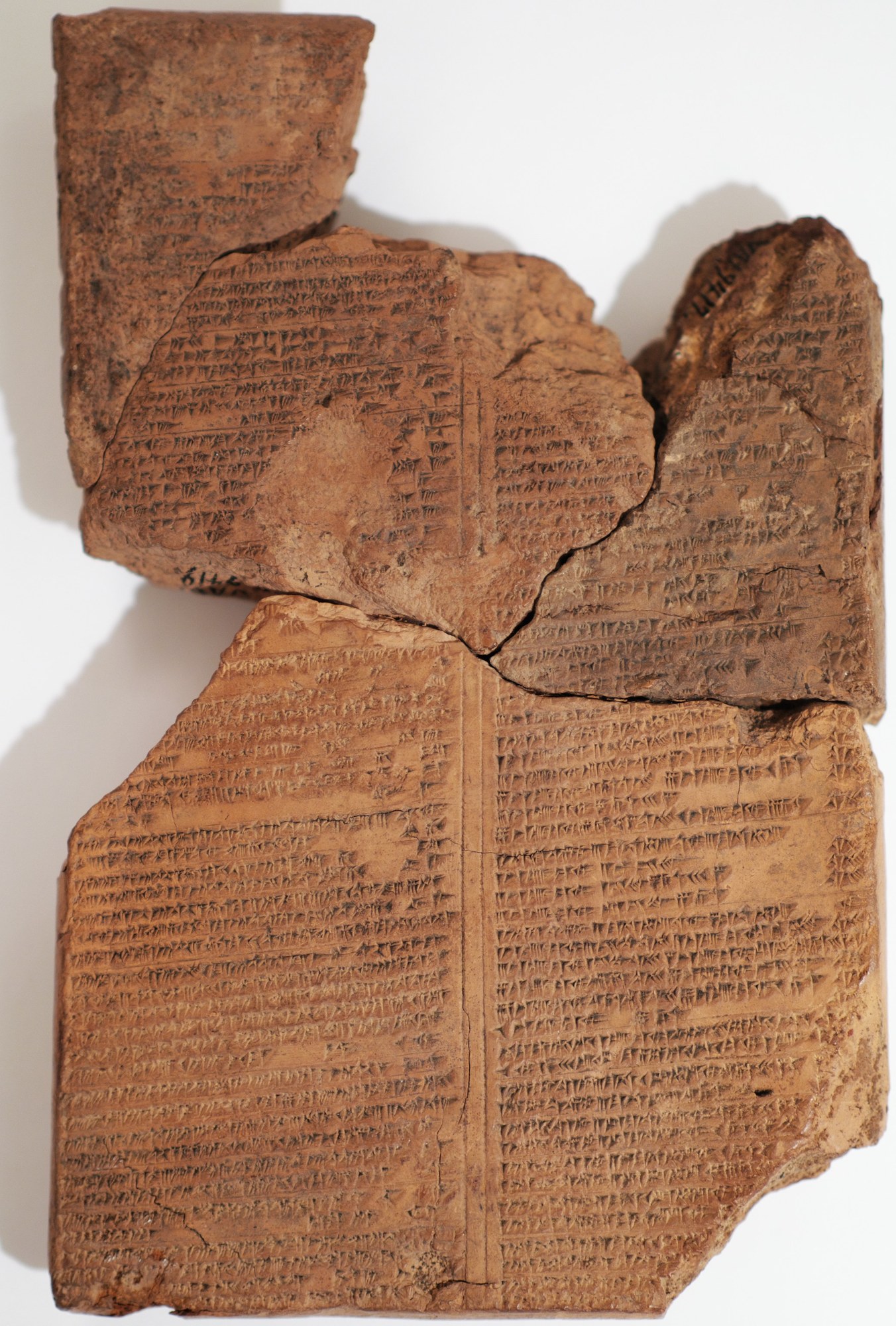
A large fragmentary Babylonian cuneiform tablet, joined from several broken pieces, its surface ruled into columns of dense cuneiform — a copy of the astronomical compendium MUL.APIN, the standard Babylonian handbook of the stars, the paths of the sky and the calendar.
Mesop.

Marduk Founds the Year and Sets the Moon in Its Course

With the sea dead beneath his foot, the champion turned to a quieter labour: fixing the stations of the sky, dividing the year, and handing the moon a monthly work-order. This is the creation of measured time, spoken into being at the world's first dawn.

7 min*Enūma Eliš*
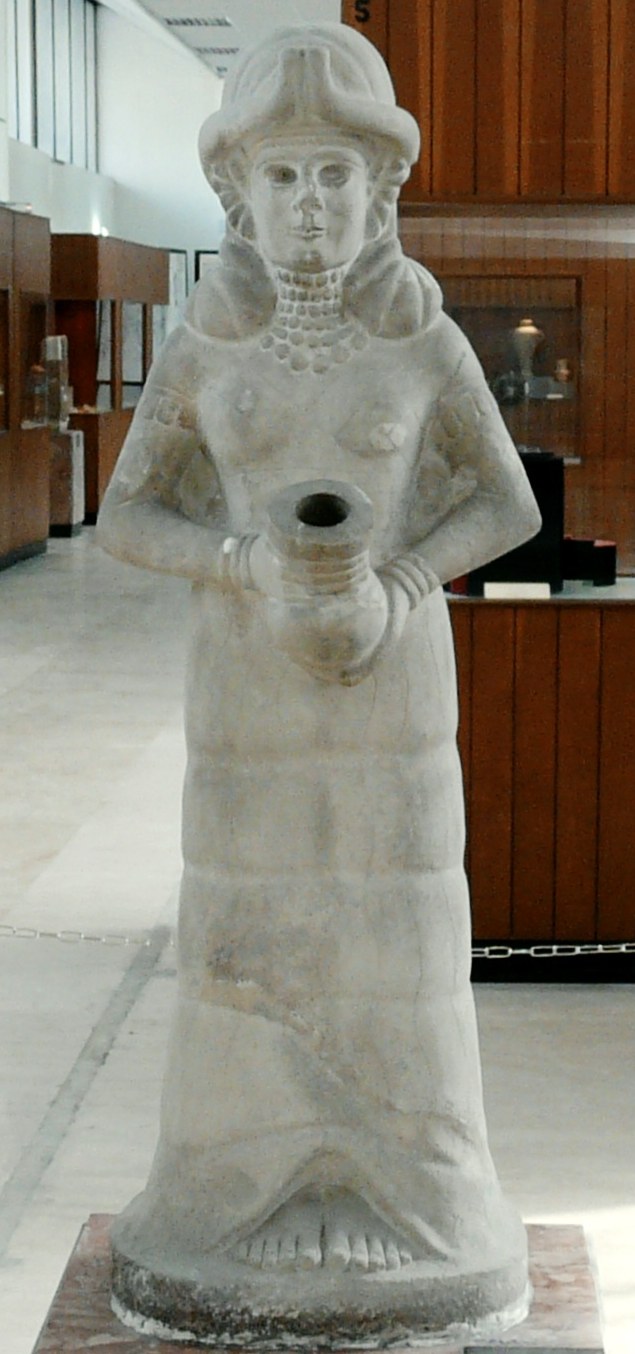
Weathered ancient limestone statue of a standing goddess in a horned headdress and a long flounced robe, a tiered bead choker and necklace at her throat, holding at her belly in both hands a round vase pierced through its centre — the vessel from which the life-giving waters were made to flow; displayed on a plinth in the National Museum of Aleppo.
Mesop.

Nammu: The Primeval Sea Who Bore Heaven and Earth

The gods are digging canals and weeping over the work when their oldest mother carries their tears down into the deep to wake her sleeping son. What she is called, and what she made, is a question two thousand years of clay cannot quite settle.

7 min*Enki and Ninmah*
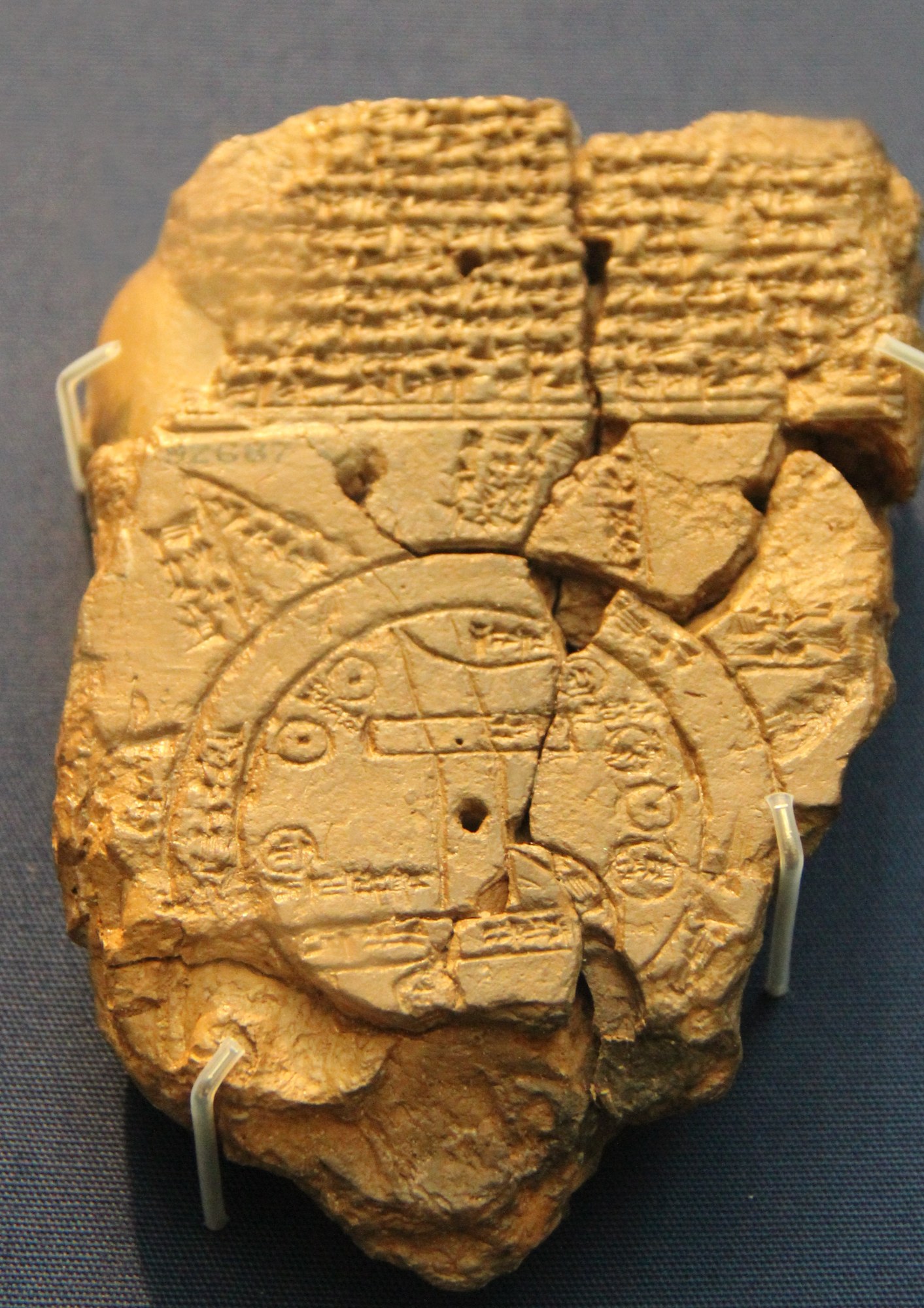
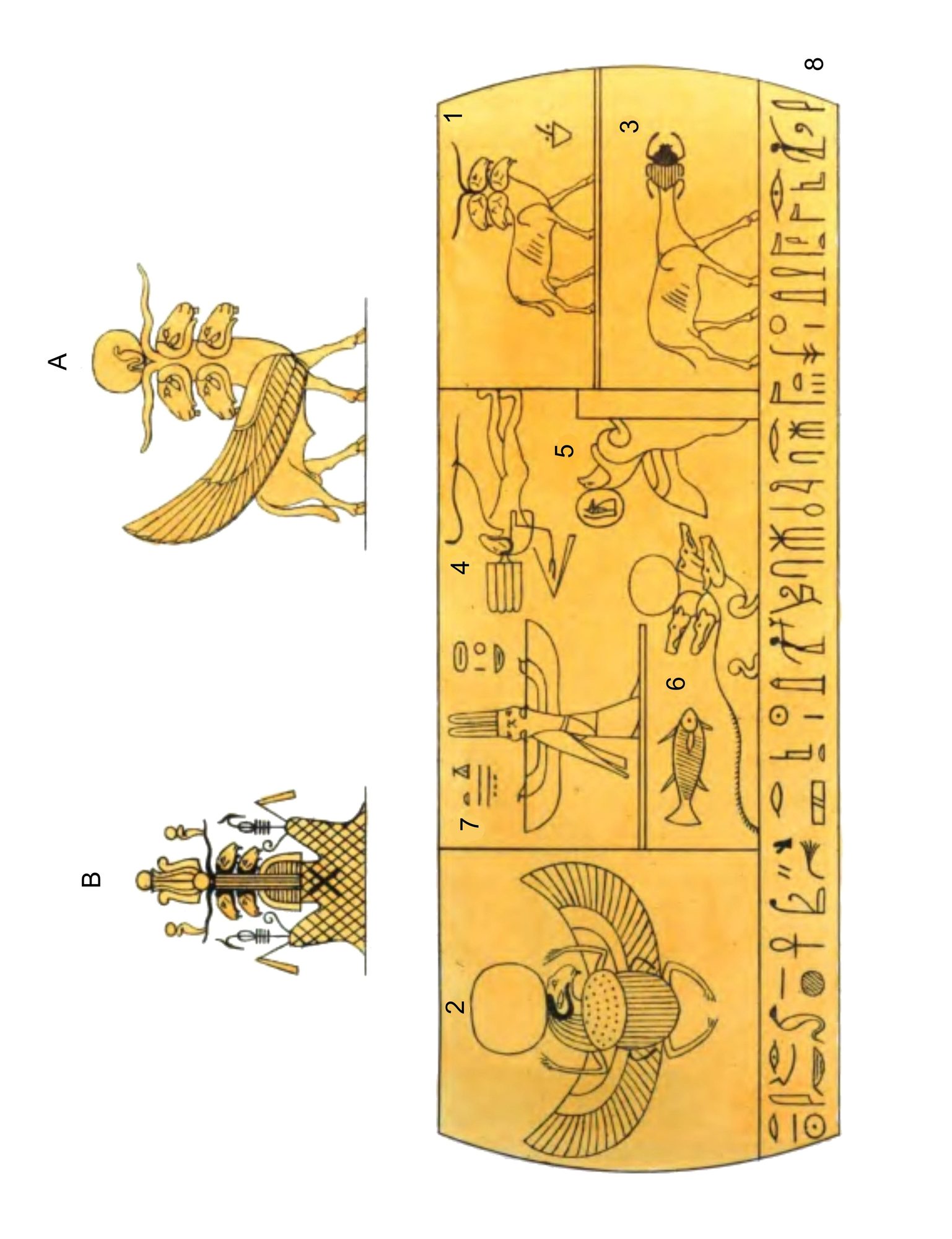
A broken Babylonian clay tablet, its upper half filled with lines of cuneiform and its lower half incised with a circular map of the world: the earth as a disc ringed by the ocean, with radiating triangular regions beyond it.
Mesop.

The Three Earths Beneath the Heavens

One short, forbidden tablet maps the Babylonian universe as six stone floors stacked in open air: three heavens above, three earths below, each a coloured slab laid down by a single arranging god. It is a diagram, not a story, and it argues with itself.

9 minKAR 307 obv. 30–38
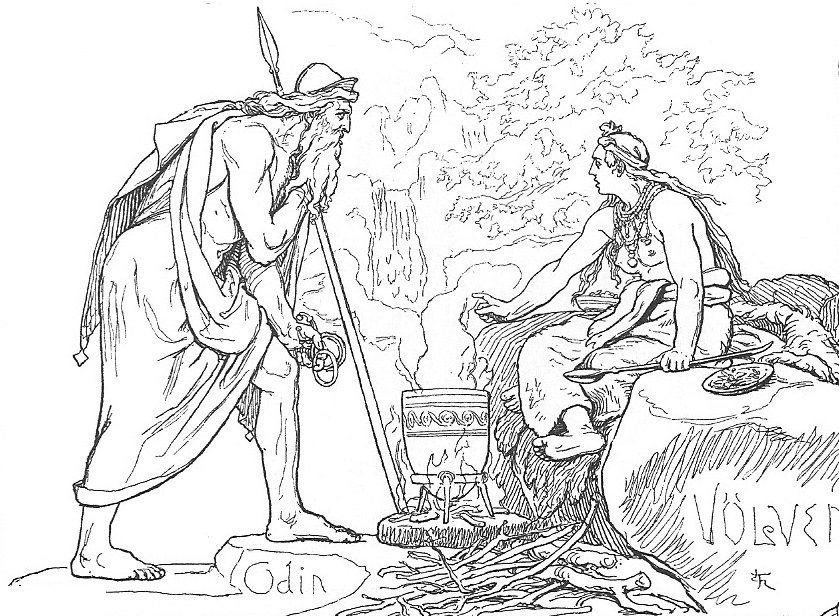
Pen-and-ink line engraving. At left the one-eyed Odin, in a winged cap and a long cloak, leans forward on his upright spear and his sword, his long beard falling; at right the seeress (the völva) sits on a fur-draped rock, one hand raised in speech, a shallow bowl in her lap; a steaming cauldron stands on a low fire between them, a leafy tree behind. The ground bears the incised labels "Odin" and "VÖLVEN".
Norse

The Seeress's Prophecy

Odin raises a dead wise-woman to make her speak, and she gives him the whole arc of the world: its making, his own hidden secrets, and the fire that ends it all.

7 minPoetic Edda
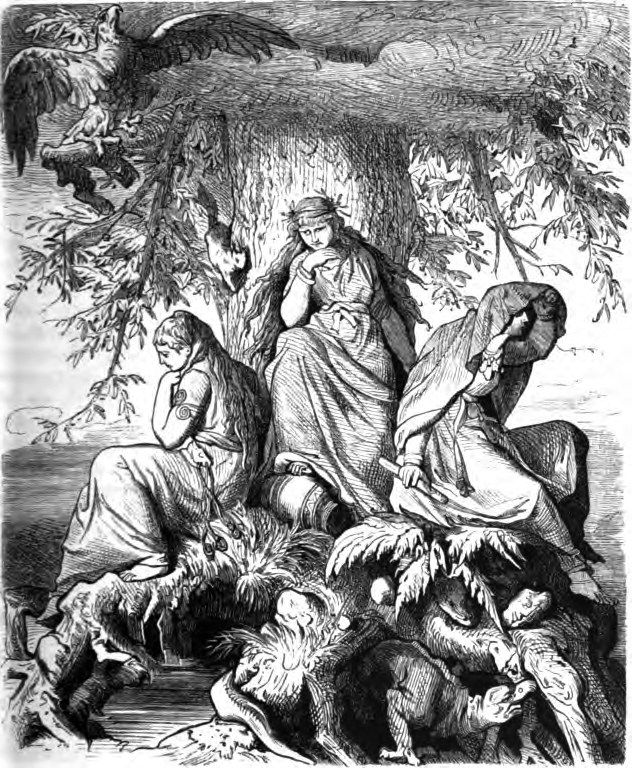
Wood-engraving of the three Norns beneath the world-ash Yggdrasil — three seated maidens in long robes under the great tree, an eagle perched in its crown above and a serpent and gnawing beasts coiling among the exposed roots below.
Norse

The Norns, Shapers of Fate

Three maidens mighty in wisdom come up from a dwelling beneath the world-ash, cut marks into wood, and lay down the lives of the sons of men.

5 minPoetic Edda
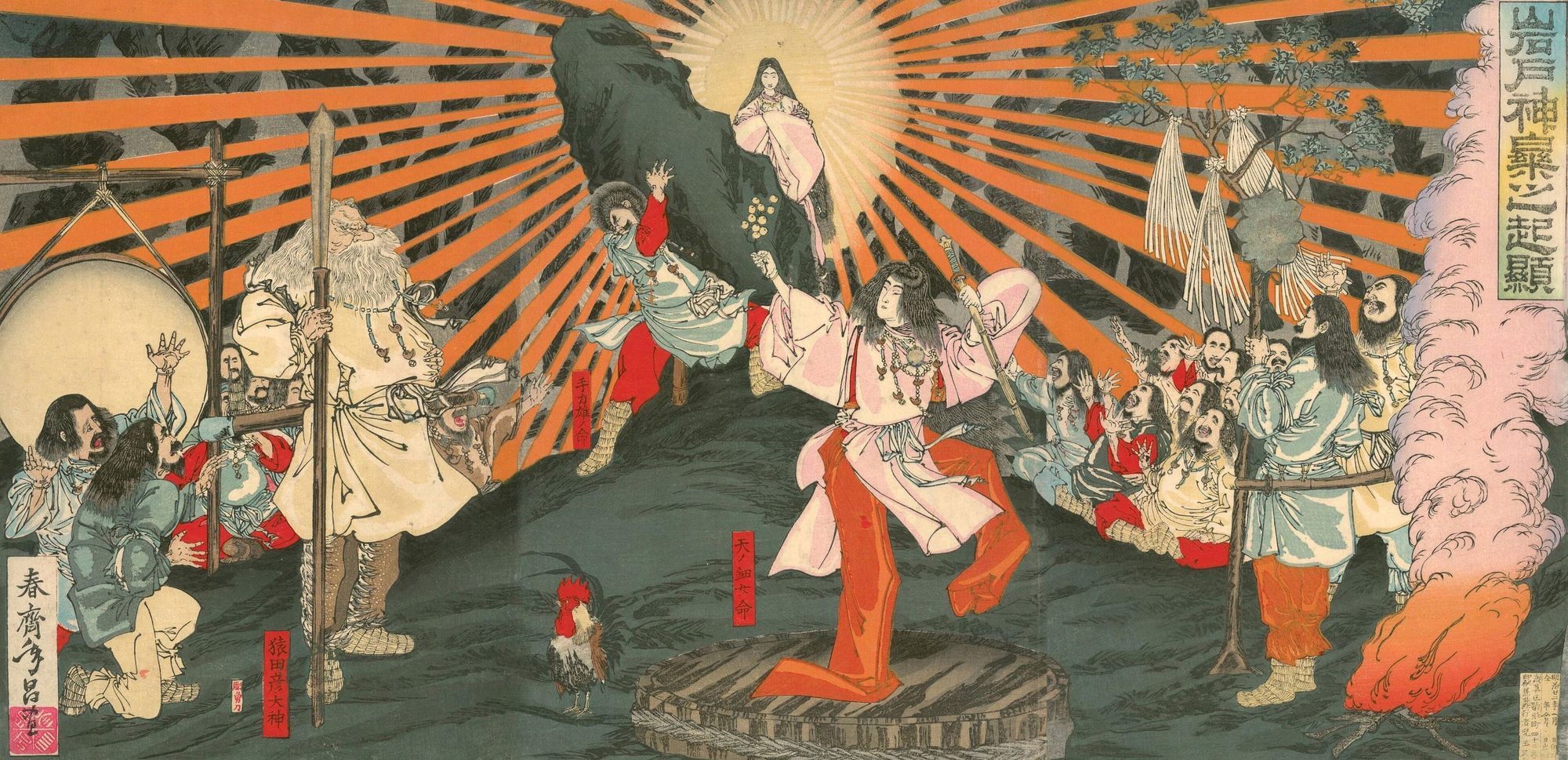
Meiji woodblock print of the sun-goddess Amaterasu emerging from the Heavenly Rock-cave, a radiant white-and-pink-robed figure haloed in a golden sunburst against the dark cliff, while below her the Dread Female Ame-no-Uzume dances wildly on an overturned tub, a red-combed cock crows at her feet, and the strong-god Tajikarao reaches up toward the cave; orange sun-rays stream across the whole scene.
Japanese

Amaterasu and the Rock Cave

The sun-goddess bolts herself inside a stone door and the world goes black; it takes a forged mirror, a ribald dance and eight hundred myriad gods laughing in the dark to trick the light back out.

6 minKojiki
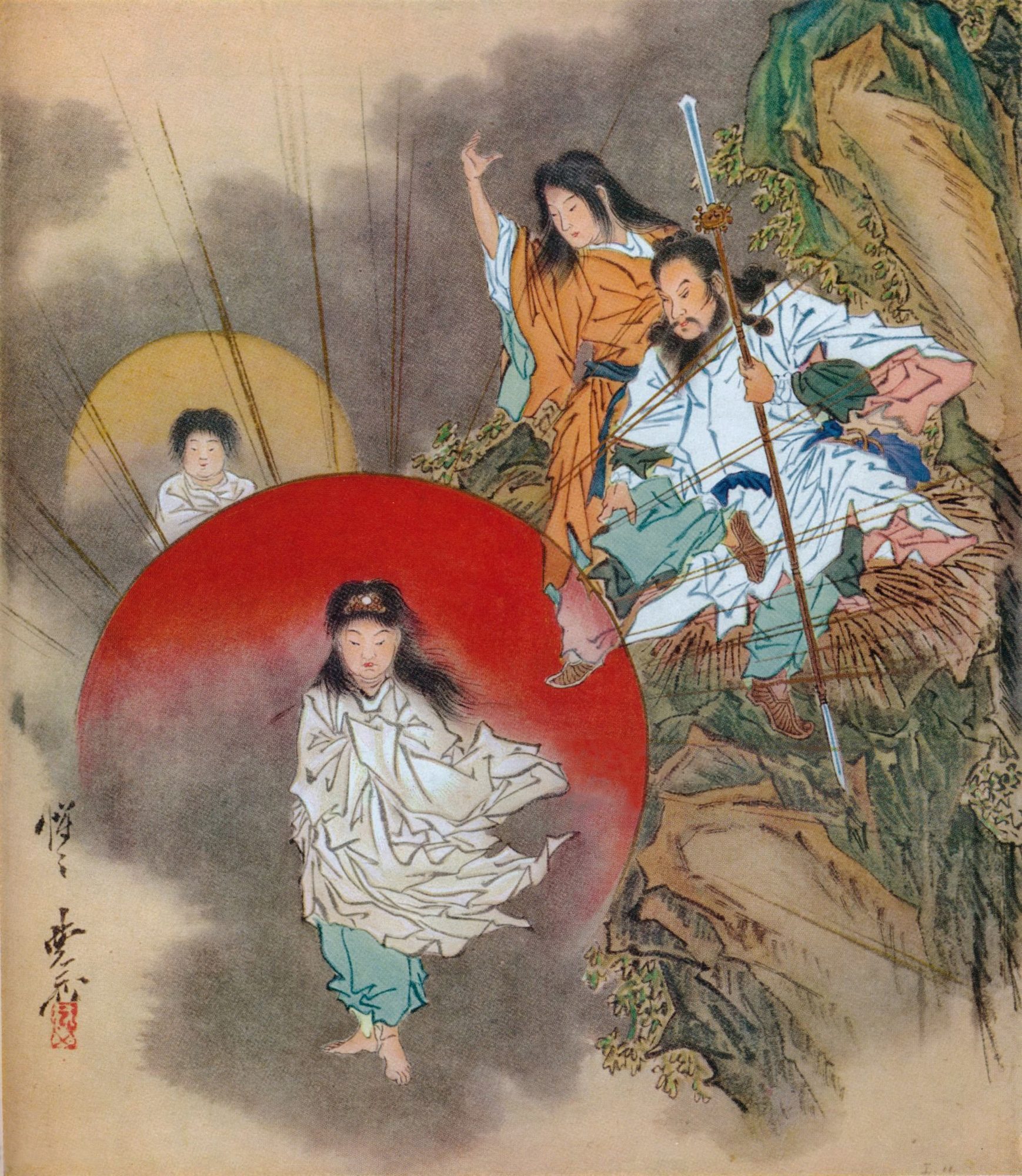
Richly coloured Japanese painting of the division of the cosmos among the first gods: the newborn sun-goddess Amaterasu rises white-robed inside a great red solar disc at the centre, a moon-child stands within a pale disc at the left, and on the heavenly cliff at the upper right the bearded creator-god Izanagi in white robes holds the heavenly jewel-spear beside the orange-robed goddess Izanami, whose arm is raised; grey cloud and streaming light fill the background.
Japanese

Takamagahara, the High Plain of Heaven

Not a mountain and not a sky-city but a plain: the celestial country of rice-fields and river-councils where the sun-goddess reigns, the cosmos opens, and the line of emperors takes its first breath.

7 minKojiki
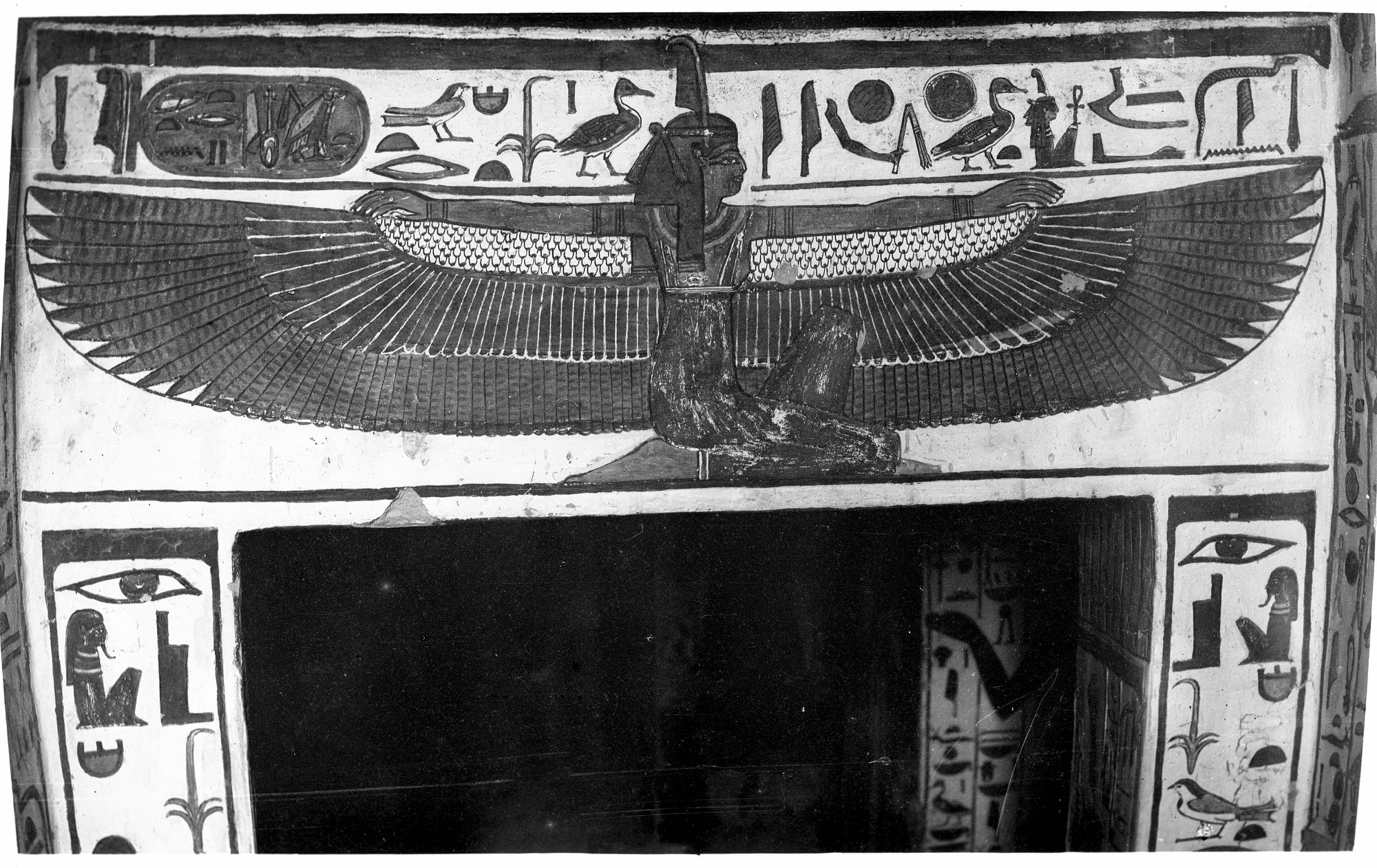
An ancient Egyptian tomb painting from the tomb of Nefertari: the winged goddess Maat kneeling on the lintel of the burial chamber, her great wings spread, facing east.
Egyptian

Maat: The Feather Against the Heart

Truth, justice and the balance of the cosmos wear a single ostrich feather; against it the heart of the dead is weighed, and the gods themselves are said to live on her.

6 minThe Book of the Dead
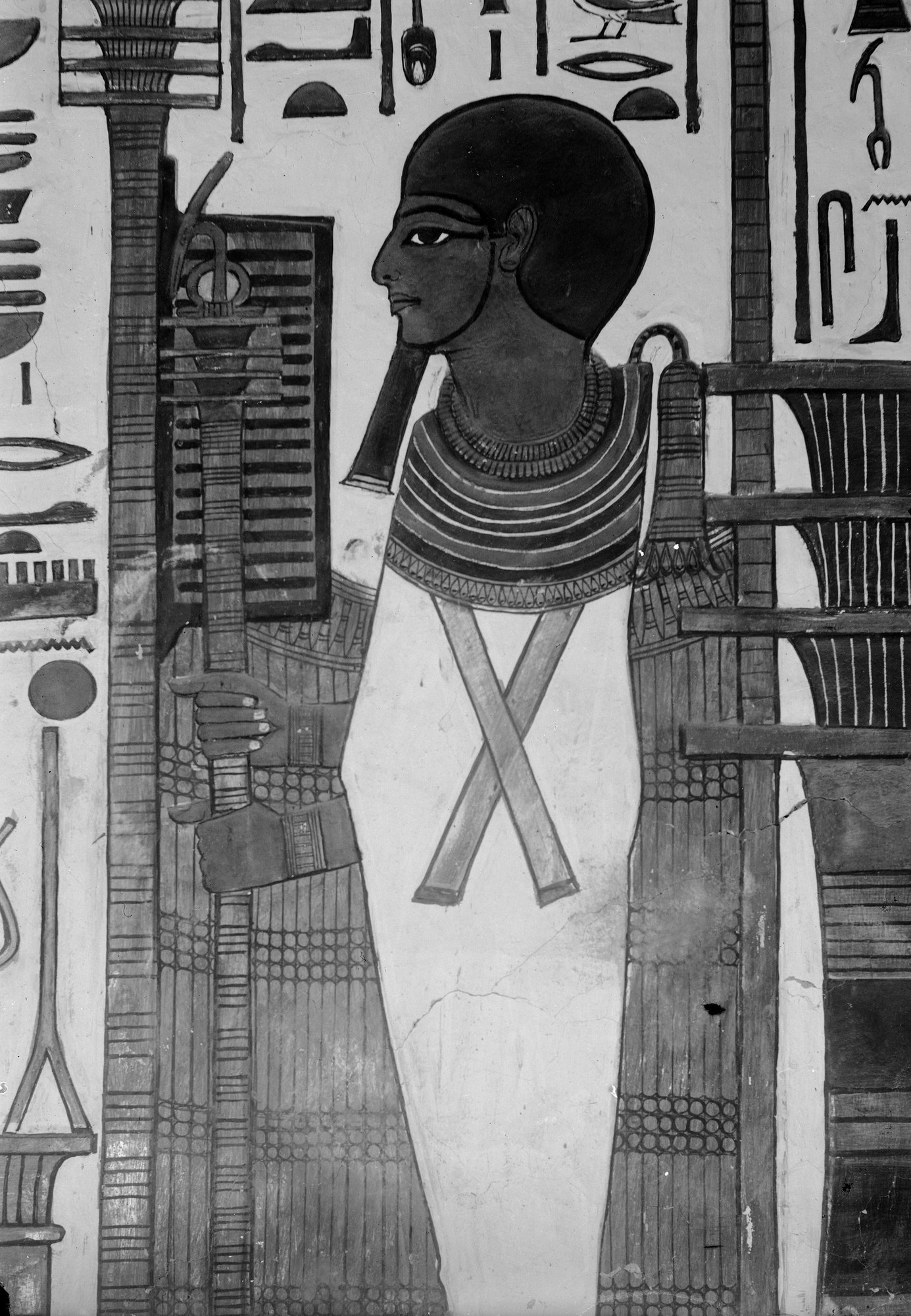
Wall-painting of the god Ptah in his shrine: a mummiform figure in a close skullcap and straight divine beard, a broad beaded usekh collar over his shoulders, his hands emerging from the wrapped body to grip a tall composite was-djed-ankh staff, standing within a kiosk framed by djed-pillars and columns of hieroglyphs. Black-and-white archival photograph of the ancient painting.
Egyptian

Ptah: The Craftsman Who Thought the World

The god of Memphis made no clay and spilled no seed. He devised the cosmos in his heart and spoke it with his tongue, then built the very bodies the other gods would live inside.

6 minMemphite Theology
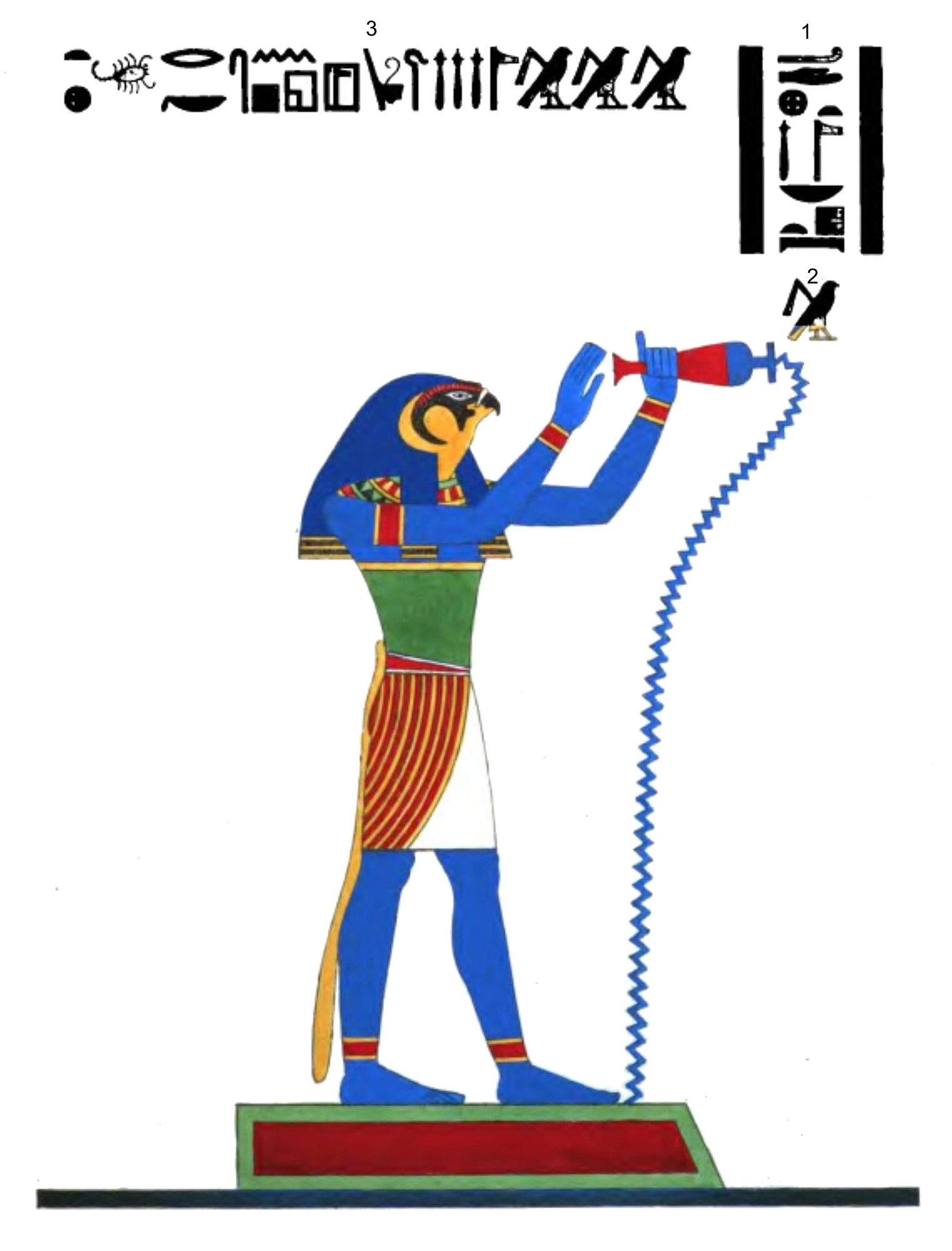
A hand-coloured lithograph plate of Thoth trismégiste: the ibis-headed god of writing standing in profile with a writing palette, from Champollion's Panthéon égyptien.
Egyptian

Thoth, Scribe of the Gods

Reed-pen in one hand and palette in the other, the ibis-headed god stands at the Great Balance and writes down whether a dead soul lived true: the recorder, the proclaimer, and the very word that ordered the world.

6 minThe Book of the Dead / Book of Coming Forth by Day
A hand-coloured lithograph plate of Amun-Ra, l'esprit des quatre éléments: the god in composite form with plumed crown, from Champollion's Panthéon égyptien.
Egyptian

Amun, the Hidden One

Felt like wind through feathers and never seen, the self-made creator of Thebes whose very name means concealment: how a local city-god rose to become Amun-Re, king of all the gods.

6 minHymns to Amun
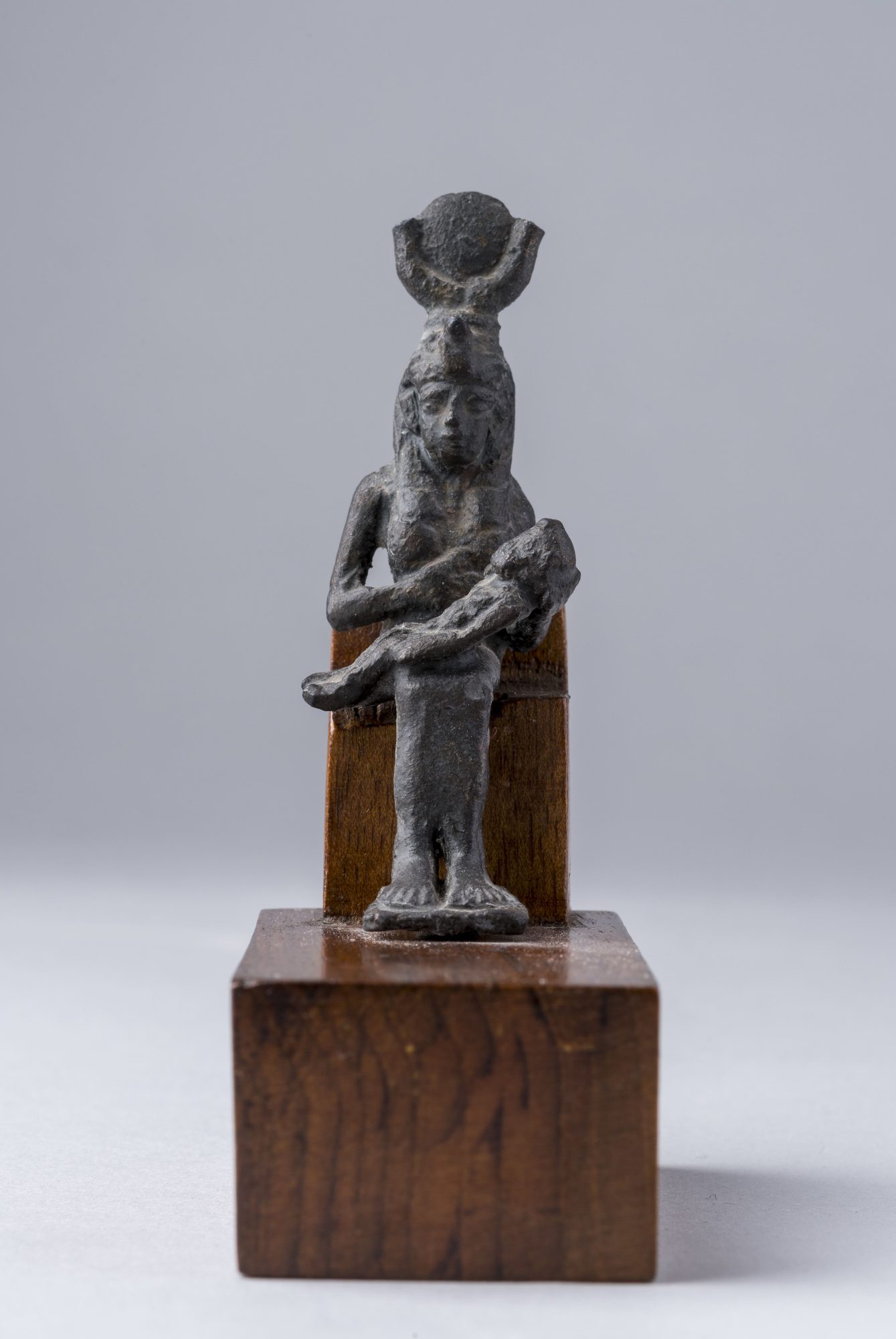
An ancient Egyptian bronze statuette of the enthroned goddess Isis nursing the infant Horus on her lap.
Egyptian

Isis, the Great of Magic

Weret-hekau, Great of Magic: the goddess who reassembled a murdered god, hid her son in a marsh, and wrung the secret name of the sun-god out of his own poisoned body.

6 minThe Legend of Ra and Isis
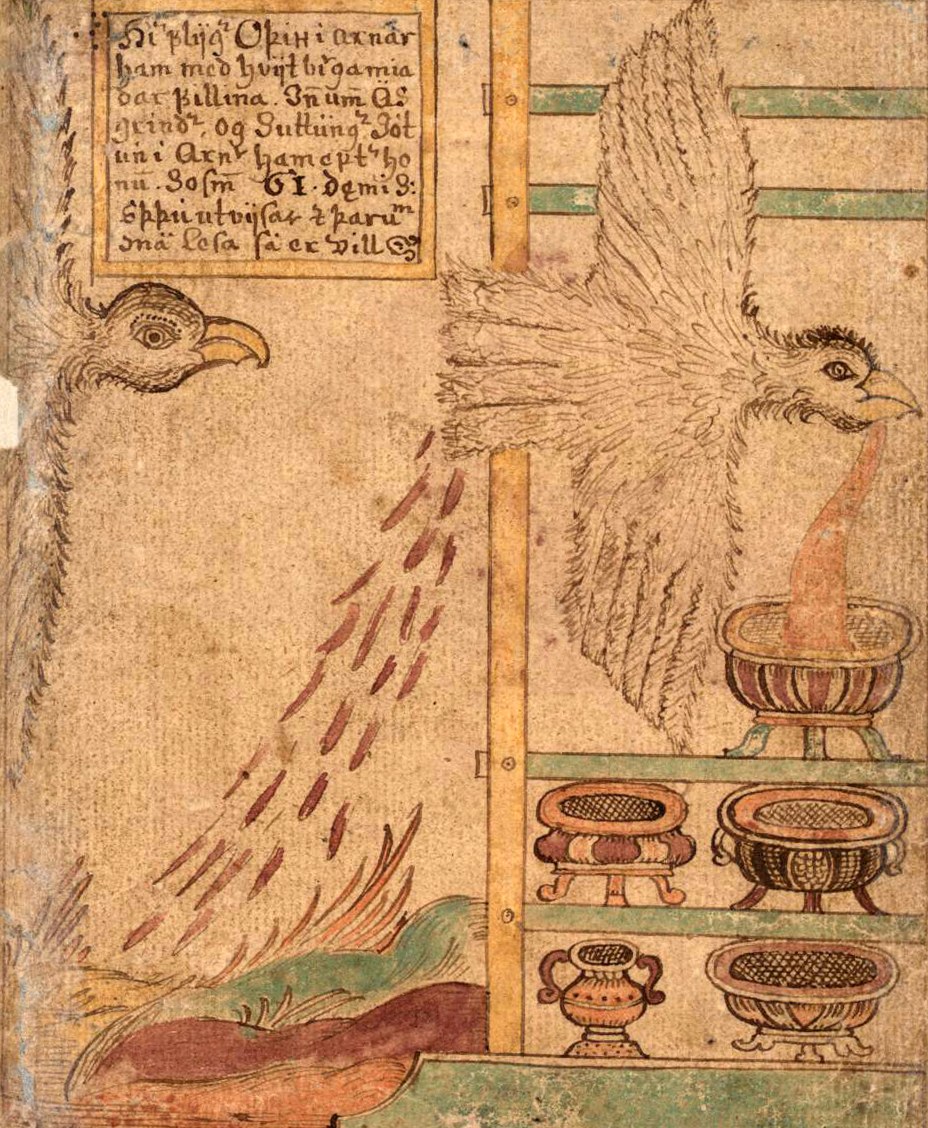
Icelandic Edda-manuscript illustration: Odin, in the shape of a great winged eagle, spews the stolen Mead of Poetry down into three ritual vessels ranged on a wooden frame, while the giant Suttung — also in eagle-shape — pursues at upper left and a stream of the escaped mead falls away below; a handwritten Icelandic caption box sits at top-left.
Norse

The Mead of Poetry

How poetry got into the world: a murdered sage, a mead brewed from his blood, and the god who slept three nights with a giant's daughter to steal it, then left her to grief.

6 minSnorri Sturluson
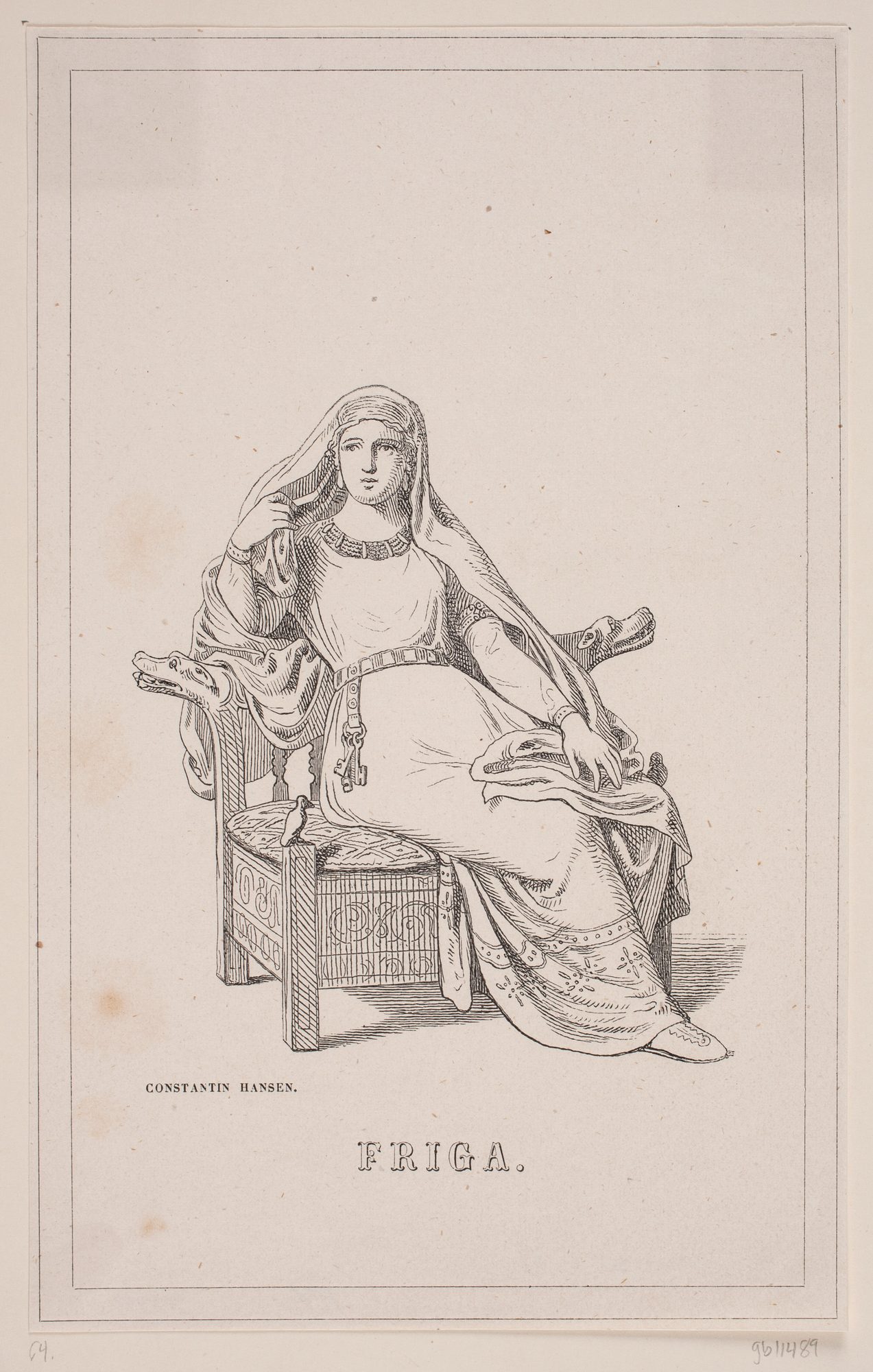
A 19th-century print of the goddess Frigg as a crowned queen, standing full-length in flowing robes, a distaff in one hand.
Norse

Frigg, Queen of the Aesir

She knows the fate of every living thing and never speaks it, and when the one doom she tried to bar comes for her son, all she can do is weep: the foremost of the goddesses, undone by a single overlooked shrub.

5 minSnorri Sturluson
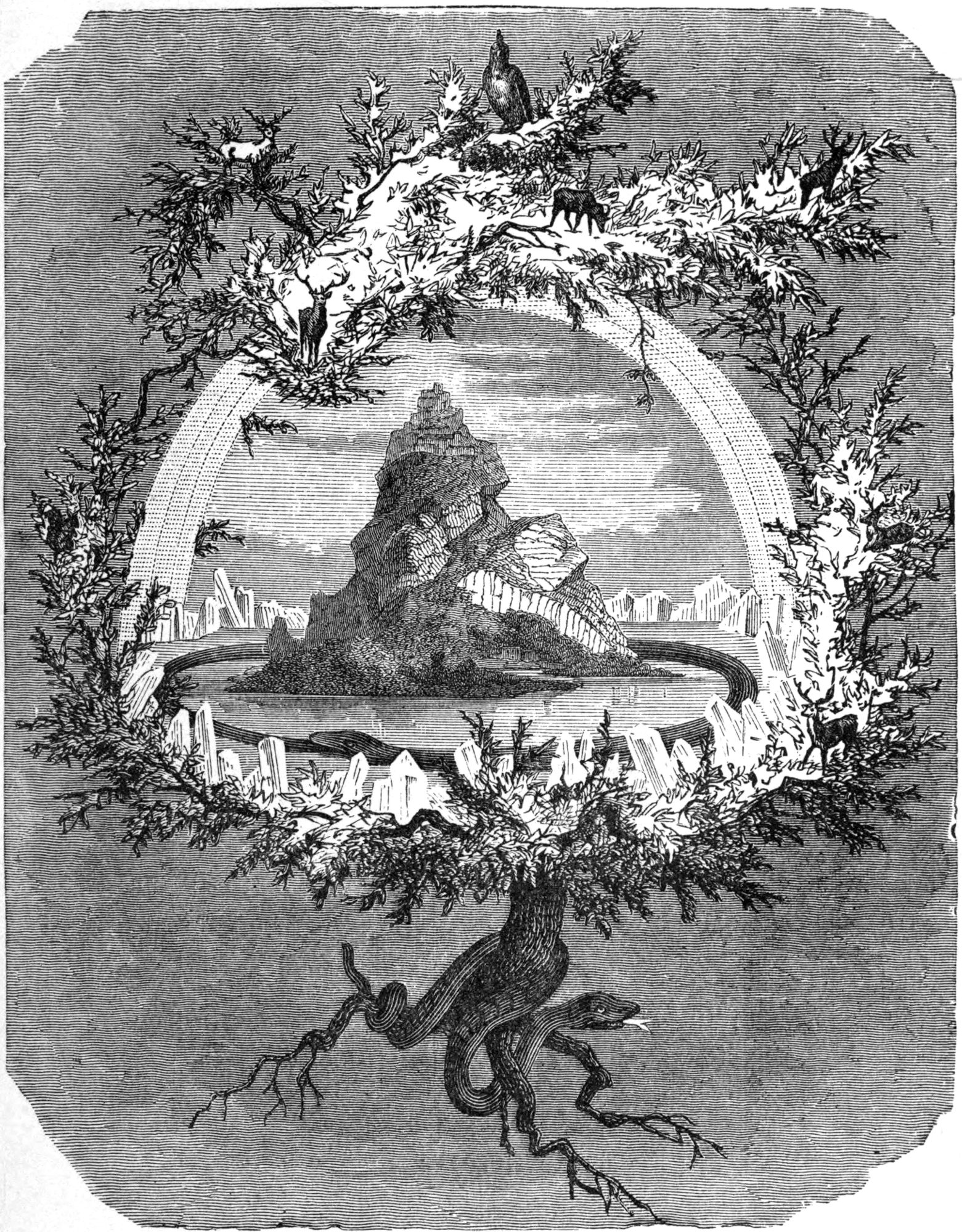
A 19th-century wood-engraving of the world-ash Yggdrasil seen whole: an eagle perched at the crown among the upper branches with four stags browsing the foliage, the central world encircled by the rainbow Bifröst and a ring of water, and the serpent Níðhöggr coiling among the exposed roots at the foot of the tree.
Norse

Yggdrasil, the World Tree

The great ash that binds the worlds is not a serene axis but a creature in perpetual pain: gnawed above, rotting within, torn from below, and still standing green over the well where the Norns pour their clay.

8 minPoetic Edda
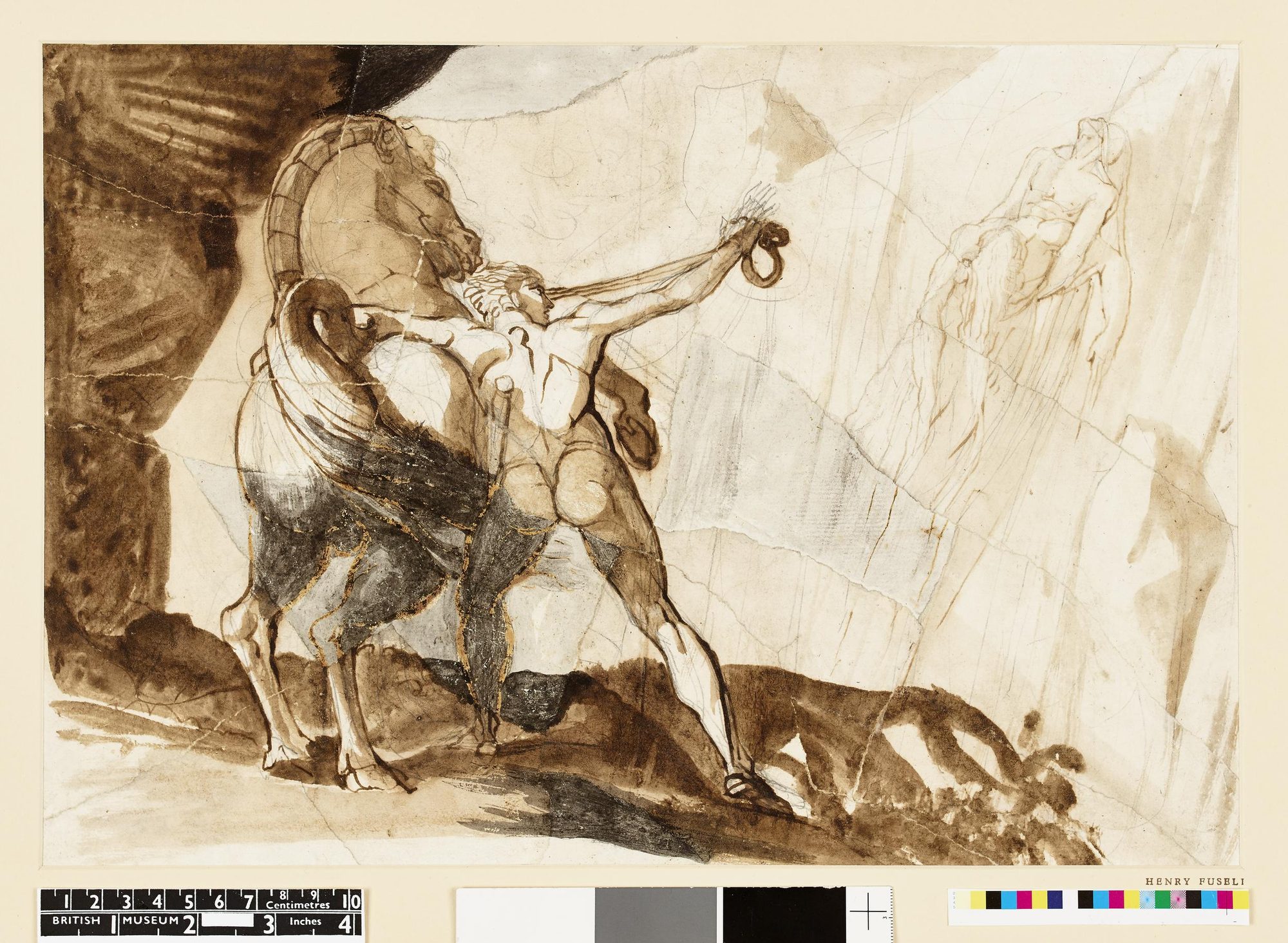
A romantic pen-and-ink drawing of Odin on his night-ride: the god in a wide-brimmed hat and cloak riding down toward the shadowy gate of Hel, his spear lowered.
Norse

Odin, the Allfather

He hanged himself on the world-tree and gave an eye to a well, and in return he took the runes and the deepest draught of wisdom: the god who paid for knowledge in his own flesh.

6 minPoetic Edda
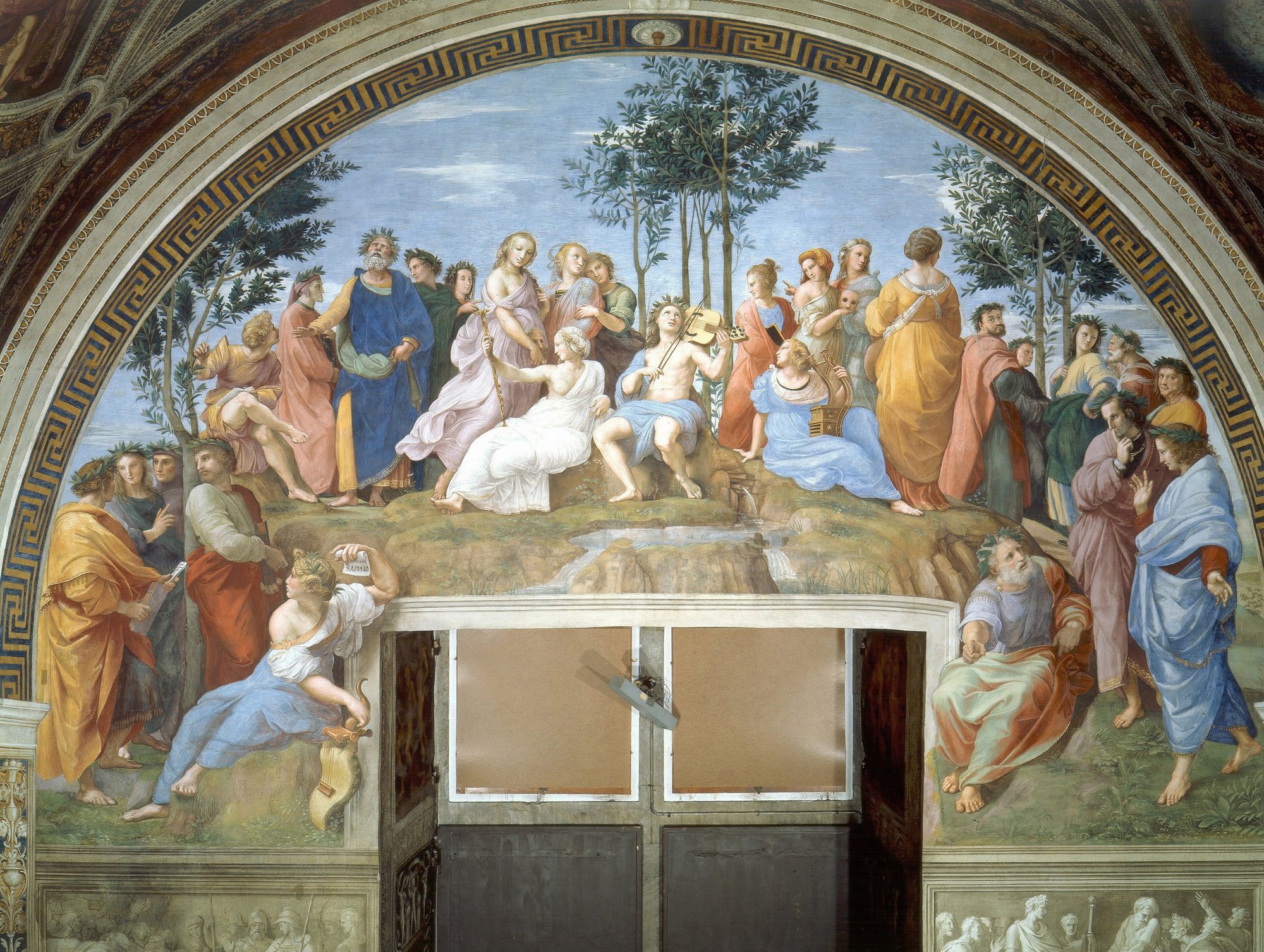
Raphael's fresco The Parnassus: Apollo seated at centre on Parnassus playing a stringed lyre, surrounded by the nine Muses and the great poets of antiquity, beneath a vaulted sky.
Greek

Apollo, God of Light and Prophecy

The newborn who burst his swaddling bands to claim the lyre, the bow and the truth of Zeus, then killed a dragon to found the oracle that spoke for him.

5 minHomeric Hymn 3
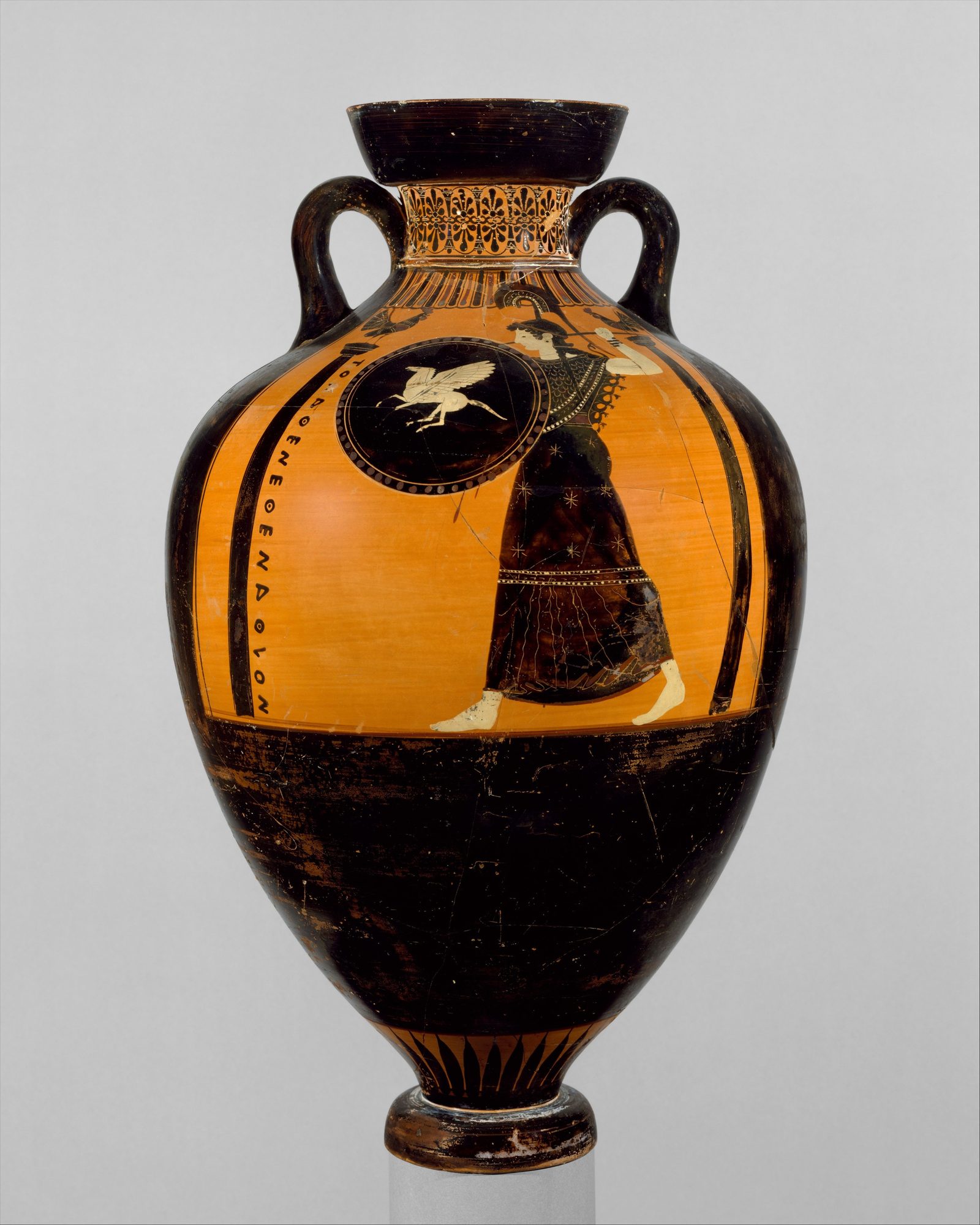
A black-figure Panathenaic prize amphora: the goddess Athena Promachos strides to the left between two columns, helmeted, brandishing a spear and holding a round shield, her aegis across her chest.
Greek

Athena, Goddess of Wisdom and War

She was born from her father's skull in full armour, spear already levelled, and the whole of Olympus reeled at the sight of a daughter equal to Zeus.

5 minHesiod
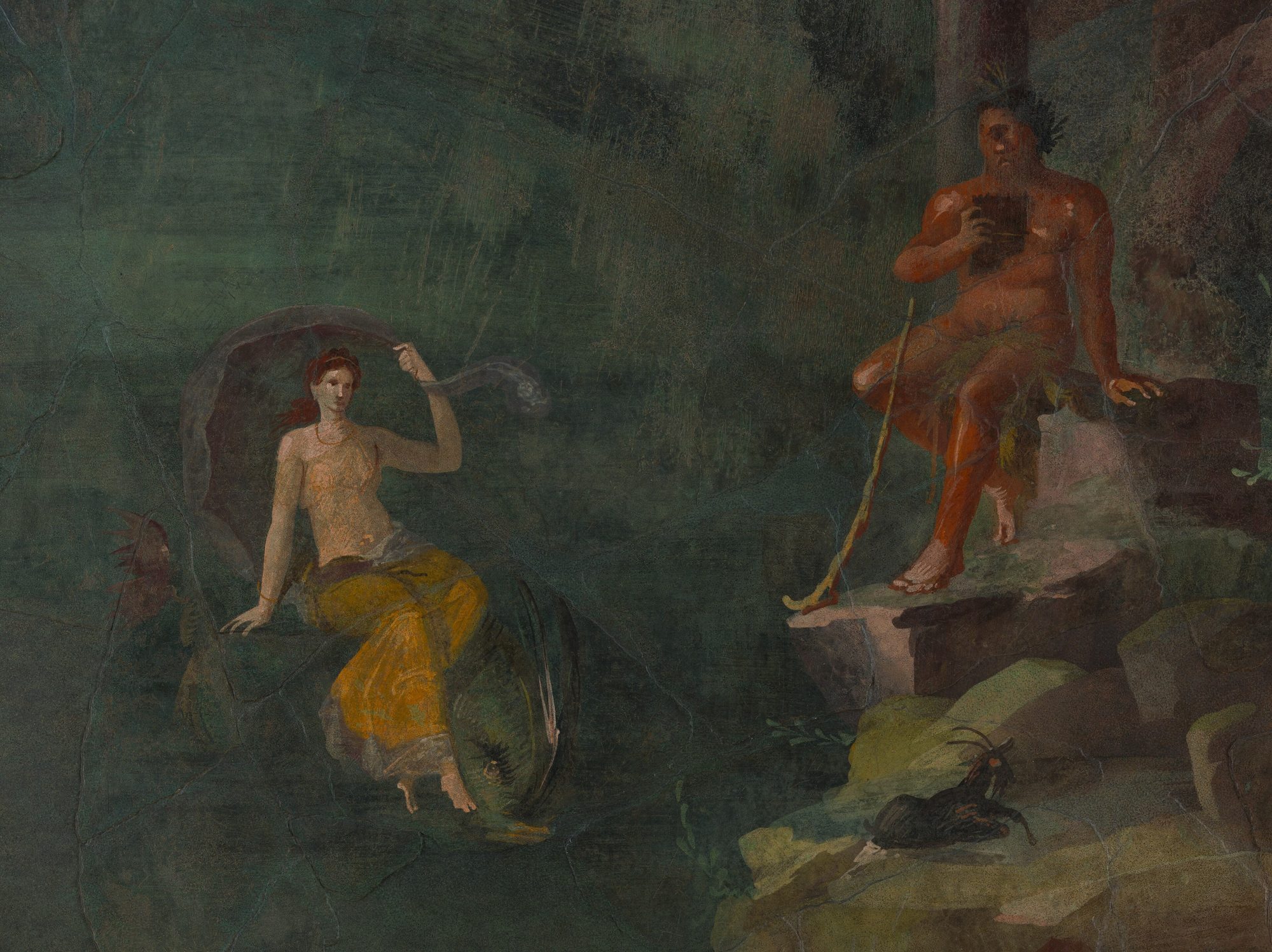
A Roman fresco in the Third Style: the Cyclops Polyphemus, a giant seated in a landscape, receives the cup of wine as the sea-nymph Galatea rides a dolphin across the sea at the panel's edge, under a violet-blue sky.
Greek

Odysseus and the Cyclops

He beat a giant with a lie and a sharpened stake, then threw it all away for the pleasure of hearing the monster learn his name.

7 minHomer
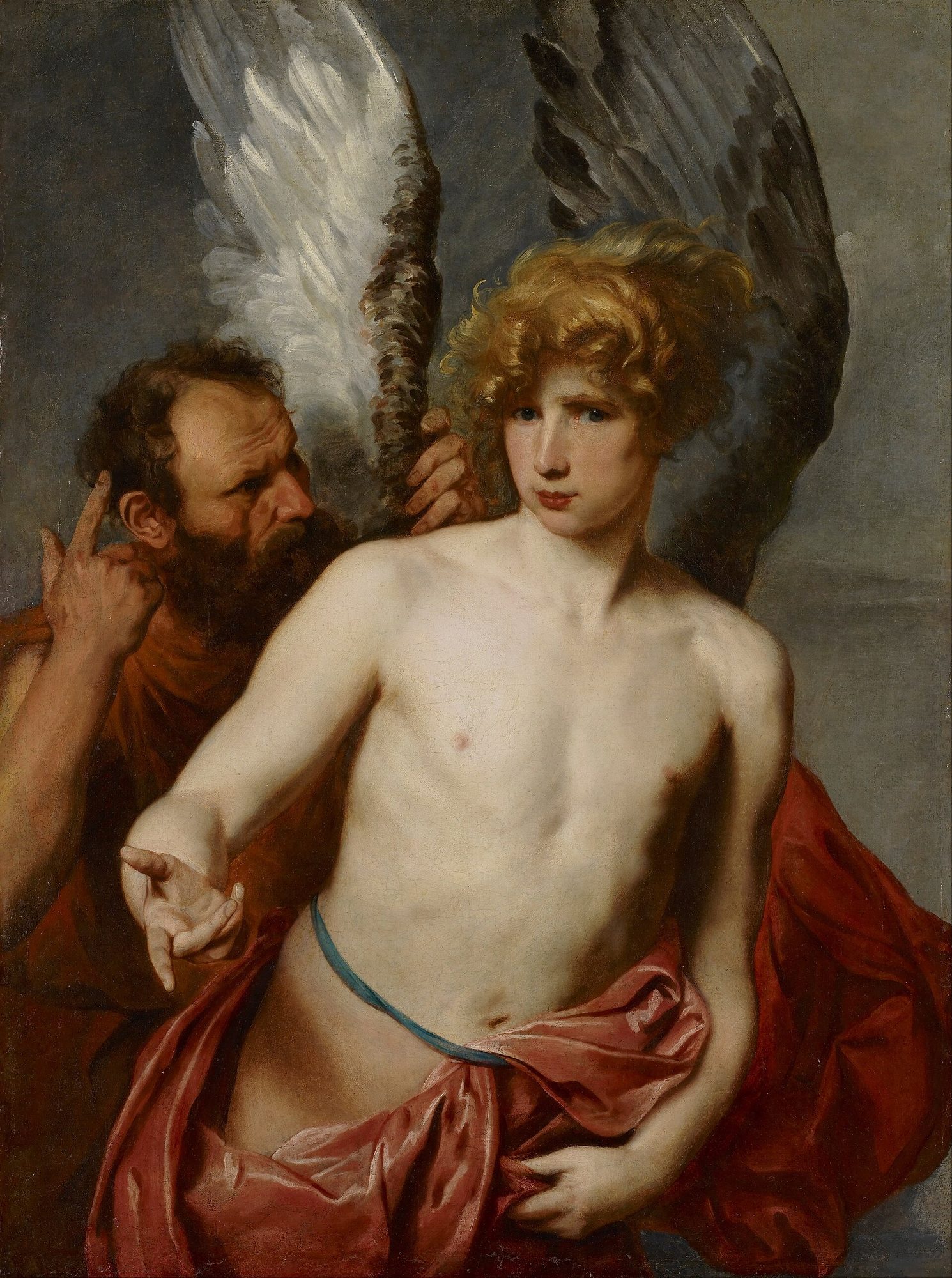
A Baroque painting of Daedalus and Icarus. The aged, balding, grey-bearded Daedalus stands behind his son in a russet-orange robe, one hand steadying a great feathered wing (one pinion pale, one dark) at the boy's shoulder while the other hand rises with a raised, admonishing finger, as though giving a warning. In front of him the youthful, bare-torsoed Icarus, with tousled golden hair and a red drape falling from his hips, gazes out past the viewer, one arm extended. The background is a plain, shadowed studio wall.
Greek

Daedalus and Icarus

A caged inventor reasons that if the sea and the land are watched, the sky at least lies open. He builds his son a pair of wings, and gives him one rule to keep him alive.

6 minOvid
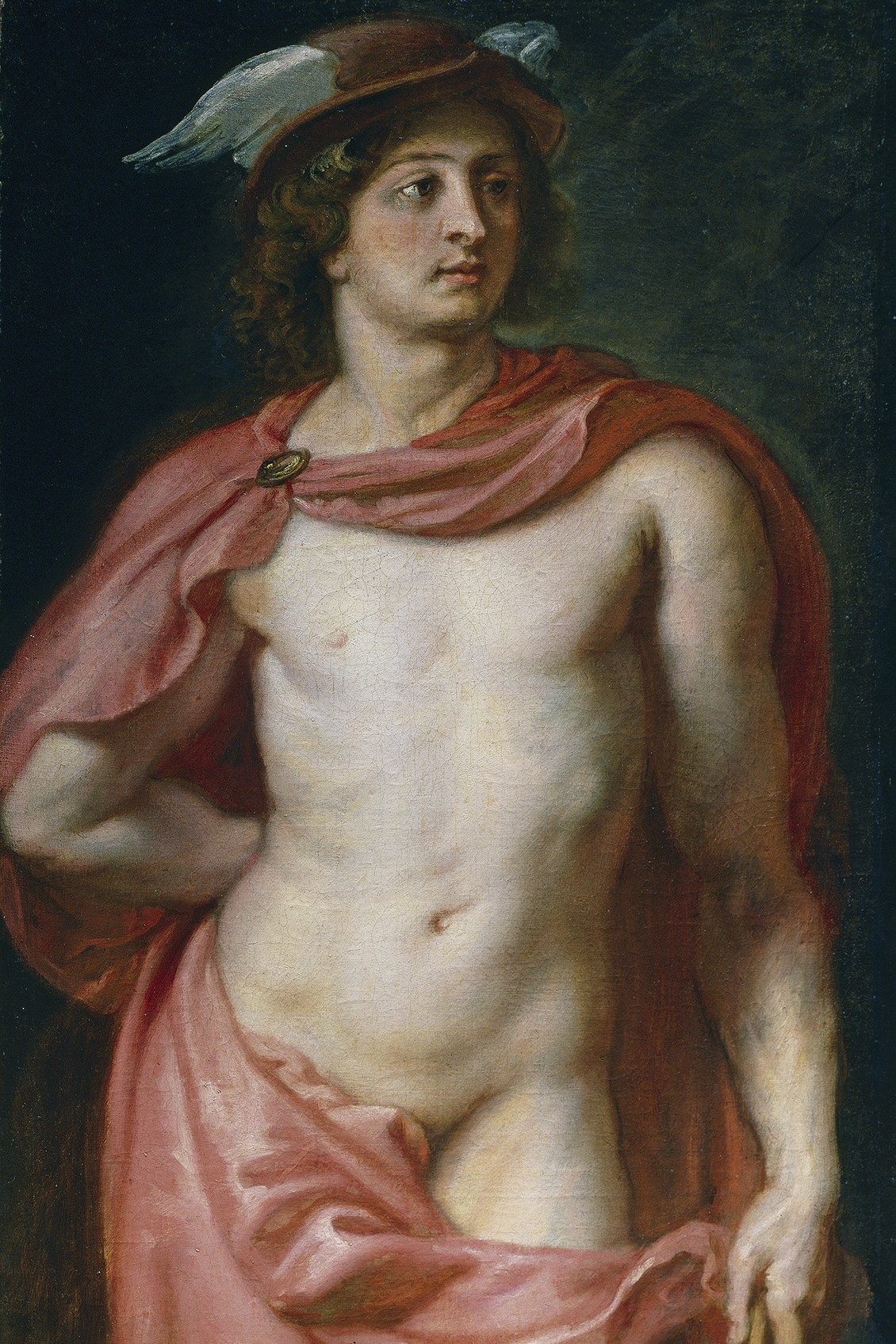
The young Hermes, unbearded and long-haired, wearing the winged traveller's hat (petasos) with its pale feathers spread at either side. A coral-rose mantle is clasped at one shoulder with a gold brooch and falls across his bare torso; he stands against a dark ground, his head turned to gaze aside.
Greek

Hermes, the Messenger God

Born at dawn, he had invented the lyre and stolen a god's cattle before nightfall. The trickster who talks his way onto Olympus and walks the dead down to Hades.

6 minHomeric Hymn 4