The gods have made a game of him. They stand in a ring at their assembly and take turns: one looses an arrow, another swings a blade, a third hurls a stone, all of it aimed straight at the fairest of them, and none of it touches him. The shafts glance away, the edges will not bite, the stones drop harmless at his feet, and everyone laughs, and Snorri tells us this seemed to all a great honour. It is the strangest scene in the north: a god so beloved and so protected that the other gods entertain themselves by trying, gleefully, to kill him. They are certain they never can. They are wrong, and the proof is already in the ring, handed to a blind man.
Breiðablik, where nothing unclean enters
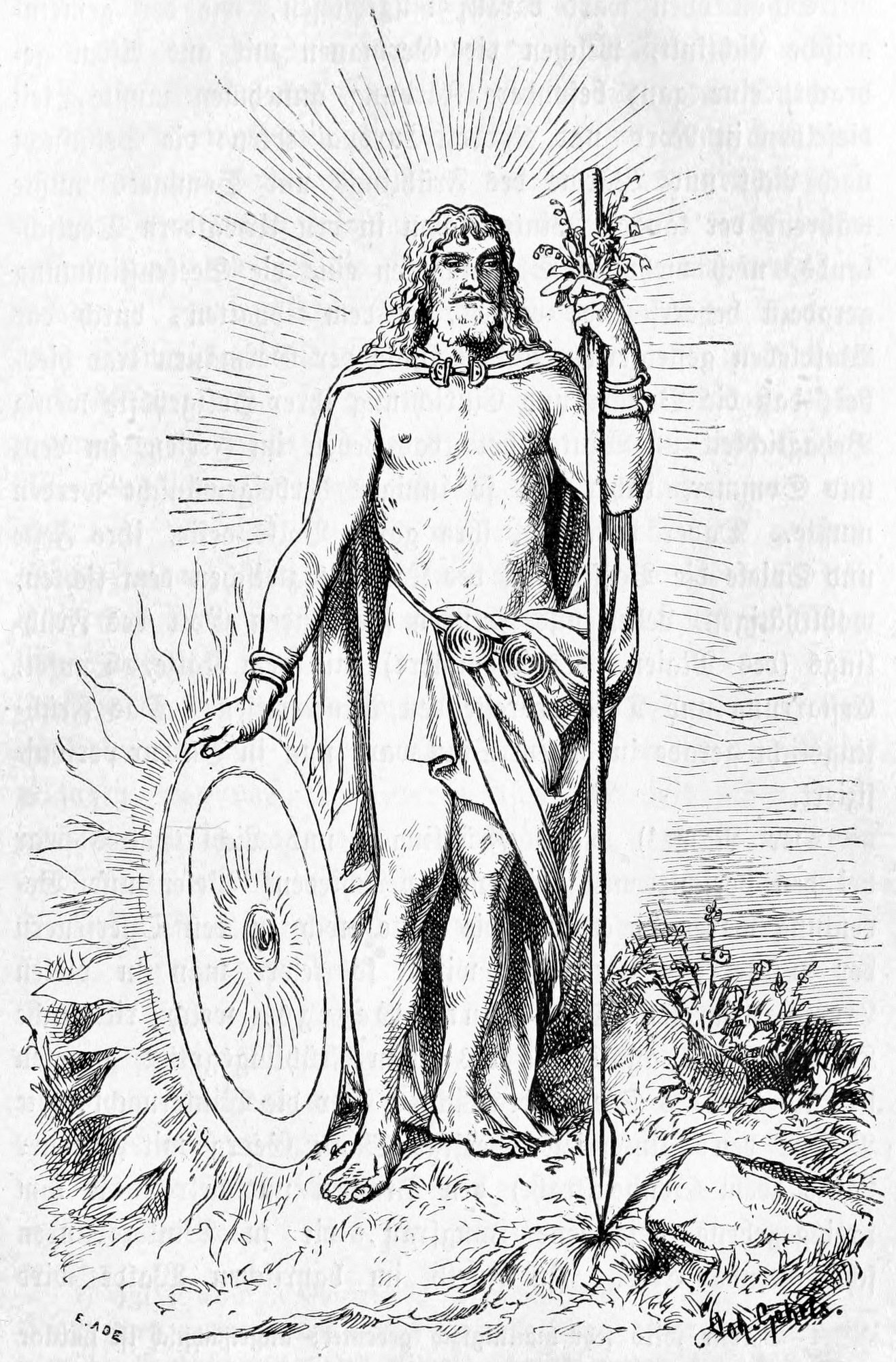
Baldr is Odin’s second son, and the sources reach for superlatives about him as they do for no one else. He is the best, Snorri says, and all praise him; so fair and bright that rays of light issue from him, so white of brow that the whitest plant on earth is likened to it. He is the wisest of the ÆsirThe gods of Asgard, led by Odin, the principal group among the Norse gods., the mildest, the most eloquent, and such is his nature that once he has pronounced a judgment none can alter it.
He lives in a heavenly hall called Breiðablik, Broad-gleaming, into which nothing unclean can ever enter. The poetry agrees: Grímnismál sets that hall in the land where the fewest crimes are known. He is, in a pantheon of one-eyed schemers and thundering brawlers, the one figure who is simply, uncomplicatedly good — and the myth exists to take him away.
His gentleness even has a legacy. Snorri names a son of Baldr and Nanna called Forseti, whose own hall is Glitnir, and says that all who come to him with disputes go away perfectly reconciled. The son of the god who could not be argued with inherits the office of settlement. It is a small portrait of a line: the father whose word is final, the son who ends quarrels. What becomes of Forseti when the doom falls, the sources do not tell; he vanishes from the record without a word.
The death the world could not prevent
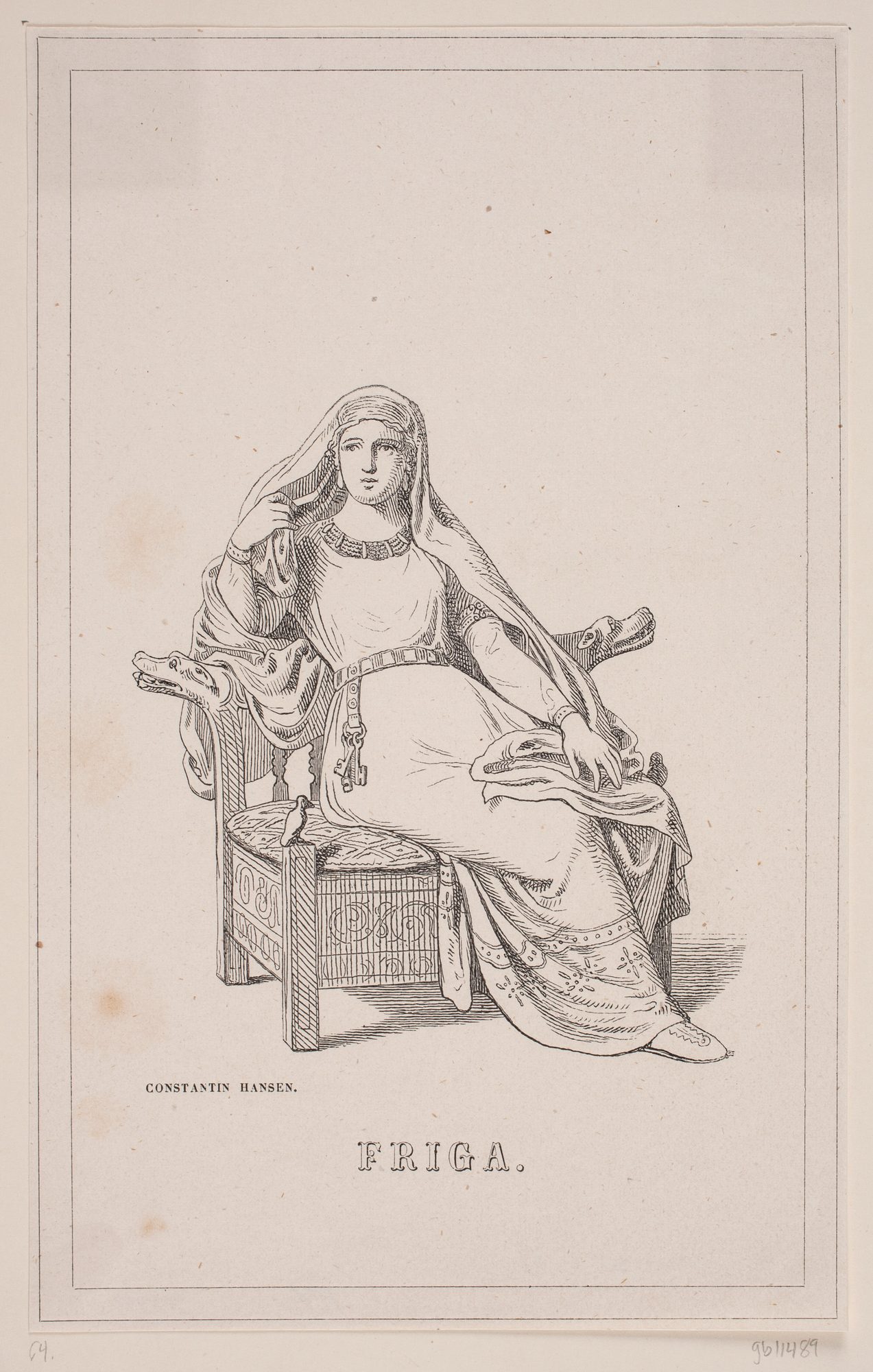
The game was safe because of a promise. Warned by dreams, Frigg asked the whole of creation to swear that nothing would harm her son, and everything swore — fire and water, iron and stone, sickness and beast — all but one shrub too young to swear, the mistletoe. Loki drew the secret out of her in a woman’s shape and put the shrub in the blind hand of Höðr, Baldr’s own brother; the one thing the world forgot to fear went through him, and the best of the gods fell dead to the ground.
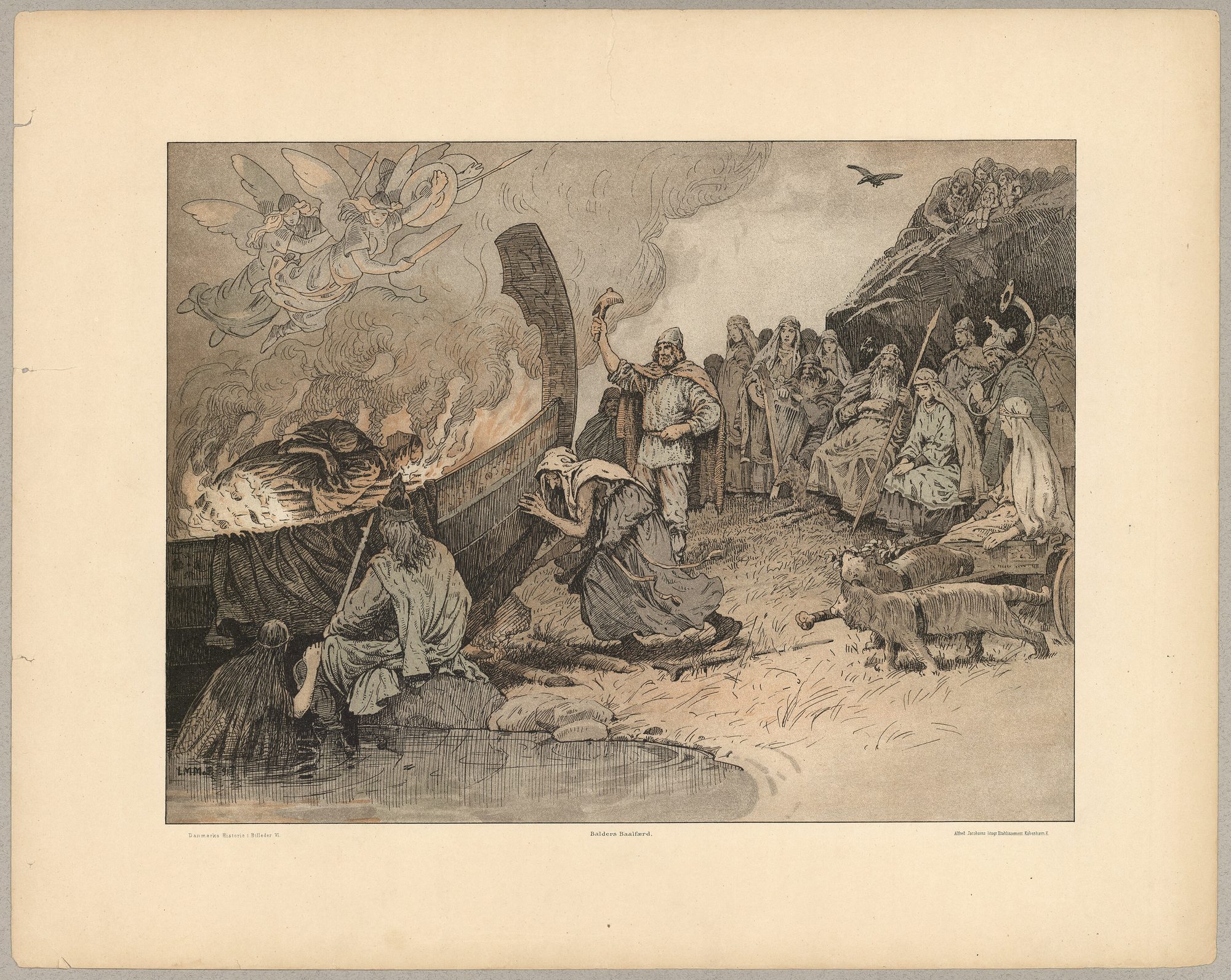
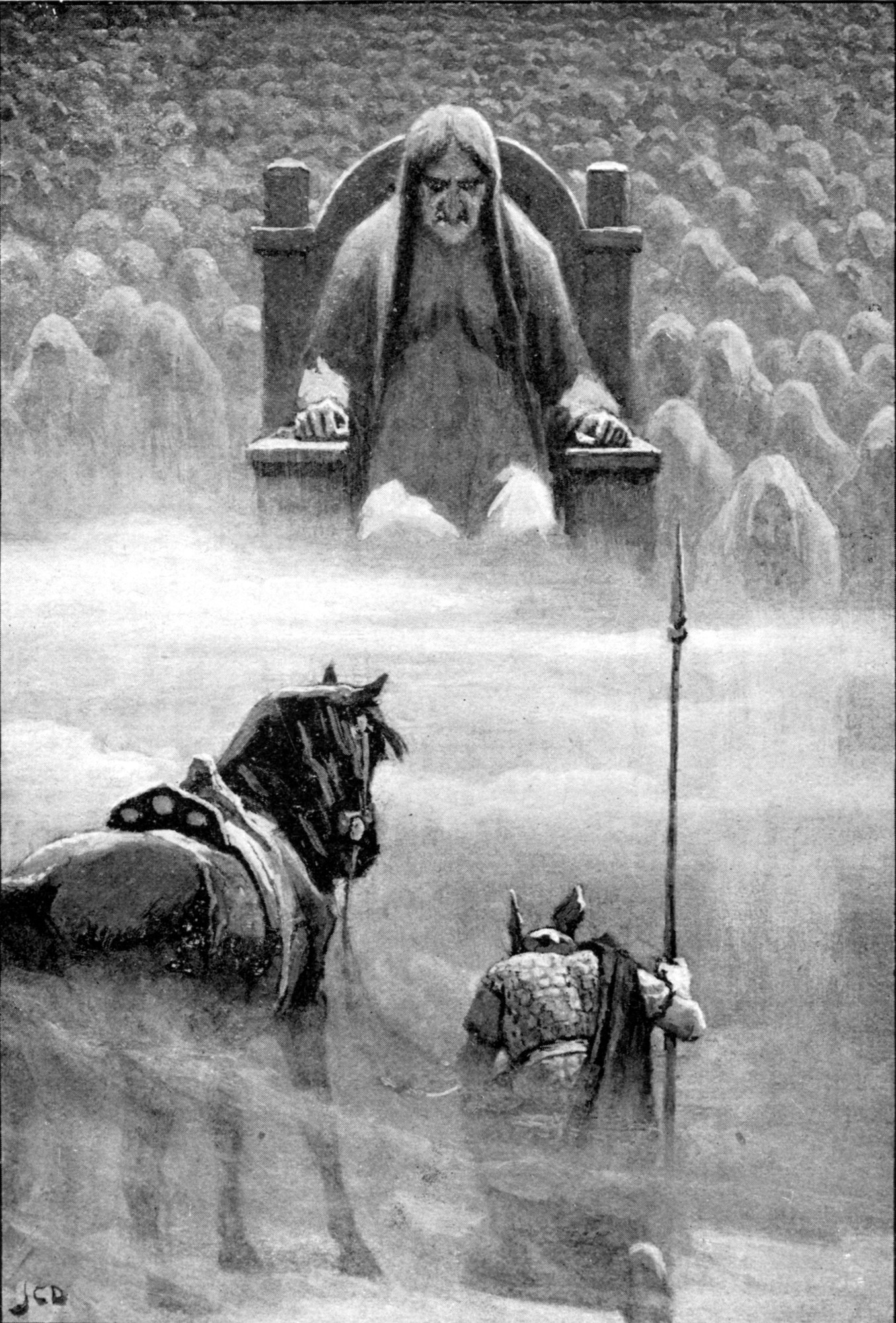
It is, Snorri writes, the greatest misfortune that has ever happened to gods and men. The gods buried him on his great ship, the whole world wept for him, and one refusal kept him in HelThe Norse realm of the dead, ruled in Snorri's telling by Loki's daughter of the same name. — the death that set Ragnarök moving. How it happened, beat by beat, is told in The Death of Baldr.
Saxo’s Balderus, cut down in a duel
There is another Baldr worth knowing, and he is startlingly different. The Danish historian Saxo Grammaticus, writing the myths as if they were early history, gives us a Balderus who is no gentle martyr but a demigod warrior whose body is proof even against steel. He and a mortal named Hother are rivals for the hand of Nanna — here the daughter of a king called Gewar, not the goddess’s daughter of Nep — and the rivalry is fought out in the field, not the heavens.
To kill so invulnerable a man Hother must win a special sword kept by Miming, a satyr of the woods; after several battles he plunges it into Balderus’s side; three days later the wound proves fatal, and the dead king is buried in a barrow. The two tales should not be blended, but together they show the shape of the tradition: one shining name pulled two ways, a passive god murdered by a trick, and a lovesick king cut down in a duel.
Thok will weep / With dry tears / For Balder’s burial; / Neither in life nor in death / Gave he me gladness. / Let Hel keep what she has! (Snorri Sturluson, Prose Edda, Gylfaginning 53, trans. Anderson)
- Snorri Sturluson, Prose Edda, Gylfaginning 22, 32, 49–54 (trans. Rasmus B. Anderson, The Younger Edda, Chicago 1880; Project Gutenberg #18947, read verbatim)Baldr as the best and brightest of the Æsir, the light that issues from him and the plant likened to his brow, and his hall Breiðablik where nothing unclean enters; Forseti his son in Glitnir; the dangerous dreams and the council; Frigg’s oath from fire, water, iron, metals, stones, earth, trees, sicknesses, beasts, birds and creeping things; the gods’ invulnerability-game; Loki’s woman-disguise at Fensal and the mistletoe
too young
west of Valhal; blind Höðr and the guided dart; the funeral on Hringhorni, Hyrrokkin on her wolf, Nanna’s death, Litr, Draupnir and the caparisoned horse; Hermóðr’s nine-night ride on Sleipnir, Móðguðr at the gold-thatched Gjallar-bridge, Hel’s weeping-condition, and Þökk’s refusal (generally believed that this Thok was Loke
). - Poetic Edda, Baldrs draumar (
Baldr’s Dreams
/The Lay of Vegtam
) (trans. Benjamin Thorpe; Project Gutenberg #14726, read verbatim)Baldr’s oppressive dreams; Odin’s ride to the völva’s grave in Niflhel past the blood-stained hound; the mead brewed and shield-covered, waiting for Baldr below; the prophecy naming Höðr the slayer and Rindr’s one-night-old son the avenger. (The name Váli is supplied by other stanzas, not spoken in this poem.) - Poetic Edda, Völuspá 36–37 and 60–61 (Thorpe numbering; trans. Benjamin Thorpe, Project Gutenberg #14726, read verbatim)the mistletoe
slender and passing fair
, thedeadly, noxious dart
,Hödr shot it forth
whileFrigg bewailed, in Fensalir
; and the eschatological return in the renewed world,Baldr shall come; Hödr and Baldr
to inhabit Odin’s halls. The terse poem does not spell out Loki’s disguise or Frigg’s oath; that causal apparatus is Snorri’s. - Poetic Edda, Hyndluljóð 29 (trans. Benjamin Thorpe, Project Gutenberg #14726, read verbatim)Váli named as the avenger of Baldr,
his own brother: he the slayer slew
. - Saxo Grammaticus, Gesta Danorum, Book III (trans. Oliver Elton, 1905; Project Gutenberg #1150, read verbatim)the euhemerized Danish variant, in which Balderus is a demigod
proof even against steel
, Hother a mortal rival for Nanna (here daughter of Gevarus, not Nep), with Miming’s sword, the side-wound, and death after three days. A separate heroic tradition, not to be merged with the Eddic mistletoe myth.