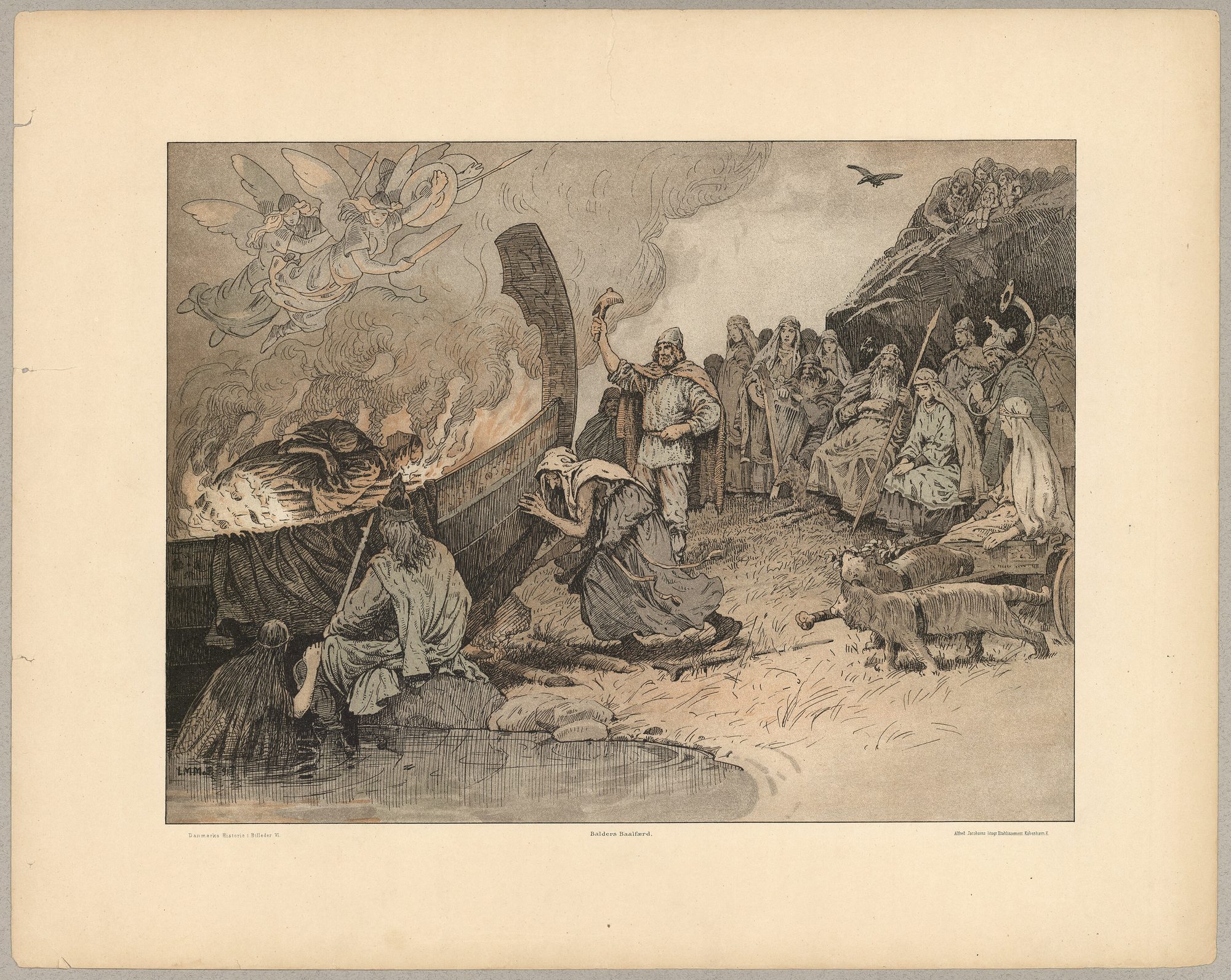
It starts with bad sleep. This is the Norse death narrative preserved in the Eddic sources, with Saxo’s separate Danish version kept distinct. Baldr, the best and brightest of Odin’s sons, begins to dream dreams that are great and dangerous to his life, and in the north a god’s nightmare is a matter of state. The ÆsirThe gods of Asgard, led by Odin, the principal group among the Norse gods. gather to take counsel over them, and the counsel goes two ways at once. Odin cannot leave a riddle alone, so he saddles SleipnirOdin's eight-legged grey horse, called the best of all steeds. and rides down the long dark road to the borders of HelThe Norse realm of the dead, ruled in Snorri's telling by Loki's daughter of the same name., to the grave where an old prophetess lies buried, and he wakes her with runesThe ancient letters of the Germanic futharks, believed to carry magic power when carved. of the dead until she speaks against her will. She tells him what he has ridden all that way not to hear.
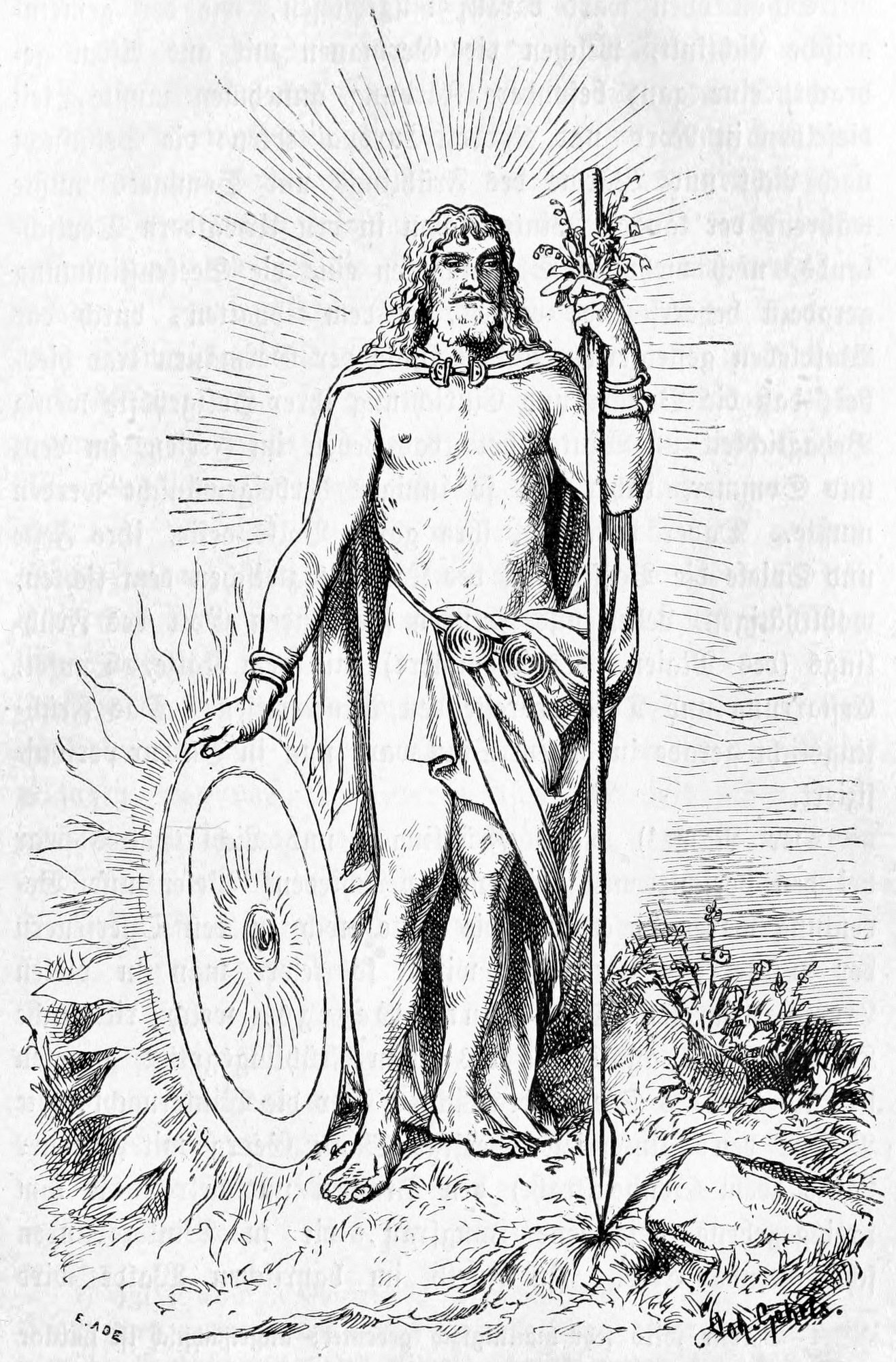
The mead already stands brewed and waiting for Baldr in the halls below, a shield laid over the bright drink and benches strewn with rings, the underworld decked out to receive a god. His brother will be his slayer. And a son not yet born, whom Odin will father on a woman called Rindr, will come one night old to avenge him. Then she orders the rider home and will say no more, and Odin goes back to Asgard carrying a prophecy he cannot unmake. Who Baldr was when he lived — the fairest of the gods, the lord of Breiðablik where nothing unclean could enter — is the portrait drawn in Baldr the Shining; this is the story of how he died.
Every door barred against it
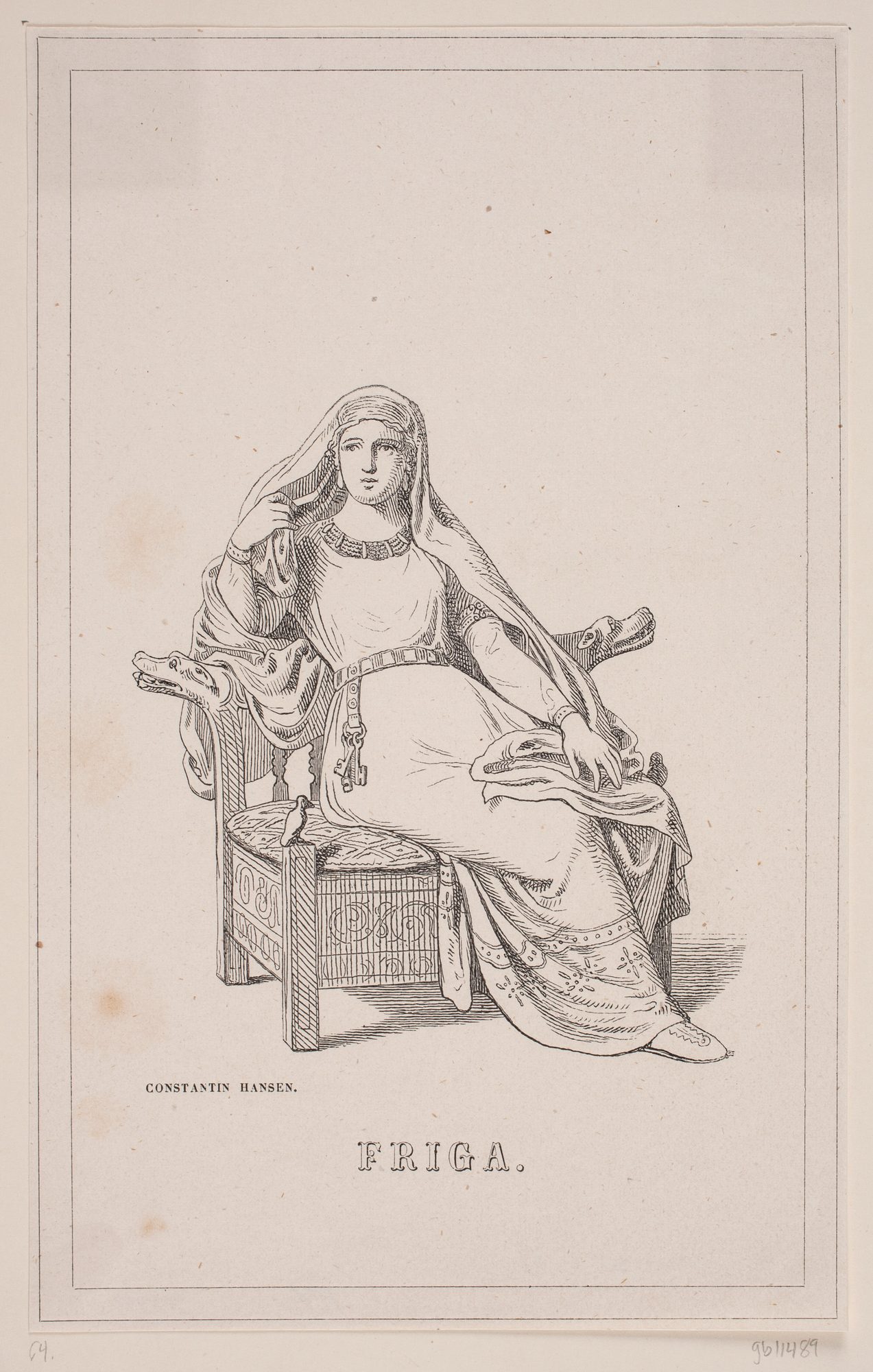
His wife tries the other way. Where Odin rides to meet the doom, Frigg sets out to bar every door against it. She goes through the whole of creation and takes an oath, thing by thing, that nothing will harm her son: fire and water swear, iron swears and every kind of metal, stones and earth and trees swear, and so do the sicknesses, the beasts, the birds and the creeping things. The world promises.
And the promise works so well that it becomes a game. At their assemblies the gods stand Baldr in the middle of a ring and amuse themselves by trying to kill him. They hurl darts at him and hew at him with swords and axes and pelt him with stones, and nothing bites, nothing breaks him, the weapons all turn aside, and the whole company laughs, because they reckon it a great honour to him that he stands there unhurt while the world does its worst.
The shrub too young to swear
Loki cannot stand the sight of it. He takes the shape of a woman and goes to Frigg in her hall at Fensal, and gets the one thing she is proud of out of her as easy gossip: that she took an oath from everything, everything, except a little shrub that seemed to her too young to swear, a plant called the mistletoe. That is all he needs. He goes and pulls it up. At the assembly the blind god Höðr, Baldr’s own brother, is standing back from the sport because he has no weapon and cannot see to aim.
Loki comes to him with a kindness that is really a murder. Why are you not honouring Baldr like the rest? Here, he says, is something to throw; I will show you where he stands. He puts the mistletoe in the blind man’s hand and guides the aim, and Höðr throws. The one thing in the world that never swore goes clean through Baldr, and he falls dead to the ground. It is, the story says plainly, the greatest misfortune that has ever happened to gods and men.
What follows is worse than grief, because grief at least can move. The Æsir are struck speechless. Their hands fail them; they cannot so much as lift the body at first, and they cannot take the one revenge that would answer, because they are standing on a hallowed peace-stead where no blood may be shed. Odin grieves hardest of them all, and he grieves worst, because he alone understands exactly how much has been lost and what the loss sets moving. All they can do is bury him.
Hyrrokkin’s shoulder to the ship
They bury him like a king. Baldr’s body is carried down to his great ship Hringhorni, the largest of all ships, to be burned upon it, but the gods cannot shift the vessel down to the water. They send to the land of giants, and a giantess called Hyrrokkin comes riding a wolf with vipers for reins, and she sets her shoulder to the ship and drives it out with a single push, so hard that fire leaps from the rollers underneath and the whole earth shakes.
Baldr’s wife Nanna looks on the pyre and her heart bursts with grief, and she dies, and they lay her on the fire beside her husband. Thor hallows the flames with his hammer and, in a flash of the old temper, kicks a dwarf named Litr into the blaze as it burns. Odin lays his gold ring Draupnir on the pyre, and Baldr’s horse is led up to it fully harnessed, to carry its master into the dark.
Nine nights to the Gjöll bridge
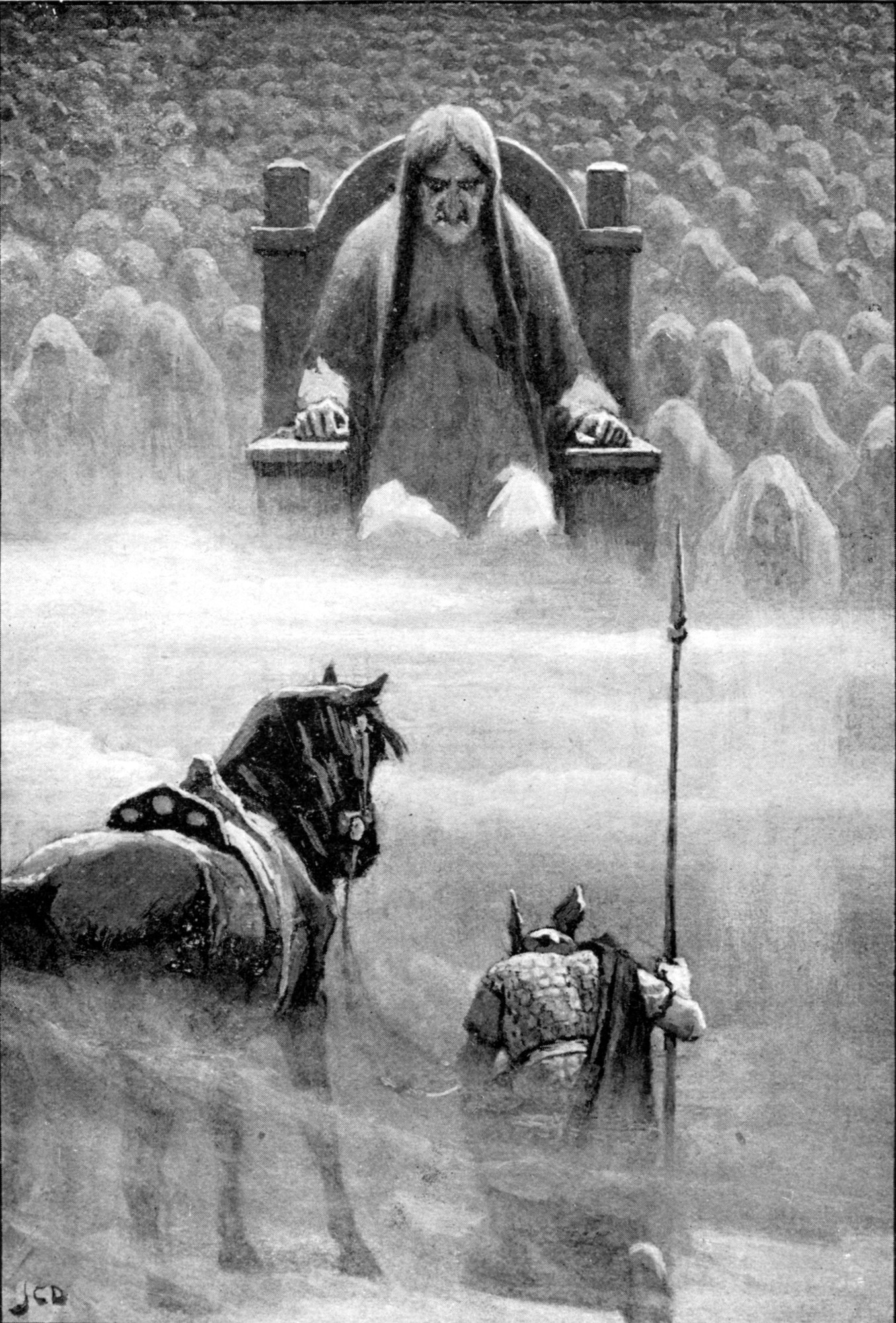
But the dead can sometimes be bought back. Frigg asks who among them will ride to Hel and offer a ransom for Baldr, and Hermóðr the Bold, Odin’s own, undertakes it on Sleipnir. He rides nine nights through valleys so deep and so dark he can see nothing at all, until he comes to the river Gjöll and its bridge roofed with shining gold, where a maiden named Móðguðr keeps watch. The bridge shakes under him, and she tells him so: yesterday five bands of the dead crossed over it, and it did not thunder under them the way it thunders now under one living rider. He still carries the colour of the living.
He puts the horse at Hel’s towering gate and clears it so cleanly the hooves never graze it, and inside he finds the dead god sitting in the seat of honour. He stays the night and in the morning makes his plea, and the death-goddess names her price. Let all things in the world, quick and dead, weep for Baldr, and she will send him back up to the Æsir; but if one thing refuses, if anything at all will not weep, she keeps him. Hermóðr rides home with a bargain that sounds, for one bright moment, like a thing that could be done. Baldr sends Odin’s ring back with him, and Nanna sends Frigg a linen kerchief, gifts, and a ring for Fulla, tokens that the dead still remember the living.
Dry tears in one cave
So the messengers of the gods go out over all the world and ask it to weep, and the world weeps. Men weep and beasts weep, the earth and the stones and the trees weep, and every metal weeps, the way these things weep when they are carried from frost into warmth. And then, in one cave, they come on an old giantess sitting alone, and she will not.
Dry tears, she says, are all she will give for Baldr’s burial; living or dead he never did her any good; let Hel keep what she holds. One refusal is enough. Baldr stays below, and afterwards the gods understood, and the story says it too, that the giantess in the cave was Loki, who had pulled up the shrub, guided the blind hand, and now sat dry-eyed to jam the last door shut.
The vengeance shaped to fit
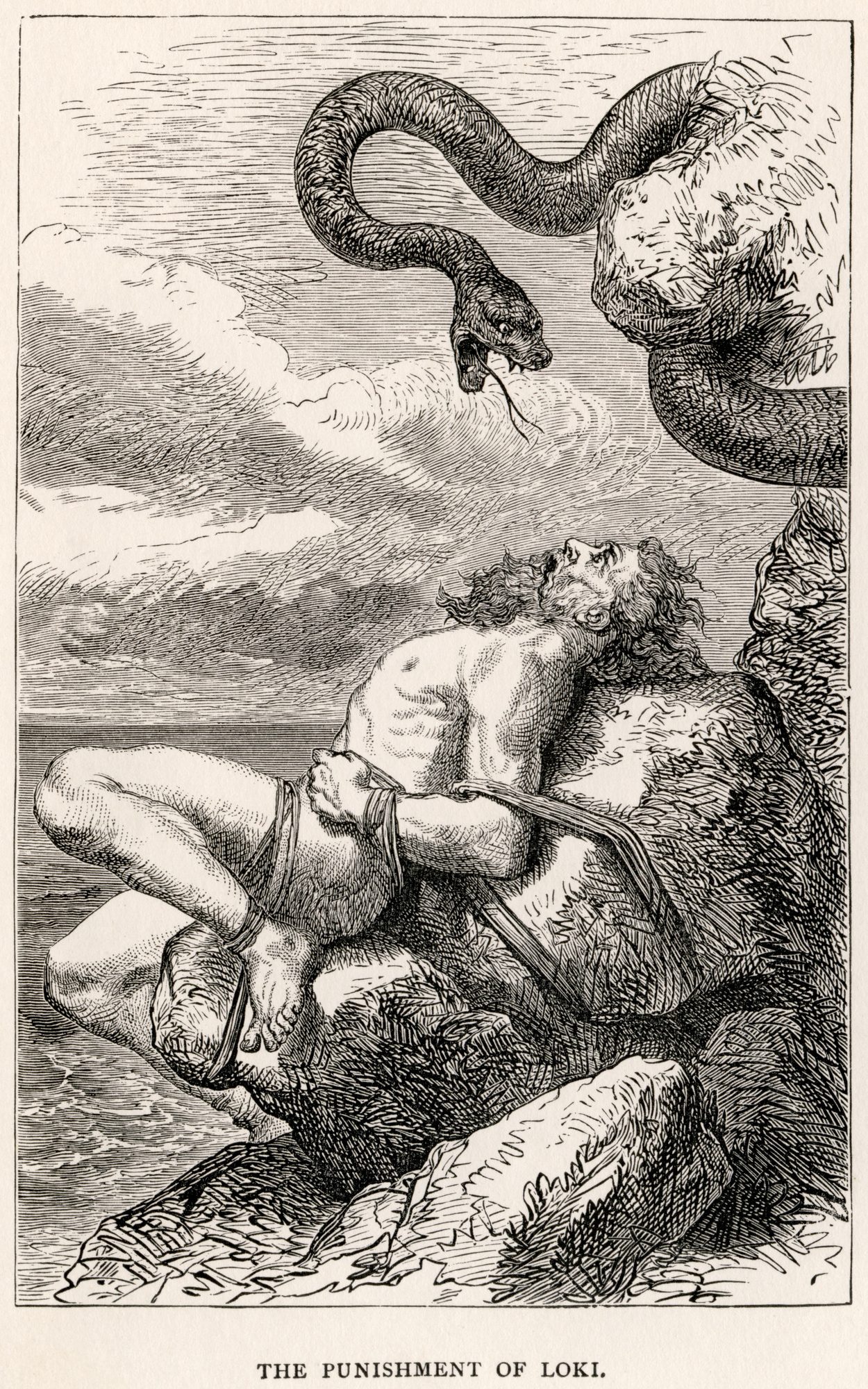
For that they hunt him at last. He flees and hides as a salmon in a waterfall and is caught, and the vengeance is shaped to fit the crime. They bind him across three stones with the guts of his own son, and Skaði fixes a venom-serpent above his face to drip. His faithful wife Sigyn stands over him holding out a basin to catch the poison, but each time it fills she must turn to empty it, and in that moment the venom falls on him and he writhes so violently that the earth quakes. There he lies bound, and there he will lie until the last day.
That is where the death of Baldr leaves the world: the best of the gods shut in Hel because one creature would not cry, the god of light gone out of the sky-halls, and the great deceiver pinned under dripping poison, waiting. His return is real, but it is not here, and it is not soon.
When Ragnarök has come and gone and the earth rises new from the sea, with grainfields sprung unsown and every evil mended, Baldr will come back, and Höðr with him, the slain brother and the blind slayer together, to keep Odin’s halls in a world that has finally paid the whole price. That is the consolation. It waits on the far side of the end. In the story itself there is only the pyre-smoke, the empty seat, and one giantess in a cave declining to weep.
I am the cause that thou seest not Baldr riding to the halls. (Lokasenna 28, trans. Thorpe)
- Snorri Sturluson, Prose Edda, Gylfaginning 49–54 (trans. Rasmus B. Anderson, The Younger Edda, Chicago 1880; Project Gutenberg #18947, read verbatim)the core of the whole narrative. Baldr’s dangerous dreams and the council; Frigg’s universal oath from fire, water, iron and all metals, stones, earth, trees, sicknesses, beasts, birds and creeping things; the gods’ invulnerability-game reckoned an honour; Loki’s woman-shape at Fensal and the mistletoe
too young to exact an oath from
, grown west of Valhalla; blind Höðr, the guided hand and the dart,the greatest misfortune that has ever happened to gods and men
; the paralysed Æsir on the hallowed peace-stead; the funeral on Hringhorni, Hyrrokkin on her wolf with viper-reins, Nanna’s death of grief, the dwarf Litr kicked into the fire, Draupnir and the caparisoned horse; Hermóðr’s nine-night ride on Sleipnir, Móðguðr at the gold-thatched Gjallar-bridge, Hel’s weeping-condition, the returned Draupnir and Nanna’s kerchief; the whole world weepingas when things thaw from frost
, the lone refusing giantessbelieved to be Loki
, and the hunting and binding of Loki with the venom-serpent, Skaði, and Sigyn’s basin. - Poetic Edda, Baldrs draumar (
Baldr’s Dreams
/The Lay of Vegtam
) 1–16 (trans. Benjamin Thorpe; Project Gutenberg #14726, read verbatim)the oppressive dreams and the council; Odin’s ride on Sleipnir down to Niflhel to raise a dead völva with runes; her prophecy that the mead stands brewed for Baldr in Hel, that Höðr will be the slayer, and that Rindr’s son, one night old, will avenge him. (The poem names onlyRindr’s son
; the name Váli is supplied by other stanzas and is kept out of the narrative here.) - Poetic Edda, Völuspá 36–38 and 60–61 (Thorpe numbering; trans. Benjamin Thorpe, Project Gutenberg #14726, read verbatim)the mistletoe grown
slender and passing fair
, thedeadly, noxious dart
,Hödr shot it forth
whileFrigg bewailed, in Fensalir
, and the bound Loki with Sigyn at his side; and the eschatological return,Baldr shall come; Hödr and Baldr
to dwell in Odin’s halls in the renewed world where the unsown fields bear fruit. The terse poem gives the mistletoe and the shot but not Loki’s disguise or Frigg’s oath; that causal chain is Snorri’s. - Poetic Edda, Lokasenna 27–28 (trans. Benjamin Thorpe, Project Gutenberg #14726, read verbatim)Frigg’s grief for Baldr and Loki’s own boast that he is the cause Baldr rides no more to the halls, the earliest voice to put the guilt in Loki’s mouth.
- Poetic Edda, Grímnismál 12 (trans. Benjamin Thorpe, Project Gutenberg #14726, read verbatim)Breiðablik, Baldr’s hall, set in the land where the fewest crimes are known.
- Saxo Grammaticus, Gesta Danorum, Book III (trans. Oliver Elton, 1905; Project Gutenberg #1150)the euhemerized Danish variant, in which Balderus is a demigod proof against steel and Hother a mortal rival for the hand of Nanna, who wins the sword Miming and kills him with a wound in the side from which he dies after three days. Loki plays no part; a separate heroic tradition, not to be blended with the Eddic mistletoe myth.