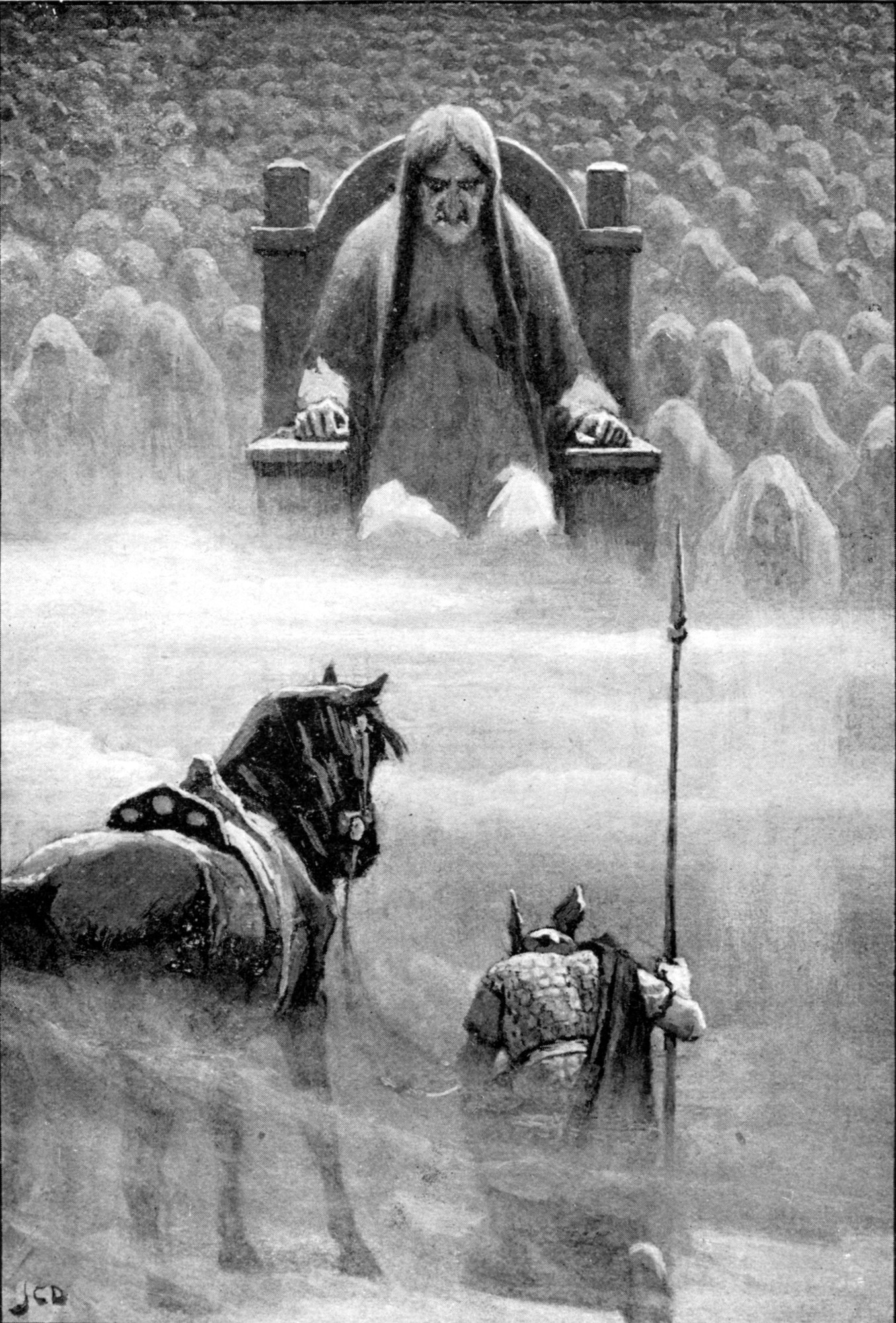
The gods came for the three children before the children had done anything at all. A prophecy had reached Asgard that great woe would come out of JötunheimThe land of the giants in Norse cosmology., out of the brood Loki had got on the giantess AngrboðaThe giantess of Jötunheim who bears Loki's monstrous children, among them the wolf Fenrir., and so Odin had them fetched to him. The two sons he dealt with in their turn; but the daughter, the one who was half the colour of living flesh and half a livid, corpse-cold blue, he cast down into the cold and the mist of Niflheim and gave her a kingdom made entirely of the people nobody sings about: not the war-slain, who go up to Valhöll and Fólkvangr, but everyone who dies of sickness and everyone who dies of old age. That is almost everyone. Hel, punished for a doom she had not yet caused, was handed the largest population in the cosmos.
Half blue, half the hue of flesh
Snorri is careful about her body, and the care is worth keeping, because the popular gloss softens it. He does not say half-living and half-corpse. He says one half of her is blue and the other half is of the hue of flesh, so that she is easily known, and her looks are very stern and grim.
The word doing the heavy lifting is the blue: in the old tongue blár is the shade of the dead, the livid hue of a body gone cold, and it is from that connotation, not from any line in the text, that the corpse-half reading grows. Read her either way and the effect holds. She is a queen you would recognise across a hall, one side of her the colour of anyone alive, the other side already gone.
A table called Famine
Her hall is called Éljúðnir, and it is built to a plan. The walls stand at a strange, forbidding height and the gates are huge, and inside, every furnishing carries a name that is also a sentence. Her table is Famine. Her knife is Starvation. The threshold you cross to enter is Stumbling-block; the bed you lie in is Care; the hangings around that bed are Gleaming-bale, a shimmer of misfortune.
Her manservant is Ganglate and her maidservant Ganglot, names that both mean something like sloth, the tardiness of the sick-room. Nothing here is furniture for its own sake. To be received into Hel’s house is to be seated at hunger, cut with starvation, laid down in care. She rules by a kind of grim domestic poetry, and the poem is the slow death she presides over.
Nine nights down to her gate
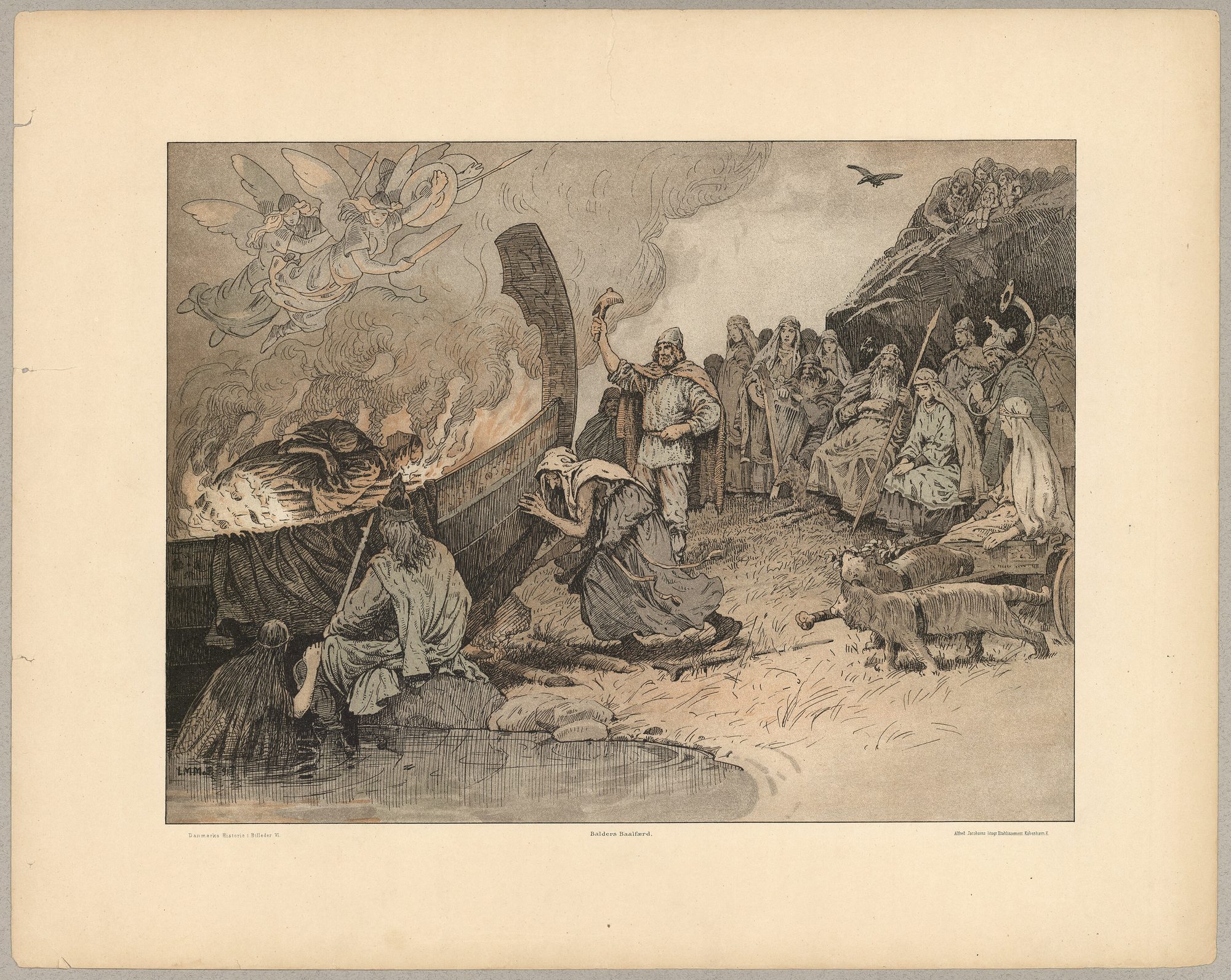
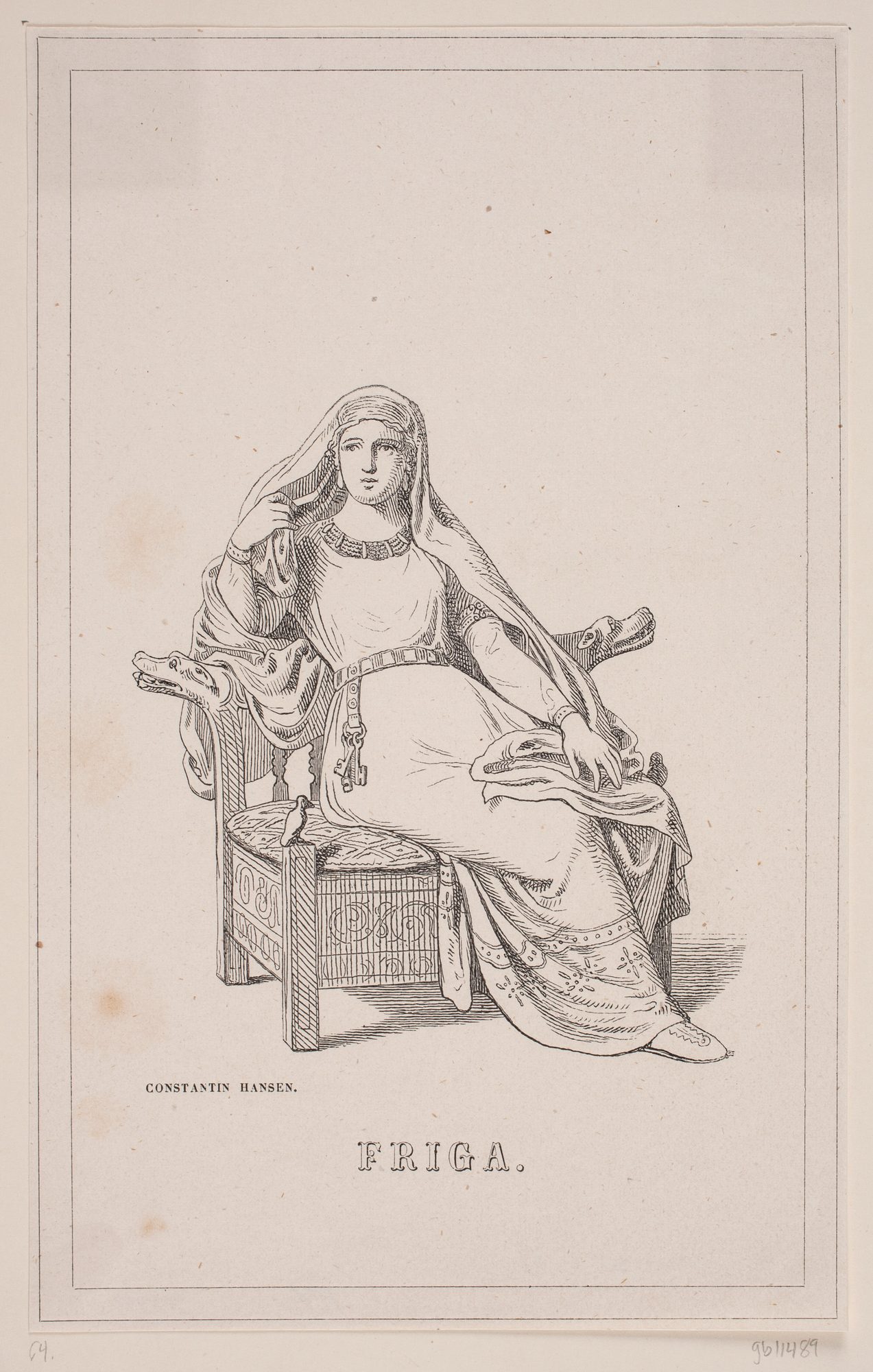
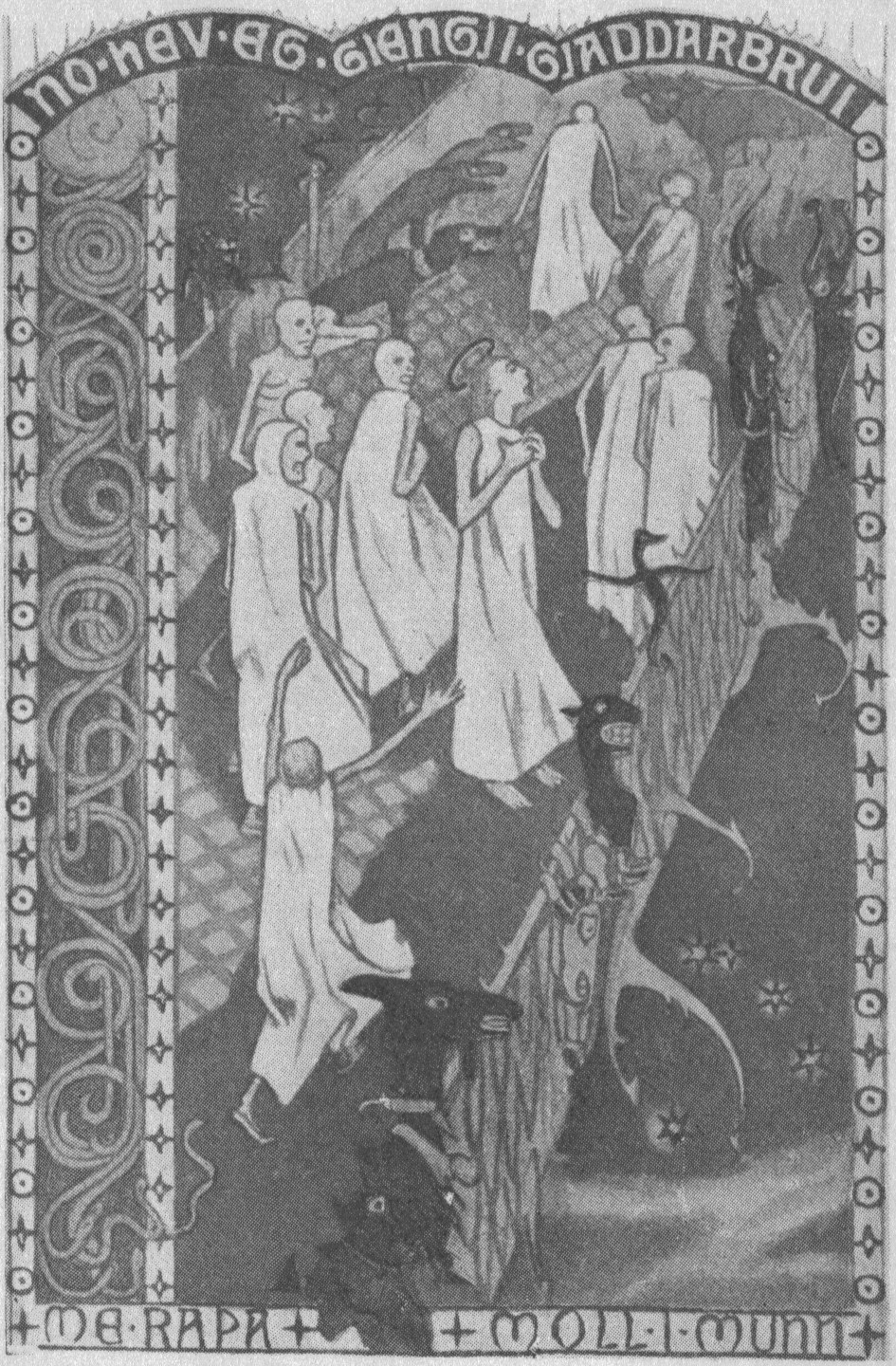
The world learned the weight of her kingdom when Baldr died. Frigg asked who among the gods would ride the way to Hel and offer a ransom for her son, and Hermóð the Nimble took Odin’s horse SleipnirOdin's eight-legged grey horse, called the best of all steeds. and went. He rode nine nights through valleys so deep and dark he saw nothing until he reached the Gjöll-river, and there stood the gold-thatched Gjallar-bridge and its keeper, the maiden Móðguð. She told him that five whole bands of dead men had ridden across the day before, and that the bridge thundered no less under him alone, one living man.
Downward and northward, she said, lay the road to Hel. He came to a gate so high that Sleipnir had to gather himself and leap it clean, and inside he found Baldr sitting in the high-seat of the hall. The place had been waiting: in the older poem of Baldr’s dreams, before he was even dead, his benches stand bright with rings and the mead is already brewed under a shield, ready for a guest the gods have not yet lost.
What Hel keeps, she keeps
She named her price, and it was almost gentle. If all things, she said, both quick and dead, would weep for Baldr, then he could go back to the Aesir; but if anything at all refused its tears, she would keep him. So the gods sent word through the whole world, and the whole world wept. All things wept but one. A giantess sitting in a cave, called Þökk and believed by most to be Loki wearing another shape, said she would weep only dry tears for Baldr, and let Hel keep what she had.
And Hel kept him. Her authority is quiet but it is total: she does not argue, she does not bargain twice, she simply holds. The bargain the gods could not close was the difference between getting Baldr back and losing him to her for good, and at Ragnarök, when the friends of Hel march out of the north in Loki’s company aboard Naglfar, the ship built from dead men’s nails, it is her side that is coming for the living. The queen of everyone who dies quietly outlasts almost everyone who does not.
Here for Baldr the mead is brewed, / The shining drink, and a shield lies o’er it. (Baldrs draumar 7, trans. Bellows)
- Snorri Sturluson, Prose Edda, Gylfaginning 34 (trans. Rasmus B. Anderson, The Younger Edda, Chicago 1880; Project Gutenberg #18947, read verbatim)Hel’s parentage from Loki and the giantess Angrboða of Jötunheim; her siblings the Fenris-wolf and the Midgard-serpent; Odin casting her into Niflheim with dominion over those ‘who die from sickness or old age’, not the battle-slain; her hall Éljúðnir with its walls of strange height and huge gates; the household of grim names (table Famine, knife Starvation, servants Ganglate and Ganglot, threshold Stumbling-block, bed Care, hangings Gleaming-bale); and her body, one half blue and the other half the hue of flesh, her looks very stern and grim.
- Snorri Sturluson, Prose Edda, Gylfaginning (Baldr’s death; Anderson ch. 50–53) (same edition, read verbatim)Frigg’s appeal for a rider; Hermóð the Nimble’s nine-night ride down dark valleys on Sleipnir; the Gjöll-river and the gold-thatched Gjallar-bridge; the maiden Móðguð and her count of five bands of the dead; Sleipnir’s leap over Hel’s gate; Baldr in the high-seat; Hel’s weeping-condition for his release; and the giantess Þökk, generally believed to be Loki, who refuses to weep.
- Snorri Sturluson, Prose Edda, Gylfaginning (cosmology; Anderson ch. 3–4) (same edition, read verbatim)the rivers of Niflheim rising from the well Hvergelmir, of which Gjöll runs nearest the gate of Hel; the passage of the wicked ‘to Hel, and from her to Niflhel … the ninth world’.
- Snorri Sturluson, Prose Edda, Gylfaginning (Ragnarök; Anderson ch. 55) (same edition, read verbatim)‘the friends of Hel’ marching in Loki’s company with the frost-giants and the sons of Muspel; Naglfar, the ship made of dead men’s nails.
- Poetic Edda, Baldrs draumar 1–9 (trans. Henry Adams Bellows, 1923; Project Gutenberg #73533, read verbatim)Odin’s ride down to Niflhel past the bloody, howling hound; Hel’s hall standing ready before Baldr’s death, its benches bright with rings, and the brewed mead waiting under a shield.
- Poetic Edda, Völuspá 38–39, 50–51 (same edition, read verbatim)the serpent-walled torture-hall on Náströnd where oath-breakers and murderers suffer and Níðhöggr sucks the blood of the slain, a punitive quarter distinct from Hel’s ordinary death-by-sickness-and-age realm; and Naglfar loosed at Ragnarök with the people of Hel, Loki at the helm.