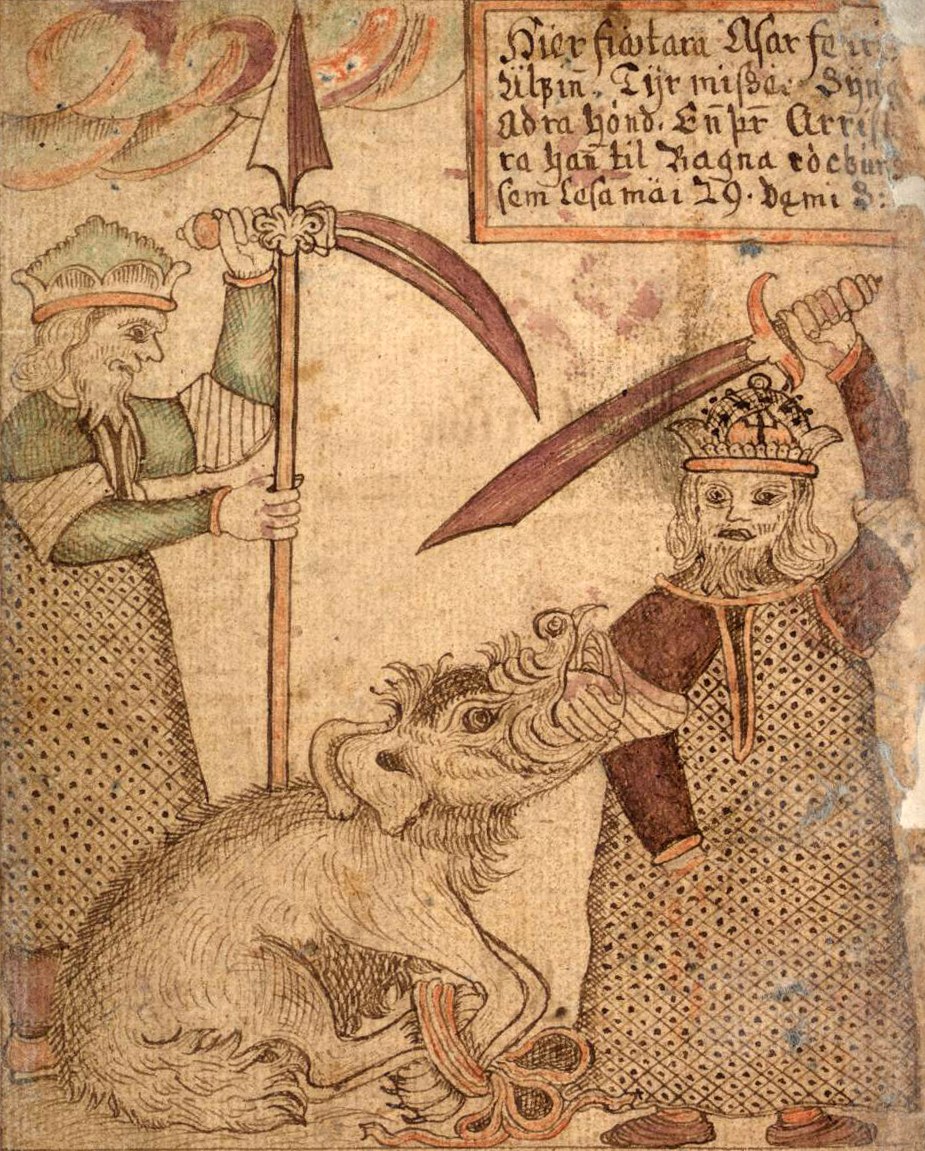
They passed the ribbon from hand to hand around the ring of gods, and every one of them looked at his neighbour, and no one moved. The thing lying in Fenrir’s path was soft and smooth as a length of silk, and the Wolf, who had snapped two great iron fetters as if they were kindling, was not fooled for a moment. He would let them try their new cord on him, he said, but on one condition.
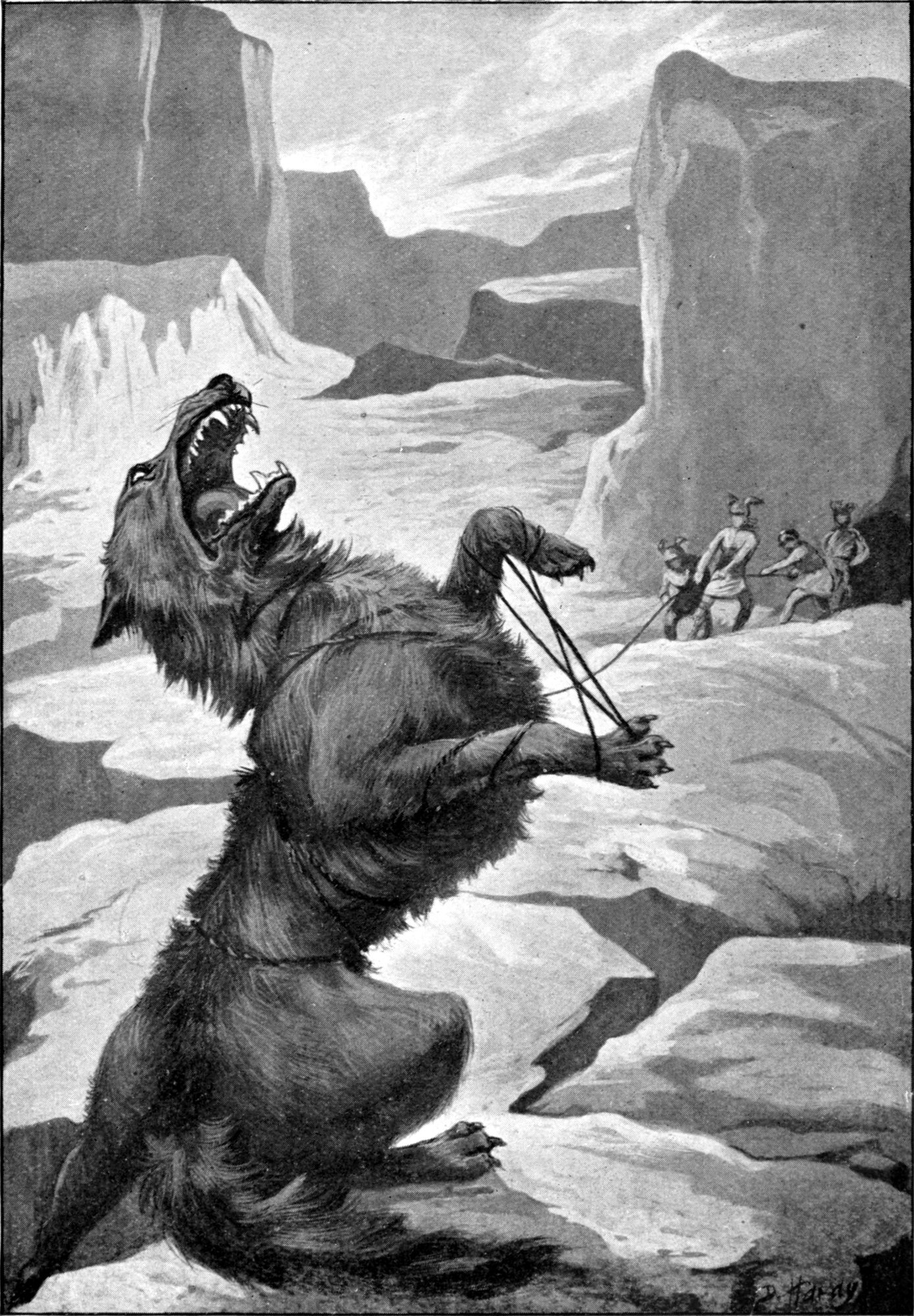
Someone must lay a hand between his teeth as a pledge that this was all done in good faith. The gods knew the pledge was a lie; they had no intention of ever letting him loose. So they stood in the silence, each waiting for another to pay, until one of them put out his right hand and laid it in the Wolf’s mouth. That was Tyr, and it is the thing everyone remembers about him: the god who kept a promise he knew to be false, with the arm it cost him.
Tyr-valiant and Tyr-prudent
Snorri names him the boldest and most valiant of the Aesir, the one who holds much sway over victory in battle and a good god for a fighting man to call upon. His courage passed into proverb: a man who outstrips others and never wavers was called Tyr-valiant, and the wisest was Tyr-prudent. He is the God of Battles and the Son of Odin in the old kenning-lists, and he sits among the twelve gods appointed to be judges. That is the reputation. The single deed that carries it is the binding of the Wolf.
Burst at the first lash
Fenrir was Loki’s monstrous get, brother to the serpent that circles the world and to HelThe Norse realm of the dead, ruled in Snorri's telling by Loki's daughter of the same name. who rules the dead, and the gods had reared him at home while he was small enough to keep. Even then only one of them dared go near enough to feed him, and it was Tyr. When prophecy told the Aesir that this creature was fated to be their ruin, they resolved to chain him. They forged a fetter called Laedingr and coaxed the Wolf into testing his strength against it, and he burst it at the first lash. They made a second, Drómi, half again as strong, and he dashed it against the ground so hard the pieces flew, and shook himself free.
Fashioned from six impossibilities
So the gods sent down to the dwarfs, who made a thing no forge could have hammered. Gleipnir was fashioned from six impossibilities: the sound a cat makes when it moves, the beard of a woman, the roots of a mountain, the sinews of a bear, the breath of a fish, and the spittle of a bird. That is why, Snorri says with a straight face, a cat’s footfall is silent and rocks have no roots. Now the gods had to get the ribbon onto a Wolf who had learned to be suspicious.
Tyr alone put his hand in
They took him out to an island called Lyngvi, in a lake named Ámsvartnir, and there they showed him the silken cord and dared him to break it. Fenrir turned it over in his mind. He could see no glory in snapping a thread, and he could smell the cunning in it. If the band was made with wiles, he said, then for all it looked so slight it would never come onto his feet. He would consent to the test only if a god would set a hand in his jaws as surety. That was the moment the ring of gods went quiet.
Everyone understood what the pledge really was, because everyone knew the cord would hold and the promise behind it would not. Tyr alone put his hand in the Wolf’s mouth. When Fenrir strained and the cord only bit deeper, when he understood at last that he had been caught for good, he clamped down, and the hand was gone at the wrist. Every god there laughed with relief. Tyr did not. Snorri closes the account of him on exactly that cost: this is why he is one-handed, and why he is not counted a reconciler of men.
The Poetic Edda states it as plain fact in a line of introductory prose: Tyr, who had but one hand, was there, for the wolf Fenrir had bitten the other off when they bound him. And when Loki goes down the benches at Ægir’s feast flinging each god’s shame in his face, he saves for Tyr the obvious wound, gloating that he would gladly tell how the Wolf once tore his right hand from him. Tyr does not flinch.
He answers that he lacks a hand and Fenrir lacks his freedom, that the loss brings longing to them both, and that the Wolf must now wait in his fetters for the fall of the gods. A breath earlier he had done the one other thing the poem shows him doing: he stood up for Freyr, the god who harms no woman and looses the bound from their fetters. Even in a hall full of insults, Tyr is the one who speaks for keeping faith.
A war-god, not a peacemaker
It is worth being honest about what the sources do and do not say. The Eddas give us no tidy god of justice
; what they give is a war-god of unbending courage who is expressly not a peacemaker, and who sits among the judges of the Aesir. The justice reading is an inference, and a fair one, drawn from the deed itself: a god who upholds a binding oath at a cost to his own body, and who is invoked in the same breath as victory.
When the valkyrie teaches Sigurd how to win, she tells him to carve the victory-runesThe ancient letters of the Germanic futharks, believed to carry magic power when carved. on his sword-hilt and to call twice upon Tyr, cutting the t-rune twice into the blade. The god’s own name became a mark you scratched into steel when your life depended on the outcome.
Against the hound Garmr
His ending is as fixed as everything else in this world. In Snorri’s telling, when the last battle comes and the bound things break loose, Tyr goes against the hound Garmr and the two of them kill each other. Here the sources part ways. The old poem Völuspá knows the refrain that Garm howls before the cave Gnipahellir and the fetters will burst and the wolf run free, but it never says whom Garmr fights; the duel is Snorri’s own tidying of the doom, not a thing the surviving eddic verse spells out. Either way there is a grim rightness in it. The one-handed keeper of oaths falls the same night the great oath-breaking wolf runs loose at last.
My hand do I lack, but Hrothvitnir thou, / and the loss brings longing to both; / ill fares the wolf who shall ever await / in fetters the fall of the gods. (Lokasenna 39, trans. Bellows)
- Snorri Sturluson, Prose Edda, Gylfaginning XXV (trans. Arthur Gilchrist Brodeur, 1916; Wikisource, read verbatim)Tyr as the boldest and most valiant of the Aesir, holding much sway over victory in battle and worth a warrior’s invocation; the proverbial phrases
Tyr-valiant
andTyr-prudent
; and the summary that because of the Wolf’s bindingTyr is one-handed, and is not called a reconciler of men
. - Snorri Sturluson, Prose Edda, Gylfaginning XXXIV (trans. Arthur Gilchrist Brodeur, 1916; Wikisource, read verbatim)the full Fenrir-binding — the rearing of the Wolf and Tyr alone daring to feed it; the fetters Laedingr and Drómi and the sayings drawn from them; the dwarf-forged Gleipnir and its six ingredients; the island Lyngvi in the lake Ámsvartnir; the Wolf’s suspicion and demand for a hostage-hand; Tyr’s right hand laid in the mouth and lost,
then all laughed except Tyr
; and the aftermath (the chain Gelgja through the rock Gjöll, the stone Thviti, the sword-gag, the river Ván). - Snorri Sturluson, Prose Edda, Gylfaginning LI (trans. Arthur Gilchrist Brodeur, 1916; Wikisource, read verbatim)Ragnarök, where
the dog Garmr
and Tyr do battle and each becomes the other’s slayer. This specific pairing is Snorri’s own systematisation. - Snorri Sturluson, Prose Edda, Skáldskaparmál I and IX (trans. Arthur Gilchrist Brodeur, 1916; Wikisource, read verbatim)Tyr among the twelve Aesir
appointed to be judges
in the high-seats at Ægir’s feast; and the canonical kenning-list —the One-handed God, and Fosterer of the Wolf, God of Battles, Son of Odin
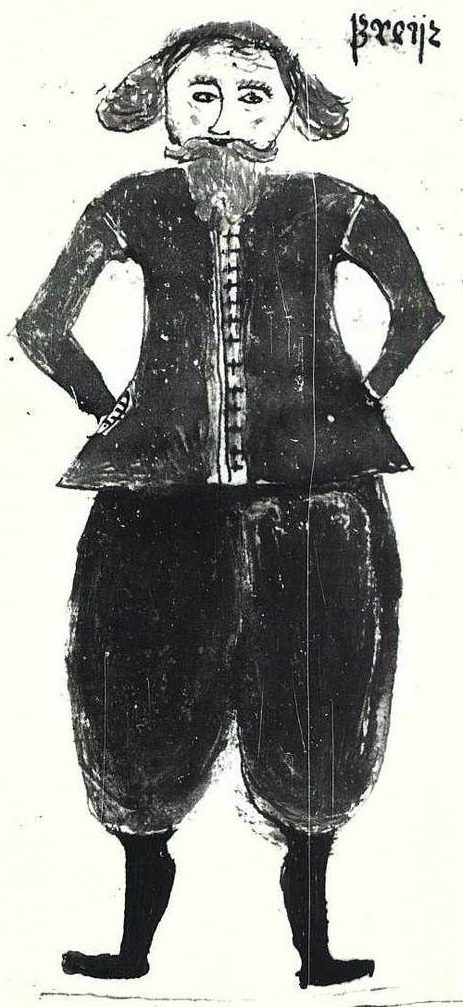
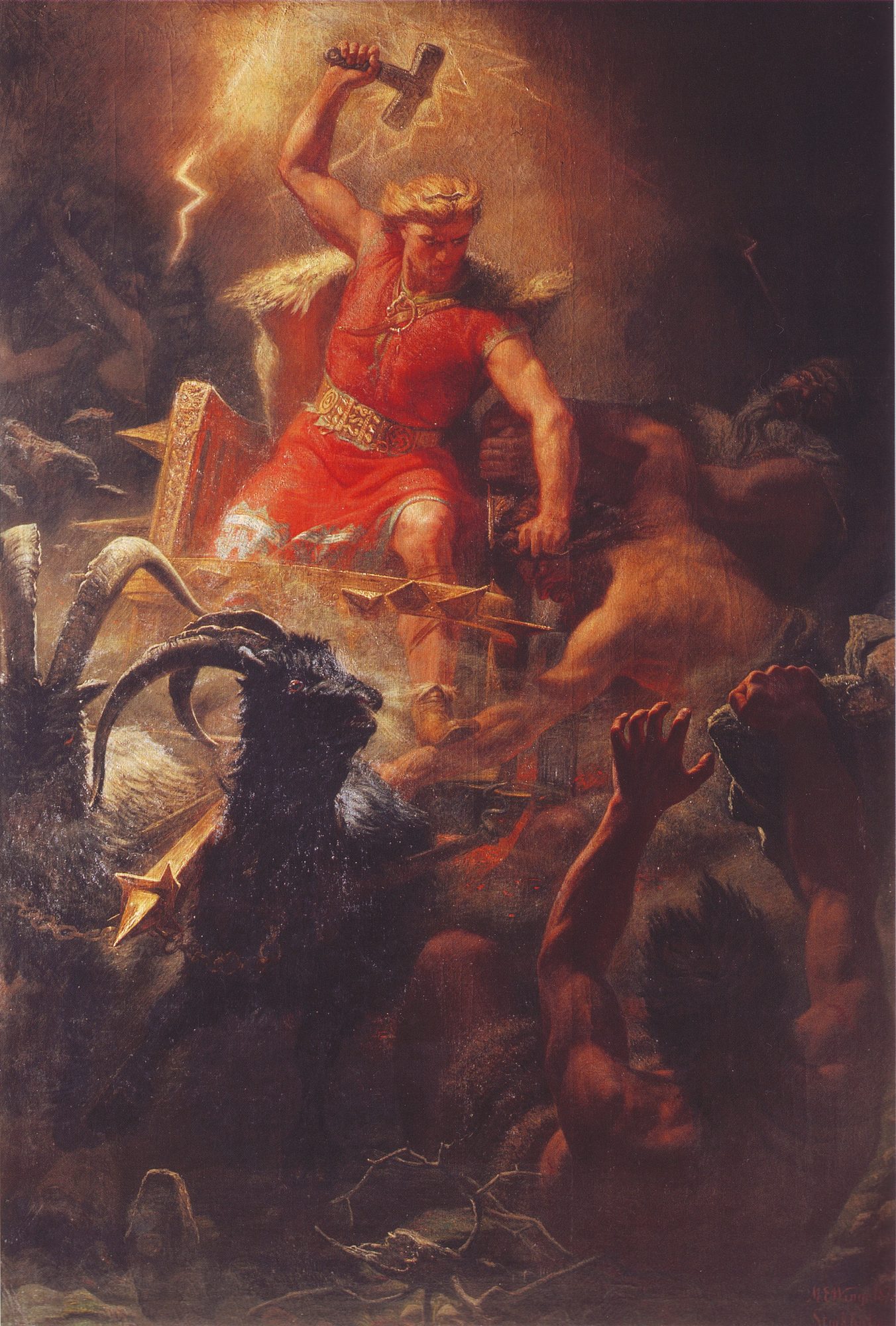
. - Poetic Edda, Hymiskviða 4–10 (trans. Henry Adams Bellows, 1923; Wikisource, read verbatim)Tyr names the giant Hymir as his father (
A kettle my father fierce doth own, a mighty vessel a mile in depth
); the nine-hundred-headed grandmother; with Bellows’ note thatit is not clear why Tyr, who is elsewhere spoken of as a son of Othin, should here call Hymir his father
. - Poetic Edda, Lokasenna, introductory prose and 37–39 (trans. Henry Adams Bellows, 1923; Wikisource, read verbatim)
Tyr, who had but one hand, was there
; Tyr’s defence of Freyr; Loki’s taunt of the severed right hand and Tyr’s measured reply; and the Wolf namedHrothvitnir
. - Poetic Edda, Sigrdrífumál 6 (trans. Henry Adams Bellows, 1923; Wikisource, read verbatim)the victory-rune charm taught to Sigurd —
the runes on thy sword-hilt write… and twice shalt thou call on Tyr
— the t-rune carved twice for victory, the rune that bears the god’s own name. - Poetic Edda, Völuspá 44, 49, 58 (trans. Henry Adams Bellows, 1923; Wikisource, read verbatim)the recurring refrain
Now Garm howls loud before Gnipahellir, the fetters will burst, and the wolf run free
— which names Garmr but never names Tyr as his opponent, the variant against which Snorri’s Tyr–Garmr duel should be read.